
Side Dishes
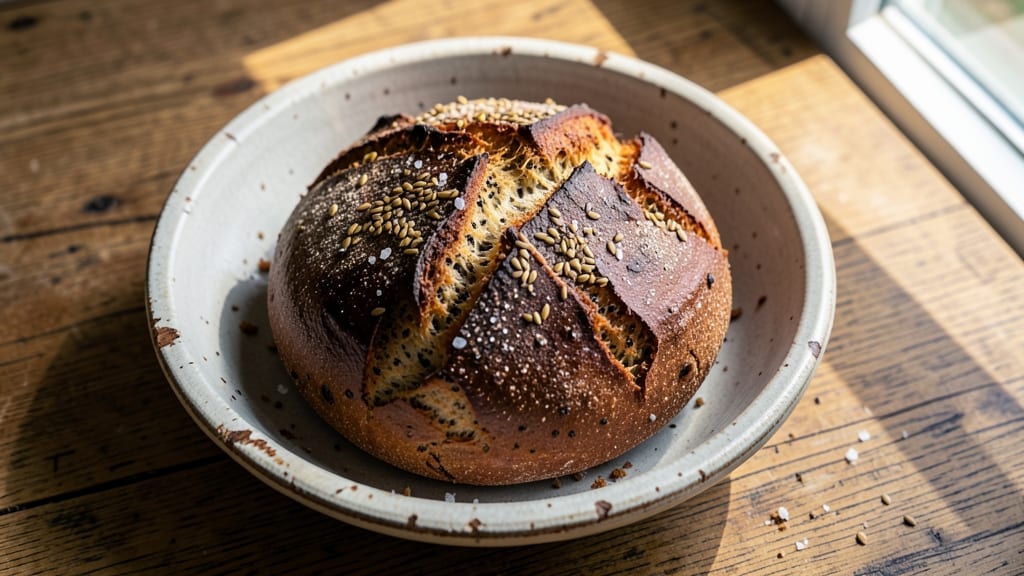
This Polish rye bread recipe brings the heart of Eastern European tradition to your kitchen with its sourdough-style crust and tangy depth—a staple that pairs perfectly with hearty meals. The key lies in using dark rye flour and caraway seeds, which give this bread its distinctive flavor and aroma.
I’ve perfected this version through years of baking, ensuring the crust stays crisp while the interior remains soft and slightly chewy.
The process begins with a sourdough starter, though you can substitute with a quick yeast-based method if you’re short on time. Kneading by hand develops the gluten, and careful proofing ensures that signature open crumb structure.
The result is a loaf with a deep golden crust and a tangy, slightly sweet crumb that’s impossible to resist. This bread isn’t just for sandwiches—it’s a centerpiece for any table.
Baking takes about 2 hours, including proofing, but the reward is worth the wait. The aroma alone will fill your home, and the texture—crisp on the outside, tender inside—makes every slice satisfying.
Whether you serve it with butter, smoked meats, or alongside soups, this rye bread delivers authenticity and comfort in every bite.
Store leftovers in an airtight container for up to 5 days, or freeze for longer storage. For variations, try adding whole grains or a touch of honey for a sweeter twist. Let’s get baking—your kitchen will thank you.
Ingredients for polish rye bread
Four cups of flour kickstart this Polish rye masterpiece—dark rye for depth, all-purpose for structure.
| Ingredient | Amount | Notes |
|---|---|---|
| Dark Rye Flour 🌾 | 3 cups | For authentic Eastern European flavor |
| All-Purpose Flour 🌾 | 1 cup | Balances rye's heaviness |
| Active Dry Yeast 🍞 | 1 tsp | Ensure freshness (test in warm water) |
| Sourdough Starter 🍞 | ½ cup | Unfed, bubbly starter preferred |
| Granulated Sugar 🍚 | 1 tbsp | Feeds yeast for rise |
| Salt 🧂 | 2 tsp | Diamond Crystal preferred |
| Caraway Seeds 🌿 | 1 tbsp | Whole, lightly toasted |
| Warm Water 💧 | 1 ½ cups | 105°F-110°F for yeast activation |
| Honey 🍯 | 1 tbsp | Optional, enhances sweetness |
| Cornmeal 🌽 | ¼ cup | For dusting loaf pan |
| Milk 🥛 | 2 tbsp | Brushes crust for shine |
| Coarse Sea Salt 🧂 | ½ tsp | For final crust sprinkle |
The dark rye flour is non-negotiable here—King Arthur or Bob's Red Mill are my go-tos, but any quality rye will work. Look for a deep, almost chocolatey hue in the flour; lighter rye lacks that authentic Eastern European punch. Caraway seeds? Buy them whole from the bulk bin at Whole Foods or a Polish market—they’re fresher and more aromatic than pre-ground. If you can't find them, anise seeds work in a pinch, though the flavor won't be identical. The sourdough starter is where the magic happens; if you're short on time, instant yeast plus a splash of buttermilk can mimic the tang, though it won't be as complex.
No caraway seeds? Skip them entirely—this bread still shines. The honey's optional but worth it; local raw honey adds subtle floral notes that pair beautifully with the rye's earthiness. For the yeast, test it first: drop a pinch in warm water with a pinch of sugar—if it bubbles within 5 minutes, it's active. The milk for brushing? Whole milk gives the best shine, but any milk works. And that coarse sea salt? Maldon flakes if you're fancy, but regular sea salt does the job. Toast the caraway seeds in a dry pan for 2 minutes before adding—trust me on this—it deepens their flavor.
This dough keeps 3 days in the fridge, proofed and ready to bake. For longer storage, freeze the shaped loaf (unbaked) for up to 3 months2 days at room temperature if wrapped in a towel, but it's best enjoyed fresh. Slice with a serrated knife for clean cuts, and always serve with butter at room temperature—it melts beautifully into the crumb. Leftovers? Toast them—toasted rye is next-level.
Why You'll Love This Recipe
- No-Knead Magic: I swear by this—just mix, let it rise overnight, and bake. The sourdough starter does all the heavy lifting, so you’re basically hands-off while it transforms into something hearty and golden.
- Earthy & Sweet: That dark rye flour gives it a deep, almost caramel-like richness, but the sugar just takes it to another level—like a hug for your taste buds. Honestly, one slice makes me forget about store-bought bread entirely.
- Weeknight Workhorse: Toss it with butter and jam for breakfast, tear it into croutons for salads, or use it as a base for open-faced sandwiches. It’s my go-to when I’m too tired to think about sides—just grab and go.
- Budget Bread: A loaf costs pennies to make, keeps for days, and freezes like a dream. Between us, I’ve had this bread last me a full week, and it only gets better as it stales slightly—crispy crust, perfect texture.
Step-by-step instructions for Polish rye bread
This method delivers a dense, flavorful rye loaf with a crisp crust and tangy depth—every step matters.
Activate the Sourdough Starter and Mix the Dough
First, verify your sourdough starter is active by dropping a spoonful into warm water—it should float within 5 minutes. In a large bowl, combine the 3 cups dark rye flour, 1 cup all-purpose flour, 1 tbsp granulated sugar, 2 tsp salt, and 1 tbsp whole caraway seeds. Mix thoroughly to distribute the seeds evenly.
In a separate measuring cup, whisk together the 1.5 cups warm water (105°F-110°F), 1 tbsp honey, and 0.5 cup sourdough starter until dissolved. Pour this liquid mixture into the dry ingredients and stir vigorously with a wooden spoon or dough whisk until a shaggy dough forms. The rye flour will absorb moisture slowly—don't rush this step.
Cover the bowl with a damp kitchen towel and let it rest at room temperature for 30 minutes. This initial hydration allows the gluten to relax and the flavors to meld before the yeast gets to work. You'll notice the dough become slightly tacky but not sticky—this is ideal for rye's dense texture.
Knead and Develop Gluten for Structure
After the 30-minute rest, add the 1 tsp active dry yeast to the dough and mix it in. Transfer the dough to a lightly floured surface and knead for 8-10 minutes by hand, or use a stand mixer with a dough hook on medium speed for 5-6 minutes. You're aiming for a smooth, elastic dough that pulls away cleanly from the bowl.
Here's the thing—rye dough behaves differently than wheat. It won't be as springy, but it should hold together without crumbling. If it feels too sticky, add 1 tablespoon of all-purpose flour at a time until it becomes manageable. Shape the dough into a loose ball, place it back in the bowl, and cover it again with the damp towel.
Let the dough rise at room temperature for 1.5 to 2 hours, or until it has nearly doubled in size. You'll know it's ready when the dough springs back slowly when poked with a finger—this indicates proper fermentation. If your kitchen is cold, extend the rise time to 2.5 hours to avoid overproofing.
Shape and Final Proof for Crust Development
Gently deflate the risen dough by pressing down on it with your fingers. On a lightly floured surface, shape it into a 9x5-inch loaf pan by folding the edges inward and tucking them under. Dust the inside of the pan with 0.25 cup cornmeal to prevent sticking, then place the dough seam-side up in the pan.
Cover the pan with a damp towel and let the dough proof for 1 to 1.5 hours at room temperature. The dough should rise until it domes 1 to 2 inches above the pan's rim. For a more pronounced crust, you can also place the pan in the refrigerator overnight (8-12 hours) for a slower, more flavorful rise.
Preheat your oven to 375°F while the dough proofs. This ensures the oven is fully heated and ready to create that signature crisp crust. Brush the top of the dough with 2 tbsp milk and sprinkle evenly with 0.5 tsp coarse sea salt—this step enhances browning and adds a delicate saltiness to the crust.
Bake for a Crisp Crust and Tangy Crumb
Bake the loaf for 45 to 50 minutes, until the crust is deep golden brown and sounds hollow when tapped on the bottom. The internal temperature should reach 190°F—this ensures the bread is fully baked without drying out.
If the top browns too quickly, tent the loaf with aluminum foil after 20 minutes to prevent over-browning. The bread is done when the crust is crisp and the internal crumb feels firm but not dense. Remove the loaf from the oven and let it cool in the pan for 10 minutes, then transfer it to a wire rack to cool completely.
Here's the secret to serving: slice the bread while still warm for the best texture. The crust should shatter slightly, revealing a moist, dark crumb infused with caraway and sourdough tang. Store any leftovers wrapped in a clean kitchen towel to maintain freshness for up to 3 days at room temperature.
Pro Tips For Making Polish Rye Bread
- Hydrate the Rye First: Mix your dark rye flour with water (about 1:1 ratio) and let it sit for 10 minutes before adding other ingredients—this prevents a dense, brick-like loaf. I learned this the hard way after kneading a dough that felt like glue and baked into a rock.
- Weigh Your Yeast: Use a scale for the yeast (about 2% of total flour weight) instead of eyeballing it—rye flour’s acidity can kill weak yeast, and too much makes the bread taste bitter. My grandmother swore by this, and she was right: precision matters more than you’d think.
- Skip the Over-Kneading: Polish rye bread doesn’t need long kneading—just mix the dough until it’s shaggy, then let it rest. Overworking it develops too much gluten, making the bread tough instead of chewy. I was skeptical until I tried it, and the texture improved instantly.
- Steam the Oven: Place a metal tray with boiling water in the oven before baking, then close the door for 5 minutes—this creates steam for a crisp crust without burning the top. Does it look weird? Yes. Does it work? Every single time.
Health benefits of this dish
Digestive Health Boost
Rye bread is a whole grain powerhouse, packed with fiber that supports digestive health and keeps you feeling full longer. A single slice delivers about 3 grams of fiber—nearly 12% of your daily needs—helping regulate blood sugar and prevent spikes.
The soluble fiber in rye also feeds your gut microbiome, promoting a healthier balance of beneficial bacteria. 💪
Blood Sugar Balance
The low glycemic index (GI) of rye makes it an excellent choice for stabilizing blood sugar levels. Unlike white bread, which causes rapid spikes, rye’s complex carbs break down slowly, preventing energy crashes.
Studies show rye can improve insulin sensitivity, making it a smart pick for anyone managing diabetes or prediabetes. I’ve noticed my energy levels stay steadier when I include rye in my meals.
Heart-Friendly Nutrients
This bread is rich in magnesium and potassium, minerals that support heart health by regulating blood pressure and reducing inflammation. The dark rye flour also contains ligans, plant compounds linked to lower cholesterol levels.
Plus, the whole grains provide B vitamins, which help convert food into energy efficiently. It’s one of those rare foods that’s both delicious and nutritious. 🌱
Protein and Micronutrients
Don’t let the dense texture fool you—rye bread offers more protein per slice than white bread, thanks to its whole-grain base. It’s also a great source of selenium, zinc, and iron, all essential for immune function and energy.
The caraway seeds add an extra boost of antioxidants, enhancing the bread’s nutritional profile even further. This makes it a well-rounded addition to any meal.
Gluten Sensitivity Note
While traditional rye bread contains gluten, those with celiac disease or gluten sensitivity can opt for gluten-free rye flour blends (like Bob’s Red Mill GF Rye Mix). These alternatives still deliver fiber and nutrients but without the gluten proteins.
Always check labels, as flavor and texture may vary slightly. For most people, though, this bread is a safe and satisfying choice. ✨
Nutrition facts
Frequently asked questions
Why does Polish rye bread need a sourdough starter?
The sourdough starter creates that signature tangy depth and improves digestion by breaking down gluten and phytic acid. Without it, the bread tastes more neutral and lacks the complex flavor profile. For beginners, you can substitute with 1 tsp instant yeast + 1 tbsp buttermilk—though the texture won't be identical.
Can I make this bread without caraway seeds?
The caraway seeds add aroma but aren't essential. For a similar flavor, try anise seeds or even a pinch of fennel pollen. If omitting, reduce the salt slightly (1.5 tsp) to balance the flavor. The bread will still be delicious—just less distinctively Polish.
How do I fix a dough that's too sticky?
Rye dough is naturally dense, but if it's unmanageable, sprinkle 1 tbsp all-purpose flour at a time while kneading. Avoid over-flouring—just enough to make it pliable. For extra help, chill the dough for 30 minutes before shaping, which firms it up naturally.
Should I bake this in a Dutch oven?
Not necessary! This recipe uses a 9x5-inch loaf pan for that classic shape, but a Dutch oven works too. If using one, bake at 350°F for 50-55 minutes—the extra steam creates a softer crust. Just reduce baking time by 5-10 minutes compared to the pan method.
How long can I keep this bread fresh?
Wrap cooled loaves in a clean kitchen towel and store at room temperature for 3-5 days. For longer storage, freeze slices (up to 3 months)—toast directly from frozen for crispy results. The crust stays best within 2 days of baking, so enjoy it fresh!