Side Dishes
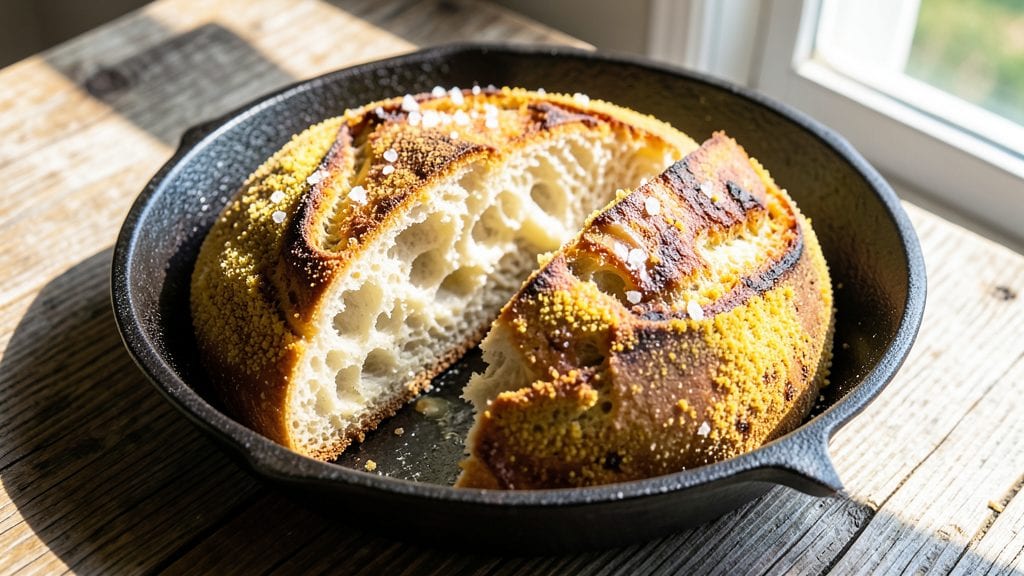
This traditional cowboy bread recipe brings the heart of the Old West to your kitchen with its rustic cornmeal crust and smoky depth. ✨ Born from frontier cooking traditions, this bread delivers crispy edges and a soft, pillowy center that pairs perfectly with hearty stews or grilled meats.
The secret lies in its simple ingredients and the way it transforms over an open flame or in a cast-iron skillet.
What sets cowboy bread apart is its versatility—it’s as much about the technique as the recipe. Whether you’re baking it in a Dutch oven or toasting it over coals, the result is a bread with a satisfying crunch and a tender interior.
This method preserves the authenticity of frontier cooking while making it accessible for modern kitchens. The cornmeal crust adds a subtle earthiness that complements the smoky flavor, creating a dish that’s both nostalgic and deeply satisfying.
By the time you pull it from the heat, you’ll have a bread that’s crispy on the outside and soft inside, with a faint smokiness that hints at its wild origins. The texture is what makes it unforgettable—each bite offers a contrast that’s impossible to resist.
Perfect for campfire meals, backyard cookouts, or as a rustic side to any hearty dish, this bread is a testament to how simple ingredients can create something extraordinary.
Ready to bring a taste of the frontier into your kitchen? The process is straightforward, but the results are anything but ordinary. Let’s get started on creating this classic cowboy bread that’s as much a part of American culinary history as it is a delicious addition to your table.
Ingredients for traditional cowboy bread
Six simple ingredients plus a smoky touch create this frontier classic.
| Ingredient | Amount | Notes |
|---|---|---|
| All-Purpose Flour 🌾 | 3 cups | Unbleached preferred for texture |
| Fine Yellow Cornmeal 🌽 | 1 cup | Stone-ground for authentic texture |
| Active Dry Yeast 🍞 | 1 packet | Or 2.25 tsp instant yeast |
| Warm Water 💧 | 1 ¼ cups | 110°F for yeast activation |
| Granulated Sugar 🍚 | 1 tbsp | Feeds yeast for rise |
| Salt 🧂 | 1 tsp | Kosher or sea salt |
| Unsalted Butter 🧈 | ½ cup | Cold, cubed for mixing |
| Wood Smoked Paprika 🌶️ | 1 tsp | For frontier smokiness |
| Garlic Powder 🧄 | ½ tsp | Or 1 fresh clove minced |
| Vegetable Oil 🫒 | 2 tbsp | For greasing Dutch oven |
| Coarse Kosher Salt 🧂 | 1 tbsp | For sprinkling top crust |
| Wood Chips or Chunks 🌳 | ½ cup | Hickory or oak preferred |
The cornmeal is non-negotiable—it's what gives cowboy bread that iconic rustic crust. Bob's Red Mill stone-ground cornmeal is my go-to, but any fine yellow cornmeal works. For the yeast, FreshPaks from the grocery store are foolproof—just toss them right in the water. The butter should be cold when you mix it in; this keeps the dough from getting too soft. As for the wood chips, Traeger or Weber brands are reliable, but any hardwood chunks from the hardware store work too. Pro tip: Soak the wood chips for 30 minutes before using—keeps them burning steady without flaming.
No wood chips? Smoked paprika plus a drop of liquid smoke gets you close, though it won't be the same. Running short on cornmeal? Substitute half with all-purpose flour, but the texture won't be as authentic. Fresh garlic instead of powder? Use 1 clove minced—it adds a brightness the powder can't match. The yeast packet says 'proof it in warm water'—don't skip this! If your water isn't 110°F, the yeast might not activate fully, and your bread could end up dense. (Trust me, I've made that mistake.) For the Dutch oven, any heavy pot with a lid works—Lodge or Le Creuset are ideal, but even a cast-iron skillet in a pinch.
This dough keeps in the fridge for 24 hours if wrapped tightly in plastic—great for meal prep. Once baked, it stays fresh for 3 days at room temp, wrapped in a towel. For leftovers, reheat slices in a dry skillet over medium heat for 1-2 minutes per side—crispy again in no time. Freezing? Wrap individual slices in foil and freeze for up to 3 months. The smoky flavor actually intensifies when reheated, so don't toss those leftovers! And if you're serving at a campfire, toast slices directly over the coals for maximum frontier vibes.
Why You'll Love This Recipe
- Five-Ingredient Magic: I swear by this list—flour, cornmeal, yeast, water, sugar. That’s it. No fancy pantry raids, no last-minute store runs. The cornmeal gives it that rustic crunch, while the yeast does all the heavy lifting. Honestly, it’s the kind of recipe that makes me feel like I’ve outsmarted grocery shopping.
- Crunch Meets Chew: The secret’s in the layers—soft, pillowy inside from the yeast and sugar, but that cornmeal crust? Chef’s kiss. It’s got this satisfying bite that disappears the second you take a bite. I’ll be real: my kids used to sneak bites before dinner just for that texture.
- Campfire to Kitchen: Between us, this bread is my go-to for everything. Grilled cheese? Check. Sandwiches for a picnic? Done. Even toasted with butter for breakfast—yes, even on a Tuesday night. It’s the one loaf that doesn’t get left behind when the potluck’s over.
- No-Waste Wonder: Make a big batch, and it’ll last. Freeze the extras—seriously, just wrap them in foil and toss in the freezer. Thaw at room temp, and no one’s the wiser. Plus, the cornmeal’s cheap, the yeast’s cheap, and you’re not buying artisanal anything. Budget-friendly doesn’t get much better than this.
Step-by-step instructions for traditional cowboy bread
Here's how to make this frontier classic with a crispy cornmeal crust and smoky aroma.
👨🍳 Step 1: Activate the Yeast and Mix the Dough
In a large bowl, combine the 1.25 cups warm water (about 110°F) with the 1 tbsp granulated sugar and 1 packet active dry yeast. Let it sit for 5-10 minutes until it becomes foamy—this means your yeast is alive and ready to work. If it doesn't foam, your yeast is dead and you'll need to start over.
In a separate bowl, whisk together the 3 cups all-purpose flour, 1 cup fine yellow cornmeal, 1 tsp salt, 1 tsp wood smoked paprika, and 0.5 tsp garlic powder. I like to use a whisk for this so the cornmeal stays fine and doesn't clump. Make a well in the center and pour in the yeast mixture along with the 0.5 cup cold cubed butter.
🍳 Step 2: Knead Until Smooth and Elastic
Mix everything together with a wooden spoon until it forms a shaggy mass, then turn it out onto a lightly floured surface. Here's where the real work happens—knead for 8-10 minutes until the dough is smooth, elastic, and springs back when you poke it. I press down gently during the first minute to break up the gluten, then switch to folding techniques to develop it properly.
The dough should be slightly tacky but not sticky. If it's too dry, add 1 teaspoon warm water at a time until it comes together. If it's too sticky, add 1 tablespoon flour at a time. Real talk: this step makes all the difference for that perfect cowboy bread texture.
⏰ Step 3: Let the Dough Rise Until Doubled
Lightly grease a large bowl with 1 tablespoon vegetable oil and place the dough inside. Cover with a damp towel or plastic wrap and let it rise in a warm place for 1-2 hours or until it's doubled in size. I like to put it near the oven with the light on for consistent warmth—this helps the dough rise evenly without overproofing.
You'll know it's ready when you poke it gently and the indentation stays put. Don't let it rise too long or your bread will be dense instead of light and airy. If you're short on time, you can speed this up by using a proofing box or placing the bowl in a 75°F environment.
🔥 Step 4: Shape and Bake with Smoky Flavor
Preheat your oven to 425°F with a Dutch oven inside for 30 minutes. While it's heating, shape the dough into a round loaf on a floured surface. I like to make a well in the center and let the dough rise slightly again for 10 minutes while the oven finishes preheating—this gives it that classic cowboy bread shape.
Carefully transfer the dough to the hot Dutch oven. Brush the top with a little water, then sprinkle with 1 tbsp coarse kosher salt. Add the 0.5 cup wood chips or chunks to the bottom of the oven for that authentic smoky flavor. Bake covered for 30 minutes, then uncover and bake for another 15-20 minutes until golden brown.
🍽️ Step 5: Cool and Serve Fresh
Remove the bread from the oven and let it cool on a wire rack for at least 15 minutes before slicing. I know it's tempting to dig in right away, but letting it cool prevents a gummy texture. The crust should be crispy with a slight smoky flavor from the wood chips, while the inside remains soft and pillowy.
Slice it thick for that rustic cowboy bread experience, and serve warm with butter or honey. The cornmeal crust adds a nice texture contrast to the soft interior, making each bite satisfying. Store any leftovers wrapped in a clean towel to keep it fresh for up to 3 days.
Pro Tips For Making Traditional Cowboy Bread
- TOAST THE CORNMEAL: Dump that fine yellow cornmeal into a dry skillet over medium heat for 2-3 minutes before mixing it into the dough. I learned this the hard way—skipping it makes the bread taste flat and mealy, like it’s missing something. Just until it smells nutty and steams lightly.
- WEIGH YOUR FLOUR: Scoop that all-purpose flour into a kitchen scale instead of guessing with cups. Cowboy bread dough is unforgiving when it comes to hydration—too much flour and it’ll be dense; too little and it’ll collapse. I’ve ruined batches both ways, and the scale fixes it every time.
- PROOF AT ROOM TEMP: Let that yeasty dough rise in a spot that’s 75°F (24°C) or warmer—no fridge, no oven. I used to rush it in the microwave or near the stove, and the bread turned out gummy or overproofed. A warm corner of the kitchen (or even a turned-off oven with the light on) works perfectly.
- PUNCH DOWN HARD: After the first rise, slam that dough onto the counter and punch it down with the heel of your hand—not your knuckles. This isn’t a gentle knead; you’re deflating it and building gluten fast. I skipped this once and ended up with a sad, dense loaf that looked more like a brick than bread.
Troubleshooting perfect results
Dough Too Sticky?
If your dough feels too sticky during kneading, don’t panic—just add 1 tablespoon flour at a time while kneading. Work it in gradually until the dough becomes smooth but still slightly tacky.
Overworking it with too much flour can make the bread dry, so aim for just enough to make it manageable. I’ve found that 1-2 extra tablespoons usually does the trick for this recipe. 💪
Yeast Not Foaming?
If your yeast mixture doesn’t foam after 10 minutes, your yeast is likely dead. Double-check the expiration date on your packet—yeast loses potency over time. Replace it with a fresh packet and ensure your water is 110°F (too hot or cold water can kill yeast).
I keep a thermometer handy to avoid this issue. If you’re in a pinch, you can try adding 1 extra teaspoon of sugar to encourage activation. 🔥
Uneven Rise?
For an uneven rise, your dough might be too cold or the environment too chilly. Place the dough in a warm spot—like near the oven with the light on—or use a proofing box set to 75°F.
If your kitchen is drafty, cover the bowl with a damp towel to trap heat. I’ve also had success using a microwave on low for 30 seconds to warm the bowl slightly before rising. 🌡️
Crust Too Soft?
A soft crust often means the bread didn’t bake long enough or the oven wasn’t hot enough. Ensure your oven reaches 425°F before baking and bake uncovered for the full 15-20 minutes.
For extra crispiness, broil for 1-2 minutes at the end. If using wood chips, make sure they’re burning steadily—flaming chips can make the crust uneven. 🔥
Dense Interior?
Overproofing or underkneading usually causes a dense texture. Knead for the full 8-10 minutes to develop gluten properly, and don’t let the dough rise beyond doubling. If it’s still dense, try shaping it into a round loaf and letting it rest for 10 minutes before baking—this helps redistribute the gluten.
I’ve also found that using stone-ground cornmeal adds lightness compared to regular cornmeal. 🌾
Smoke Too Strong?
If the smoky flavor overpowers the bread, reduce the wood chips to ¼ cup or use smoked paprika alone. Soak the chips for 30 minutes to prevent flaming, which can make the bread bitter.
For a milder smoke, use applewood chips instead of hickory or oak. If you’re baking without wood chips, a ½ teaspoon of liquid smoke can add just the right hint. 🌳
Nutrition facts
Frequently asked questions
What makes cowboy bread different from regular bread?
The cornmeal crust and smoky flavor set it apart! Cowboy bread gets its signature texture from the 1 cup cornmeal mixed with flour, creating a crispy exterior with a rustic bite. The wood chips or smoked paprika add that authentic frontier smokiness missing in standard bread recipes. It's also traditionally baked in a Dutch oven or over coals for that campfire charm.
Can I make cowboy bread without a Dutch oven?
Use a heavy cast-iron skillet instead—it works just as well. Preheat it in the oven for 30 minutes at 425°F to mimic the Dutch oven's heat retention. For extra smokiness, place wood chips on foil under the skillet while baking. A pizza stone also works if you have one.
How do I get that perfect crispy crust?
Bake uncovered for the final 15-20 minutes at high heat (425°F) to develop crispiness. Brush the top with water before baking to create steam for a better crust. For extra crunch, broil for 1-2 minutes at the end. The cornmeal needs dry heat to crisp properly—don't cover it during the final baking stage.
Can I make cowboy bread without wood chips?
Yes! Use 1 teaspoon smoked paprika plus ½ teaspoon liquid smoke for that smoky depth. Or try ½ teaspoon chipotle powder for a milder smoke flavor. The bread will still taste great—just less authentic. For a campfire effect, toast the baked bread directly over coals for 1-2 minutes per side afterward.
How long will cowboy bread stay fresh?
Wrap cooled bread in a clean towel and store at room temperature for 3 days. For longer storage, freeze slices wrapped in foil for up to 3 months. The cornmeal crust stays crispy better when reheated—just toast slices in a dry skillet over medium heat for 1-2 minutes per side. The smoky flavor actually intensifies when reheated!