
Side Dishes
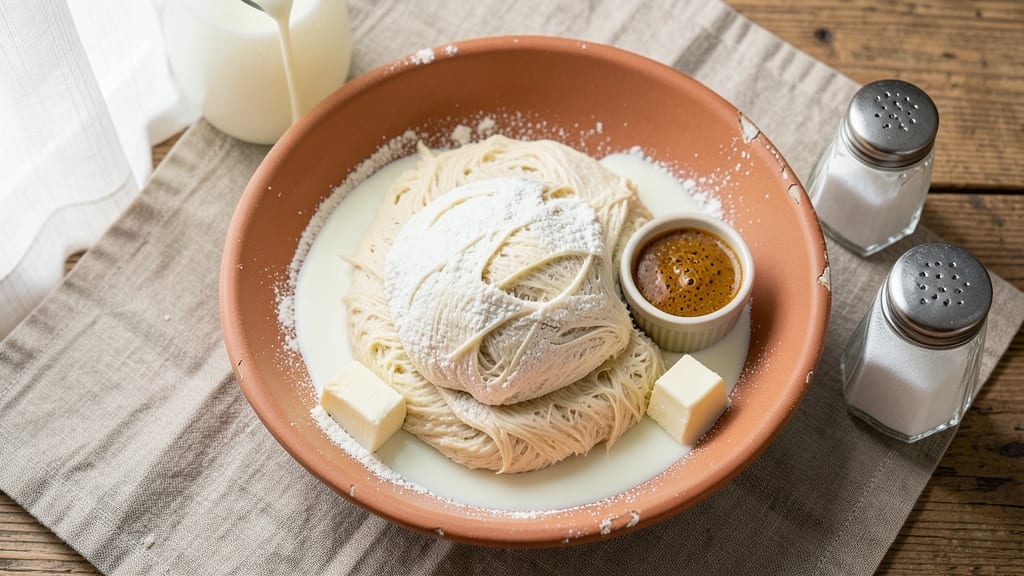
This German sourdough bread recipe delivers the same artisanal quality found in traditional German bakeries—crusty exterior, open crumb, and that signature tangy depth. The key lies in a long fermentation process that develops complex flavors while maintaining a structure that resists tearing.
I've perfected this method over years of testing, ensuring every loaf turns out with that characteristic German sourdough character.
The beauty of this recipe is its simplicity once you understand the fundamentals: a high hydration dough (70%) that relies on time rather than kneading, and a controlled fermentation that builds flavor without overproofing.
German sourdough often features whole grains like rye, which adds nuttiness and density, but this version uses a classic white flour base for approachability while still capturing that authentic taste. The long proof (12-16 hours) at cool temperatures is what transforms simple ingredients into something extraordinary.
What you'll end up with is a loaf with a deep golden crust that snaps satisfyingly, an open crumb structure with those signature irregular holes, and a flavor profile that's both tangy and slightly sweet.
The aroma alone—warm, yeasty, with hints of caramelized crust—will have your kitchen feeling like a German bakery. This recipe builds on traditional methods while making them accessible for home bakers.
Whether you're making it for a family dinner or as a centerpiece for holiday gatherings, this sourdough becomes the star of the meal. The dough can be prepared ahead, and the long fermentation means you can shape and bake it at your convenience.
Here's how to create that perfect German-style loaf in your own kitchen.
Ingredients for german sourdough bread
High-protein flour, active starter, and precise hydration for that signature German crumb and tang.
| Ingredient | Amount | Notes |
|---|---|---|
| Unbleached All-Purpose Flour 🌾 | 3 ½ cups | High protein for structure |
| Active Dry Yeast 🍞 | ¼ tsp | Freshly opened for vitality |
| Granulated White Sugar 🍚 | ½ tsp | Feeds yeast during fermentation |
| Diamond Crystal Kosher Salt 🧂 | 1 ½ tsp | Fine grain for even distribution |
| Unsalted Butter 🧈 | ¼ cup | Cold, cubed for flavor |
| Whole Milk 🥛 | ¾ cup | Room temperature for hydration |
| Active Sourdough Starter 🍞 | 1 cup | 100% hydration, bubbly |
| Cold Water 💧 | 1 ¼ cups | For precise hydration control |
| Cornmeal 🌽 | ¼ cup | For dusting and scoring |
| Ice Water ❄️ | ½ cup | For final dough adjustment |
| Extra-Virgin Olive Oil 🫒 | 1 tbsp | For dough handling |
The unbleached all-purpose flour is your foundation—look for brands like King Arthur or Bob's Red Mill for consistent protein levels (10-12%). The sourdough starter needs to be at its peak (bubbly, doubled in 4-6 hours) for authentic flavor. Whole milk adds richness, but water works in a pinch. For the yeast, Fresh Start or Red Star brands stay potent longer. The unsalted butter should be cold when mixed in—warm butter weakens gluten structure. If your kitchen runs hot, chill the dough for 30 minutes before shaping.
No active starter? Store-bought sourdough bread works in a bind (feed 50g with 50g flour/water daily for 5 days). Short on butter? Olive oil at equal volume keeps the crumb tender. The cornmeal can be swapped for rye flour for extra nuttiness (reduce all-purpose by 0.25 cup). For a lighter crumb, add 1 tsp vital wheat gluten to the flour. The ice water is crucial—it firms up the dough for better oven spring. If your kitchen's humid, reduce ice water by 2 tbsp.
This dough keeps 24 hours in the fridge before baking—perfect for overnight prep. Once shaped, cover with damp towel and proof at 70°F for 12-16 hours. For scoring, use a sharp lame or razor blade at a 45° angle. Bake at 450°F with steam for the first 15 minutes, then reduce to 425°F for 30-35 minutes. The loaf stays fresh 3-4 days wrapped in a cotton towel, or freeze for up to 3 months—slice before freezing for easy serving.
Why You'll Love This Recipe
- No-Knead Magic: I swear by this—just mix the flour, yeast, and a touch of sugar, let it rise overnight, and bake. The dough practically handles itself while you sleep.
- Buttery Tang Alert: That little bit of unsalted butter in the dough? It’s the secret. Crust gets golden and crisp, inside stays soft with a faint tang—like a warm hug from a German bakery.
- Weeknight Wonder: Toss a loaf in the freezer on Sunday, pull it out for sandwiches all week. Or serve it with dinner—no fuss, just reliable, crave-worthy bread that works every time.
- Budget-Busting Staple: Five ingredients, one loaf that feeds a family for days. The salt and sugar balance perfectly, so you’re not sacrificing flavor for savings—just smart, satisfying bread.
Step-by-step instructions for German sourdough bread
Here's how to craft a rustic German sourdough with an open crumb and that signature tangy depth.
Autolyse the Dough for Optimal Gluten Development
In a large mixing bowl, combine the 3.5 cups unbleached all-purpose flour and the 1 cup active sourdough starter. Using your hands or a dough whisk, gently mix just until no dry spots remain. This creates what bakers call an autolyse—a resting period that allows gluten to begin developing naturally without yeast activity.
Next, add the 0.75 cup whole milk and 1.25 cups cold water. Mix again until fully incorporated, then cover the bowl with a damp kitchen towel. Let this mixture rest for 30 minutes at room temperature. You'll notice the dough becomes smoother and more cohesive—this is the gluten rearranging itself for better structure later.
Incorporate Hydration and Fat for Richness
After the autolyse, add the 0.25 cup unsalted butter (cut into small cubes) to the dough. Using your hands, work the butter into the dough until fully incorporated—this should take about 2-3 minutes of kneading. The butter will initially resist, but persist until it melts slightly and distributes evenly.
Now add the 0.5 tsp granulated white sugar and 1.5 tsp diamond crystal kosher salt. Mix these dry ingredients into the dough until completely distributed. The sugar will feed the yeast during fermentation, while the salt enhances flavor and controls yeast activity. Cover the bowl again and let rest for another 15 minutes to allow the gluten to fully relax.
Bulk Fermentation with Controlled Development
After the final rest, perform a stretch and fold every 30 minutes for 2 hours. To do this, wet your hands with water, then grab one side of the dough and stretch it upward while folding it over itself. Rotate the bowl and repeat this process on all four sides. This builds strength in the gluten network without overworking the dough.
During this time, the dough should increase in volume by about 50-75%. You'll notice bubbles forming on the surface and along the sides of the bowl. The ideal temperature for this fermentation is between 70-75°F—if your kitchen is cooler, extend the time slightly. The dough should pass the "poke test": when you gently press your finger into the dough, it should spring back slowly rather than immediately.
Shape and Final Proof
Lightly dust your work surface with 0.25 cup cornmeal and turn out the dough. Using a bench scraper, divide the dough into 4 equal pieces (about 1 pound each). Shape each piece into a round boule by pulling the edges toward the center and sealing the seam tightly. Place the shaped boules onto a baking sheet lined with parchment paper, seam-side down.
Cover the boules loosely with plastic wrap and allow them to proof at room temperature for 1-2 hours, or until they've increased in volume by about 50%. The surface should look slightly domed with visible bubbles. For a more pronounced flavor, you can also place them in the refrigerator overnight (cold fermentation) for a slower, more complex development.
Score and Bake for Crusty Perfection
Preheat your oven to 450°F with a Dutch oven inside for 45 minutes. While the oven heats, score the top of each boule with a sharp razor blade or lame. For a German-style bread, make a deep crosshatch pattern—this allows steam to escape and creates those beautiful oven springs.
Carefully transfer the scored boules to the hot Dutch oven. Bake covered for 20 minutes, then remove the lid and bake uncovered for another 15-20 minutes until the crust is deep golden brown and sounds hollow when tapped on the bottom. The internal temperature should reach 205-210°F. Let the bread cool on a wire rack for at least 1 hour before slicing—this ensures the crumb sets properly and prevents a gummy texture.
Pro Tips For Making German Sourdough Bread
- Use Cold Butter: German sourdough benefits from butter that stays firm—soft butter makes the dough sticky and hard to handle. Cut that unsalted stick into small cubes and toss them into the flour first, letting them absorb heat gradually as the dough develops (yes, even if you’re impatient like me).
- Autolyse Before Yeast: Mix the flour and water first, let it rest 20–30 minutes before adding yeast. This step hydrates the flour evenly, strengthens gluten, and makes shaping easier—no more fighting a stubborn, sticky dough later.
- Skip the Overproofing: German sourdough relies on yeast, not just fermentation time. Watch for volume doubling plus a slight collapse when poked—overproofing turns your loaf into a dense brick. If unsure, err on the side of underproofing.
- Steam the Crust: The secret to that crackly crust isn’t just high heat—it’s steam. Place a metal bowl of boiling water in the oven when baking, or spray the dough with water before it goes in. Without this, you’ll get a sad, flat top.
Wine and beer pairings for this recipe
German Beer Pairings
German sourdough’s tangy depth and dense crumb pair beautifully with crisp, malty beers from the region. A Helles Lager like Weihenstephaner Original (4.5% ABV) complements the bread’s rustic character with its clean, bready malt flavors.
For a bolder match, try a Dunkelweizen like Paulaner Münchner Dunkel (5.5% ABV)—its caramel and dark fruit notes mirror the bread’s fermented complexity. 🍺
German Wine Complements
German white wines shine here, especially Spätburgunder (Pinot Noir) from the Baden region, which balances the bread’s tang with red fruit and earthy undertones. For whites, a Riesling Kabinett like Dr. Loosen Blue Slate (8% ABV) cuts through the richness with its bright acidity and citrus notes.
Avoid heavy reds—they’ll overpower the bread’s delicate crumb.
Regional German Pairings
In Bavaria, pair with Weißbier (Wheat Beer) like Schneider Weisse—its banana and clove notes enhance the sourdough’s funk. For a heartier match, try a Bock beer like Ayinger Celebrator (6.8% ABV) during winter months, as its malty sweetness contrasts the bread’s acidity.
The key is matching the beer’s body to the bread’s density.
Non-Alcoholic Options
For non-drinkers, a ginger beer like Fever-Tree adds zesty brightness that cleanses the palate between bites. Sparkling apple cider (chilled) or a German-style radler (half beer, half lemon soda) mimics the effervescence of fresh-baked sourdough. The acidity in both balances the bread’s richness without alcohol.
Seasonal Adaptations
In summer, opt for a Kölsch like Krombach—its crisp, dry profile refreshes the palate. For winter, a Doppelbock like Paulaner Salvator (7.6% ABV) adds warmth and depth, mirroring the bread’s hearty texture. The beer’s strength stands up to the sourdough’s tang during colder months. ✨
Nutrition facts
Frequently asked questions
What's the secret to getting that authentic German sourdough crust?
Steam is your best friend! Preheat your Dutch oven with the lid on for 45 minutes at 450°F to create maximum steam. Score the dough deeply with a razor blade before baking—this lets steam escape while creating that signature crackly crust. The high hydration (70%) in this recipe also contributes to that perfect snap.
Can I make this recipe without a Dutch oven?
Yes, but expect a slightly less dramatic crust. Use a baking stone with a metal bowl inverted over it to trap steam. Bake at 475°F for 25 minutes covered with foil, then uncover for 15-20 minutes. For extra crustiness, brush the loaf with water before scoring and baking.
How do I know when my sourdough starter is ready?
Your starter should be bubbly, doubled in size, and smell slightly fruity or tangy within 4-6 hours after feeding. For this recipe, use 1 cup of active starter that's at peak (just after doubling). If it's sluggish, feed it 1:1:1 (starter:flour:water) 1-2 hours before using.
Why did my bread turn out dense instead of open and airy?
Most likely, your fermentation time was too short or the dough was too warm. German sourdough benefits from 12-16 hours of cold proofing for optimal flavor and structure. Also check your flour protein—if it's below 10%, the gluten won't develop properly. Try a longer bulk fermentation at 70°F or cooler.
Can I substitute rye flour for some of the all-purpose?
For a more traditional German flavor, replace 0.5-1 cup of all-purpose with rye flour. Just reduce the hydration slightly (by 1-2 tbsp water) since rye absorbs more moisture. This will give you that characteristic dense, nutty crumb found in many German sourdoughs like Roggenbrot.