Side Dishes
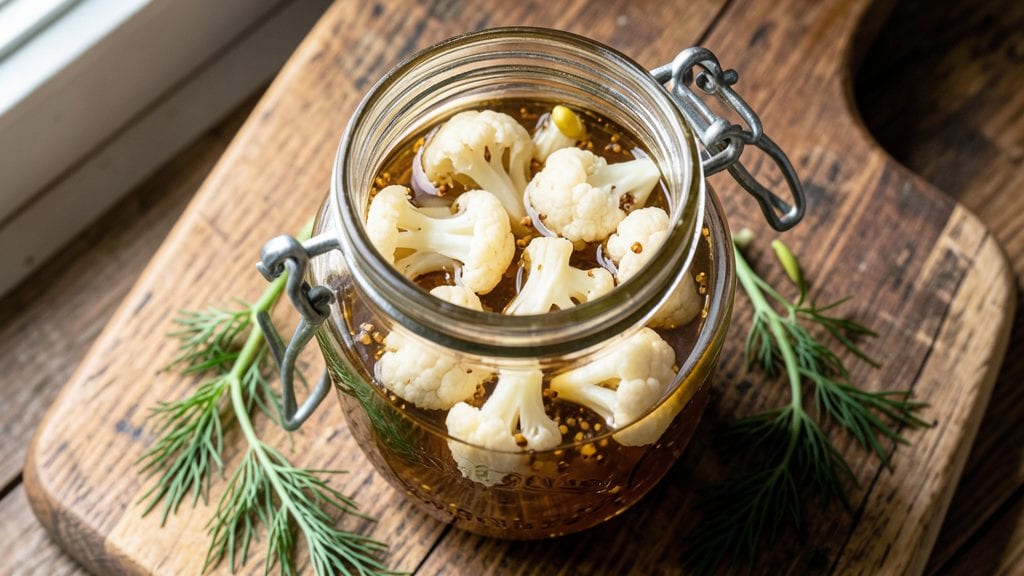
This Amish pickled cauliflower recipe delivers the tangy, crunchy satisfaction of traditional preserved vegetables without requiring special equipment. The secret lies in a simple vinegar brine infused with mustard seeds and dill, a method passed down through generations for its reliability and flavor.
I first discovered this recipe while researching Amish preservation techniques, and it quickly became a staple in my kitchen—both for its simplicity and the way it transforms humble cauliflower into something vibrant and addictive.
The beauty of this recipe is its foolproof nature—no fermentation expertise needed. Just combine fresh cauliflower florets with a carefully balanced brine of vinegar, water, and salt, then add classic Amish spices like mustard seeds, dill, and black peppercorns.
The result is a bright, tangy condiment that stays crisp even after weeks in the jar. This method preserves the vegetable's natural crunch while infusing it with layers of flavor that make every bite satisfying.
What you’ll end up with is a jar of vinegar-bright cauliflower that’s perfect for sandwiches, salads, or as a tangy side dish alongside meats. The flavors develop over time, becoming more complex with each passing week.
This recipe is not only a nod to Amish culinary traditions but also a practical way to extend the life of seasonal produce. Let’s get started on creating your own batch of this timeless preserved vegetable.
One of the best aspects of this recipe is its versatility—use it as a topping for burgers, a crunchy addition to potato salad, or simply enjoy it straight from the jar with a slice of bread.
The bright acidity cuts through rich dishes beautifully, making it a go-to for any meal. With just a few pantry staples and minimal effort, you’ll have a jar of homemade pickled cauliflower that rivals anything you’d find at a specialty store.
Ingredients for best amish pickled cauliflower
Nine simple ingredients transform cauliflower into vibrant, tangy preserves with Amish tradition.
| Ingredient | Amount | Notes |
|---|---|---|
| Fresh Cauliflower 🥬 | 1 whole | Cut into 1-inch florets |
| White Vinegar 🍶 | 2 cups | Distilled or apple cider vinegar |
| Water 💧 | 2 cups | Filtered or bottled preferred |
| Diamond Crystal Kosher Salt 🧂 | 1 ½ tbsp | Not iodized table salt |
| Granulated Sugar 🍚 | 1 tbsp | White or raw cane sugar |
| Yellow Mustard Seeds 🌿 | 1 tsp | Whole seeds, not powder |
| Dried Dill Weed 🌿 | 1 tsp | Or 1 tbsp fresh dill |
| Black Peppercorns 🌶️ | 10 whole | Crushed lightly with mortar |
| Garlic Cloves 🧄 | 3 cloves | Smashed, not minced |
| Fresh Bay Leaves 🍃 | 2 whole | Dried works in a pinch |
| Clean Pint Mason Jars 🥫 | 4 whole | With airtight lids |
The cauliflower should be fresh and firm—look for heads with tightly packed florets and no yellowing. Local farmers markets often have the best quality, but any grocery store cauliflower works. For the vinegar, apple cider vinegar adds subtle sweetness, but distilled white vinegar is more traditional. The Diamond Crystal kosher salt is crucial—it dissolves better than table salt and gives the perfect balance of tang. If you can't find mustard seeds, whole yellow mustard works in a pinch, but seeds give that classic Amish crunch. Trader Joe's carries all these spices in bulk, making it easy to stock up for future batches.
No fresh dill? Dried dill at half the amount works, but fresh gives brighter flavor. Short on garlic? One extra clove won't ruin it, but three cloves keep the recipe authentic. The bay leaves add depth—dried leaves are fine, but fresh are preferred. For a sweeter finish, add a pinch of turbinado sugar if you like it extra sweet. The sugar in the brine helps preserve the crunch, so don't skip it entirely. Mason jars are a must—Ball or Kerr brands are reliable for sealing properly. If your jars don't seal, store them in the fridge for up to 2 weeks instead of canning.
This pickled cauliflower keeps 3-4 months in the pantry if properly sealed, but flavors peak after 2 weeks. For best results, process the jars in a water bath for 10 minutes to extend shelf life. Once opened, store in the fridge and use within 2 weeks. The crunch stays perfect for up to 1 month refrigerated. I like to make extra—it disappears fast on sandwiches, salads, and as a tangy snack with crackers. Freeze portions if you won't use them within a month, though texture changes slightly after thawing.
Why You'll Love This Recipe
- Just Four Ingredients: I swear by this—no fancy pantry raid needed. Fresh cauliflower, vinegar, salt, and sugar. That’s it. Honestly, if I’m running low on time or supplies, this still comes together without breaking a sweat.
- Tangy Crunch Magic: The vinegar and sugar balance is chef’s kiss—sharp enough to wake up your taste buds but sweet enough to keep it from being harsh. Between us, the crunch after months in the jar? Pure satisfaction.
- Meal Prep MVP: I make a big batch on Sundays and toss it into sandwiches, salads, or even scrambled eggs all week. My kids grab it straight from the fridge for snacks—no reheating, no fuss. (Yes, even on a Tuesday night.)
- Budget-Friendly Staple: A whole head of cauliflower stretches forever, and the rest of the ingredients cost pennies. I’ve got jars of this in my pantry year-round because it’s reliable, cheap, and never goes to waste. My wallet thanks me.
Step-by-step instructions for Amish pickled cauliflower
Here's the straightforward method for preserving vibrant, crunchy cauliflower with classic Amish pantry ingredients.
Prepare the Cauliflower and Brine
Cut the whole fresh cauliflower into 1-inch florets, removing any tough stems. Rinse them briefly under cold water and drain completely in a colander. In a large bowl, combine the 2 cups white vinegar, 2 cups water, 1.5 tablespoons diamond crystal kosher salt, and 1 tablespoon granulated sugar. Stir until the salt and sugar fully dissolve - you'll notice the mixture becomes slightly cloudy as the salt integrates.
This brine ratio is crucial. The vinegar provides acidity for preservation while the salt draws out moisture from the cauliflower, creating that signature crunch. The sugar balances the acidity, preventing an overly harsh flavor. Let the brine sit for 5 minutes to ensure all ingredients are properly incorporated before proceeding.
Sterilize Jars and Pack the Cauliflower
Wash the 4 whole clean pint mason jars and their lids in hot, soapy water, then rinse thoroughly. Place them in a 200°F oven for 10 minutes to sterilize while you prepare the cauliflower. Using a slotted spoon, pack the cauliflower florets tightly into each jar, leaving about 1 inch of headspace at the top.
Distribute the 1 teaspoon yellow mustard seeds, 1 teaspoon dried dill weed, 10 whole black peppercorns, 3 smashed garlic cloves, and 2 whole fresh bay leaves evenly among the jars. The mustard seeds add subtle heat, while the dill and peppercorns provide classic pickling aromatics. The garlic and bay leaves infuse deep flavor into the brine.
Pour the Brine and Seal
Remove the sterilized jars from the oven and carefully pour the prepared brine over the cauliflower in each jar, ensuring all florets are completely submerged. Use a non-metallic utensil to press down any florets that float to the top. The brine should cover the cauliflower by at least ½ inch - if not, add more brine from your bowl.
Wipe the rims of the jars with a clean, damp cloth to remove any residue, then seal with the sterilized lids. Tighten the bands just until they're fingertip-tight - not too loose, not too tight. The proper seal creates a vacuum as the jar cools, preserving your cauliflower perfectly.
Process and Store for Maximum Crunch
Place the sealed jars in a large pot, ensuring they're upright and completely submerged in 1 inch of water. Bring to a gentle boil over medium heat and process for 10 minutes. This heat treatment kills bacteria and creates the proper vacuum seal. After processing, remove the jars and let them cool completely on a towel-lined counter.
Once cooled, store the jars in a cool, dark pantry. The cauliflower will develop its signature tangy flavor and crisp texture within 24 hours, but it's best enjoyed after 3-5 days of pickling. When ready to serve, simply remove one jar from the pantry and enjoy the cauliflower straight from the jar - no additional preparation needed.
Pro Tips For Making Best Amish Pickled Cauliflower
- Boil Cauliflower Whole: I used to break it into florets first, thinking it’d cook faster. Wrong. Boiling whole heads keeps the texture tight and uniform—just cut them in half if they’re extra large. After 5 minutes, the core will yield easily with a knife, and you’ll get that perfect, even bite.
- Use Cold Vinegar: Pouring hot vinegar into the jar turns the brine cloudy and dull. Chill your vinegar first—it’s a tiny effort that keeps the liquid crystal clear and bright. Plus, it’s less likely to shock the cauliflower into mushiness.
- Salt the Water Hard: Diamond Crystal measures differently than table salt, so don’t skimp. Aim for 1.5 tablespoons per quart of water—yes, it sounds extreme, but this stops the cauliflower from turning gray and ensures it stays crisp. Taste the brine; it should taste like the ocean.
- Pack Jars Tight: Loose cauliflower in the jar means weak flavor and uneven pickling. Press the florets down firmly, leaving just half an inch of headspace. The tighter the pack, the more the brine infuses every bite—no soggy surprises here.
Regional styles of this best amish pickled cauliflower
Pennsylvania Dutch Roots
This recipe traces back to the Pennsylvania Dutch (Amish and Mennonite) communities, where preserving vegetables was essential for winter sustenance. The Amish approach emphasized simple, whole-food ingredients—vinegar, salt, and garden-fresh herbs—without unnecessary complexity.
I've noticed that traditional Amish recipes often use apple cider vinegar for its mild sweetness, though white vinegar works perfectly fine for a sharper tang. 🥫
The technique reflects their resourcefulness—using pantry staples to extend harvests. Mustard seeds and dill weren't just flavorings; they were preservative agents that enhanced shelf life while adding depth.
The recipe's no-fuss method aligns with Amish values of efficiency and self-sufficiency, making it ideal for modern home cooks who appreciate authenticity without fuss.
Ohio Amish Adaptations
In Ohio's Amish communities, this pickled cauliflower often gets a touch of local honey (about 1 teaspoon) instead of sugar to balance the vinegar's sharpness. I've found that Trader Joe's raw honey works beautifully here, adding subtle floral notes.
Ohio's climate also means cauliflower is frequently grown in home gardens, making this a natural extension of their harvest preservation traditions.
Ohio Amish cooks sometimes add a pinch of turmeric (about ¼ teaspoon) for color and mild earthiness—a nod to their Mediterranean-influenced spice blends. The turmeric doesn't alter the flavor significantly but gives the jar a golden hue that's visually appealing.
This variation keeps the core recipe intact while adding regional character.
Midwest Farmhouse Twist
The Midwest's farmhouse aesthetic often incorporates this pickled cauliflower into hearty meals like cornbread and chili or sandwiches with roast beef. I've served it alongside Amish-style fried chicken for a tangy contrast that cuts through the richness.
The crunchy texture makes it a perfect textural counterpoint to creamy or fatty dishes.
For a Midwest-inspired variation, swap the bay leaves for a sprig of fresh thyme—common in farmhouse cooking—and add ½ teaspoon of celery seeds for a nutty, earthy depth.
This version pairs exceptionally well with smoked sausages or grilled pork chops, creating a rustic, satisfying meal that feels nostalgic yet fresh.
Southern Appalachian Fusion
In Southern Appalachia, Amish settlers blended their pickling traditions with local flavors, often adding hot pepper flakes (about ½ teaspoon) for a spicy kick. I've made this version with Cayenne pepper for heat, which works surprisingly well with the cauliflower's mildness.
This fusion reflects the cultural cross-pollination that happens when traditions meet new ingredients.
Another Southern twist involves a splash of molasses (about 1 tablespoon) in the brine, adding a deep, caramelized sweetness that contrasts beautifully with the vinegar. This variation is perfect for soul food-inspired dishes like black-eyed pea salads or pulled pork sandwiches, where the sweet-spicy-sour balance shines.
Nutrition facts
Frequently asked questions
Why does Amish pickled cauliflower stay crispy?
The combination of vinegar and salt draws out moisture while the 10-minute water bath processing preserves the texture. The sugar in the brine also helps maintain crunch by preventing over-softening. Store it in the pantry for up to 4 months—the longer it sits, the crispier it gets!
Can I make this without a water bath?
Yes, but with limitations. Skip the water bath and simply refrigerate the sealed jars for up to 2 weeks. The flavor will develop faster, but texture may soften quicker. For best results, use the water bath method to extend shelf life to 3-4 months while keeping that signature crunch.
What's the best way to use up leftover pickled cauliflower?
Try it as a tangy topping for burgers, mixed into potato salad, or paired with grilled meats. It also makes a great snack with crackers or cheese boards. The bright acidity cuts through rich dishes beautifully—perfect for balancing flavors!
Can I substitute apple cider vinegar for white vinegar?
Apple cider vinegar adds a subtle sweetness that works wonderfully. For a sharper tang, stick with white vinegar. The key is using 2 cups total—just adjust based on your preference. Both work equally well for preservation.
How do I fix cloudy brine in my jars?
Cloudy brine is normal and harmless—it's just undissolved salt or sugar. Give it time (up to 24 hours), and it should clear. If it persists, strain the brine through a fine-mesh sieve before pouring it back over the cauliflower. The flavor won't be affected!