Soups & Stews
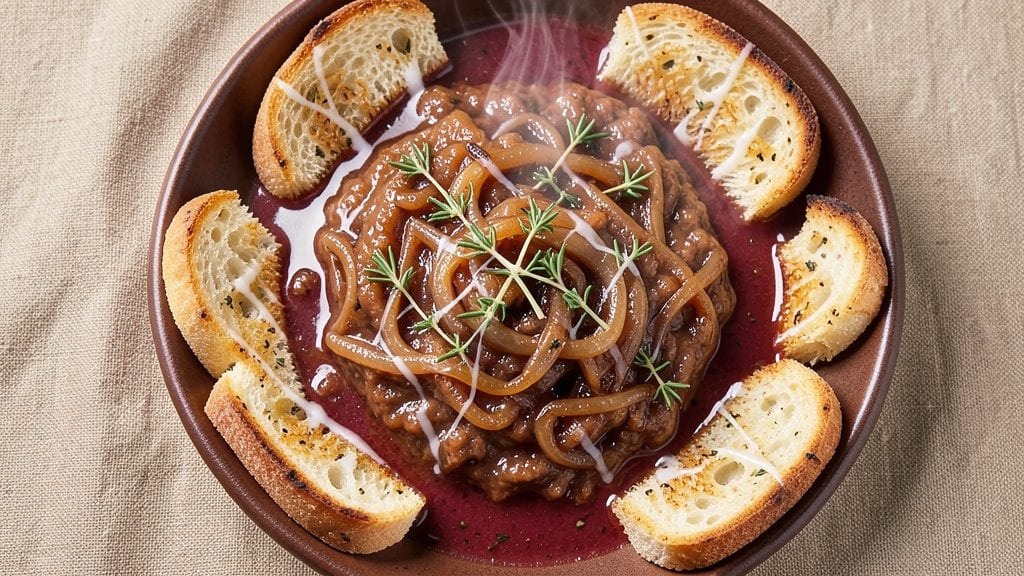
This Applebee’s French onion soup copycat recipe brings home that signature deep caramelized fond and golden Gruyère clouds you love. This copycat version nails the restaurant's rich beef broth, tender onions, and perfectly toasted bread topped with bubbly melted cheese.
The key lies in slow caramelization and precise timing to achieve that signature restaurant-quality depth.
What sets this recipe apart is the method for developing the fond—those dark, flavorful bits that form at the bottom of the pan. By cooking the onions low and slow, we build layers of sweetness and umami that transform simple beef broth into something extraordinary.
The beef broth is enriched with aromatics, and the bread is toasted just enough to hold its shape under the weight of melted cheese.
When you serve this soup, you'll notice the onions are perfectly tender yet still hold their shape, swimming in a rich, savory broth. The bread topping becomes crispy at the edges while maintaining a soft center, topped with a blanket of bubbly Gruyère that's impossible to resist.
This is comfort food at its finest, recreated with professional precision.
The best part? This copycat version delivers the same restaurant experience without the wait or the markup. Whether you're feeding a crowd or treating yourself to a cozy meal, this French onion soup will become a new favorite. Let's get started on recreating this classic dish in your own kitchen.
Ingredients for applebee's french onion soup copycat
Gather these essential ingredients to recreate Applebee's signature French onion soup at home.
| Ingredient | Amount | Notes |
|---|---|---|
| Yellow Onions 🧅 | 3 whole | Yellow or sweet onions preferred |
| Unsalted Butter 🧈 | ½ cup | Full-fat for rich flavor |
| Beef Broth 🥛 | 6 cups | High-quality, low-sodium preferred |
| Dry White Wine 🍷 | ½ cup | Any dry, mild variety |
| Garlic Cloves 🧄 | 4 cloves | Peeled and minced |
| Fresh Thyme Leaves 🌿 | ¼ cup | Or 1 tbsp dried thyme |
| Salt 🧂 | 1 ½ tsp | Kosher salt preferred |
| Black Pepper 🌶️ | ½ tsp | Freshly ground preferred |
| Baguette 🍞 | 1 whole | Crusty, day-old preferred |
| Gruyère Cheese 🧀 | 2 cups | Freshly grated, not pre-shredded |
| Parmesan Cheese 🧀 | ½ cup | Freshly grated, for topping |
| Extra-Virgin Olive Oil 🫒 | 1 tbsp | For drizzling on bread |
The onions are the star here. Yellow or sweet onions work best—they caramelize beautifully and add that signature sweetness. Costco or Trader Joe's usually carry big bags of yellow onions at a good price. If you can't find them, red onions will work in a pinch, but they'll be slightly less sweet. The butter matters too—full-fat is non-negotiable for that rich fond. I always grab Land O'Lakes or Plugrá from the store, but if you've got homemade, even better. For the beef broth, Swanson or Pacific Foods are solid choices, but if you're making your own, simmer beef bones with carrots, celery, and herbs for maximum depth.
No white wine? Substitute extra beef broth with a splash of apple cider vinegar—it adds brightness without alcohol. Fresh thyme is ideal, but dried thyme at one-third the amount works too. The Gruyère is key—pre-shredded melts differently, so grab a wedge and grate it yourself. No Gruyère? Comté or Emmental in a pinch. For the bread, day-old baguette is perfect—it's crisp enough to hold up under the cheese. If you can't find a baguette, Italian bread or a crusty loaf works too. Just make sure it's sturdy enough to toast without falling apart.
This soup gets better the next day—honestly, the flavors meld even more beautifully. Store leftovers in the fridge for up to 3 days, covered tightly. The bread topping can be toasted fresh before serving, or you can assemble the whole thing ahead and broil just before eating. For extra crispiness, broil the bread for 2-3 minutes until golden. Freezing isn't recommended—the bread gets soggy, but the broth can be frozen separately for up to 3 months.
Why You'll Love This Recipe
- One-Pot Magic: I swear by this recipe because it’s all in one pot—no chopping boards left sticky with onion juice, no extra pans to scrub. Just caramelize those onions in butter until they’re golden and sweet, then let the wine and broth do the rest. Honestly, the cleanup is almost as good as the soup.
- Wine-Infused Depth: That splash of dry white wine isn’t just for show—it cuts through the richness of the beef broth and butter while adding a bright, almost floral note. The garlic? Oh, it’s there in the background, warm and cozy, like a hug in a bowl. (Yes, even on a Tuesday night.)
- Leftovers That Shine: This soup actually improves the next day. The flavors meld even more, and the crust on top gets crispier—perfect for reheating with a quick broil. I make a double batch on Sundays because it’s my go-to for lazy afternoons or when friends drop by unannounced.
- Budget-Friendly Luxury: You’d never guess this tastes like a restaurant classic—it’s just onions, butter, and broth, but layered with technique. The beef broth adds richness without breaking the bank, and the wine (even a cheap bottle) elevates it to something special. My secret weapon for pretending I’m fancy.
Step-by-step instructions for Applebee's French onion soup copycat recipe
Here's how to recreate that signature restaurant flavor at home—rich caramelized onions, velvety broth, and gooey Gruyère clouds.
Caramelize the Onions Slowly
Slice the 3 whole yellow onions into thin half-moons—about ⅛-inch thick. Melt the 0.5 cup unsalted butter in a large Dutch oven over medium heat. Add the onions and stir to coat completely. Reduce heat to medium-low and let them cook undisturbed for 15 minutes, stirring occasionally.
This is where the magic happens. The onions should soften and release moisture, then slowly evaporate into a sweet, syrupy caramel. After 15 minutes, sprinkle with 1 teaspoon of the 1.5 teaspoons salt and stir. Continue cooking for another 30-45 minutes, stirring every 10 minutes, until the onions are deep golden brown and almost jam-like in texture. Patience here is key—rushing will leave them pale and watery.
Build the Fond and Deglaze
Once the onions are beautifully caramelized, increase heat to medium-high. Add the 4 minced garlic cloves and cook for 30 seconds until fragrant. Pour in the 0.5 cup dry white wine and scrape up all those delicious browned bits from the bottom of the pot with a wooden spoon. This deglazing step captures all the flavor that would otherwise burn.
Let the wine simmer for 2-3 minutes until mostly evaporated. Then add the 6 cups beef broth and the 0.25 cup fresh thyme leaves. Bring to a gentle simmer, then reduce heat to low. Let the soup cook uncovered for 20 minutes to allow flavors to meld. Season with the remaining 0.5 teaspoon salt and 0.5 teaspoon black pepper. The soup should be rich and aromatic, with a deep onion flavor that coats your spoon.
Prepare the Baguette for Topping
While the soup simmers, cut the 1 whole baguette into 1-inch thick slices. Brush both sides of each slice with the 1 tablespoon extra-virgin olive oil. Arrange the slices on a baking sheet and toast in a 375°F oven for 5-7 minutes until golden and crisp. Keep them warm while you finish the soup.
This step is crucial for achieving that perfect crunch contrast. The toasted baguette should be firm enough to hold the cheese without becoming soggy. If you're short on time, you can toast them in a skillet over medium heat for 2-3 minutes per side instead.
Assemble and Melt the Cheese
Preheat your broiler to high. Ladle the hot soup into 4 oven-safe bowls or ramekins, placing 2 toasted baguette slices in each bowl. Top each with half of the 2 cups freshly grated Gruyère cheese. Sprinkle the 0.5 cup freshly grated Parmesan cheese evenly over the top.
Place the bowls on a baking sheet and broil for 2-3 minutes until the cheese is bubbly and golden brown. Watch carefully—the cheese melts quickly and can burn if left too long. The cheese should form beautiful, gooey clouds that stretch when you pull the bowls from the oven.
Serve Immediately
Let the soups rest for 1-2 minutes after broiling to allow the cheese to set slightly. Serve each portion straight from the bowl, using a spoon to cut through the cheesy top layer. The contrast of the warm, crispy bread topped with melted cheese against the rich, caramelized onion broth makes this dish truly special.
For best results, serve immediately while the bread is still crisp and the cheese is molten. If you need to hold them for a few minutes, tent loosely with foil to keep the cheese from drying out. Each spoonful should deliver layers of sweet caramelized onions, savory broth, and that irresistible Gruyère melt.
Pro Tips For Making Applebee'S French Onion Soup Copycat
- Sweat the Onions Slow: I learned this the hard way—rushing the onions turns them bitter. Caramelize them over medium-low heat for 20-25 minutes, stirring occasionally, until they’re deep golden and syrupy. No need to rush; this is where the flavor builds.
- Use Cold Butter: Add the unsalted butter to the onions in small chunks while they’re still raw. It melts faster and coats them evenly, preventing scorching. Skip the melted butter shortcut—it burns before the onions soften properly.
- Deglaze with Wine Early: Pour in the dry white wine as soon as the onions start to brown, not after they’re fully cooked. The alcohol lifts the fond (those sticky bits) off the pan, adding depth to the broth. Let it simmer 2 minutes before adding broth—don’t skip this.
- Simmer, Don’t Boil: After adding beef broth, keep the heat low enough that just tiny bubbles break the surface. Boiling makes the soup cloudy and dulls the onion flavor. A gentle simmer for 30-45 minutes concentrates the taste—no babysitting required.
Regional styles of this recipe
Classic French Approach
In France, this dish is all about the fond—those rich, dark bits that form from slow caramelization. Traditional French onion soup uses baguette slices and Gruyère cheese, but often includes a splash of cognac instead of wine for depth.
The French version typically serves the soup in shallow, wide bowls to allow the cheese to melt dramatically over the top. I've adapted this technique by using dry white wine for a more approachable flavor profile that still delivers that signature richness. 🍷
American Diner Twist
American diners often take a bolder approach, adding beef stock instead of just broth and sometimes including carrots and celery for extra depth. Some versions even incorporate Worcestershire sauce or a dash of Dijon mustard for a tangy kick.
The cheese topping might include a mix of Gruyère and Swiss, creating a slightly sweeter, nuttier flavor. I've kept the classic Gruyère for authenticity but understand that some American palates prefer a milder cheese blend.
Southern U.S. Style
In the Southern U.S., this soup often gets a Cajun or Creole twist, with additions like smoked paprika, bay leaves, and sometimes even a touch of hot sauce or Cajun seasoning.
The bread might be a sourdough instead of baguette, and the cheese could include sharp cheddar for a more robust flavor. I've maintained the classic French onion base but appreciate how Southern cooks elevate it with their signature spices.
This version works well if you want to add ½ teaspoon smoked paprika to the broth for a subtle smoky note. 🌶️
Modern Fusion Version
For a contemporary take, some chefs incorporate umami-rich ingredients like miso paste or fish sauce to deepen the broth's complexity. Others might add goat cheese or blue cheese to the topping for a creamy, tangy contrast.
I've experimented with a small splash of soy sauce (about ½ teaspoon) in the broth for an extra layer of savory depth without overpowering the dish. This fusion approach works especially well if you're serving the soup as part of a larger meal with bold flavors.
Vegetarian Adaptation
For a plant-based version, swap the beef broth for a rich mushroom or vegetable broth and use vegetable oil instead of butter. The onions still caramelize beautifully, and the cheese topping can remain the same. Some vegetarians also add nutritional yeast to the broth for a cheesy, umami flavor.
This adaptation is perfect for those who want to enjoy the comfort of French onion soup without the meat. The key is ensuring the broth is deep and flavorful—consider adding soy sauce or miso to mimic the umami of beef.
Regional Cheese Variations
While Gruyère is classic, regional cheeses can add exciting twists. In Switzerland, Emmental is often used for its mild sweetness and meltability. In Italy, Fontina provides a creamy, slightly tangy flavor. For a spicier kick, try Pecorino Romano mixed with the Gruyère.
I recommend sticking with Gruyère for the closest Applebee's copycat experience, but don't hesitate to experiment with local cheeses to put your own spin on the dish. 🧀
Nutrition facts
Frequently asked questions
Can I make this soup ahead of time?
The broth and caramelized onions actually taste better the next day, so plan ahead! Store the soup (without cheese) in an airtight container in the fridge for up to 3 days. Toast the bread fresh before serving, or broil it just before eating to keep it crispy. The cheese should always be added fresh to get that perfect melt.
What's the secret to getting the cheese to melt like Applebee's?
Use freshly grated Gruyère (not pre-shredded) and broil the bowls on high for just 2-3 minutes. Watch closely—the cheese should bubble and turn golden, but not brown. The key is starting with hot soup and using oven-safe bowls that can handle direct broiler heat.
Can I substitute the baguette with another type of bread?
Yes! A crusty Italian bread or sourdough works well, but avoid soft breads like white sandwich bread—they'll get soggy. For extra crispiness, brush the slices with olive oil and toast them longer. If you can't find baguette, look for a French bread or even ciabatta at your grocery store.
Why did my onions burn instead of caramelizing?
This happens when you stir too often or cook on too high heat. The onions need low and slow cooking for 45-60 minutes to develop that deep caramel color. Keep heat at medium-low and only stir every 10 minutes. If they start to darken too quickly, reduce the heat further. Patience is key!
Can I make this soup vegetarian?
Replace the beef broth with mushroom or vegetable broth and use vegetable oil instead of butter. For extra depth, add ½ teaspoon soy sauce or 1 teaspoon miso paste to the broth. The caramelized onions will still shine, and you can keep the same cheese topping.