
Side Dishes
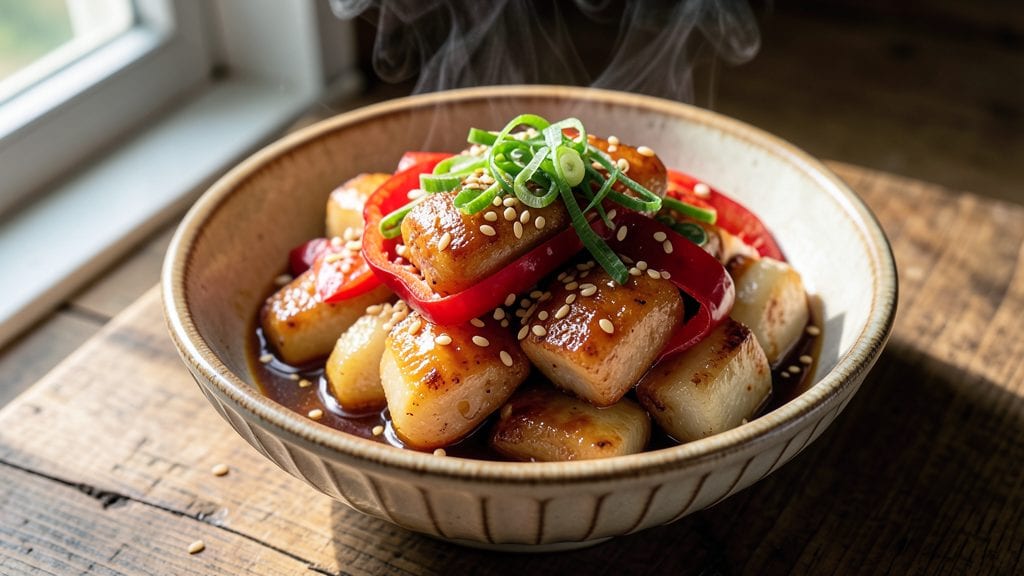
This sweet tteokbokki recipe transforms simple rice cakes into a chewy, spicy-sweet masterpiece with a gooey fried egg crown—exactly the kind of dish that makes Korean comfort food feel like a restaurant-quality experience.
The secret lies in balancing gochujang's heat with just enough sugar to create that signature addictive sweetness, while the fried eggs add richness that takes every bite to the next level.
What sets this recipe apart is the technique: boiling the rice cakes just until they're tender but still hold their shape, then tossing them in a sauce that's equal parts spicy, sweet, and umami-packed.
The gochujang base develops deep flavor as it simmers, while a touch of honey or sugar rounds out the sharpness. Topped with crispy fried eggs, fish cakes, and green onions, each bite delivers that perfect contrast of textures and flavors.
By the time you're done, you'll have a bubbling pot of chewy rice cakes swimming in glossy sauce, crowned with runny-yolk fried eggs that pull into golden strands. The aroma alone will have everyone gathering around the table—this isn't just a side dish, it's the star of the meal.
The best part? The sauce gets even better the next day, making it perfect for meal prep or leftovers.
Serve this with steamed rice to soak up every last drop of sauce, or pair it with grilled meats for a complete Korean feast. The recipe includes variations for cheese lovers or kimchi enthusiasts, so you can customize it to your taste. Let's get cooking!
Ingredients for sweet tteokbokki
Gochujang, honey, and crispy eggs—this is the sweet-spicy combo that turns rice cakes into magic.
| Ingredient | Amount | Notes |
|---|---|---|
| Tteokbokki Rice Cakes 🍚 | 14 oz | Korean-style, round shape preferred |
| Gochujang 🌶️ | ½ cup | Korean red chili paste, smooth texture |
| Soy Sauce 🥫 | ¼ cup | Light or regular, not low-sodium |
| Rice Wine Vinegar 🍶 | ¼ cup | Or substitute apple cider vinegar |
| Minced Garlic Cloves 🧄 | 4 cloves | Freshly minced for maximum flavor |
| Honey 🍯 | ¼ cup | Or brown sugar for deeper flavor |
| Sugar 🍬 | ¼ cup | White or cane sugar, fine granulated |
| Vegetable Oil 🫒 | ½ cup | For frying eggs and fish cakes |
| Large Eggs 🥚 | 4 whole | Fresh, room temperature for best frying |
| Fish Cakes 🐟 | 12 pieces | Korean surimi-style, frozen is fine |
| Green Onions 🧅 | ¼ cup | Thinly sliced, white and green parts |
| Sesame Seeds 🌾 | 1 tbsp | Toasted for extra crunch and flavor |
| Sesame Oil 🫒 | 1 tbsp | For finishing, don't substitute |
| Salt 🧂 | 1 tsp | Kosher or sea salt, adjust to taste |
| Black Pepper 🌶️ | ½ tsp | Freshly ground for best flavor |
The gochujang is the heart of this dish. Look for smooth, not grainy, at Korean markets or the international aisle—Hanjin or Sinsegae are solid brands. If you can only find chunky gochujang, strain it first for that silky sauce texture. The rice cakes? Round shape holds up best—check the Asian grocery section. I always grab extra because they disappear fast. Fresh garlic is non-negotiable here—pre-minced from a jar lacks depth. Toast your sesame seeds in a dry pan for 30 seconds before adding them—they'll be 100 times more flavorful!
No rice wine vinegar? Apple cider vinegar works in a pinch, but the flavor will be slightly different. Short on honey? Brown sugar or maple syrup both work, though honey gives that signature smooth sweetness. The fish cakes can be swapped for tofu puffs or even crispy breaded shrimp—just adjust frying time. For extra richness, stir in 1 tbsp of melted butter at the end. The sauce gets better as it sits, so make it a day ahead if you can—flavors meld beautifully. And if you're feeling fancy, add 1 tbsp of gochugaru (Korean chili flakes) for extra heat!
This sauce keeps for 5 days in the fridge—it actually tastes better the next day! Portion it into jars so you can reheat just what you need. The fried eggs? Make them fresh—they won't reheat well, but you can fry a batch ahead and keep them warm in a 200°F oven for up to 20 minutes. The rice cakes? Store them in a sealed container in the fridge, but soak them in warm water for 5 minutes before reheating. Pro tip: Double the sauce recipe—it's perfect for bowls, rice, or even as a dipping sauce!
Why You'll Love This Recipe
- Sweet Heat in Minutes: I swear, this comes together faster than ordering takeout. Just toss the rice cakes in a pan with gochujang, a splash of vinegar, and garlic—no chopping, no fuss. The sauce clings to those chewy bites like magic.
- Caramelized Comfort: That balance of sweet and spicy? Chef’s kiss. The gochujang’s depth marries perfectly with the vinegar’s tang, while the garlic adds a savory punch. It’s the kind of dish that makes you reach for seconds without even thinking.
- Lunchbox Hero: Between us, this is my go-to for meal prep. Pack it cold for a spicy, satisfying lunch—just reheat with a quick stir. My kids (yes, even the picky one) devour it straight from the fridge.
- Budget-Friendly Fire: Gochujang and rice cakes are dirt cheap, yet they punch way above their price. A single batch feeds four for under $5, and leftovers reheat like a dream. My wallet and my taste buds thank me.
Step-by-step instructions for sweet tteokbokki recipe
Here's how to make this spicy-sweet Korean classic with gooey eggs and crispy fish cakes!
Prepare the Sweet Spicy Sauce
In a medium saucepan, combine the 0.5 cup gochujang, 0.25 cup soy sauce, 0.25 cup rice wine vinegar, 0.25 cup honey, and 0.25 cup sugar. Bring this mixture to a gentle simmer over medium heat, stirring constantly for 5 minutes until it begins to thicken. You'll notice the sauce transform from a loose paste to a glossy, syrupy consistency that coats the back of a spoon.
Next, add the 4 cloves minced garlic and continue simmering for another 2 minutes until fragrant. The aroma should be rich and slightly sweet with a hint of spicy heat. Remove from heat and set aside - this sauce is the flavor foundation that makes everything taste amazing. If you prefer less heat, reduce the gochujang slightly or add a pinch more sugar to balance it.
Fry the Fish Cakes and Eggs
Heat 0.3 cup vegetable oil in a large skillet over medium heat until shimmering. Add the 12 pieces fish cakes and fry for 2-3 minutes per side until golden brown and crispy. You want them to develop a nice crunch while staying tender inside. Transfer to paper towels to drain excess oil and keep warm.
In the same skillet, add another 0.2 cup vegetable oil and heat until just smoking. Crack in the 4 whole large eggs one at a time, letting each cook until the whites are set but yolks remain runny. This creates that perfect gooey center we all love. Remove eggs and set aside with the fish cakes.
Assemble and Simmer the Tteokbokki
In a large pot, combine the 14 oz tteokbokki rice cakes with the prepared sauce. Add 1 cup water and bring to a gentle boil over medium-high heat. Stir once to distribute the sauce evenly. The rice cakes will begin to soften and absorb the flavorful liquid.
After 3 minutes of simmering, add the fried fish cakes and eggs back to the pot. Stir gently just to combine - we don't want to break the eggs or crush the fish cakes. Cook for another 2-3 minutes until everything is heated through and the rice cakes are tender but still holding their shape.
Finish and Serve
Remove from heat and stir in the 0.25 cup thinly sliced green onions. Drizzle with 1 tablespoon sesame oil and sprinkle with 1 tablespoon toasted sesame seeds. The sesame oil adds a nutty depth while the seeds provide that satisfying crunch we crave.
Season with 1 teaspoon salt and 0.5 teaspoon freshly ground black pepper to taste. The perfect tteokbokki should have a balance of sweet, spicy, and savory flavors with each bite. Serve immediately while hot, garnished with extra green onions if desired. This dish is best enjoyed fresh from the stove!
Pro Tips For Making Sweet Tteokbokki
- SOAK THE RICE CAKES: I learned this the hard way—dry rice cakes turn to mush when they hit the sauce. Toss them in warm water for 10-15 minutes first, then drain. This keeps them chewy and prevents a gummy mess. (Yes, even if you're impatient like me.)
- COOK THE GARLIC LOW: Minced garlic burns faster than you think, and burnt garlic ruins the whole dish. Sauté it in a dry pan for 30 seconds on medium-low heat—just until fragrant, not golden. Then toss it into the sauce last to keep that fresh, sweet aroma.
- BUILD THE SAUCE GRADUALLY: Dumping all the gochujang, soy sauce, and vinegar at once makes the flavors clash. Start with a splash of vinegar and soy, then slowly add gochujang while tasting. You can always add more heat later, but you can’t fix a sauce that’s too salty or sour.
- SIMMER, DON’T BOIL: After adding the rice cakes, keep the heat at a gentle simmer—not a rolling boil. Boiling turns the sauce watery and makes the rice cakes fall apart. A slow, steady simmer lets the flavors meld without breaking the texture. (Your future self will thank you.)
Pro cooking tips for perfect results
Sauce Thickness Mastery
The key to that glossy, clingy sauce is controlling the simmer time—don’t walk away! Stir constantly for 5 minutes over medium heat until it reaches a spoon-thick consistency. I use a wooden spoon to scrape the bottom occasionally to prevent burning.
If your sauce splits or looks grainy, whisk in 1 tsp water and simmer another 30 seconds. The sauce should coat the back of a spoon but still be pourable—not gloppy. 🌡️
Rice Cake Texture Secrets
Boil the rice cakes in the sauce for only 3-4 minutes—any longer and they’ll turn mushy. I like to add them to the simmering sauce when it’s already hot to cut down on cooking time.
For extra chewiness, soak them in warm water for 10 minutes before adding to the sauce. This hydrates them just enough to hold their shape without overcooking. Pro move: Taste one raw—if it’s too hard, add 1 extra minute of simmering.
Egg Perfection Technique
For those signature runny yolks, fry the eggs in freshly heated oil until the whites are just set (about 2-3 minutes total). The secret is removing them when the edges are golden but the center still jiggles slightly.
I crack them into a separate plate first, then slide them into the pan to prevent spillage. Keep them warm in a 200°F oven while you finish the rest—this maintains the gooey texture. 🥚
Fish Cake Crispiness
Fry the fish cakes in batches to avoid crowding the pan—this ensures even browning. Use a slotted spoon to transfer them to paper towels immediately after frying to remove excess oil. For extra crunch, toss them in 1 tsp cornstarch before frying.
I like to keep them warm in a 225°F oven on a wire rack until ready to serve. This prevents sogginess and keeps them crispy.
Balancing Sweet and Spicy
Adjust the sweetness to your taste—start with the 0.25 cup honey and add more if needed. For heat, reduce gochujang by 1 tbsp at a time. I always taste the sauce before adding the rice cakes to avoid overpowering flavors.
If it’s too sharp, a pinch of sugar or a splash of rice wine vinegar can help. The goal is a harmonious blend where neither sweet nor spicy dominates. 🌶️
Final Flavor Boost
Stir in the sesame oil and seeds right before serving—they add depth and crunch that fades if added too early. For an extra umami kick, add 1 tsp fish sauce or a splash of soy sauce at the end.
The green onions should be added last to keep them crisp. Serve immediately with steamed rice to soak up every last bit of that flavorful sauce! ✨
Nutrition facts
Frequently asked questions
Can I make sweet tteokbokki without gochujang?
Yes, but the flavor will be different. For a substitute, mix 2 tbsp tomato paste, 1 tbsp paprika, and 1 tsp smoked paprika with the sauce base. Reduce the sugar slightly since tomato adds natural sweetness. Alternatively, use 1 tbsp gochugaru (Korean chili flakes) for milder heat.
Why did my rice cakes turn mushy?
Overcooking is the most common cause. Simmer the rice cakes for only 3-4 minutes after adding them to the sauce—they should be tender but still hold their shape. If they're too hard, soak them in warm water for 10 minutes before cooking to help them soften faster.
How can I make this dish less spicy?
Reduce the gochujang by 2 tbsp and add 1 extra tbsp of honey or sugar to balance the heat. For a milder version, replace half the gochujang with soy sauce or tomato paste. Always taste the sauce before adding the rice cakes to adjust as needed.
Can I prepare this ahead of time?
The sauce actually tastes better the next day. Make it a day ahead and store in an airtight container in the fridge. Reheat gently on the stove, then add the fried eggs and fish cakes fresh for the best texture. The rice cakes can be stored separately and reheated in the sauce for 2-3 minutes.
What are good toppings besides eggs and fish cakes?
Try these delicious additions: crumbled bacon for smokiness, shredded mozzarella for cheesy goodness, or crispy kimchi for tangy crunch. For extra protein, add sliced ham or crispy tofu puffs. Garnish with extra green onions or sesame seeds for freshness.