
Breakfast & Brunch
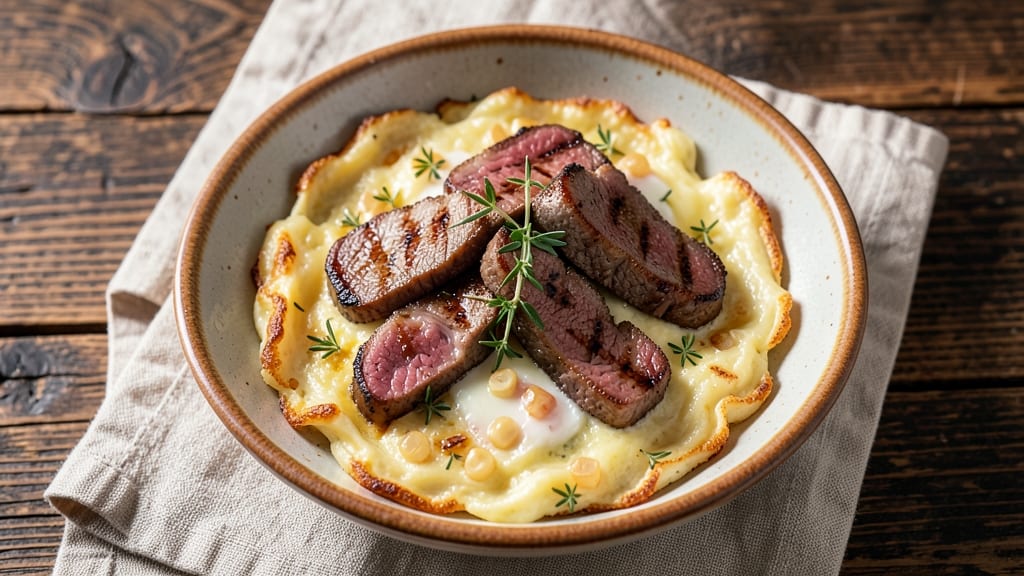
This steak omelette recipe transforms a classic breakfast into a hearty, restaurant-style dish that balances rich, juicy steak with fluffy eggs wrapped around it.
The secret lies in perfectly seared steak bites—tender yet firm—paired with eggs whisked to silky perfection, ensuring every bite delivers that ideal contrast of textures and flavors. I developed this method after years of experimenting with breakfast dishes that could satisfy both brunch cravings and dinner hunger.
The key to success is timing: the steak must rest while the eggs cook, so everything stays warm and the filling remains juicy. A cast-iron skillet handles both components beautifully, and a touch of butter keeps the eggs rich without overpowering the steak’s natural flavor.
This isn’t your average omelette—it’s a foolproof way to elevate breakfast into a satisfying meal that feels indulgent yet simple to prepare.
What you’ll end up with is a golden, perfectly folded omelette filled with warm, juicy steak bites that stay tender and flavorful. The edges are crisp enough to hold their shape, while the inside remains velvety and fully cooked.
This dish is ideal for weekend brunches, lazy weeknight dinners, or whenever you crave something hearty yet quick to make.
Pair it with a side of roasted potatoes or a fresh salad to round out the meal, or keep it simple with a drizzle of hot sauce for extra zing.
The beauty of this recipe is its versatility—it’s equally at home on a weekend morning table or as a satisfying dinner option. Let’s get cooking!
Ingredients for steak omelette
Six eggs, one juicy steak, and a handful of fresh herbs—this omelette packs serious flavor without the fuss.
| Ingredient | Amount | Notes |
|---|---|---|
| Large Eggs 🥚 | 6 whole | Room temperature for best whisking |
| Unsalted Butter 🧈 | 2 tbsp | Cold, cubed for searing steak |
| Ribeye Steak 🥩 | ½ lb | Thinly sliced against grain |
| Shallots 🧅 | 2 whole | Finely minced, not chopped |
| Fresh Thyme Leaves 🌿 | ¼ tsp | From 2 sprigs, finely chopped |
| Garlic Cloves 🧄 | 2 cloves | Minced, not pressed |
| Salt 🧂 | ½ tsp | Kosher or sea salt |
| Freshly Ground Black Pepper 🌶️ | ¼ tsp | Cracked, not pre-ground |
| Heavy Cream 🥛 | 2 tbsp | Full-fat for richness |
| Shredded Gruyère Cheese 🧀 | ½ cup | Freshly grated, not pre-shredded |
| Extra-Virgin Olive Oil 🫒 | 1 tbsp | For egg cooking |
| Lemon Zest 🍋 | ½ tsp | From 1/4 lemon, optional |
The steak makes this dish shine, so don’t cut corners. Ribeye is my go-to—it’s marbled enough to stay tender but firm enough to hold its shape. Grab a 1/2 lb package from the butcher counter (they’ll slice it thin for you) or use pre-sliced steak from the deli section. If you can’t find ribeye, sirloin or flank steak work too—just slice it extra thin. The shallots and thyme? Fresh is non-negotiable here—dried won’t give that bright, aromatic punch. I always buy thyme sprigs and chop them myself; the grocery store pre-chopped stuff just doesn’t compare.
No ribeye? Pre-cooked steak strips from the deli section are a lifesaver—just pat them dry before using. Short on Gruyère? Parmesan or sharp cheddar work in a pinch, but Gruyère’s nutty depth is what ties everything together. The heavy cream adds richness without making the eggs too heavy—half-and-half works if you’re out, but trust me, full-fat is worth it. For the eggs, room temperature is key—whisk them right before cooking so they’re silky, not rubbery. And if you’re feeling fancy, a tiny pinch of nutmeg in the cheese boosts the flavor (no one will know it’s there, but it makes a difference).
Steak can be prepped ahead—slice it and store in the fridge for up to 2 days, sealed in a container with a paper towel to absorb moisture. The eggs? Whisk them fresh, but you can measure everything else out the night before. This omelette reheats beautifully—5 minutes in a skillet over medium heat brings it back to life. Leftovers? Wrap them in foil and freeze for up to 1 month. I like to make a double batch on Sundays so I’ve got a quick breakfast or dinner ready all week.
Why You'll Love This Recipe
- No-Fuss Mornings: I swear by this for lazy Sundays—just slice the steak thin, chop shallots while the butter melts, and let the eggs do the rest. No flipping drama, no burnt edges, just smooth, golden perfection in under 15 minutes.
- Steakhouse in a Pan: That first bite? Rich, buttery ribeye folded into silky eggs with thyme’s bright punch—it’s like sneaking a fancy meal into breakfast. The shallots add this sweet, caramelized depth that makes it taste like a restaurant dish, not a weeknight hack.
- Lunchbox Hero: Between us, this is my secret weapon for packed lunches. The steak stays tender when reheated, and the eggs hold up better than sad, soggy sandwiches. Toss in a side of toast, and you’ve got a meal that feels gourmet but costs pennies.
- Leftovers That Don’t Suck: Most omelettes turn into rubber when reheated, but not this one. The butter keeps the eggs creamy, and the steak? Still juicy. I make a double batch on Sundays—one for dinner, one for tomorrow’s quick lunch. No sad, dry scraps here.
Step-by-step instructions for steak omelette recipe
Here's how to make a restaurant-worthy steak omelette with perfectly fluffy eggs and tender ribeye bites.
Prepare the Steak and Aromatics
Slice the 0.5 lb ribeye steak thinly against the grain into ¼-inch strips. Pat them dry with paper towels—this ensures a good sear. In a small bowl, combine the 2 whole shallots, 2 cloves garlic cloves, 0.25 tsp fresh thyme leaves, 0.5 tsp salt, and 0.25 tsp freshly ground black pepper. Mix well so every bite of steak gets that flavor punch.
Heat 1 tbsp extra-virgin olive oil in a nonstick skillet over medium-high heat. Add the steak strips in a single layer and let them sear undisturbed for 1 minute until they develop a deep golden crust. Flip and cook another 30 seconds—they should be medium-rare with just a hint of pink inside. Remove the steak and set aside on a plate, then immediately add the shallot mixture to the same skillet. Cook for 1-2 minutes until softened and fragrant. This step builds the foundation of your omelette's flavor.
Whisk the Egg Mixture
While the steak cooks, crack the 6 whole large eggs into a large bowl. Add the 2 tbsp heavy cream, 0.5 cup shredded gruyère cheese, and 0.5 tsp lemon zest. Whisk vigorously with a fork or wire whisk for 30 seconds until the yolks and whites are fully combined and the mixture is smooth. Here's the thing—room temperature eggs whisk better, so if they're straight from the fridge, let them sit out for 10 minutes before starting.
Season the egg mixture with ½ tsp salt and ¼ tsp freshly ground black pepper. The lemon zest adds a bright pop that cuts through the richness of the steak and cheese. Give it one final whisk to ensure everything is evenly distributed. This step is where you set up the omelette's texture—fluffy, not rubbery.
Cook the Omelette Base
Wipe out the skillet you used for the steak with a paper towel to remove any leftover shallot bits. Melt 1 tbsp unsalted butter over medium heat until it foams and smells nutty. Pour in the egg mixture and let it sit undisturbed for 10 seconds—this allows the bottom to set slightly before you start folding.
Using a silicone spatula, gently push the edges of the omelette toward the center, tilting the pan to let the uncooked egg flow to the edges. Keep the heat at medium—too high and the eggs will cook too fast, making them dry. You want the top to be just set when it reaches the center. This creates that classic, soft, custardy texture inside.
Fill and Fold to Perfection
When the omelette is about 80% set and the edges look slightly dry, sprinkle the seared steak strips, shallot mixture, and any accumulated juices from the plate onto one half of the omelette. Be generous—this is the star of the dish. Fold the other half over the filling, pressing gently to seal. Let it cook for another 20-30 seconds until the bottom is golden brown and the filling is heated through.
Slide the omelette onto a warm plate and serve immediately. The steak should still be warm but not overcooked, the eggs fluffy and rich, and the cheese melted just enough to hold everything together. If you're making more than one, keep the cooked omelettes warm in a 200°F oven while you finish the rest.
Pro Tips For Making Steak Omelette
- Cook Steak to 125°F: DESCRIPTION: Ribeye for an omelette needs to stay juicy, so pull it off the heat at 125°F—medium-rare. Overcooking turns it into shoe leather, and you’ll regret it when your eggs are still sizzling. Let it rest 5 minutes under foil before slicing, or it’ll dry out while you finish the omelette.
- Mince Shallots Like Confetti: DESCRIPTION: Tiny shallots caramelize faster and sweeten the eggs. Pulse them in a knife or food processor until they’re almost paste-like—no big chunks. If you’re lazy and chop them by hand, aim for rice-grain size. (Yes, even if you’re impatient like me.)
- Salt Eggs Before Whisking: DESCRIPTION: Add a pinch of salt to the eggs before cracking them into the bowl. This distributes the seasoning evenly instead of just sprinkling it on top later. Unsalted butter’s already got enough salt, so don’t double up—just balance it.
- Fold Eggs Over Steak: DESCRIPTION: Let the eggs cook until just set (about 30 seconds) before adding the steak. Fold the omelette around the steak slices so they stay warm and the edges crisp up. If you flip too early, the steak gets cold while you finish folding—like waiting for coffee to brew.
Storing and reheating this steak omelette
Refrigerator Storage
Store your steak omelette in an airtight container for up to 3 days in the refrigerator. Let it cool completely before sealing—this prevents condensation and keeps the eggs from turning rubbery.
I like using glass Pyrex containers because they reheat evenly. Place a paper towel on top to absorb any excess moisture from the steak juices. 🥪
Freezer Prep
For longer storage, wrap each omelette tightly in plastic wrap followed by foil to prevent freezer burn. Label with the date and freeze for up to 1 month.
When ready to eat, thaw overnight in the fridge—this preserves texture better than microwave defrosting. I often make double batches on weekends so I have quick meals ready.
Reheating Methods
For best results, reheat in a nonstick skillet over medium heat for 3-5 minutes until warmed through. Add a pat of butter to prevent sticking and keep the eggs moist.
If using the microwave, cover with a damp paper towel and heat in 20-second intervals until reaching 165°F—this avoids rubbery eggs. The steak will stay juicy if reheated gently. 🔥
Reviving Texture
If your omelette loses moisture during storage, sprinkle 1 tsp water or heavy cream over the eggs before reheating. This restores that fluffy texture. For extra richness, add a splash of beef broth when reheating—it mimics the original juices and enhances the steak flavor.
I find this works especially well with frozen omelettes.
Portion Control
Divide omelettes into single servings before freezing to make reheating easier. This also prevents the eggs from drying out during storage. I use quart-sized freezer bags for individual portions—just squeeze out excess air before sealing.
For quick lunches, reheat one portion while keeping the rest cold for later in the week. 💡
Garnish Refresh
Before serving reheated omelettes, add fresh chives or parsley for color and brightness. A drizzle of hot sauce or balsamic glaze can also revive the flavors. I like toasting sourdough bread alongside for dipping—it soaks up any extra juices beautifully. This simple step makes reheated omelettes feel fresh again. ✨
Nutrition facts
Frequently asked questions
Can I use pre-cooked steak from the deli for this recipe?
Pre-cooked steak strips work perfectly—just pat them dry thoroughly before adding to the omelette. The key is to keep them warm while cooking the eggs, so reheat them briefly in a skillet with a splash of beef broth to revive their juices. Avoid using overly dry or seasoned deli meat, as it can make the eggs taste bland.
Why do my eggs turn out rubbery instead of fluffy?
Overcooking is the most common culprit. Use medium heat and stop cooking when the eggs are still slightly runny on top (about 80% set). Also, whisk the eggs vigorously until fully combined and use room-temperature eggs. If they're cold, they won't incorporate properly, leading to a dense texture.
What's the best way to keep the steak juicy in the omelette?
Sear the steak just until medium-rare (1 minute per side) and let it rest for 2-3 minutes before adding to the omelette. This allows the juices to redistribute. Also, keep the omelette cooking time short (20-30 seconds after folding) to prevent the steak from drying out.
Can I make this ahead of time for brunch?
Yes, but with a few tricks. Assemble the omelettes, let them cool completely, then wrap individually in foil. Store in the fridge for up to 3 days and reheat in a skillet over medium heat for 3-4 minutes. For freezing, wrap tightly in plastic and foil—thaw overnight in the fridge before reheating. The texture won't be as fluffy as fresh, but it's still delicious!
What other proteins can I substitute for steak?
Try thinly sliced chicken breast, shrimp, or sausage for variety. For chicken, cook until fully done (165°F) and pat dry. Shrimp should be pre-cooked and chilled. Sausage works best if you remove the casing and crumble it—just be sure to drain excess fat to keep the omelette light.