
Main Courses
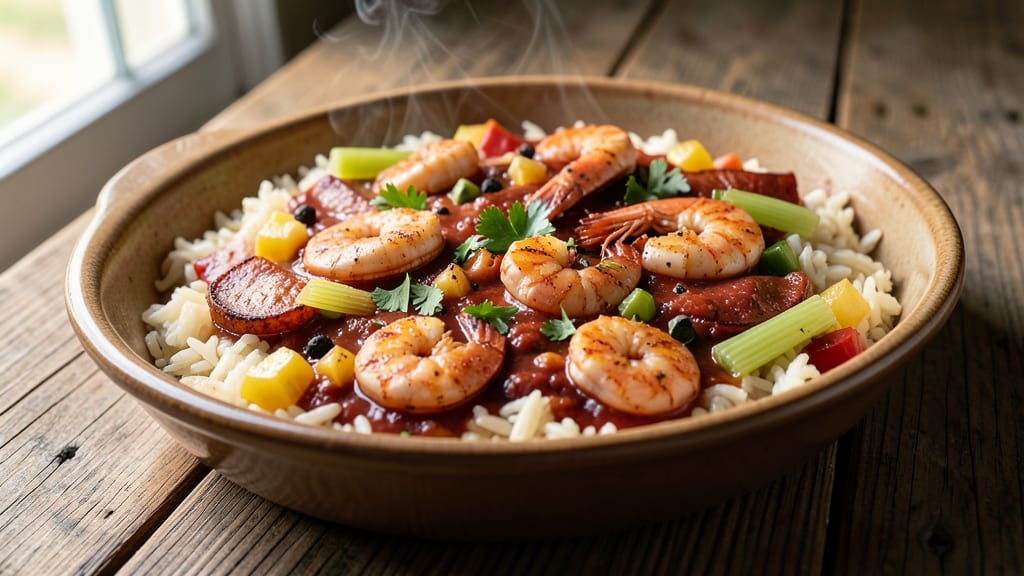
This red jambalaya recipe delivers the bold, spicy flavors of Cajun cuisine in one aromatic, one-pan dish that brings the bayou to your dinner table.
The secret lies in building layers of heat and depth through the holy trinity—onions, bell peppers, and celery—while balancing smoky andouille sausage with sweet shrimp for a protein-packed finish. I developed this version after years of testing, ensuring the rice absorbs the rich, tomato-based sauce without turning mushy.
The beauty of jambalaya is its versatility—this recipe works equally well for weeknight dinners or weekend gatherings, scaling easily to feed a crowd. The sausage renders its fat into the pot, creating a natural roux that deepens the sauce's complexity, while the shrimp cooks in just minutes to stay tender.
With precise timing and the right spice blend, you'll achieve that signature Louisiana flavor: smoky, spicy, and just sweet enough.
What you'll end up with is a steaming pot of vibrant red jambalaya where each bite delivers tender sausage, plump shrimp, and perfectly seasoned rice in every forkful.
The aroma alone will have everyone gathering at the table, and the dish holds up beautifully for leftovers—even better the next day as flavors meld further. This is comfort food at its finest, with just the right balance of heat and heartiness.
Serve with crusty bread to soak up every last drop of sauce or alongside a simple green salad for a complete meal. The instructions walk you through each step—from building the spice base to timing the shrimp perfectly—so you'll achieve restaurant-quality results in your own kitchen. Let's get cooking!
Ingredients for red jambalaya
Pantry staples meet bold Cajun flavors in this one-pan dish.
| Ingredient | Amount | Notes |
|---|---|---|
| Long-Grain White Rice 🍚 | 1 ½ cups | Uncooked, long-grain preferred |
| Andouille Sausage 🌭 | 1 lb | Smoked variety, sliced into half-moons |
| Large Shrimp 🦐 | 1 lb | Peeled, deveined, tails on |
| Yellow Onion 🧅 | 1 whole | Medium size, diced small |
| Green Bell Pepper 🌶️ | 1 whole | Medium size, diced small |
| Celery Stalks 🥬 | 2 whole | Trimmed, diced small |
| Garlic Cloves 🧄 | 4 cloves | Fresh, minced fine |
| Canned Diced Tomatoes 🍅 | 14 ½ oz | No-salt-added preferred |
| Chicken Broth 💧 | 2 cups | Low-sodium preferred |
| Cajun Seasoning 🌶️ | 2 tbsp | Homemade or store-bought |
| Smoked Paprika 🌶️ | 1 tbsp | For extra depth of flavor |
| Dried Thyme 🌿 | 1 tsp | Or 3 tbsp fresh thyme |
| Bay Leaves 🍃 | 2 whole | Fresh or dried |
| Olive Oil 🫒 | 2 tbsp | Extra-virgin preferred |
| Salt 🧂 | 1 tsp | Adjust to taste |
The holy trinity—onions, bell peppers, and celery—is non-negotiable here. Trader Joe's sells pre-diced versions if you're short on time, but freshly chopped always tastes better. For the sausage, grab Andouille from the butcher section—the smoked kind adds that authentic bayou flavor. Shrimp should be fresh or thawed properly—never frozen straight from the store. The rice matters too: long-grain white absorbs the sauce perfectly without getting mushy. I always rinse mine before cooking to remove excess starch.
No Cajun seasoning? Mix 1 tbsp each paprika, garlic powder, onion powder, dried oregano, and 1/2 tsp cayenne. Short on thyme? Substitute with 1/2 tsp dried oregano. The canned tomatoes can be fire-roasted for extra depth—just drain most of the liquid. Using low-sodium broth? Add a pinch of salt to balance flavors. For a vegetarian version, swap the sausage and shrimp for chickpeas and extra bell peppers. The olive oil should be extra-virgin—regular won't give the same richness.
This reheats beautifully—just add a splash of water or broth. Keeps for 4-5 days in the fridge, freezes for 3 months. I always make a double batch because it's that good. Store in airtight containers with a tight lid to keep the rice from drying out. Leftovers taste even better the next day as the flavors meld together.
Why You'll Love This Recipe
- One-Pot Magic: I swear by this recipe—just brown the sausage, chop the veggies, and let the roux do the work. No pots, no pans, no stress. The shrimp cooks in minutes, and the rice soaks up that smoky, spicy goodness like a dream.
- Smoky-Spicy Kick: That deep red roux from the tomato paste and cayenne? Unreal. The andouille adds smoky depth, while the shrimp brings freshness—crisp edges, tender centers, and a heat that lingers just right. Honestly, my picky husband stops complaining mid-bite.
- Weeknight to Party Fix: Same recipe, totally different vibes. Serve it over rice with crusty bread for a lazy Sunday, or pile it into a cast-iron skillet for game day. Even my college-aged kids ask for it when friends come over—no fancy prep, just pure flavor.
- Leftovers That Don’t Suck: Between us, most jambalaya leftovers turn into sad, dry rice. Not this one. The rice stays fluffy, the shrimp stays juicy, and the sauce just gets better overnight. I meal prep this all the time—lunch for three days, zero effort.
Step-by-step instructions for red jambalaya
Here's how to build this bold Cajun dish layer by layer—rich, spicy, and packed with smoky sausage and sweet shrimp.
Sauté the Holy Trinity of Cajun Cooking
Heat the 2 tablespoons olive oil in a large, heavy-bottomed pot over medium-high heat. Add the diced yellow onion, diced green bell pepper, and diced celery stalks all at once. Stir frequently for 5-6 minutes until the vegetables soften and begin to release their natural juices.
This classic Cajun combination—called the "holy trinity"—builds flavor depth. You'll know it's ready when the vegetables lose their sharp edges and develop a slight translucency. Keep the heat steady; if it gets too hot, the vegetables will burn before they soften. Press down gently with a wooden spoon to help them break down faster.
Cook the Andouille and Add Aromatics
Push the vegetables to one side of the pot and add the sliced andouille sausage. Cook for 4-5 minutes, stirring occasionally, until the sausage begins to brown and release its smoky fat. This is where the jambalaya gets its signature depth.
Once the sausage is nicely browned, add the minced garlic cloves and stir for 30 seconds until fragrant. Here's the thing—garlic burns fast, so don't walk away. You want it to smell like a Cajun market, not like a charred mistake. If it starts to darken too quickly, reduce the heat slightly and give it another 10 seconds.
Build the Base with Tomatoes and Seasonings
Add the 14.5 ounces canned diced tomatoes, 2 tablespoons Cajun seasoning, 1 tablespoon smoked paprika, 1 teaspoon dried thyme, and 2 whole bay leaves to the pot. Stir everything together and let it simmer for 5 minutes on medium heat. This step develops the rich, spicy foundation of your jambalaya.
You'll notice the mixture thicken slightly as the tomatoes break down. This is normal—it's creating the perfect balance of acidity and depth. Taste the mixture now (carefully, it's hot!) and adjust the seasoning if needed. If it needs more heat, add a pinch of cayenne pepper, but don't worry if it's perfect as-is—we'll build more flavor in the next steps.
Add Rice and Broth for Perfect Texture
Stir in the 1.5 cups long-grain white rice, spreading it evenly through the tomato mixture. Pour in the 2 cups chicken broth and add the 1 teaspoon salt. Bring the mixture to a gentle boil, then immediately reduce the heat to low. Cover the pot with a tight-fitting lid and let it simmer for 15 minutes without stirring.
This resting period is crucial—it allows the rice to absorb the liquid evenly and develop its signature texture. Don't peek! Every time you lift the lid, you release steam and disrupt the cooking process. If you're worried about burning, just remember that the rice will cook through from the heat trapped inside the pot.
Finish with Shrimp and Rest for Maximum Flavor
After 15 minutes, gently fold in the 1 pound large shrimp using a wooden spoon. Cover the pot again and cook for another 5-7 minutes until the shrimp turn pink and opaque and the rice is tender. The shrimp should cook just until done—overcooking turns them rubbery, and we want them to stay sweet and juicy.
Once everything is cooked, remove the pot from heat and let the jambalaya rest, covered, for 5 minutes. This final rest allows the flavors to meld together perfectly. Before serving, discard the bay leaves and give it one last taste—adjust the seasoning if needed. The jambalaya should be rich, spicy, and perfectly balanced with smoky sausage and sweet shrimp. Serve hot with crusty bread to soak up every last bite.
Pro Tips For Making Red Jambalaya
- CRISP THE SAUSAGE FIRST: Slice the andouille into ¼-inch rounds and sear them in a dry skillet over medium-high for 2-3 minutes before adding to the jambalaya. This renders the fat and adds a deeper, smokier flavor—skipping this step means you’ll be chasing that rich taste later with extra oil.
- PEPPER THE SHRIMP: Pat the shrimp very dry with paper towels and season them with a pinch of salt and a few grinds of black pepper right before they hit the pot. Wet shrimp steam instead of sear, and the pepper gives them a subtle kick that cuts through the richness of the andouille.
- TOAST THE RICE: After cooking the onions and peppers until soft, turn the heat to medium-high and stir in the raw rice for 1-2 minutes until it turns opaque and smells nutty. This step locks in flavor and prevents mushy rice—like making a quick, starchy crust.
- SIMMER LOW AND LONG: Once the liquid is absorbed and the rice is tender, reduce the heat to the lowest setting possible and let it steam for 10 minutes, covered. I learned this the hard way—rushing the final simmer turns the rice gluey and dulls the spices. Patience here makes all the difference.
Serving suggestions for leftovers
Crusty Bread Pairing
Nothing beats jambalaya with a warm, crusty loaf to soak up every last drop of that smoky, spicy sauce. I always reach for a baguette-style bread from my local bakery—look for one with a crisp exterior and soft interior.
For an extra Cajun twist, brush the bread with garlic butter before serving. Tear it into chunks and place it directly on the table so guests can grab as needed. 🥖
Cool Contrast Salad
A bright, peppery salad cuts through the richness of jambalaya beautifully. I love a simple arugula and citrus salad with 1 tbsp olive oil, 1 tbsp lemon juice, ½ tsp Dijon mustard, and a pinch of flaky sea salt.
Toss with ½ cup sliced radishes and ¼ cup crumbled feta cheese for a refreshing contrast. The acidity in the dressing helps reset your palate between bites.
Pickled Veggies
Quick-pickled vegetables add a tangy crunch that balances the heat and richness. I make a simple batch with ½ cup white vinegar, ½ cup water, 1 tbsp sugar, and 1 tsp salt, then add 1 thinly sliced red onion and ½ cup sliced jalapeños.
Let it sit for at least 30 minutes before serving. These pickles add a bright, acidic pop that makes every bite of jambalaya more vibrant.
Cornbread Companion
For a Southern-inspired pairing, serve jambalaya alongside sweet cornbread with a hint of jalapeño. I use a simple mix of 1 cup cornmeal, 1 cup all-purpose flour, 1 tbsp sugar, 1 tbsp baking powder, and 1 tsp jalapeño powder.
The slight heat in the cornbread echoes the jambalaya's spice, while its sweetness rounds out the dish. Warm it fresh from the oven for the best texture.
Garnish Like a Pro
Elevate your jambalaya with fresh garnishes that add color and freshness. A sprinkle of chopped green onions or fresh parsley brightens the plate. For extra heat, add crushed red pepper flakes or a few thinly sliced jalapeños.
I also love a drizzle of hot honey—just 1 tsp adds a sweet-spicy finish that ties everything together. 🌶️
Beverage Pairings
Cool down the heat with a refreshing iced sweet tea or a crisp light lager. For a non-alcoholic option, try a ginger beer with a squeeze of lime. If you prefer wine, a dry rosé or Sauvignon Blanc complements the dish's bold flavors without overpowering them.
The key is balancing the spice with something cool and slightly acidic.
Nutrition facts
Frequently asked questions
What makes this jambalaya different from Creole versions?
This recipe focuses on the Cajun-style jambalaya with a tomato-based sauce, while Creole versions often use a darker roux foundation. The key differences are the tomato addition (giving it that signature red color) and the inclusion of shrimp—traditional Cajun jambalaya typically features seafood, while Creole versions might include more meat like chicken or ham.
Can I make this recipe without shrimp?
Swap the shrimp for 1 lb chicken thighs or breasts (cut into bite-sized pieces) or 1 lb smoked turkey sausage. For a vegetarian option, use 1 can chickpeas (drained) and 1 cup diced bell peppers. Cook the chicken or chickpeas with the rice for the last 10-12 minutes of simmering to prevent overcooking.
Why does my jambalaya turn out mushy?
Mushy jambalaya usually happens from overcooking or stirring too much. The rice should cook undisturbed for 15 minutes after adding the broth—don't peek! Also, make sure to use long-grain white rice (like Carolina or Basmati) and rinse it first to remove excess starch. If the rice is still too soft, reduce the broth by ¼ cup next time.
How can I make this spicier?
For extra heat, add ½ tsp cayenne pepper with the Cajun seasoning or stir in 1 tbsp hot sauce at the end. For a smoky kick, increase the smoked paprika to 2 tbsp. If you love fresh heat, toss in 1-2 sliced jalapeños with the holy trinity. Remember, you can always adjust the spice level to taste at the end!
Can I prepare jambalaya ahead of time?
This dish actually tastes better the next day! Store leftovers in an airtight container in the fridge for up to 4-5 days. Reheat gently on the stove with a splash of broth or water. For freezing, portion into containers and freeze for up to 3 months. Thaw overnight in the fridge before reheating—never microwave from frozen.