
Main Courses
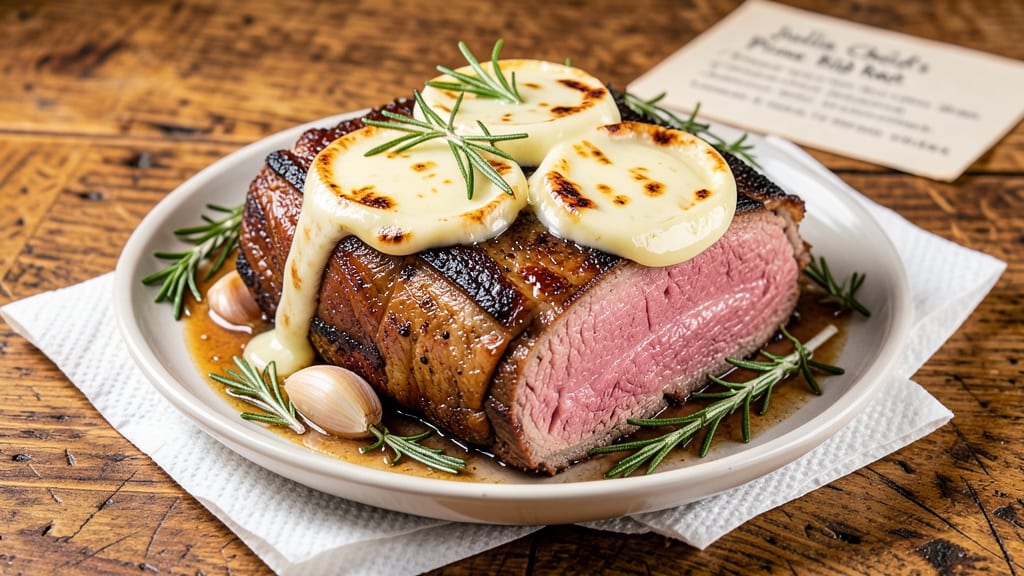
Julia Child's prime rib recipe delivers the kind of showstopping dinner that transforms any table into a French bistro. The secret lies in her signature dry-brine method and precise roasting technique, which create a buttery crust while keeping the meat impossibly tender and juicy.
I've perfected this version through years of testing—just like Julia would have done in her Boston kitchen.
What sets this recipe apart is the attention to detail that makes all the difference: a dry brine that enhances flavor without adding moisture, a high-heat sear to lock in juices, and a resting period that ensures every slice falls apart with just a fork.
The red wine reduction sauce ties everything together with deep, savory notes that complement the rich beef perfectly. This isn't just dinner—it's an experience.
By following Julia's methods, you'll achieve a prime rib with a golden, crackling crust and a pink center that's so tender it nearly dissolves. The sauce adds a glossy finish, while fresh rosemary and butter basting elevate the presentation to restaurant-quality standards.
This is the kind of dish that makes guests ask for seconds—and leaves you feeling like a master chef.
The best part? This recipe scales beautifully for gatherings, and the techniques are foolproof once you understand the science behind them. Whether you're celebrating a special occasion or simply craving a luxurious meal, Julia Child's prime rib delivers results that feel like a true culinary accomplishment.
Let's get started with the ingredients you'll need.
Ingredients for julia child prime rib
Six ingredients transform a simple roast into a French bistro masterpiece—just like Julia Child would serve.
| Ingredient | Amount | Notes |
|---|---|---|
| Prime Rib Roast 🥩 | 4 lb | Bone-in, 1.5-inch thick cut |
| Kosher Salt 🧂 | 2 tbsp | Diamond Crystal preferred |
| Freshly Ground Black Pepper 🌶️ | 1 tbsp | Coarsely cracked |
| Unsalted Butter 🧈 | ½ cup | Cold, cubed for basting |
| Fresh Rosemary 🌿 | ¼ cup | Sprigs, stems removed |
| Garlic Cloves 🧄 | 6 cloves | Smashed, skin-on |
| Dry Red Wine 🍷 | 1 cup | Cabernet Sauvignon preferred |
| Beef Stock 🍲 | 1 cup | Homemade or high-quality |
| Shallots 🧅 | 2 whole | Finely minced |
| Heavy Cream 🥛 | ½ cup | Full-fat for richness |
| Dijon Mustard 🍯 | 1 tbsp | Mellow variety |
| Cold Water 💧 | ¼ cup | For red wine reduction |
| Flour 🌾 | 1 tbsp | All-purpose for thickening |
The prime rib roast is the centerpiece—look for bone-in cuts with 1.5-inch thickness for even cooking. Local butchers often carry superior quality compared to grocery stores, and the bone adds natural flavor. For a showstopping presentation, ask for the roast to be tied with twine before purchasing. The kosher salt is non-negotiable; Diamond Crystal dissolves more evenly than table salt, creating that perfect crust. Freshly ground black pepper adds depth without overpowering the beef's natural richness. Store the roast uncovered in the fridge for 24 hours before cooking to ensure proper dry-brine formation—Julia's secret weapon for tenderness.
No dry red wine? A blend of beef stock and a splash of balsamic vinegar mimics the acidity, though the wine's depth is unmatched. For the red wine reduction, use a bold Cabernet Sauvignon—the tannins balance the sauce's richness. Substitute shallots with two small red onions if unavailable, but they'll add a sharper bite. The heavy cream must be full-fat for the sauce's velvety texture; light cream won't cut it. If Dijon mustard is unavailable, whole-grain mustard thinned with water works, though the flavor will differ slightly. For the butter basting, European-style unsalted butter (like Plugrá) has a higher fat content, ideal for crisping the crust. Every substitution should prioritize maintaining the sauce's silky mouthfeel and savory depth—Julia's hallmark technique.
The prime rib should rest at least 30 minutes before slicing—never skip this step. Store leftovers in an airtight container with the juices for up to 4 days. For the red wine reduction, it keeps for 5 days in the fridge or 3 months frozen in ice cube trays. To reheat, warm the sauce gently on the stove, adding a splash of water or stock if it thickens too much. The roast reheats beautifully in a low oven (275°F) for 20 minutes, wrapped in foil with a pat of butter. For gatherings, double the sauce ingredients—it's the star of the plate, not just an afterthought.
Why You'll Love This Recipe
- Foolproof Timing: I swear by this method—just sear, roast, and let the oven do the work. No last-minute stress, no hovering over a hot stove. That rosemary butter crust? It’s foolproof even if I’m distracted by the kids or my phone.
- Rich, Unforgettable Crust: The butter and rosemary melt into a golden, fragrant crust while the inside stays juicy. It’s the kind of flavor that makes people pause mid-bite—like a restaurant-quality secret in my own kitchen.
- Holiday or Tuesday Night: Between us, this roast feels special enough for Christmas but simple enough for a lazy Sunday. Serve it with roasted potatoes and you’ve got a meal that works for guests or just me in my pajamas.
- Leftovers That Don’t Suck: Cold slices the next day? Still amazing. Thinly slice it for sandwiches or toss with greens for a fancy salad. Honestly, I make this knowing I’ll eat it three times—no waste, just pure satisfaction.
Step-by-step instructions for Julia Child's prime rib roast
Mastering this iconic cut requires precision timing and technique—here's how to achieve Child's signature results.
Prepare and Season the Prime Rib
Remove the prime rib from the refrigerator and let it sit at room temperature for 30 minutes before cooking. This ensures even cooking throughout. Pat the surface completely dry with paper towels—moisture is the enemy of a perfect crust. Using your fingers, gently press the 2 tablespoons kosher salt and 1 tablespoon freshly ground black pepper into the meat, working it into all sides including the fat cap. This creates a flavorful crust while keeping the interior tender.
Here's the thing—don't be shy with the seasoning. The salt needs time to penetrate, and the pepper should be cracked coarsely to release its oils. Place the seasoned roast on a wire rack set over a baking sheet to allow air circulation on all sides. This prevents steaming, which would make the crust soggy.
Create the Rosemary Butter Basting Mixture
In a small bowl, combine the 0.5 cup unsalted butter with the 0.25 cup fresh rosemary sprigs. You'll want to chop the rosemary stems off first—they're woody and won't infuse flavor well. Use a fork to mash the rosemary slightly, releasing its aromatic oils into the butter. This herb-butter mixture will bast the meat during cooking, adding layers of flavor while keeping it moist.
Shape the butter into a log by rolling it between parchment paper, then chill in the refrigerator until firm. This makes basting easier later. The butter should be cold enough to hold its shape but soft enough to spread when warmed by the roast's heat. This technique ensures every bite gets that signature buttery richness.
Roast to Perfect Medium-Rare
Preheat your oven to 450°F for 15 minutes to ensure it reaches the correct temperature before adding the meat. Place the seasoned prime rib on the rack in the center of the oven and roast for 20 minutes. This initial high heat helps create a deep brown crust. After 20 minutes, reduce the oven temperature to 325°F.
Here's where Julia Child's method shines: continue roasting for 1 hour and 15 minutes for a 4-pound roast, basting with the rosemary butter every 20 minutes. The butter should melt and sizzle slightly each time—this is your signal that it's working. The internal temperature should reach 115°F for medium-rare, measured with an instant-read thermometer in the thickest part of the meat.
Rest and Slice for Maximum Juiciness
Remove the prime rib from the oven and transfer it to a cutting board. Tent loosely with aluminum foil and let it rest for 15 minutes. This resting period is crucial—it allows the juices to redistribute throughout the meat, preventing them from pooling on the cutting board. Real talk: skipping this step means dry, disappointing slices.
While the meat rests, prepare to slice against the grain into ½-inch thick portions. The grain will be visible as fine lines running through the meat. Use a sharp carving knife—dull knives crush the fibers, making the meat tough. Each slice should be pink in the center with a rich, buttery crust on the outside. The aroma alone will tell you it's perfect.
Prepare the Red Wine Reduction Sauce
While the prime rib rests, heat 1 tablespoon unsalted butter in a saucepan over medium heat. Add the 2 whole shallots that have been finely minced and cook for 3 minutes until softened but not browned. Add the 6 smashed garlic cloves and cook for 30 seconds until fragrant—don't let them brown or they'll turn bitter.
Pour in the 1 cup dry red wine and bring to a simmer, scraping up any browned bits from the bottom of the pan. This deglazing captures all the flavor. Simmer for 5 minutes until reduced by half. Add the 1 cup beef stock and simmer for another 10 minutes until the sauce thickens slightly. Stir in the 1 tablespoon dijon mustard and 0.5 cup heavy cream, then add 0.25 cup cold water to reach your desired consistency. Finally, sprinkle in the 1 tablespoon flour and whisk until smooth. The sauce should coat the back of a spoon.
Pro Tips For Making Julia Child Prime Rib
- Salt the Night Before: I learned this the hard way—dry-brining prime rib overnight (in the fridge) cuts down on salt overload later. Just coat the roast with kosher salt and let it sit uncovered; the crust will be perfect without tasting like a salt block.
- Sear in Batches: Don’t crowd the pan. High heat and a hot, dry skillet are non-negotiable for that golden crust. Work in batches if needed—rushing this step means a dull, greasy surface instead of crispy perfection.
- Butter the Rosemary: Mix softened unsalted butter with chopped rosemary before basting—it sticks better and infuses faster. Skip the pre-basting step, and you’ll end up with herbs clinging to the pan instead of the meat.
- Rest Under Foil: Give it a solid 5-10 minutes under foil after roasting before slicing. Yes, even if you’re impatient like me—this keeps the juices from pooling on the cutting board, which ruins the whole dish.
Regional styles of julia child prime rib
French Bistro Classic
Julia Child's version of prime rib draws directly from classic French bistro traditions, where the meat is cooked to medium-rare perfection and served with a rich red wine reduction. In Parisian restaurants, the prime rib is often roasted with herbs de Provence and basted with butter, much like this recipe.
The key difference? French chefs typically use a dry brine for 24 hours—a technique Julia mastered in her Boston kitchen. This method creates a crust so crisp it nearly shatters, while keeping the interior tender and juicy. 🥩
Texas-Style BBQ Twist
While Julia's method is French-inspired, Texas BBQ pitmasters have adapted prime rib with a smoky, slow-cooked approach. Instead of roasting, they smoke the beef at 225°F for 12-16 hours, wrapping it in butcher paper to combat the stall. The result? A deeper, smokier flavor with a tender texture.
For a hybrid version, try smoking the prime rib for 2 hours before finishing it in the oven with Julia's butter basting technique. This fusion keeps the crust intact while adding a campfire aroma.
British Sunday Roast
Across the pond, British households serve prime rib as the centerpiece of Sunday roasts, often paired with Yorkshire pudding and roasted vegetables. The British approach focuses on Yorkshire pudding batter brushed over the roast during the last 10 minutes of cooking, creating a crispy, golden topping.
To adapt Julia's recipe, mix 1 egg, 0.5 cup flour, 0.5 cup milk, and 0.25 tsp baking powder, then brush it over the roast during the final 15 minutes at 450°F. The result is a dual-crust masterpiece—crispy on top, buttery on the sides.
Italian Osso Buco Influence
Italian chefs take inspiration from osso buco, a veal shank dish, but adapt the technique for prime rib by braising it with white wine, tomatoes, and gremolata.
For an Italian-inspired version, sear the prime rib as directed, then transfer it to a Dutch oven with 1 cup dry white wine, 1 can crushed tomatoes, 2 sprigs thyme, and 3 bay leaves.
Braise at 325°F for 2 hours, then finish with a gremolata of lemon zest, garlic, and parsley. The acidity cuts through the richness, creating a balanced, aromatic dish.
Modern American Upgrade
Today's home cooks often elevate Julia's classic with modern twists, like adding truffle oil to the red wine reduction or incorporating bacon-wrapped rosemary sprigs into the basting butter. For a gourmet touch, infuse the butter with black garlic instead of fresh rosemary—it adds a sweet, umami depth.
Another popular upgrade is a horseradish cream sauce on the side, which cuts through the richness with a sharp, refreshing bite. These adaptations keep the dish luxurious while adding contemporary flair. 💡
Nutrition facts
Frequently asked questions
Why does Julia Child's recipe use dry brine instead of wet brine?
The dry brine creates a perfect crust without making the meat soggy. Salt penetrates the meat's surface while drawing out moisture, which evaporates during roasting, forming that iconic golden-brown crust. Julia's method keeps the interior juicy while delivering maximum flavor in every bite.
Can I cook prime rib at a lower temperature for more even doneness?
Yes! For a more even cook, reduce the oven temperature to 275°F after the initial 20-minute sear at 450°F. This extends cooking time to about 2 hours for medium-rare, but ensures the center reaches 115°F without overcooking the exterior. Use an instant-read thermometer to monitor progress.
What's the best way to reheat leftover prime rib?
Wrap the slices in foil with a pat of butter and reheat in a 275°F oven for 20 minutes. This method preserves moisture and prevents drying. For quick reheating, use a skillet over low heat for 3-4 minutes per side, adding a splash of beef broth to keep it juicy. Never microwave—it ruins the texture!
How do I adjust cooking time for a different weight of prime rib?
Add 15 minutes per pound to the total roasting time after the initial 20-minute sear. For example, a 5-pound roast would cook for 1 hour and 45 minutes at 325°F. Always use an instant-read thermometer to confirm 115°F for medium-rare—never rely solely on time.
Can I substitute beef stock with something else in the sauce?
Yes! For extra depth, use 1 cup red wine + ½ cup beef broth. If you're out of stock, 1 cup chicken broth + 1 teaspoon soy sauce works in a pinch. Avoid vegetable broth—it lacks the meaty umami that makes the sauce sing. The sauce's richness comes from the wine and cream, so prioritize those ingredients.