
Appetizers
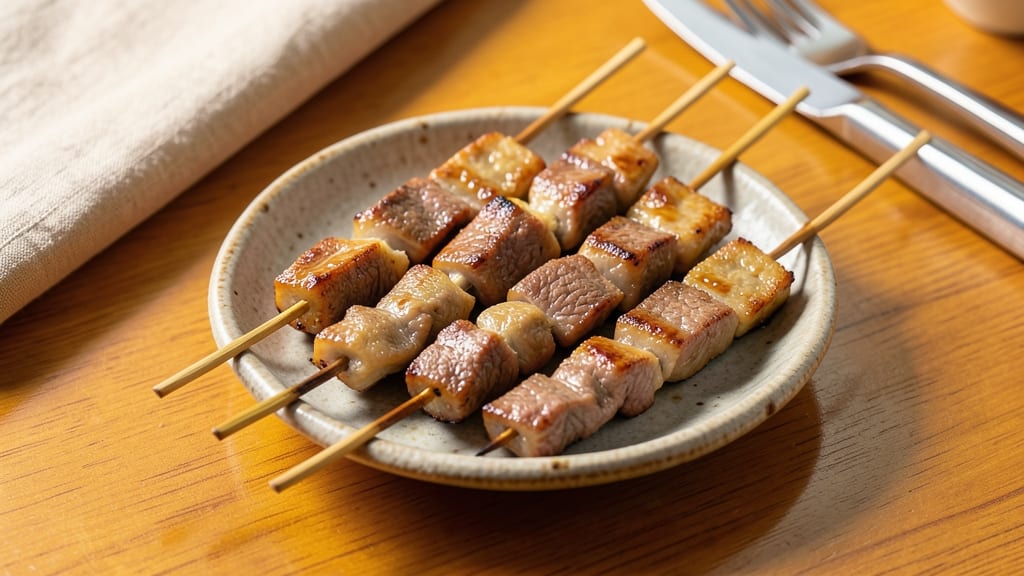
This Japanese beef skewers recipe delivers tender, charred-edge perfection with every bite—just like your favorite yakitori spot. The secret lies in thinly sliced beef marinated overnight in a balance of soy sauce, mirin, and sake, creating layers of umami that transform simple ingredients into restaurant-quality flavor.
I developed this method after years of experimenting with different marinade ratios and cooking techniques, ensuring the beef stays juicy while developing that signature caramelized crust.
The process begins with precise slicing—thin cuts of ribeye or sirloin absorb the marinade perfectly while cooking quickly over high heat.
You'll work with traditional Japanese seasonings (soy sauce, mirin, and a touch of sugar) that create a glossy, flavorful coating, but modern variations like adding ginger or garlic can elevate it further.
The skewers cook in just 10-12 minutes, making this an ideal appetizer for gatherings or a quick weeknight dinner when paired with steamed rice.
What you'll achieve is beef that's tender yet firm, with edges that are beautifully charred and interiors that remain juicy. The marinade caramelizes into a sticky glaze that adds depth, while the smoky aroma fills your kitchen—an experience that feels both professional and deeply satisfying.
Each skewer balances sweetness, saltiness, and umami in a way that's impossible to resist.
Serve these skewers with classic sides like miso soup or quick-pickled vegetables to complete the meal. The recipe scales easily, so you can adjust the quantity based on your needs—whether you're feeding a crowd or treating yourself to a special night in.
Let's get started on creating skewers that taste like a trip to Japan.
Ingredients for japanese beef skewers
Simple ingredients, big flavor—this Japanese beef skewers recipe transforms basic pantry staples into restaurant-quality bites.
| Ingredient | Amount | Notes |
|---|---|---|
| Ribeye Steak 🥩 | 1 ½ lb | Thinly sliced against grain |
| Soy Sauce 🍶 | ½ cup | Japanese or low-sodium preferred |
| Mirin 🍶 | ¼ cup | Sweet cooking wine |
| Dry Sake 🍶 | ¼ cup | Not sweet mirin substitute |
| Granulated Sugar 🍚 | 2 tbsp | White or brown sugar |
| Garlic Cloves 🧄 | 4 cloves | Minced for marinade |
| Fresh Ginger 🌿 | 1 tbsp | Finely grated, peel removed |
| Sesame Oil 🫒 | 1 tbsp | Toasted sesame preferred |
| Wooden Skewers 🪵 | 16 whole | Soaked 30 minutes in water |
| Neutral Oil 🫒 | 2 tbsp | Vegetable or canola |
| Toasted Sesame Seeds 🌾 | 1 tbsp | For garnish |
| Diamond Crystal Kosher Salt 🧂 | ½ tsp | For seasoning |
| Black Pepper 🌶️ | ¼ tsp | Freshly cracked |
The beef is everything here. Ribeye delivers the best marbling for juiciness, but sirloin works too—just slice it against the grain for tenderness. Most butchers will slice it thinly for you, but if you're doing it yourself, freeze the meat 30 minutes first for cleaner cuts. For the marinade ingredients, Japanese soy sauce makes a difference over regular brands—Kikkoman is reliable, but local Asian markets often have higher-quality options. Mirin should be sweet but not syrupy—Happyo is a trusted brand. The sake? Any dry variety works; avoid sweet cooking wines like mirin substitutes.
No mirin? Substitute 1 tbsp sugar plus 1 tbsp water for the same sweetness. Short on sake? Dry white wine or extra water keeps the marinade balanced. Fresh ginger is ideal, but powdered works at half the amount. The sesame oil adds depth—use the toasted kind for nuttier flavor. For the skewers, soak them 30 minutes to prevent burning. If you can't find wooden skewers, metal or soaked bamboo alternatives work. The sugar in the marinade caramelizes beautifully, but if you're watching sweetness, reduce it to 1 tbsp. The garlic and ginger can be minced or grated—just keep it fine so it blends smoothly.
Marinated beef keeps 24 hours in the fridge—flavor actually improves overnight. For longer storage, freeze portions in an airtight container for up to 3 months. These skewers reheat best on a grill or skillet for 2-3 minutes to restore that charred edge. I like to portion the marinade into small containers so I can grab just what I need for a weeknight dinner. The sesame seeds? Toast them in a dry pan for 30 seconds—they'll smell amazing and add extra crunch.
Why You'll Love This Recipe
- Here’s what sold me: the sugar cuts through the richness of the ribeye while the soy and sake deepen the umami. It’s not just "good"—it’s that crispy, sticky, caramelized edge with a tender center that makes you want to eat it straight off the skewer.
- I’ll be real: I always make too much. But the best part? The flavor improves overnight. Reheat the skewers, and suddenly you’ve got restaurant-quality bites with zero extra work. My freezer’s stocked with these because they’re my secret weapon for lazy days.
Step-by-step instructions for Japanese beef skewers
Here's the method that delivers melt-in-your-mouth tenderness with that perfect charred edge.
Prepare the Marinade and Soak the Skewers
In a medium bowl, whisk together the 0.5 cup soy sauce, 0.25 cup mirin, 0.25 cup dry sake, 2 tablespoons granulated sugar, 4 cloves minced garlic cloves, and 1 tablespoon finely grated fresh ginger until the sugar dissolves completely. This marinade is the flavor foundation - the balance of sweet, salty, and umami creates the signature Japanese beef taste. Let it sit at room temperature for 10 minutes while you prepare the skewers.
While the marinade rests, soak the 16 whole wooden skewers in warm water for at least 30 minutes. This prevents them from burning during grilling. I like to use a shallow dish and change the water once halfway through soaking for maximum effectiveness. The skewers should absorb enough moisture to handle the high heat without splitting.
Marinate the Ribeye for Maximum Tenderness
Slice the 1.5 lb ribeye steak thinly against the grain into strips about ½-inch thick and 2-inches long. The grain direction is crucial here - you'll see the muscle fibers running through the meat. Cutting against these fibers ensures each bite has maximum tenderness. Place the sliced beef in a resealable plastic bag and pour the marinade over it, making sure every piece is well coated.
Seal the bag and massage the marinade into the beef for 1 minute to distribute it evenly. Then refrigerate for at least 4 hours, preferably overnight. This long marinating time breaks down the meat fibers and infuses maximum flavor. I know it's tempting to skip this step, but trust me - the wait is worth it for that restaurant-quality tenderness you're after.
Thread and Chill the Skewers
Remove the beef from the refrigerator 30 minutes before grilling to bring it to room temperature. Working quickly, thread the marinated beef onto the soaked skewers, leaving about ½-inch space between each piece. This spacing prevents the skewers from falling apart during cooking and allows the heat to penetrate evenly. You should have about 4 pieces per skewer for perfect portion sizes.
Place the assembled skewers on a plate and refrigerate for another 30 minutes. This final chilling step helps the beef hold its shape on the skewers when you transfer them to the grill. Here's the thing - if you skip this step, you might find your skewers coming apart when you try to flip them, and that's a real bummer when you're this close to perfect results.
Grill to Charred Perfection
Preheat your grill to medium-high heat or about 400°F. You want the grill to be hot enough to create those beautiful charred edges while keeping the interior tender. Once preheated, lightly oil the grates with 2 tablespoons neutral oil using a paper towel - this prevents sticking and creates that classic grill mark. Place the skewers on the grill and cook for 2-3 minutes per side until you see beautiful grill marks and the internal temperature reaches 135°F for medium-rare.
Here's where it gets exciting - watch for those charred edges that develop a deep caramel color. That's your signal that the beef is cooking perfectly. For the last 30 seconds of cooking, add 1 tablespoon sesame oil to the grill to infuse that nutty aroma. Remove the skewers when they reach your desired doneness - they'll continue cooking slightly as they rest.
Finish and Serve with Garnish
Transfer the cooked skewers to a serving platter and let them rest for 5 minutes. This resting period allows the juices to redistribute throughout the meat, ensuring each bite remains tender. While they rest, sprinkle each skewer generously with 1 tablespoon toasted sesame seeds and a pinch of 0.5 teaspoon diamond crystal kosher salt and 0.25 teaspoon black pepper. The sesame seeds add a delightful crunch and visual appeal that makes these skewers look as good as they taste.
Serve immediately with steamed rice and a side of quick-pickled vegetables to balance the richness. The contrast of textures and temperatures makes each bite unforgettable. These skewers deliver on the promise of tenderness with that perfect charred edge - every element comes together in perfect harmony for an authentic Japanese dining experience at home.
Pro Tips For Making Japanese Beef Skewers
- Cut Against the Grain: Slice your ribeye thin (about ¼-inch) and parallel to the grain—this makes the skewers tender enough to eat with chopsticks. I used to fight this step, but trust me: wider slices turn chewy, and you’ll end up sawing through the meat instead of savoring it.
- Marinate Cold, Not Room Temp: Toss the sliced beef into the soy-mirin-sake-sugar mix and refrigerate for at least 30 minutes—no rushing. I learned this after serving skewers that were barely cooked through because I skipped chilling. Cold marinade = even cooking, no surprises.
- Skewer in Two Rounds: Thread two pieces of beef per skewer (max) to avoid overcrowding—this keeps them searing, not steaming. After 2 minutes on the grill, flip once and baste with leftover marinade. Overcrowding = sad, gray skewers.
- Use a Mixing Bowl for Basting: Save ¼ cup of the marinade in a small bowl to baste while grilling. Dipping the skewers halfway through locks in flavor and prevents the sugar from burning before the beef’s done. (Yes, even if you’re impatient like me.)
Perfect pairings for this dish
Rice Pairings
Steamed Japanese short-grain rice is the classic pairing, absorbing the skewers' caramelized marinade beautifully. Use 1.5 cups uncooked rice per 3 cups water for perfect, fluffy grains. For extra flavor, cook the rice in dashi stock instead of water—it adds subtle umami depth that complements the beef. 🍚
For a quicker option, try sushi rice (seasoned with rice vinegar and sugar) served warm. The slight tang cuts through the richness of the charred beef. I like to sprinkle toasted sesame seeds on top for a cohesive finish that ties back to the skewers' garnish.
Vegetable Sides
Quick-pickled daikon radish and cucumber provide a refreshing crunch and bright acidity. Toss 2 cups julienned daikon and 1 cup cucumber with 2 tbsp rice vinegar, 1 tbsp sugar, and ½ tsp salt. Let sit for 20 minutes before serving—this balances the skewers' richness perfectly. 🥬
For a heartier side, steamed bok choy with a drizzle of sesame oil and soy sauce adds a simple, elegant touch. The slight bitterness of bok choy contrasts the sweet-savory skewers, creating a well-rounded bite.
Sauce Enhancements
A drizzle of yuzu kosho (citrus chili paste) adds a zesty kick that elevates the skewers. I use 1 tsp yuzu kosho mixed with 1 tsp honey for a sweet-spicy glaze. Brush lightly over the skewers before serving for an extra layer of complexity. 🌶️
For a creamy option, shoyu mayo (soy sauce-infused mayo) is a crowd-pleaser. Mix ¼ cup mayo with 1 tbsp soy sauce and 1 tsp grated ginger. Serve on the side for dipping—it’s a match made in heaven with the charred beef.
Drink Pairings
A crisp dry sake like Dassai 17 complements the skewers' umami notes without overpowering them. Serve chilled—its clean finish cleanses the palate between bites. For a non-alcoholic option, sparkling yuzu soda adds a refreshing citrus contrast. 🍶
If you prefer beer, a light Japanese lager such as Asahi Super Dry works beautifully. The subtle maltiness pairs well with the skewers' caramelized edges, while its crisp finish balances the dish's richness.
Nutrition facts
Frequently asked questions
What's the best cut of beef for these skewers?
Ribeye or sirloin work best—they have the right fat-to-lean ratio for juiciness. Slice against the grain for maximum tenderness, and ask your butcher to cut it thinly (about ½-inch thick) if you're not comfortable slicing yourself. The marbling in ribeye adds extra flavor when charred.
Can I make these skewers without a grill?
Use a skillet over high heat or a broiler for the same charred effect. For the skillet method, heat until smoking hot and cook 2-3 minutes per side. For broiling, place skewers on a baking sheet 3 inches from the heat source and watch closely to avoid burning.
Why does the marinade need to be refrigerated overnight?
The overnight marinating time is key—it breaks down the meat fibers for tenderness while infusing maximum flavor. The sugar in the marinade also starts caramelizing, creating a sticky glaze that clings to the beef during cooking. If you're short on time, marinate for at least 4 hours, but overnight results are worth the wait.
How do I prevent the skewers from falling apart?
Soak wooden skewers for 30 minutes before using, and leave ½-inch space between beef pieces. Chill the assembled skewers for 30 minutes before cooking—this helps the meat hold together. If using metal skewers, thread pieces tightly to avoid gaps. For extra security, skewer a small piece of lettuce between beef pieces as a natural spacer.
Can I use pre-marinated beef or frozen beef?
Pre-marinated beef will work, but the flavor won't develop as deeply. For frozen beef, thaw it in the fridge overnight first. If using frozen, marinate for 24 hours to ensure even flavor penetration. Never thaw at room temperature—this can promote bacterial growth and uneven cooking.