
Soups & Stews
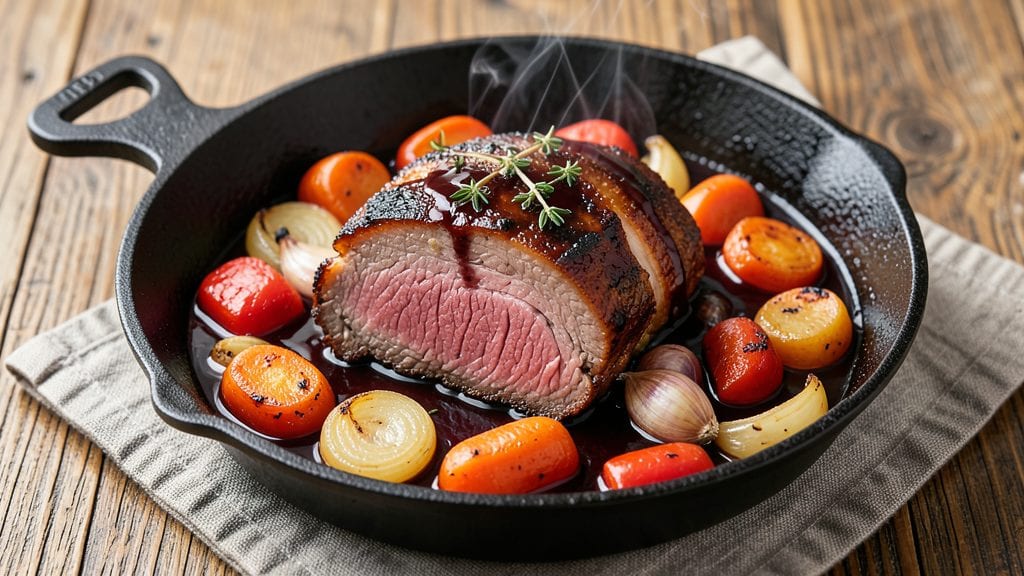
This Guinness braised corned beef recipe transforms tough cuts into melt-in-your-mouth perfection through slow simmering with malty depth. The rich, dark beer creates a velvety sauce that tenderizes the meat while infusing layers of caramelized flavor—something you simply can’t replicate with store-bought shortcuts.
I’ve perfected this method over years of testing, ensuring every bite delivers that signature Guinness complexity without bitterness.
The secret lies in patience and precise technique: browning the beef first develops a flavorful crust, while the long braise (3-4 hours) breaks down collagen into silky richness.
You’ll need just 10 minutes of active prep before letting the oven or stovetop do the work—ideal for hands-off cooking that still delivers restaurant-quality results. The aroma alone will have your kitchen smelling like a Dublin pub by dinnertime.
By the end, you’ll have fork-tender corned beef swimming in a glossy, deep-brown sauce that clings to every bite. The Guinness adds a subtle sweetness and roasted maltiness that balances the meat’s natural richness, creating a dish that’s both hearty and refined.
Serve with creamy mashed potatoes or buttery coleslaw to soak up every last drop of that luxurious braising liquid.
This recipe scales beautifully for gatherings—just double the sauce—and reheats perfectly for leftovers. The key is maintaining the sauce’s thickness, which I’ll show you how to do without lumps or separation.
Whether you’re feeding a crowd or treating yourself to a Sunday supper, this braised corned beef will become your new go-to centerpiece.
Ingredients for guinness braised corned beef
Ten ingredients, one unforgettable flavor—this Guinness braise turns tough beef into silky perfection.
| Ingredient | Amount | Notes |
|---|---|---|
| Corned Beef Brisket 🥩 | 3 lb | Tough cut, trimmed of excess fat |
| Guinness Stout 🍺 | 2 cups | Full-bodied, not light lager |
| Yellow Onions 🧅 | 2 whole | Medium, sliced into half-moons |
| Carrots 🥕 | 4 whole | Medium, cut into chunks |
| Garlic Cloves 🧄 | 6 cloves | Peeled, smashed lightly |
| Fresh Thyme 🌿 | 2 sprigs | Stems removed, leaves only |
| Fresh Bay Leaves 🍃 | 2 whole | Dried works if fresh unavailable |
| Tomato Paste 🍅 | 2 tbsp | Smooth, not chunky |
| Worcestershire Sauce 🍶 | 1 tbsp | Lea & Perrins preferred |
| Balsamic Vinegar 🍷 | 1 tbsp | Aged, not white vinegar |
| Beef Broth 💧 | 1 cup | Low-sodium preferred |
| Olive Oil 🫒 | 2 tbsp | Extra-virgin for browning |
| Diamond Crystal Kosher Salt 🧂 | 1 ½ tsp | For seasoning, not curing |
| Freshly Ground Black Pepper 🌶️ | 1 tsp | Coarsely ground |
| Brown Sugar 🍬 | 1 tbsp | Light or dark, packed |
The beef is everything here. Brisket is ideal—it’s got the connective tissue for that melt-in-your-mouth texture, but don’t stress if you find chuck roast instead. Trim excess fat, but leave some for flavor. Costco or Whole Foods often carry pre-trimmed briskets, which saves time. If you’re buying a whole brisket, look for one with good marbling—it’ll reward you with richer flavor. The Guinness? Don’t skimp—the full-bodied stout is what gives this dish its signature depth. I always grab a 12-ounce bottle from the beer section, but the canned version works too (just use the same amount).
No Guinness? Stout beer or even dark ale will do in a pinch, but the maltiness will be subtler. The tomato paste might seem like overkill, but trust me—it adds a sweetness that balances the beer’s bitterness. Pre-shredded cheese bags? Not here. Fresh thyme is ideal, but if you’re using dried, cut the amount to one-third of what’s listed. The Worcestershire sauce is non-negotiable—it’s what gives this braise that umami punch. Lea & Perrins is the gold standard, but any good-quality bottle will work. For the onions, don’t peel them—leave the skins on for color and texture, then slice them off after cooking.
This braise tastes even better the next day, so make extra—it reheats beautifully. Store in an airtight container in the fridge for up to 5 days, or freeze portions for 3 months. The sauce thickens as it cools, so if it seems too thin when reheating, simmer uncovered for 5-10 minutes to reduce. Leftovers? Game day gold. Serve with crusty bread to soak up every last drop of that Guinness-infused sauce.
Why You'll Love This Recipe
- One-Pot Magic: I swear by this recipe when I’m too tired to dirty three pans—just toss everything in one deep skillet, let the Guinness do the work, and walk away. The onions caramelize right in the braise, so you don’t even need to pre-cook them.
- Deep Umami Bomb: That first sip of Guinness in the pot? It’s like a flavor time machine—rich, malty, and just a little bitter to cut through the corned beef’s saltiness. The garlic cloves soften into golden nubs that pack serious punch.
- Leftovers That Beg: Between us, this dish tastes better the next day. I make a double batch on Sundays because the meat gets fork-tender, the carrots melt into sweetness, and I can throw slices into sandwiches or reheat with mashed potatoes all week.
- Budget Feast for All: A whole brisket feeds six for under $30, and the Guinness adds drama without breaking the bank. Honestly, it’s my go-to for game nights, potlucks, or when my college-age kid brings home friends who “forgot to eat.”
Step-by-step instructions for Guinness braised corned beef
This braising method transforms tough brisket into melt-in-your-mouth perfection with rich Guinness depth.
Sear the Corned Beef for Maximum Flavor
Heat a large Dutch oven over medium-high heat. Add the 2 tablespoons olive oil and let it shimmer for 30 seconds. Place the 3 lb corned beef brisket fat-side down in the pan and sear for 6-8 minutes until the fat renders and the exterior develops a deep golden-brown crust. Flip carefully and sear the other side for another 4-5 minutes.
Here's the thing - searing creates a flavor barrier that locks in juices during braising. You'll know it's ready when the meat releases easily from the pan and the fat has rendered into a rich golden pool. Remove the beef and set it aside on a plate, leaving all the browned bits in the pot - they're packed with flavor.
Build the Aromatic Base
In the same Dutch oven, add the sliced 2 whole yellow onions and cook for 5 minutes until softened and lightly caramelized. Add the 4 whole carrots cut into chunks and cook for another 3 minutes, stirring occasionally. Push the vegetables to the sides of the pot to make space in the center.
Add the 6 cloves smashed garlic cloves and cook for 30 seconds until fragrant. Here's where it gets good - sprinkle the 1.5 teaspoons diamond crystal kosher salt and 1 teaspoon freshly ground black pepper directly over the vegetables. Stir everything together, scraping up those precious browned bits from the bottom of the pot.
Develop the Guinness Braising Liquid
Pour in the 2 cups Guinness stout, scraping the bottom again to incorporate all the flavor. Add the 2 tablespoons tomato paste, 1 tablespoon Worcestershire sauce, 1 tablespoon balsamic vinegar, 1 tablespoon brown sugar, and the 1 cup beef broth. Stir well to combine all ingredients into a smooth liquid.
The brown sugar will help caramelize the vegetables and create a glossy finish on the beef. Bring the mixture to a gentle simmer over medium heat, then reduce heat to low. Here's the critical part - place the 2 sprigs fresh thyme and 2 whole fresh bay leaves on top of the braising liquid, not submerged. This allows their flavors to infuse without turning bitter.
Braise Until Tender Perfection
Return the corned beef to the Dutch oven, fat-side up, and cover tightly with a lid. Braise for 3 hours at a gentle simmer. Here's the secret to success - maintain a consistent low heat. You want to see just a few bubbles breaking the surface occasionally, but no vigorous boiling.
After 3 hours, check for doneness by inserting a meat thermometer into the thickest part of the beef. It should read 205-210°F. If not, continue braising for another 30-60 minutes. The beef is ready when it's fork-tender and the juices run clear. The vegetables should also be tender but still holding their shape.
Rest and Serve with Confidence
Remove the corned beef from the pot and transfer it to a cutting board. Tent loosely with aluminum foil and let it rest for 15-20 minutes. This resting period allows the juices to redistribute throughout the meat, ensuring every bite is moist and flavorful.
While the beef rests, skim any excess fat from the braising liquid if desired. The vegetables can be served as-is or slightly thickened with a cornstarch slurry if you prefer a more substantial sauce. Slice the beef against the grain into ½-inch thick slices and serve with the braising liquid spooned over the top. Each bite should deliver rich Guinness flavor, tender beef, and perfectly caramelized vegetables.
Pro Tips For Making Guinness Braised Corned Beef
- Brown the Brisket First: I learned this the hard way—skipping the sear means your braise will taste flat, no matter how long you simmer. Get that brisket deep golden in a hot pan before adding Guinness, or you’ll just end up with a pale, watery mess. (Yes, even if you’re impatient like me.)
- Slice Onions Like a Pro: Thin, even slices of onion caramelize faster and sweeten the braise properly. I used to chop them randomly, and half the batch would turn mushy while the rest stayed raw. Aim for ⅛-inch slices—no smaller, or they’ll dissolve into the sauce.
- Don’t Rush the Guinness Reduction: The first 15 minutes after adding Guinness are critical—let it bubble hard until it’s reduced by at least a third. Skimping here makes the sauce thin and boring. I know, I know, but trust the process—your future self will notice the difference.
- Use Whole Garlic Cloves: Smashing garlic into paste burns easily and can turn bitter. Toss in 4-5 whole cloves, peel them after browning the onions, and let them infuse gently. Sounds weird, but it works—and you won’t end up with a bitter aftertaste. (Your nose will thank you.)
Essential equipment for this recipe
Dutch Oven Essentials
A heavy-duty Dutch oven is non-negotiable for this recipe—I use my Lodge 6.5-quart (enamel-coated) because it distributes heat evenly and handles the long braise without hot spots. The tight-fitting lid creates a steam chamber that tenderizes the beef while caramelizing the vegetables.
If you don’t own one, Le Creuset’s stoneware Dutch oven is another excellent (but pricier) option. For budget-friendly alternatives, a stainless steel Dutch oven from All-Clad works well, though it requires more attention to heat control. 🔥
Meat Thermometer Must-Have
Invest in a high-quality instant-read thermometer—I swear by the ThermoWorks Smoke—to avoid overcooking. The beef should reach 205-210°F for perfect tenderness, and a thermometer ensures accuracy without guesswork. A bimetallic stemmed thermometer (like the Taylor Precision Products) is a great budget alternative.
Pro tip: Insert the probe into the thickest part of the beef, avoiding fat pockets, for the most reliable reading.
Knife Skills Matter
A sharp 8-inch chef’s knife (I recommend Wüsthof or Shun) is essential for slicing the onions and carrots evenly, which ensures consistent cooking. For the corned beef, a long, thin-bladed carving knife (like the Mercer Culinary Genesis) makes clean, precise slices against the grain.
Dull knives crush meat instead of cutting it, leading to uneven textures. Keep a honning board nearby to protect your counters and maintain knife sharpness.
Browning Pan Control
Use a heavy-bottomed pan (like a Calphalon or Made In) for searing the beef to prevent burning. Medium-high heat is key—too high, and the fat will smoke; too low, and the crust won’t form.
A wire whisk helps distribute heat evenly while browning, and a tongs makes flipping the beef easier without piercing the meat. If your pan lacks heat distribution, a cast-iron skillet (like Lodge) is a great backup.
Liquid Measurement Tools
Precision matters with liquids like Guinness and beef broth. Use a liquid measuring cup (like OXO Good Grips) for accuracy, and a fine-mesh strainer to skim excess fat from the braising liquid if needed.
A wooden spoon (not metal) helps stir the sauce gently without scraping the pot. For thickening, keep a small bowl nearby to mix your cornstarch slurry (if using) with cold water to avoid lumps.
Resting Setup
After braising, transfer the beef to a cutting board and tent it loosely with aluminum foil. This setup keeps the meat warm while allowing steam to escape, which prevents sogginess.
A meat mallet (like Victorinox) can help tenderize thicker cuts if needed, though this recipe’s braising time should handle it. For serving, a large platter ensures the beef and sauce stay together for easy plating.
Nutrition facts
Frequently asked questions
Can I use a different beer instead of Guinness?
A full-bodied stout (like Black Label or Murphy's) works best, but dark ales or even porter can substitute. Avoid light lagers—they lack the maltiness and depth that make this dish special. If using a different beer, reduce the amount by 10% since some beers are more carbonated. The flavor will be subtler but still delicious.
How do I know when the beef is fully tender?
Use a meat thermometer for accuracy—the beef should reach 205-210°F in the thickest part. If you don’t have one, test with a fork: it should slide in and out easily with no resistance. The juices should also run clear, not pink. Overcooking can make the meat dry, so aim for the lower end of that temperature range.
Can I make this recipe on the stovetop instead of the oven?
Simmer the beef on low heat for 4-5 hours instead of 3 hours in the oven, stirring occasionally to prevent scorching. Keep the lid slightly ajar to let steam escape, which helps maintain a gentle simmer. The stovetop method works well for smaller batches or if you prefer hands-on cooking.
What’s the best way to reheat leftovers?
Reheat in the same Dutch oven over low heat with a splash of beef broth to restore moisture. Cover and simmer for 15-20 minutes, stirring occasionally. Avoid microwaving—it can make the sauce watery. For extra richness, add a splash of Guinness or a pat of butter while reheating.
Why does my sauce turn out too thin?
This usually happens if the beef wasn’t fully submerged during braising. To fix it, mix 1 tablespoon cornstarch with 2 tablespoons cold water, stir into the sauce, and simmer for 2-3 minutes until thickened. For prevention, ensure the liquid covers at least 75% of the beef and reduce heat if it boils vigorously.