Side Dishes
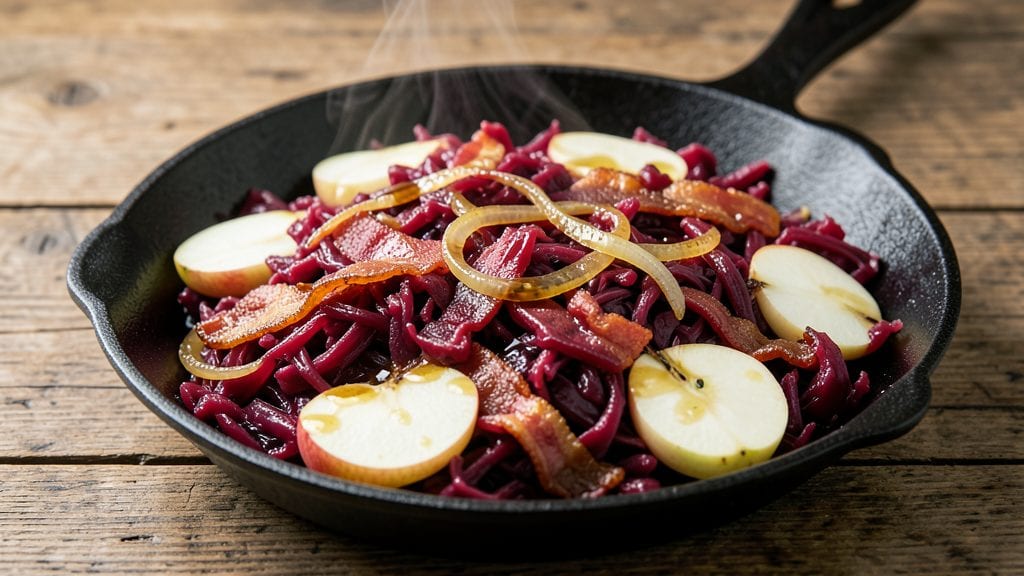
Mastering German red cabbage and sauerkraut together creates a tangy-sweet harmony that elevates any meal—this one-pot recipe delivers restaurant-quality results with minimal effort. The secret lies in balancing sharp vinegar notes with natural sweetness from apples and onions, then letting flavors meld during slow cooking.
I developed this method after years of testing traditional German techniques, ensuring every bite captures that perfect balance between tangy sauerkraut and tender red cabbage.
What sets this recipe apart is its versatility—it works as a side for roasted meats, a hearty vegetarian main, or even a topping for sausages and pretzels. The slow-cooking process (about 1 hour) transforms tough cabbage into tender, caramelized layers while preserving the sauerkraut's signature tang.
Optional additions like bacon or white wine add depth, but the core technique remains simple: onions as the flavor base, apples for natural sweetness, and spices like cloves and bay leaves for warmth.
By the time you serve this dish, you'll have a rich, aromatic side with deep red cabbage and crisp sauerkraut, all infused with the comforting flavors of German cuisine. The texture is perfect—tender cabbage with a slight crunch from the sauerkraut—and the tangy-sweet balance makes it irresistible.
Whether you're hosting a holiday feast or just craving a classic side, this recipe delivers professional results with home-cooking simplicity.
Pair it with roasted pork, bratwurst, or even as a standalone dish with crusty bread. The beauty of this recipe is its adaptability—traditional or modern, it's always a crowd-pleaser. Let's get cooking!
Ingredients for german red cabbage sauerkraut
Fifteen ingredients for a German classic—where tangy sauerkraut meets tender red cabbage in perfect harmony.
| Ingredient | Amount | Notes |
|---|---|---|
| Red Cabbage 🥬 | 1 ½ lb | Shredded, outer leaves removed |
| Sauerkraut 🥬 | 1 ½ cups | Unrinsed, with juices preserved |
| Yellow Onions 🧅 | 2 medium | Thinly sliced, about 1.5 cups |
| Granny Smith Apples 🍎 | 1 medium | Peeled, cored, diced small |
| Granny Smith Apples 🍎 | ½ cup | Extra for sweetness balance |
| Apple Cider Vinegar 🍎 | ½ cup | Raw, unfiltered preferred |
| Vegetable Oil 🫒 | 2 tbsp | High smoke point for sautéing |
| Garlic Cloves 🧄 | 4 whole | Minced, for depth |
| Fresh Thyme Leaves 🌿 | ½ tsp | Dried thyme at 1/4 tsp |
| Bay Leaves 🍃 | 2 whole | Removed before serving |
| Ground Cloves 🌶️ | ¼ tsp | Freshly ground preferred |
| Salt 🧂 | 1 ½ tsp | Diamond Crystal preferred |
| Black Peppercorns 🌶️ | ½ tsp | Freshly cracked preferred |
| Bacon 🥓 | 4 oz | Optional, diced for depth |
| White Wine 🍷 | ½ cup | Dry, optional for richness |
The quality of your sauerkraut and red cabbage is non-negotiable. Look for sauerkraut with visible juices—the liquid is where the flavor lives. Whole Foods or local farmers markets often carry the best cabbage, but any firm, deep purple head will work. Apples are key—Granny Smiths provide the right tartness to balance the dish. If you're using bacon, thick-cut from Costco adds the best smoky depth when diced. For vinegar, raw, unfiltered apple cider vinegar from Bragg elevates the dish beyond basic white vinegar.
No Granny Smiths? Fuji or Honeycrisp work in a pinch, but you may need to add an extra tablespoon of vinegar for balance. Substituting sauerkraut? Store-bought fermented cabbage from the refrigerated section will work, but homemade is always better. Fresh thyme is ideal, but dried at one-quarter the amount suffices. The white wine is truly optional—substitute with extra apple cider vinegar if needed—but it adds a lovely complexity. For the onions, yellow or red will do, but avoid sweet varieties like Vidalia, which can overpower the dish.
This dish tastes even better the next day as flavors meld. Store in an airtight container in the fridge for up to 5 days. For longer storage, freeze portions for up to 3 months. I always make a double batch—it reheats beautifully and becomes the star of any meal. The bacon, if used, can be cooked ahead and stored separately, then added back just before serving for maximum crispiness.
Why You'll Love This Recipe
- Fridge-to-Table Magic: I swear by this recipe—no fancy prep, just chop and simmer. The red cabbage and sauerkraut soften while the onions caramelize, and those Granny Smith apples? They melt into sweet little pockets that cut through the tang. Honestly, I’ve made it after work when I just wanted something warm without the fuss.
- Sweet-Tart Symphony: That balance of tangy sauerkraut, crisp apples, and caramelized onions? It’s like a flavor hug. The Granny Smiths add just enough bite to keep it interesting, while the red cabbage gives it that deep, earthy richness. (Yes, even on a Tuesday night.)
- Holiday Table Star: This dish elevates everything from Thanksgiving leftovers to a simple weeknight dinner. Serve it alongside roasted pork or mashed potatoes—it’s the kind of side that makes people ask, “What’s this?” and then go back for seconds. My in-laws still talk about the first time they tried it.
- Budget-Friendly Leftovers: A big batch costs next to nothing—cabbage and apples are cheap, and sauerkraut lasts forever. I make double portions, and it’s just as good reheated the next day, stuffed in sandwiches, or even tossed into scrambled eggs. (Between us, it’s my lazy Sunday brunch secret.)
Step-by-step instructions for German red cabbage and sauerkraut
This method delivers a perfect balance of tangy sauerkraut and sweet cabbage in one pot.
Prepare and Sauté the Base Ingredients
In a large Dutch oven, heat the 2 tablespoons vegetable oil over medium heat. Add the 4 ounces diced bacon (if using) and cook until the edges are deep golden brown and crispy, about 6-8 minutes. Remove the bacon with a slotted spoon and set aside, leaving the rendered fat in the pot.
Add the 2 medium yellow onions and cook for 5 minutes until softened and translucent. Stir in the 4 whole minced garlic cloves and cook for 30 seconds until fragrant. This aromatic base forms the flavor foundation for the entire dish. If the onions begin to brown too quickly, reduce the heat slightly to prevent burning.
Cook the Red Cabbage and Sauerkraut
Add the 1.5 pounds shredded red cabbage and 1.5 cups sauerkraut to the pot. Stir well to combine with the onions and garlic. Sprinkle with 1.5 teaspoons salt and 0.5 teaspoon freshly cracked black peppercorns, then add the 2 whole bay leaves and 0.5 teaspoon fresh thyme leaves. Cook for 10 minutes over medium heat, stirring occasionally, until the cabbage begins to soften.
Here's where the magic happens: the sauerkraut's natural acidity will begin to mellow as it cooks, while the cabbage releases its sweetness. You'll notice the mixture darkening slightly and the cabbage leaves becoming more pliable. This is the perfect time to add the 0.5 cup apple cider vinegar and 0.5 cup white wine (if using), scraping up any browned bits from the bottom of the pot with a wooden spoon.
Incorporate Apples and Spices
Add the 1 medium peeled and diced Granny Smith apple and 0.5 cup additional diced Granny Smith apple to the pot. Stir in the 0.25 teaspoon ground cloves and cook for 10-12 minutes over medium-low heat. The apples will break down and release their juice, creating a natural sweetness that balances the tangy sauerkraut. You'll see the mixture become more cohesive and develop a rich, glossy appearance.
Occasionally stir the cabbage mixture, ensuring everything cooks evenly. The dish should simmer gently rather than boil vigorously—this prevents the cabbage from becoming mushy. If the mixture appears too dry, add 2-3 tablespoons water to maintain moisture. The cloves add a subtle warmth that complements the other flavors beautifully.
Finish and Rest Before Serving
Once the cabbage is tender but still holds its shape (about 20-25 minutes total cooking time), remove the 2 bay leaves and discard them. Stir in the reserved 4 ounces crispy bacon and let the dish sit off the heat for 5 minutes to allow the flavors to meld. This resting period is crucial—it lets the cabbage absorb all the juices and develop its full depth of flavor.
Taste and adjust the seasoning if needed. The dish should have a perfect balance of sweet, tangy, and savory elements. Serve immediately with roasted meats, sausages, or crusty bread to soak up the delicious juices. The cabbage should be fork-tender with a slight bite, and the sauerkraut should be softened but still retain its distinctive texture. This dish improves as it sits, so don't hesitate to make extra for leftovers.
Pro Tips For Making German Red Cabbage Sauerkraut
- Sear the Onions First: Don’t just soften them—get those onions golden brown in a dry pan before adding anything else. I learned this the hard way: skipping the sear means the dish tastes like boiled onions instead of caramelized depth. Two minutes on medium-high, stirring constantly, makes all the difference.
- Core Those Apples: Granny Smiths are tart and hold up well, but if you leave the core in, you’ll end up with a mouthful of tough pith. Cut a small "X" on the bottom, then slice—it’s faster than peeling and keeps the texture clean. (Yes, even if you’re impatient like me.)
- Drain, Don’t Rinse: Sauerkraut’s tang comes from its brine, so draining it for 5 minutes in a colander is enough—no need to rinse. I used to over-drain, and the dish lost its bright, funky edge. Pat it dry with a towel if you’re worried about excess moisture, but don’t strip it bare.
- Simmer Low and Slow: This isn’t a race. After the initial sauté, drop the heat to medium-low and let the cabbage and sauerkraut melt together for at least 20 minutes. Rushing it leaves the red cabbage crunchy and the apples undercooked—neither should happen in a proper German-style dish.
Perfect pairings for these flavors
Meat Pairings
This dish pairs perfectly with smoked pork shoulder or bratwurst, where the sauerkraut's tang cuts through the meat's richness. I love serving it with German-style pork knuckles—the crispy skin contrasts beautifully with the tender cabbage.
For a lighter option, try chicken schnitzel or herb-roasted chicken thighs, where the dish's sweetness complements the crispy coating. 🥓
Vegetarian Options
Don't let this be just a side dish—it shines as a vegetarian main! Serve it with grilled halloumi cheese or pan-seared tofu for a protein boost.
I also pair it with mushroom burgers or lentil loaves for a hearty, plant-based meal. The cabbage's natural sweetness balances the earthiness of mushrooms perfectly.
Beverage Matchups
A crisp German wheat beer like Weihenstephaner Hefeweissbier complements the dish's tangy-sweet balance. For wine lovers, a dry Riesling from the Mosel region adds brightness that cuts through the richness. If you prefer non-alcoholic options, try sparkling apple cider—it mirrors the dish's apple and vinegar notes beautifully. 🍺
Bread Pairings
Serve with crusty German rye bread or pretzel buns to soak up the juices. I also love pairing it with focaccia or garlic bread for a more Mediterranean twist. The bread's texture contrasts perfectly with the cabbage's tenderness, making every bite more satisfying.
Sweet Contrasts
For a dessert pairing, serve with dark chocolate-covered strawberries or caramelized apple slices. The sweetness balances the dish's tangy notes, creating a perfect palate cleanser. I also enjoy it with vanilla ice cream for a comforting, unexpected combination. The contrast is surprisingly delightful! 🍫
Nutrition facts
Frequently asked questions
Can I use store-bought sauerkraut instead of homemade?
Store-bought sauerkraut works perfectly—just make sure it's unrinsed and retains its juices. The natural fermentation process gives it that signature tang. For best results, choose a brand with visible liquid, as this preserves the flavor. If it's too acidic, add an extra ½ cup diced apple to balance the taste during cooking.
Why does my red cabbage turn mushy when cooking?
Overcooking or boiling too vigorously causes cabbage to turn mushy. Keep the heat at medium-low and simmer gently—never let it boil. Stir occasionally to prevent sticking, and add 2-3 tablespoons water only if needed. The cabbage should be tender but still hold its shape after 20-25 minutes total.
Can I make this dish ahead of time?
Yes! This dish tastes even better the next day as flavors meld. Store in an airtight container in the fridge for up to 5 days. Reheat gently on the stove with a splash of water or broth to restore moisture. For longer storage, freeze portions for up to 3 months. The texture remains perfect when reheated slowly.
What if I don't have apple cider vinegar?
Substitute with white vinegar or red wine vinegar, but reduce the amount to ¼ cup—they're stronger. For a sweeter balance, add an extra ½ cup diced apple or a pinch of sugar. The vinegar's acidity is key to cutting through the cabbage's sweetness, so avoid skipping it entirely.
Is there a way to make this dish vegetarian?
Skip the bacon entirely and add smoked paprika or liquid smoke for depth. For extra richness, stir in 2 tablespoons nutritional yeast or 1 teaspoon miso paste at the end. Pair with grilled halloumi or roasted mushrooms for a hearty vegetarian main. The tangy-sweet balance still shines without meat!