
Side Dishes
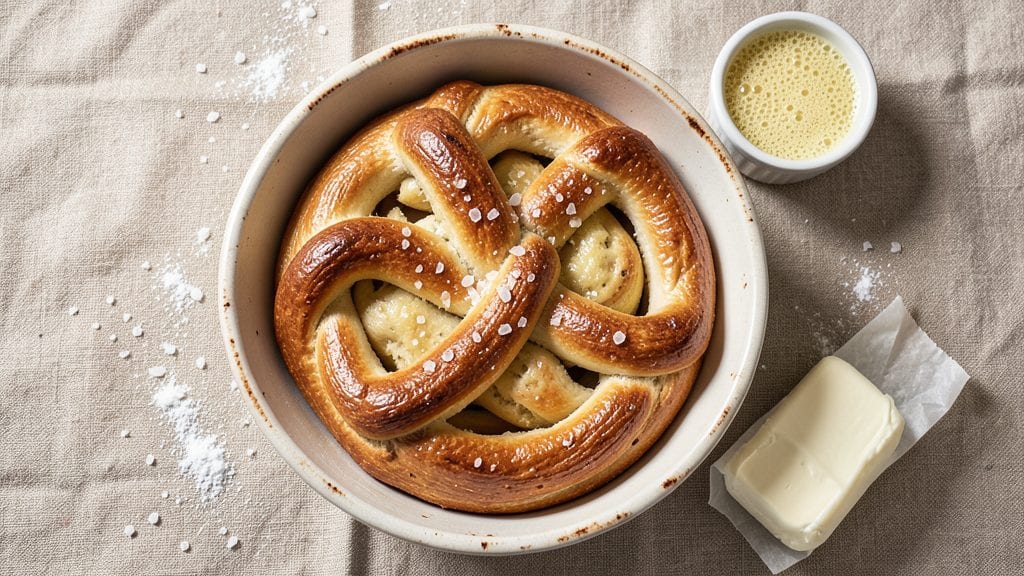
This German pretzel bread recipe delivers the perfect balance of crispy golden crust and soft, buttery interior that makes every bite irresistible. The secret lies in the baking soda bath that creates that signature chewy texture while the dough rests overnight for maximum flavor development.
I’ve perfected this method over years of testing, ensuring you get restaurant-quality results at home without the fuss.
What sets this recipe apart is the combination of traditional techniques with modern convenience—whether you’re shaping pretzels by hand or using store-bought dough for a shortcut. The dough is enriched with butter and milk (or vegan alternatives) for that melt-in-your-mouth tenderness, while the coarse salt topping adds a satisfying crunch.
The baking soda water bath transforms the texture from ordinary to extraordinary in just a few minutes.
By the time you pull these pretzels from the oven, you’ll have golden-brown twists with a crisp exterior and a soft, pillowy center—each bite offering that perfect contrast of textures.
This recipe is foolproof, whether you’re serving them warm with butter or saving them for sandwiches later in the week. The aroma alone will have everyone gathering around the table.
For added flavor, try sprinkling sesame seeds or poppy seeds before baking, or keep it classic with just the salt. The dough can be made ahead and refrigerated overnight, making this the ideal make-ahead recipe for holidays or game days. Let’s get baking!
Ingredients for german pretzel bread
Twelve simple ingredients transform into golden pretzels with crispy crusts and buttery centers.
| Ingredient | Amount | Notes |
|---|---|---|
| All-Purpose Flour 🌾 | 5 cups | Unbleached preferred for chewy texture |
| Instant Yeast 🍞 | ½ tsp | Active dry works too |
| Granulated Sugar 🍚 | ¼ cup | White or brown sugar |
| Salt 🧂 | 1 ½ tsp | Diamond Crystal preferred |
| Unsalted Butter 🧈 | ½ cup | Cold, cubed for dough |
| Whole Milk 🥛 | 1 cup | Room temperature for best mixing |
| Large Eggs 🥚 | 1 whole | Room temperature preferred |
| Baking Soda 🧪 | ½ cup | For the signature bath |
| Coarse Kosher Salt 🧂 | ½ cup | Morton preferred for texture |
| Sesame Seeds 🌱 | ¼ cup | Optional for topping |
| Poppy Seeds 🌱 | ¼ cup | Optional for topping |
| Water 💧 | 2 cups | For yeast activation |
| Vegetable Oil 🫒 | 1 tbsp | For greasing bowl |
The flour is non-negotiable here—King Arthur or Gold Medal give that perfect chew. If you're feeling fancy, grab whole wheat flour for half the amount to add depth (but keep the texture in mind). The baking soda needs to be fresh—if it's been sitting in your cabinet for months, toss it. For the butter, I always use Land O'Lakes or Plugrá—they're reliable and cold enough to stay cubed when mixed. The milk? Whole milk works best for richness, but oat milk or almond milk will work if you're avoiding dairy. Just make sure it's room temperature—cold milk kills yeast faster than you'd think.
No sesame seeds? Poppy seeds or everything bagel seasoning add a similar crunch. Short on baking soda? Baking powder at double the amount gets you close, but the texture won't be quite the same. The coarse salt is key—Morton's Kosher Salt is the gold standard, but Diamond Crystal works too. If you're using store-bought dough, check the ingredients: some brands add preservatives that can interfere with the baking soda bath. For the yeast, Saf-Instant is my go-to because it doesn't need proofing, but active dry works if you're patient enough to let it bloom in warm milk first.
This dough is a 24-hour make-ahead dream—just seal it in an airtight container and let it ferment in the fridge. The baking soda bath keeps for 1 week in a sealed container, but it's best used fresh. For extra crispiness, bake the pretzels on a parchment-lined sheet and transfer them to a wire rack immediately. Store leftovers in a paper bag at room temperature for up to 3 days—they lose crispness in plastic. Freeze shaped pretzels for up to 3 months—just thaw at room temperature before baking.
Why You'll Love This Recipe
- Pantry Magic: I swear by this recipe—no fancy ingredients, just flour, yeast, sugar, salt, and butter sitting in my cupboard. That’s it. You won’t need to hunt for anything special, and the dough comes together faster than I can say "where’s the baking soda?"
- Butter-Kissed Crunch: The moment the pretzel twists hit the oven, that golden crust snaps with a satisfying crack, while the inside stays soft and pillowy. Honestly? The butter in the dough makes all the difference—it’s like a hug for your taste buds.
- Breakfast to Brunch: I make these on Sundays and they last all week—sliced for toast, torn for sandwiches, or even as a side for soup. They’re the ultimate lazy morning hero, and no one ever complains when I pull them out.
- Budget Baking Win: This recipe stretches my grocery budget without compromise. A single batch feeds my family for days, and the ingredients cost less than half of what store-bought pretzel bread does. Plus, the leftovers freeze like a dream.
Step-by-step instructions for German pretzel bread
This method delivers that iconic pretzel crunch and buttery softness—every twist is perfect.
Activate the Yeast and Prepare the Dough
In a small bowl, combine the 2 cups water, 0.25 cup granulated sugar, and 0.5 tsp instant yeast. Let it sit for 5-10 minutes until frothy—this confirms your yeast is active. If it doesn't bubble, your yeast may be dead, and you'll need to start over.
In a stand mixer fitted with the dough hook, combine the 5 cups all-purpose flour, 1.5 tsp salt, 1 cup whole milk, 1 whole large egg, and the yeast mixture. Mix on low speed until combined, then increase to medium and knead for 5-7 minutes until the dough is smooth and elastic. The dough should pull away from the sides of the bowl and form a windowpane when stretched thin between your fingers.
Let the Dough Rest and Shape the Pretzels
Transfer the dough to a lightly greased bowl, cover it with a damp towel, and let it rise in a warm place for 1-1.5 hours or until doubled in size. You'll know it's ready when you poke it gently and it springs back slowly. This resting period develops gluten, which gives pretzels their signature chew.
Punch down the dough and divide it into 4 equal pieces. Roll each piece into a 24-inch rope, about 1 inch thick. Twist each rope into a pretzel shape—cross the ends over each other and press down firmly to seal. Place the shaped pretzels on a parchment-lined baking sheet, leaving 2 inches between each to allow for expansion.
Boil the Pretzels in the Baking Soda Bath
Preheat your oven to 425°F. In a large pot, bring 6 cups water to a boil and dissolve the 0.5 cup baking soda and 0.5 cup coarse kosher salt in it. This alkaline bath is what gives pretzels their signature dark crust and crispy texture.
Working in batches, carefully lower the pretzels into the boiling water for 30 seconds—they'll float to the surface immediately. Use a slotted spoon to turn them gently to ensure even coating. Remove them with tongs and place them back on the baking sheet. The pretzels should look glossy and slightly puffed.
Bake to Golden Perfection
Bake the pretzels for 12-15 minutes until they're deep golden brown and sound hollow when tapped on the bottom. The crust should be crisp, but the interior should remain soft and pillowy. Rotate the baking sheet halfway through for even browning.
While still hot, brush the tops of the pretzels with melted 0.5 cup unsalted butter for extra richness. Immediately sprinkle with 0.25 cup sesame seeds and 0.25 cup poppy seeds for texture and flavor. Let them cool on a wire rack for 10 minutes before serving—this prevents sogginess and lets the flavors meld.
Pro Tips For Making German Pretzel Bread
- Measure Yeast Like a Pro: Use a kitchen scale for the yeast—don’t eyeball it. That half-teaspoon difference matters when you’re working with instant yeast in a recipe this sensitive. I learned this after a batch of dough took three hours to rise properly because I underestimated.
- Salt the Water Hard: The lye bath (if you’re boiling the dough) needs way more salt than you’d use for pasta water—think 2 tablespoons per quart. Too little, and the skin won’t set properly. Too much, and you’ll regret it when you take a bite. Taste it before dunking.
- Knead Until It’s Mean: This dough fights back. Work it until it’s smooth, elastic, and springs back slowly when poked—about 8-10 minutes by hand. Skimp here, and your pretzel will taste dense and chewy instead of light and airy. (Yes, your forearms will hate you.)
- Steam the Oven First: Crank the oven to 475°F, then place a metal tray on the bottom rack and pour in 1 cup of boiling water right before baking. The steam locks in moisture and gives that iconic pretzel sheen. I used to skip this—now my crust is crispy without being dry.
Storing and reheating this dish
Refrigerator Storage
Store freshly baked pretzels in a paper bag at room temperature for up to 3 days—plastic traps moisture, turning crispy crusts soggy. For longer fridge storage (up to 5 days), place them in an airtight container with a paper towel to absorb excess moisture.
I always let them cool completely before storing to prevent condensation. 🥖
Freezer Preservation
Shape the pretzels, but don’t boil or bake them before freezing. Place shaped dough on a parchment-lined tray, freeze solid for 1 hour, then transfer to a freezer bag with parchment between layers.
This prevents sticking. Thaw at room temperature for 1-2 hours before boiling and baking. Frozen pretzels keep for 3 months—perfect for lazy weeknights. ❄️
Reheating Crispiness
Revive stale pretzels by wrapping them in aluminum foil and warming at 350°F for 5-7 minutes. For extra crunch, broil for 1-2 minutes after reheating. A quick alternative: microwave for 20-30 seconds with a damp paper towel—this restores softness without drying them out. 🔥
Boiling Bath Refresh
If you’re reheating boiled pretzels (like after freezing), skip the baking soda bath—just bake straight from frozen or thawed. For extra crispiness, brush with melted butter and sprinkle coarse salt before reheating. The baking soda bath is only for fresh dough, not pre-baked pretzels. 🧂
Make-Ahead Dough
Prepare the dough up to 24 hours ahead and refrigerate in an airtight container. The cold slows fermentation, giving deeper flavor. Let it sit at room temperature for 1 hour before shaping to make it more pliable. This is my favorite shortcut—no last-minute rushing! ⏳
Butter and Seed Topping
For reheated pretzels, brush with melted butter and sprinkle sesame or poppy seeds while warm to restore that fresh-baked appeal. If seeds were added before baking, skip this step—they’ll stick better the first time. A light dusting of powdered sugar adds a sweet contrast too. 🌟
Nutrition facts
Frequently asked questions
Can I make this pretzel dough without yeast?
No, yeast is essential for the signature soft, airy texture of German pretzels. However, you can use 1.5 tsp rapid-rise yeast if you're short on time—it cuts fermentation time by half. For a quick alternative, try a sourdough starter (replace 1 cup water with 1 cup active starter), but the flavor will differ slightly.
Why do my pretzels turn out dense instead of soft?
Over-kneading or under-rising are the most common culprits. Knead only until the dough pulls away from the bowl (5-7 minutes max), and let it rise until doubled (1-1.5 hours). Also, ensure your yeast is fresh—old yeast won't activate properly. If your kitchen is cold, place the dough bowl near a warm oven to speed up rising.
How do I shape pretzels without them falling apart?
Work with cool dough straight from the fridge for easier handling. Roll each piece into a 1-inch-thick rope, then twist gently—don't pull too tight. Seal the ends by pressing them firmly together. If the dough cracks, wet your fingers slightly to reseal. For extra stability, chill shaped pretzels for 15 minutes before boiling.
Can I make mini pretzels with this recipe?
Divide the dough into 12-16 small pieces (about 1 oz each) and shape into tiny twists. Boil and bake for 8-10 minutes at 425°F—they'll cook faster. Use a mini muffin tin for baking to keep them uniform. Perfect for appetizers or kids' snacks!
What's the best way to store homemade pretzels?
Keep them crispy by storing in a paper bag at room temperature for 3 days. For longer storage, freeze shaped (unbaked) pretzels for 3 months—thaw before boiling/baking. Reheat in foil at 350°F for 5 minutes or broil for 1-2 minutes for extra crunch. Never store in plastic—it causes sogginess.