
Desserts
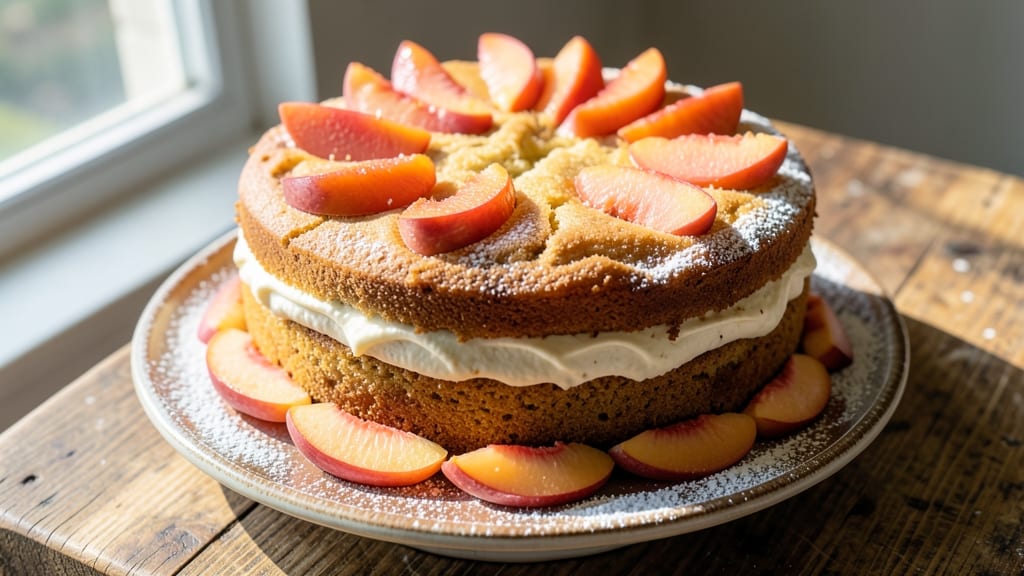
This fresh peach cake recipe captures summer's essence in every tender crumb, blending juicy peaches with a perfectly moist crumb base. The secret lies in using ripe, fresh peaches—never canned—and folding them gently into the batter to preserve their natural sweetness and texture.
I've baked countless versions, and this one consistently delivers that ideal balance of dense yet crumbly layers, where each bite reveals bursts of peach.
What sets this recipe apart is the foolproof technique for achieving a moist cake without overmixing the batter or overbaking the fruit. You'll need just 30 minutes of active prep time, followed by 45 minutes in a preheated 350°F oven—no special equipment beyond a standard mixing bowl and cake pan.
The vanilla bean extract adds depth that store-bought extracts can't match, while the lemon zest brightens the peaches without overpowering them.
By the time it emerges from the oven, you'll have a golden-topped cake with tender layers and juicy peaches peeking through the crumb. The aroma alone will have everyone gathering in the kitchen, and the texture—moist but not soggy, rich but not heavy—is what makes this recipe truly special.
Serve it warm with a scoop of vanilla ice cream or dusted with powdered sugar for an elegant summer dessert.
This cake keeps beautifully for up to 3 days at room temperature, making it perfect for picnics or potlucks. The recipe scales easily for larger gatherings, and the techniques translate perfectly to other stone fruits like nectarines or plums. Let's get baking—your summer just got sweeter.
Ingredients for fresh peach cake
Juicy peaches meet buttery crumb perfection—these ingredients craft summer's finest cake.
| Ingredient | Amount | Notes |
|---|---|---|
| Fresh Peaches 🍑 | 2 ½ lbs | Ripe, firm yet yielding, pitted and sliced |
| All-Purpose Flour 🌾 | 2 cups | Sifted, spooned not scooped |
| Granulated Sugar 🍚 | 1 ½ cups | Superfine preferred for smooth texture |
| Light Brown Sugar 🍚 | ½ cup | Packed, for moisture |
| Unsalted Butter 🧈 | 1 cup | Cold, cubed, 67% fat content |
| Large Eggs 🥚 | 2 whole | Room temperature, separated |
| Pure Vanilla Bean Extract 🌿 | 2 tsp | Scraped seeds included |
| Fresh Lemon Zest 🍋 | 1 tbsp | Fine grated, no pith |
| Baking Powder 🧂 | 2 tsp | Freshly opened, sifted |
| Diamond Crystal Kosher Salt 🧂 | ½ tsp | Fine grain, not iodized |
| Powdered Sugar 🍚 | ¼ cup | For dusting, confectioners |
| Vanilla Bean Ice Cream 🍦 | 1 ½ cups | Optional serving suggestion |
The peaches are non-negotiable—ripe but firm, with just a hint of give when pressed. Local farmers markets often have the best selection in summer, or opt for organic peaches from Whole Foods when grocery shopping. Avoid any with bruises or overly soft spots; those release excess moisture and compromise texture. For the butter, Plugrá or Land O'Lakes are reliable brands, but always use unsalted to control the final seasoning. The vanilla bean extract is where you'll notice the difference—Madagascar Bourbon or Tahitian varieties from Penzeys elevate the flavor profile significantly compared to imitation extracts.
No fresh peaches? Frozen peaches work in a pinch—thaw and pat dry thoroughly to avoid a soggy cake. Substituting brown sugar with white? Use equal parts plus 1 tbsp extra liquid to maintain moisture. For the vanilla, high-quality imitation extractvanilla sugar can supplement if needed. The lemon zest adds brightness; if you're working with a particularly tart fruit, reduce to 1 tsp zest and add 1 tsp sugar to balance. For gluten-free adaptation, substitute the flour with a 1:1 gluten-free blend and increase the baking powder by 0.5 tsp.
This cake reaches peak freshness 24 hours after baking—the flavors meld beautifully overnight. Store at room temperature in an airtight container for up to 3 days, or refrigerate for 5 days if you prefer a firmer texture. The peaches can be prepped ahead and stored in the fridge for 2 days before baking, saving time on busy mornings. For serving, dust with powdered sugar just before slicing—it dissolves quickly and loses its visual appeal. The vanilla ice cream pairing is optional but recommended; Ben & Jerry's or Häagen-Dazs brands deliver consistent quality.
Why You'll Love This Recipe
- No Pitting Required: I’ll admit, I used to dread peach prep—pits, seeds, sticky fingers everywhere. But this recipe? Just slice and layer. The peaches stay whole, juicy, and actually shine in every bite. No food processor, no fuss—just summer in cake form.
- Butter-Soft Magic: That brown sugar buttercream isn’t just sweet—it’s rich. The light brown sugar caramelizes just enough to cut through the peach’s natural tartness, while the butter keeps it velvety. Honestly, I’ve made cakes with store-bought frosting that couldn’t compete.
- Picnic to Potluck: Slice it for a no-mess picnic, serve it warm with ice cream for a lazy Sunday, or pack individual portions for work. The cake holds up surprisingly well—moist enough to stay tender but sturdy enough to transport. (Yes, even in my questionable cooler.)
- Peach Season on a Budget: Fresh peaches peak in summer, but they’re often pricey. This recipe uses just 3-4 ripe ones, so you’re not breaking the bank. Plus, the rest of the ingredients? Pantry staples. I’ve made this for under $10 and had leftovers that lasted a week—no one complained.
Step-by-step instructions for fresh peach cake
Here's the method for a tender crumb cake with juicy peach bursts and a bright citrus finish.
Prepare the Peaches and Dry Ingredients
Pit and slice the 2.5 lbs fresh peaches into ¼-inch thick rounds. Toss them immediately with 1 tablespoon of the 1.5 cups granulated sugar to prevent browning. This step preserves their vibrant color and natural juices for the cake's moisture.
In a medium bowl, whisk together the 2 cups all-purpose flour, 2 teaspoons baking powder, and 0.5 teaspoon diamond crystal kosher salt. Sift the mixture through a fine-mesh sieve directly into a separate large bowl to aerate the flour. This creates a lighter texture by eliminating any potential lumps and incorporating air into the dry ingredients.
Cream Butter and Sugars
In a stand mixer fitted with the paddle attachment, beat the 1 cup cold unsalted butter on medium speed until smooth and creamy, about 2 minutes. The butter should look fluffy with no visible lumps, which indicates proper incorporation of air.
Gradually add the remaining 1 cup granulated sugar and 0.5 cup light brown sugar while mixing on medium speed. Beat for an additional 4-5 minutes until the mixture is light and fluffy, nearly doubling in volume. You'll see ribbons form when the paddle is lifted—this is your signal that the butter and sugars are properly emulsified.
Incorporate Wet Ingredients
Add the 2 whole large eggs, one at a time, mixing on low speed after each addition until fully incorporated. Scrape down the sides of the bowl as needed to ensure even mixing. The batter should be smooth with no visible streaks of egg white.
Mix in the 2 teaspoons pure vanilla bean extract and 1 tablespoon fresh lemon zest until fully combined. The lemon zest adds a bright citrus note that complements the sweet peaches and balances the richness of the butter. Stir in the prepared peaches and their juices, reserving any excess liquid that might accumulate in the bowl.
Combine Wet and Dry Ingredients
With the mixer on low speed, gradually add the sifted dry ingredients to the wet mixture. Mix just until combined—about 30 seconds—being careful not to overmix. The batter should be thick but pourable, with a few small peach pieces visible throughout.
If the batter appears too thick, add 1-2 tablespoons of the reserved peach liquid to achieve a smooth consistency. This ensures the cake will bake evenly without being too dense. Pour the batter into a 9-inch round cake pan lined with parchment paper.
Bake and Finish
Preheat your oven to 350°F. Place the prepared cake pan on the center rack and bake for 45-50 minutes, or until a toothpick inserted into the center comes out clean. The cake should be golden on top with a slightly domed center.
Once baked, remove the cake from the oven and let it cool in the pan for 15 minutes. Then transfer it to a wire rack to cool completely. While still warm, dust the top with the 0.25 cup powdered sugar using a fine-mesh sieve for a delicate, snowy finish. Serve with 1.5 cups vanilla bean ice cream for the perfect summer dessert.
Pro Tips For Making Fresh Peach Cake
- Peel Peaches Fast: Toss halved peaches in boiling water for 30 seconds—just long enough to loosen the skin. Drain, shock in ice water, then slip off peels with a paring knife. I learned this the hard way after struggling to peel them by hand mid-recipe.
- Cream Butter Cold: Use butter straight from the fridge—it’s easier to cut into flour and sugar for that perfect crumb. Warm butter melts too fast, and you’ll end up with a dense, greasy cake instead of light layers. (Yes, even if you’re impatient like me.)
- Don’t Overmix Batter: Stir the wet and dry ingredients just until combined—lumps are fine. Overmixing develops gluten, and your cake will turn out tough instead of tender. I used to mix until it looked "perfect," then wondered why it was chewy.
- Bake Until Springy: Check doneness at 325°F by pressing the center—it should bounce back slowly, not feel jiggly. Overbaking dries out the peaches and makes the cake crumbly. (Your future self will thank you for pulling it out earlier.)
Essential equipment for this recipe
Stand Mixer Essentials
Your stand mixer is the workhorse of this recipe, so invest in a quality model with a 5-quart bowl capacity. I use a KitchenAid Artisan Series—its powerful motor handles the butter-cream stage effortlessly.
For the paddle attachment, look for one with wide, angled blades to ensure proper aeration of the butter and sugars. If you're on a budget, the Cuisinart SM-50BC delivers similar performance for $100 less. 💡
Cake Pan Prep
A 9-inch round cake pan with removable bottom is ideal for this recipe, but any well-seasoned pan works. Line the bottom with parchment paper for easy removal and prevent sticking. I recommend Wilton Perfect Results pans—their non-stick coating reduces the need for excessive greasing.
For a rustic look, use a cast iron skillet preheated in the oven for 10 minutes before adding the batter.
Measuring Tools
Precision Matters
Accurate measurements are critical for this delicate cake. Use a digital kitchen scale for dry ingredients like flour and sugar to avoid packing issues. For liquids, a liquid measuring cup with a pour spout (like OXO Good Grips) ensures clean transfers.
A microplane for lemon zest is a game-changer—it produces fine, even zest without the bitter pith. 🍋
Peach Prep Tools
Peach prep requires two essential tools: a sharp chef's knife and a peach pitter. I prefer Victorinox 8-inch chef's knives for clean cuts. For pitting, a Y-peel pitter (like OXO Good Grips) removes pits in seconds without damaging the fruit.
If you're slicing by hand, use a mandoline with a ¼-inch thick slicing blade for uniform slices.
Baking Essentials
A reliable oven thermometer (like Thermoworks) ensures your oven maintains 350°F—critical for even baking. For testing doneness, keep a toothpick handy. I also recommend a wire cooling rack to prevent soggy bottoms. A fine-mesh sieve (like Norpro) helps dust powdered sugar evenly for that professional finish.
Optional Upgrades
For extra flair, a piping bag with a star tip lets you create decorative swirls of powdered sugar. A food processor can quickly chop peaches if you prefer uniform texture.
For gluten-free baking, a King Arthur Measure Up kit ensures perfect substitutions. These tools aren’t mandatory but elevate the final presentation. ✨
Nutrition facts
Frequently asked questions
Can I substitute canned peaches for fresh ones?
The recipe calls for fresh peaches to capture that summer burst of flavor and juiciness. Canned peaches work in a pinch, but they add excess moisture that can make the cake dense. If using canned, drain them thoroughly, pat dry with paper towels, and reduce any added liquid by 2 tablespoons in the batter. For best results, use high-quality canned peaches packed in water, not syrup.
Why does my cake turn out dry?
Dry cake usually happens from overbaking or overmixing. Check your oven temperature with a thermometer—it should be 350°F. Bake until a toothpick comes out clean (45-50 minutes). Also, avoid overmixing the batter after adding dry ingredients; mix just until combined. For extra moisture, brush warm cake layers with simple syrup (equal parts sugar and water, heated until dissolved).
How do I make this gluten-free?
Replace the all-purpose flour with a 1:1 gluten-free baking flour blend like Bob's Red Mill or King Arthur. Increase the baking powder by 0.5 teaspoon to help with rise. Also, add 1 tablespoon of xanthan gum if your blend doesn't include it. The cake will still be moist but may have a slightly denser crumb. Use a digital scale for precise measurements.
Can I bake this in a different pan shape?
Yes, but adjust the baking time. A 9-inch round pan gives the classic shape, but you can use an 8-inch square pan (bake 35-40 minutes) or 9x13-inch pan (bake 30-35 minutes). For layer cakes, divide batter evenly between two 8-inch round pans and bake 25-30 minutes each. Always check doneness with a toothpick, as pan size affects heat distribution.
What's the best way to store leftovers?
Store at room temperature in an airtight container for up to 3 days for maximum freshness. For longer storage, refrigerate for 5 days (the texture will be slightly firmer). To revive, let it sit at room temperature for 30 minutes before serving. Freezing isn't recommended as it can make the cake crumbly, but you can freeze individual slices wrapped tightly for up to 1 month.