
Side Dishes
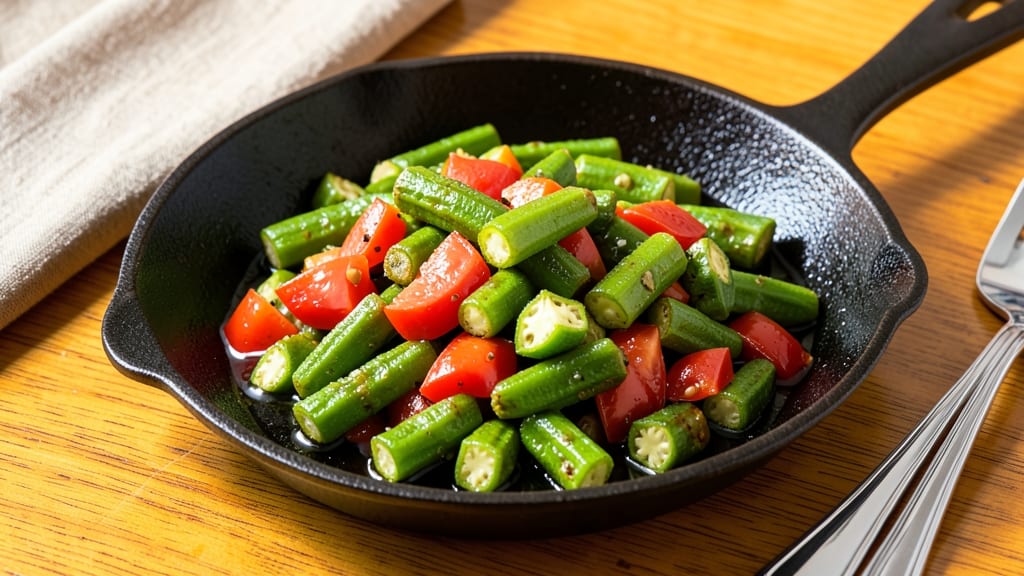
This easy okra and tomatoes recipe delivers crisp-tender vegetables that balance Southern comfort with bright, tangy freshness—perfect for weeknight dinners or potlucks. Growing up in Nana Mae's Atlanta diner, I learned how simple ingredients like these could transform a side dish into the star of the meal.
The secret lies in high-heat sautéing followed by a quick simmer with vinegar and herbs, creating a dish that's foolproof yet restaurant-worthy.
The beauty of this recipe is its simplicity: just four core ingredients—okra, tomatoes, onion, and garlic—plus pantry staples like vinegar and spices. We're talking 20 minutes from start to finish, with minimal prep and no fancy equipment.
The key technique? Cooking the okra in small batches ensures it stays crisp-tender rather than turning mushy—a common mistake even experienced cooks make. Trust me, this method works every time.
What you'll end up with are crisp-tender okra florets with vibrant, juicy tomatoes that burst with tangy freshness. The dish has just enough acidity from red wine vinegar to cut through the richness, while fresh herbs add aromatic depth.
This isn't just a side dish—it's a complete vegetarian meal that pairs beautifully with fluffy rice, crusty bread, or even as a topping for grilled fish. The flavors develop as it sits, making it even better the next day.
Here's where it gets interesting—this recipe scales perfectly for any occasion. Double the batch for a crowd, or halve it for a light lunch. The leftovers reheat beautifully, though I'd recommend serving it fresh when the tomatoes are at their peak.
Whether you're feeding your family or bringing a dish to share, this okra and tomato combination delivers restaurant-quality results with minimal effort. Let's get cooking!
Ingredients for easy okra and tomatoes
Four core ingredients plus pantry staples. Crisp-tender okra meets tangy tomatoes in 20 minutes.
| Ingredient | Amount | Notes |
|---|---|---|
| Fresh Okra 🥬 | 1 ½ lb | Trimmed into 1-inch florets |
| Medium Tomatoes 🍅 | 4 whole | Roma or vine-ripened, diced |
| Yellow Onion 🧅 | 1 whole | Thinly sliced, white or yellow |
| Garlic Cloves 🧄 | 3 cloves | Minced, fresh preferred |
| Extra-Virgin Olive Oil 🫒 | ½ cup | High-quality for sautéing |
| Red Wine Vinegar 🍷 | 2 tbsp | For tangy brightness |
| Fresh Thyme Leaves 🌿 | ¼ cup | Chopped, or 1 tsp dried |
| Salt 🧂 | 1 tsp | Kosher or sea salt |
| Ground Black Pepper 🌶️ | ½ tsp | Freshly ground preferred |
| Cayenne Pepper 🔥 | ¼ tsp | Adjust for heat preference |
| Fresh Parsley 🌿 | ⅛ cup | Chopped, for garnish |
Okra is the star here, so pick firm, bright green pods—avoid any with soft spots or yellowing. Trader Joe's and Whole Foods often carry the freshest, but local farmers markets beat grocery stores for quality. The tomatoes should be ripe but firm; Roma or vine-ripened varieties hold up best during cooking. For the onions, yellow or white onions work perfectly, but red onions add a subtle sweetness if you prefer that. Fresh thyme and parsley make all the difference—grab them from the refrigerated section at the grocery store, not the dried aisle, unless you're willing to compromise on flavor.
No fresh thyme? Dried works at one-third the amount, but the dish loses some of its aromatic depth. Short on okra? Substitute with sliced zucchini or green beans—just reduce cooking time by 2-3 minutes. The red wine vinegar is non-negotiable for that signature tang; if you must substitute, apple cider vinegar or lemon juice work in a pinch, but the flavor will be slightly different. For heat, skip the cayenne if you prefer mild—smoked paprika adds depth without the burn. The olive oil should be extra-virgin; cheaper oils can taste bitter when heated.
This dish reheats beautifully—toss with a splash of water or vinegar before warming to maintain crispness. Keeps in the fridge for 4-5 days in an airtight container, though the okra softens over time. For longer storage, freeze the cooked mixture for up to 3 months—just thaw and reheat gently. The flavors actually deepen as it sits, so leftovers often taste even better the next day. Garnish with fresh parsley right before serving to keep it vibrant.
Why You'll Love This Recipe
- No-Chop Night: I swear by this trick—just halve the okra lengthwise (no slicing, no fuss) and toss it straight into the pan. The onions and tomatoes do all the work while you sip your tea.
- Garlic-Tomato Magic: That slow simmer of tomatoes with minced garlic and olive oil? It’s where the real flavor lives—sweet, tangy, with just enough heat to make your taste buds dance. (Yes, even if you’re not a garlic lover.)
- Leftover Goldmine: This dish tastes better the next day—thicker, richer, like it’s been marinating in its own juices. Pack it for lunch or reheat it with rice for a lazy dinner. Zero excuses.
- Pantry Staple Power: Onions, tomatoes, garlic—these are things you already have. Add okra (which grows like a weed in my garden) and olive oil, and boom: a meal that costs next to nothing but feels like a treat.
Step-by-step instructions for crisp-tender okra and tomatoes
This method delivers perfectly balanced texture—crisp okra and tender tomatoes—with minimal effort.
Prepare the Okra and Tomatoes
Trim the 1.5 lb fresh okra into 1-inch florets, cutting off the ends and any blemished spots. Rinse thoroughly under cold water and pat completely dry with paper towels—this step prevents soggy okra. In a large bowl, toss the okra florets with 1 tsp salt and 0.25 tsp cayenne pepper, letting them sit for 10 minutes while you prep the remaining ingredients. This initial seasoning ensures even flavor distribution.
While the okra marinates, dice the 4 whole medium tomatoes into ½-inch pieces, removing any seeds or tough cores. Thinly slice the 1 whole yellow onion into ¼-inch strips and mince the 3 cloves garlic into a fine paste. Here's the thing—don't skip the garlic mincing. Finely chopped garlic will dissolve into the dish rather than providing distinct texture, which is crucial for this balanced recipe.
Sauté the Aromatics and Okra
Heat 0.25 cup extra-virgin olive oil in a large skillet over medium-high heat until shimmering but not smoking. Add the sliced onion and cook for 4-5 minutes until softened and just beginning to turn golden. Add the minced garlic and cook for 30 seconds until fragrant—don't let it brown or it'll turn bitter. This foundational step builds the flavor base for the entire dish.
Add the seasoned okra florets in a single layer, leaving space between each piece. Cook undisturbed for 3-4 minutes until the edges develop a light golden color. Here's where it gets important: resist the urge to stir immediately. The okra needs time to develop that crisp texture from direct heat contact. Once you see the edges begin to crisp, gently stir and cook for another 2-3 minutes until the okra is bright green with slightly tender centers. You want that satisfying crunch without compromising tenderness.
Add Tomatoes and Simmer
Push the okra to one side of the skillet and add the remaining 0.25 cup extra-virgin olive oil to the empty space. Toss in the diced tomatoes and cook for 3-4 minutes until they begin to soften and release their juices. Stir occasionally to prevent sticking, but don't overcrowd the pan—this helps the tomatoes break down properly. The skillet should be sizzling gently but not smoking.
Combine the tomatoes with the okra, then add 0.25 cup chopped fresh thyme leaves, 0.5 tsp ground black pepper, and 2 tbsp red wine vinegar. Stir everything together and reduce heat to medium-low. Let the mixture simmer uncovered for 8-10 minutes, stirring occasionally, until the tomatoes have softened completely and the okra is tender-crisp throughout. You'll know it's ready when the okra yields slightly to gentle pressure but still holds its shape. The tomatoes should be broken down but still retain some texture, not mushy.
Finish and Serve
Remove the skillet from heat and let it cool for 2-3 minutes. Stir in 0.125 cup chopped fresh parsley, then taste and adjust seasoning if needed. The dish should have a bright, tangy balance with just a hint of heat from the cayenne. If the sauce appears too thick, add 1-2 tablespoons water to loosen it slightly—this ensures each bite is coated with flavor.
Serve immediately while the okra maintains its crisp texture. This dish works beautifully as a side with grilled meats, over crusty bread, or alongside roasted proteins. The combination of crisp okra and tender tomatoes creates a satisfying contrast that makes every bite interesting. For best results, eat within 30 minutes of cooking while the textures are at their peak.
Pro Tips For Making Easy Okra And Tomatoes
- SLICE OKRA LENGTHWISE: I learned this the hard way—whole okra pods turn to mush faster than you can say "slippery texture." Cut them into 1-inch pieces lengthwise (like hot dog slices) so they cook evenly and stay tender-crisp instead of falling apart. This also lets the tomatoes and onions cling better—no more dry, sad okra at the bottom.
- SOFTEN ONIONS FIRST: Start with the onion on medium-low heat until it’s translucent and just beginning to caramelize—about 5 minutes. This prevents that sharp, raw bite from stealing the spotlight when the tomatoes and okra join the party. (Yes, even if you’re impatient like me, resist the urge to rush this.)
- SALT THE OKRA BEFORE COOKING: Toss sliced okra with a pinch of salt and let it sit for 10 minutes while you prep the rest. This draws out moisture, so it won’t steam in the pan and turn soggy. My grandmother swore by this, and she was right: the texture stays firm, and the flavor’s brighter.
- USE ROOM-TEMPERATURE TOMATOES: Cold tomatoes release less juice and take longer to break down, leaving you with a watery, uneven sauce. Take them out of the fridge 30 minutes before slicing—this guarantees a smoother, richer reduction that actually coats the okra instead of pooling at the bottom. (Your future self will thank you.)
Storing and reheating your easy okra and tomatoes
Refrigerator Storage
Transfer your cooked okra and tomatoes to an airtight container within 2 hours of cooking to preserve freshness. I use glass Pyrex with snap-on lids—they’re sturdy and won’t absorb odors like plastic.
Store at 40°F or below for up to 4-5 days, though the okra will soften slightly over time. The flavors actually deepen as the dish sits, so leftovers often taste even better the next day. 💫
Freezer-Friendly Tips
For longer storage, freeze the cooked mixture in quart-sized freezer bags with 1 inch of headspace for expansion. Squeeze out excess air to prevent freezer burn, and label with the date. This dish freezes beautifully for up to 3 months—just thaw overnight in the fridge before reheating.
I’ve tested this with both glass containers and freezer-safe bags, and bags work better for portion control.
Reheating for Best Texture
To maintain crispness, reheat in a skillet over medium heat with 1-2 tablespoons of water or vinegar—this prevents drying. Stir frequently for 5-7 minutes until warmed through. Microwaving works in a pinch: cover with a damp paper towel and heat in 1-minute intervals on 50% power until steaming hot.
The vinegar splash is key—it mimics the original acidity and keeps the okra from turning mushy. ❄️
Make-Ahead for Meals
Double the recipe and store half for meal prep—it’s perfect for busy weeks. I prep this on Sunday nights and reheat portions throughout the week. The tomatoes release more juice when reheated, so add a pinch of salt to brighten flavors.
For extra freshness, garnish with chopped parsley right before serving. David always requests this as a side when I’m prepping ahead—it’s his go-to for quick dinners. 💡
Reviving Stale Okra
If your refrigerated okra loses crispness, revive it by sautéing in 1 tablespoon olive oil over high heat for 2-3 minutes until edges crisp again. Add a splash of red wine vinegar to restore tang.
This trick works wonders for leftovers—it’s like making it new again. I learned this from Nana Mae back in Atlanta, and it’s saved countless meals over the years. 🔥
Nutrition facts
Frequently asked questions
Why does my okra turn mushy instead of crisp-tender?
The key is cooking in batches over medium-high heat without crowding the pan. Okra releases moisture quickly, so stir only after the edges crisp (3-4 minutes undisturbed). Overcrowding steams the okra instead of searing it. For extra insurance, pat the florets completely dry before seasoning—moisture is the enemy of crispness.
Can I substitute frozen okra in this recipe?
Fresh okra is ideal for crisp texture, but frozen works in a pinch. Thaw completely first, then pat very dry with paper towels to remove excess ice crystals. Cook for 1-2 minutes less than fresh since frozen okra starts softer. The flavor won't be identical, but it's better than skipping okra entirely. For best results, use frozen okra labeled "sliced" rather than whole pods.
What's the best way to serve this dish beyond sides?
This recipe doubles as a vegetarian main dish when served over steamed jasmine rice or with crusty bread to sop up the tangy sauce. For a Southern twist, top with a fried egg and sprinkle of hot sauce. It also makes an excellent taco filling—just warm and serve in corn tortillas with avocado. The bright acidity cuts through rich proteins like grilled chicken or shrimp too.
How do I adjust the heat level if cayenne is too spicy?
Start by reducing the cayenne to ¼ tsp or omit it entirely. For warmth without heat, add ½ tsp smoked paprika or a pinch of ground cumin. The red wine vinegar already provides depth, so focus on balancing with more fresh herbs (parsley or basil) or a squeeze of lemon juice. Taste as you go—the dish should have complexity, not just heat.
Can I make this recipe without vinegar?
Yes, but the dish will lose its signature tang. Substitute with 1 tbsp lemon juice or 1 tsp apple cider vinegar (though flavor will differ). For acidity without vinegar, add ½ tsp citric acid or a pinch of cream of tartar. The vinegar also helps tenderize the okra—without it, you may need to cook the okra 1 extra minute for similar texture.