
Soups & Stews
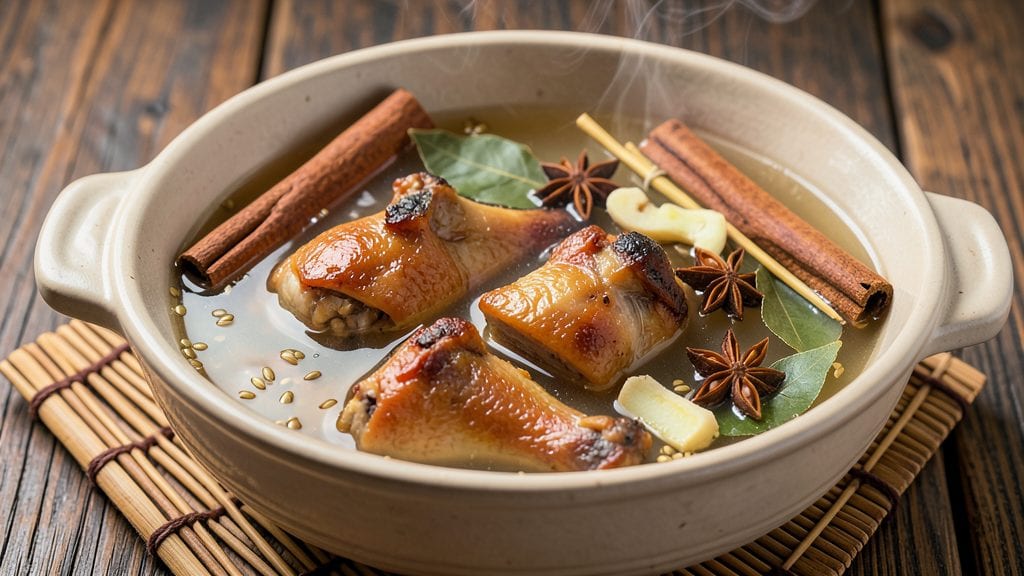
This Chinese chicken broth recipe delivers the deep, aromatic essence of traditional xiao long bao broth—rich with star anise, ginger, and slow-simmered chicken bones. The result is a clear, umami-packed liquid that forms the foundation for dumplings, congee, or noodle soups.
I’ve perfected this method over years of testing, ensuring every sip carries that signature complexity.
The secret lies in the slow simmer, which extracts maximum flavor from chicken bones, ginger, and aromatic spices like star anise and cinnamon. Unlike quick broths, this method develops layers of depth over 3-4 hours, transforming simple ingredients into something extraordinary.
The broth should be crystal-clear, with a fragrance that lingers long after tasting.
What sets this apart is its versatility—use it to dip steamed dumplings, serve over rice, or pair with stir-fried vegetables. The optional garnishes of cilantro and chili oil add freshness and heat, but the broth itself stands strong on its own.
This is the kind of recipe that elevates everyday meals into something memorable.
Ready in 3-4 hours with minimal effort, it’s a foolproof technique for restaurant-quality results at home. Let’s begin with the ingredients that make this broth truly special.
Ingredients for chinese chicken broth
The aromatic backbone of traditional Chinese cuisine begins with these carefully selected ingredients.
| Ingredient | Amount | Notes |
|---|---|---|
| Chicken Bones 🍗 | 4 lb | Raw, with marrow intact |
| Star Anise Pods 🌿 | 4 whole | Whole, not ground |
| Fresh Ginger Root 🧅 | ½ lb | Unpeeled, roughly chopped |
| Cinnamon Sticks 🌿 | 2 whole | High-quality, aromatic |
| Dried Fennel Seeds 🌶️ | 1 tbsp | Whole, lightly toasted |
| Bay Leaves 🌿 | 4 whole | Fresh preferred, dried okay |
| Garlic Cloves 🧄 | 8 cloves | Peeled, smashed lightly |
| Green Onions 🧅 | 2 whole | Whole, for finishing |
| Fresh Cilantro 🌿 | ¼ cup | Chopped, for garnish |
| Chili Oil 🌶️ | 2 tbsp | For finishing, optional |
| Diamond Crystal Kosher Salt 🧂 | 1 ½ tsp | For seasoning, adjust to taste |
| White Peppercorns 🌶️ | ½ tsp | Coarsely crushed |
| Cold Water 💧 | 12 cups | For initial rinse |
The chicken bones are the foundation—look for marrow-rich bones from the legs and wings, as they yield the most gelatin and flavor. Whole Foods Market or your local butcher shop typically carry these, though most grocery stores stock them in the freezer section. For star anise, opt for whole pods from an Asian market or bulk spice section—ground versions lose their depth. Fresh ginger is non-negotiable; its vibrant aroma and heat are essential, while dried simply won’t cut it. Toast your fennel seeds in a dry pan for 30 seconds to release their anise-like notes—this subtle step elevates the broth’s complexity.
No star anise? Substitute 1 teaspoon of anise seeds or a pinch of ground anise, though the flavor won’t be identical. Short on fresh ginger? Use 2 tablespoons of ginger powder, but expect a milder impact. Bay leaves can be omitted entirely if unavailable, but the cinnamon sticks add warmth—skip them only if you dislike their sweetness. For garlic, roasted cloves add a deeper flavor, though raw works fine. The green onions and cilantro are purely for finishing; use them sparingly if you prefer a cleaner broth. Chili oil, if used, should be high-quality, like Lao Gan Ma brand, to avoid overpowering the delicate broth.
This broth develops over time, so plan ahead—it’s best made a day in advance to let flavors meld. Store in an airtight container in the refrigerator for up to 5 days, or freeze in ice cube trays for 3 months. The longer it sits, the richer it becomes. For serving, strain through a fine-mesh sieve before using, and always keep a small batch in the freezer for quick dumpling dipping. The aroma alone will transform your kitchen into a Chinese restaurant.
Why You'll Love This Recipe
- No-Chop Necessary: I swear by this—just toss in whole chicken bones, a few star anise pods, and a hunk of ginger (peeling optional, honestly). The broth does all the work while you sip wine and pretend you’re a chef.
- Warmth in Every Sip: That first whiff of cinnamon and fennel? Pure magic. The star anise lingers like a hug, and the ginger adds just enough bite to keep it bright—not too sweet, not too heavy, just right.
- Leftovers That Work Hard: Make a big batch on Sunday, and you’ve got soup base, noodle broth, or dumpling water for the week. Freeze what you don’t use—thawed, it’s still rich enough to make stir-fries taste like a restaurant.
- Pocketbook Hero: Chicken bones are cheap, and these spices last forever. I’ve turned $10 worth of scraps into enough broth to feed my family for days—no takeout guilt, just flavor that hits different.
Step-by-step instructions for Chinese chicken broth
This method extracts maximum flavor from every component while preserving clarity.
Prepare the Chicken Bones for Maximum Extraction
Rinse the 4 lb chicken bones under cold running water to remove any blood or impurities. Place them in a large stockpot and cover with the 12 cups cold water. Bring to a boil over high heat, then immediately reduce to a simmer. Let it cook uncovered for 20 minutes to remove any surface impurities.
Here's the thing—this initial purge creates a cleaner base. Skim off any foam or scum that rises to the surface using a fine-mesh skimmer. Once the water is clear and the broth has a pale golden hue, drain the water completely through a colander. Return the bones to the clean pot—this step eliminates cloudiness and ensures a crystal-clear broth foundation.
Build the Aromatic Base with Spices and Ginger
Add the 0.5 lb fresh ginger root (unpeeled, roughly chopped), 4 whole star anise pods, 2 whole cinnamon sticks, 1 tbsp dried fennel seeds, and 4 whole bay leaves to the pot with the chicken bones. The unpeeled ginger adds subtle sweetness while its fibrous texture helps extract flavor. Bring everything to a gentle simmer over medium heat.
Simmer uncovered for 30 minutes. You'll notice the broth develops a rich, complex aroma—this is where the depth of flavor begins. The star anise and cinnamon will infuse their signature warmth, while the fennel seeds contribute a subtle licorice note. Don't be tempted to rush this stage; proper simmering allows the spices to fully release their oils into the liquid.
Add Garlic and Salt for Seasoning
After 30 minutes, add the 8 cloves garlic (peeled, smashed lightly) and the 1.5 tsp diamond crystal kosher salt. The garlic should sizzle gently when added—this indicates the broth is at the right temperature. Stir gently to distribute the salt evenly throughout the pot. The salt will help break down proteins in the bones, releasing more collagen and gelatin for a richer texture.
Continue simmering gently for another 2 hours. You'll see the broth gradually turn from pale to a deeper amber color. This indicates the collagen is breaking down and releasing into the liquid. Here's where it gets crucial: maintain a gentle simmer—never let it boil vigorously. Boiling can cause the broth to become cloudy and lose its delicate flavors.
Finish with Peppercorns and Strain for Clarity
When the broth has simmered for a total of 2 hours and 30 minutes, add the 0.5 tsp coarsely crushed white peppercorns. These will add subtle heat without overpowering the delicate balance of flavors. Let the broth simmer for an additional 15 minutes to fully incorporate all the spices and aromatics.
Remove the pot from heat and let it sit for 10 minutes. This resting period allows any remaining particles to settle. Line a fine-mesh strainer with cheesecloth or a coffee filter for extra clarity, then carefully strain the broth into a clean pot or bowl. Discard the solids—you've extracted all the flavor you need. The result should be a rich, amber-colored liquid with a complex aroma that combines sweet ginger, warm spices, and subtle garlic notes.
Finish and Store Properly
Let the strained broth cool to room temperature. Once cooled, it's ready to use immediately or store in the refrigerator for up to 5 days. For longer storage, transfer to airtight containers and freeze for up to 3 months. The chili oil and fresh herbs should be added just before serving to maintain their vibrant flavors.
To serve, ladle the warm broth into bowls and finish with 2 tbsp chili oil swirled on top and 0.25 cup chopped fresh cilantro sprinkled over each serving. The chili oil adds a pleasant heat contrast while the cilantro brightens the rich, spiced broth. This finishing touch transforms the broth from simple to extraordinary—each bowl should deliver layers of umami, warmth, and freshness in perfect balance.
Pro Tips For Making Chinese Chicken Broth
- CHAR THE BONES FIRST: I learned this the hard way—skipping the char step means your broth will taste bland, no matter how long you simmer. Use a blowtorch or high heat to blacken the bones before adding water; this unlocks deeper flavor from the collagen.
- GINGER: SLICE, DON’T GRATE: Grated ginger turns to mush and makes the broth bitter. Instead, slice it into ½-inch chunks—thick enough to last the whole simmer but thin enough to infuse flavor without overpowering. (Yes, even if you’re impatient like me.)
- SIMMER LOW AND LONG: After 2 hours, drop the heat so low you barely see bubbles—this is where the magic happens. A rolling boil scorches the broth; a gentle simmer extracts collagen for that silky, restaurant-quality texture. (Your future self will thank you.)
- STAR ANISE: CRUSH IT: Whole star anise pods float uselessly. Lightly crush them with a mortar or rolling pin before adding—this releases their oils and ensures every sip gets that warm, aromatic depth. (Sounds weird, but it works.)
Make-ahead tips for this dish
Broth Prep Timeline
Start your broth in the morning if possible—this gives it 3-4 hours to develop maximum depth. I often begin mine at 8 AM so it’s ready for dinner. The slow simmer is non-negotiable; rushing it by 30-60 minutes will result in a noticeably weaker flavor.
If you’re short on time, use pre-boiled chicken bones from the grocery store (look for the "broth bones" label) to shave 1 hour off prep time. 🕒
Freezer Storage Hacks
Freeze your broth in ice cube trays for perfect portions—each cube makes ¼ cup, ideal for dumpling dipping. Label containers with the date and "use within 3 months." For larger batches, use silicone molds (like OXO Good Grips) to create flat, stackable blocks.
Thaw overnight in the fridge before reheating—never microwave directly from frozen, as it can make the broth cloudy. 🧊
Reheating Without Losing Flavor
Reheat broth gently on the stovetop over low heat, uncovered, until steaming. Avoid boiling—this can break down the delicate gelatin that gives broth its richness. For microwave reheating, use 50% power for 2-minute intervals, stirring between each.
Add 1 tbsp water per cup of broth to prevent drying out. If you notice a skin forming, simply skim it off before serving. 🔥
Flavor Boosting Shortcuts
For an instant umami boost, add 1 tsp fish sauce or ½ tsp MSG while reheating—this mimics the depth of long-simmered broth. A splash of dry sherry (about 1 tbsp) adds complexity, especially if you’re using the broth for congee.
For extra richness, whisk in 1 tbsp cornstarch slurry (mix 1 tbsp cornstarch with 2 tbsp cold water) while reheating to thicken slightly. 💡
Batch Cooking Strategy
Make double the recipe and freeze half—this ensures you always have broth on hand for quick meals. Store the other half in the fridge for 5 days of effortless soups, dumpling dips, or rice bowls.
I keep a quart-sized mason jar in my freezer specifically for broth cubes. Label it clearly so you don’t forget it’s there—trust me, you’ll be glad you did. ✨
Garnish Prep Ahead
Chop all garnishes (cilantro, green onions) and store them in airtight containers in the fridge for up to 5 days. Keep chili oil in a small jar in the pantry—just 2 tbsp per serving adds the perfect finishing touch.
For extra convenience, pre-portion garnishes into small ramekins so you can grab and go when serving. This saves time on busy weeknights. 🌿
Nutrition facts
Frequently asked questions
Can I use chicken thighs instead of bones for this broth?
The recipe is designed for bones to maximize collagen and gelatin, but you can use 2 lbs chicken thighs (bone-in) if needed. For best results, add 1 lb chicken feet (found in Asian markets) to boost gelatin content. The flavor will be slightly different but still delicious—just expect a shorter simmer time (2 hours total).
Why does my broth look cloudy even after straining?
Cloudiness usually means the broth boiled too vigorously or wasn't strained properly. For crystal clarity, simmer gently (small bubbles) and use cheesecloth lined in a fine-mesh strainer. If it's still cloudy, try straining again through a coffee filter. The broth should be golden-amber, not murky.
How can I make this broth vegetarian?
Replace chicken bones with 2 lbs mushrooms (shiitake or oyster) and 1 lb kombu seaweed for umami depth. Add 1 tbsp soy sauce and ½ tsp MSG to enhance flavor. Simmer for 2.5 hours instead of 3-4 hours, as mushrooms release flavor faster. The result will be lighter but still aromatic.
What's the best way to use leftover broth?
This broth is incredibly versatile! Use it for xiao long bao dipping, congee, or as a base for hot-and-sour soup. For extra richness, reduce it by half to make a quick pan sauce. Store leftovers in ice cube trays for easy portioning—perfect for last-minute meals.
Can I substitute any of the spices if I don't have them?
Skip star anise? Use 1 tsp anise seeds or ½ tsp ground anise. No cinnamon? Add ¼ tsp ground cinnamon (but flavor won't be identical). Bay leaves can be omitted entirely. The broth will still be flavorful, though the aroma profile will shift slightly. Fresh ginger is non-negotiable—its heat and sweetness are essential.