
Desserts
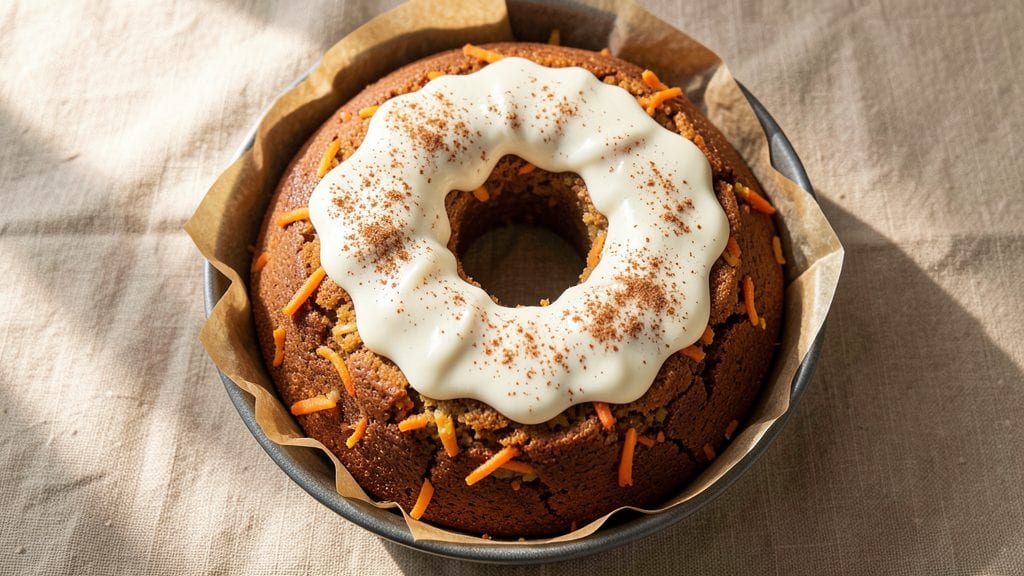
This carrot pound cake recipe delivers the perfect balance of moist, spiced cake and vibrant orange swirls that make every slice feel like a celebration. The secret lies in finely grated carrots and a precise blend of warm spices that create a tender crumb with just the right density.
I developed this version after years of testing—it’s the one that finally earned rave reviews from even the most skeptical cake lovers in my family.
The recipe combines classic pound cake structure with the natural sweetness of carrots and a hint of cinnamon, nutmeg, and ginger for depth. Unlike traditional carrot cakes, this version skips heavy frosting—opt instead for a simple spiced cream cheese glaze that complements the cake’s natural richness.
Baking time is carefully calibrated to ensure a golden top and a tender, moist interior that stays fresh for days.
What sets this apart is the swirled orange glaze—a bright, citrusy contrast that cuts through the cake’s spiced warmth. The texture is what truly impresses: a tender crumb with just enough structure to hold slices neatly, yet soft enough to melt in your mouth.
Perfect for birthdays, holidays, or simply treating yourself to something special, this cake delivers restaurant-quality results with minimal effort.
Pair it with vanilla ice cream or a dollop of whipped cream for an extra touch of indulgence. The recipe scales beautifully for gatherings, and leftovers keep well for up to 5 days.
Ready to bake a cake that’s as impressive as it is delicious? Let’s get started with the ingredients and instructions.
Ingredients for carrot pound cake
Classic pound cake ingredients meet vibrant orange swirls for a tender, spiced celebration cake.
| Ingredient | Amount | Notes |
|---|---|---|
| All-Purpose Flour 🌾 | 3 cups | Sifted for even texture |
| Granulated Sugar 🍚 | 2 cups | White or light brown |
| Light Brown Sugar 🍚 | ¾ cup | Packed firmly |
| Orange Zest 🍊 | 2 tbsp | From 1 large orange |
| Orange Juice 🍊 | ½ cup | Freshly squeezed |
| Large Eggs 🥚 | 4 whole | Room temperature |
| Unsalted Butter 🧈 | 1 ½ cups | Cold, cubed |
| Finely Grated Carrots 🥕 | 2 cups | Packed, no pulp |
| Ground Cinnamon 🌿 | 2 tsp | Freshly ground preferred |
| Ground Nutmeg 🌿 | ½ tsp | Freshly grated nutmeg |
| Ground Ginger 🌿 | 1 ½ tsp | Freshly ground preferred |
| Baking Soda 🧪 | 1 ½ tsp | Pure baking soda |
| Salt 🧂 | ½ tsp | Fine sea salt |
| Vanilla Extract 💧 | 2 tsp | Pure vanilla extract |
| Orange Glaze 🍊 | 1 cup | For swirling (see notes) |
| Cream Cheese 🧀 | 8 oz | Room temperature |
| Powdered Sugar 🍚 | 1 ½ cups | Sifted for smooth glaze |
| Heavy Cream 🥛 | ¼ cup | Chilled for frosting |
The carrots are non-negotiable—organic or conventional, but always finely grated with a box grater (no food processor). Costco or Trader Joe's often carry pre-grated carrots in tubes, but fresh is always better. For the spices, Penzeys or local spice shops offer freshly ground cinnamon and nutmeg that elevate the flavor. The butter should be cold when cubed—this ensures a tender crumb. If you're short on time, room-temperature butter works too, but it may yield a slightly denser cake. The orange zest should be from a bright, juicy orange—avoid any with blemishes or dull color.
No fresh orange juice? Bottled orange juice works in a pinch, but freshly squeezed has more depth. Substituting brown sugar? Use white sugar plus 1 tsp molasses for depth. For the glaze, if you can't find powdered sugar, sift granulated sugar into a fine powder. The cream cheese should be full-fat for best texture—low-fat versions can make the frosting grainy. If you're making this ahead, prep the glaze ingredients separately and mix them just before swirling to keep it vibrant. The vanilla extract must be real—imitation vanilla will ruin the flavor.
This cake keeps beautifully for 5 days at room temperature, wrapped tightly in plastic. For longer storage, freeze slices for up to 3 months. The glaze sets as it cools, so reheat slices for 10 seconds to soften it slightly. I always bake two cakes—one for immediate serving and one to freeze for later. The frosting can be made 2 days ahead and stored in the fridge, whipped back to smoothness before use. For serving, a dusting of powdered sugar or extra orange zest adds a professional touch.
Why You'll Love This Recipe
- No Mixer Needed: I swear by this recipe when my mixer’s on strike—just whisk the wet ingredients with a fork until the flour’s almost incorporated. The brown sugar and orange zest blend right in without fighting you.
- Bright Twist on Classic: That citrusy kick from the orange zest and juice flips carrot cake into something fresh. It’s like autumn and spring had a baby—warm spices meet zesty sunshine, and the sugar keeps it from being too heavy.
- Weeknight or Party Star: Slice it for breakfast with coffee, pack it for lunches, or serve it at a brunch where no one will guess it’s secretly budget-friendly. The texture holds up for days, so it’s my go-to for when I’m lazy and hosting.
- Pantry-Friendly Magic: All the ingredients are probably hiding in your cupboards already—no fancy swaps, no last-minute grocery runs. Honestly, the only thing stopping you is forgetting to zest the orange first. (Pro tip: do it while the cake’s baking.)
Step-by-step instructions for carrot pound cake recipe
Here's the method for creating a moist, spiced cake with vibrant orange swirls and creamy frosting.
Prepare the Carrot Cake Batter
Preheat your oven to 350°F and grease two 9-inch round cake pans with butter, then line the bottoms with parchment paper. In a large mixing bowl, combine the 3 cups all-purpose flour, 2 cups granulated sugar, 0.75 cup light brown sugar, 2 tsp ground cinnamon, 0.5 tsp ground nutmeg, 1.5 tsp ground ginger, 1.5 tsp baking soda, and 0.5 tsp salt. Whisk these dry ingredients together until fully incorporated and no lumps remain.
In a separate bowl, cream together the 1.5 cups unsalted butter and 0.5 cup orange juice until light and fluffy, about 3-4 minutes. Add the 4 whole large eggs, one at a time, beating well after each addition. Stir in the 2 tbsp orange zest and 2 tsp vanilla extract. Gradually add the dry ingredients to the wet mixture, mixing on low speed until just combined. Fold in the 2 cups finely grated carrots using a spatula, ensuring even distribution throughout the batter.
Bake the Cake Layers
Divide the batter evenly between the two prepared cake pans. Bake for 25-30 minutes, or until a toothpick inserted into the center comes out clean. The cake should be golden brown with a slight dome on top. Allow the cakes to cool in the pans for 10 minutes, then transfer them to a wire rack to cool completely before assembling.
Here's the thing—don't overbake. The cake will continue to set as it cools, and you want it to remain moist. If the top browns too quickly, tent the pans with foil to prevent over-browning while still allowing the center to cook through.
Prepare the Orange Glaze
While the cakes are cooling, prepare the 1 cup orange glaze. In a small saucepan, combine the 1 cup orange glaze with 0.25 cup heavy cream. Heat over medium-low heat, stirring constantly, until the mixture is smooth and slightly thickened, about 3-5 minutes. Remove from heat and let it cool to room temperature. This glaze will add a bright, citrusy finish to your cake layers.
Real talk: If you're using a store-bought glaze, simply follow the package instructions for heating. The key is to achieve a consistency that's pourable but not too runny—it should coat the back of a spoon smoothly when cool.
Assemble the Cake with Frosting
Once the cakes are completely cool, place one layer on a cake stand or plate. Spread a thin layer of the orange glaze over the top of the first cake layer. This helps the layers stick together and adds moisture. Place the second cake layer on top and repeat the glaze layer between the cakes.
In a separate bowl, beat together the 8 oz cream cheese, 1.5 cups powdered sugar, and 0.25 cup heavy cream until smooth and fluffy. Spread this frosting evenly over the top and sides of the cake. Use a spatula to create swirls in the frosting for a decorative finish, then drizzle the remaining orange glaze over the top in zigzag patterns for a vibrant look.
Swirl the Glaze and Serve
To create the signature orange swirls, use a butter knife or offset spatula to gently drag the glaze across the frosting in a circular motion. Start at the center of the cake and work your way outward, applying light pressure to create thin, even lines. This technique ensures the glaze doesn't pool in one spot but instead creates an even, decorative pattern.
Let the cake rest for 15-20 minutes before slicing to allow the glaze to set slightly. Serve at room temperature for the best texture and flavor. Each slice should have a moist, spiced cake layer with a bright citrus glaze and creamy frosting that balances the sweetness.
Pro Tips For Making Carrot Pound Cake
- Test for Doneness: Stick a toothpick in the center—when it comes out with moist crumbs (not wet batter), it’s done. Overbaking turns this cake dry; pull it out at 205°F (90°C) and let it sit 5 minutes. Trust the crumb test over the timer.
- Grate Carrots Fine: Skip the food processor—hand-grate them into tiny, even shreds. Larger chunks make the texture uneven, and you’ll taste the carrots instead of the cake’s sweetness. A box grater with the smallest holes works best.
- Whisk Dry Ingredients: Sift the flour, sugar, and spices together, then whisk them in the bowl for 10 seconds. This aerates the batter and prevents dense pockets. I learned this the hard way—my first batch was brick-heavy.
- Use Fresh Zest: Buy oranges the same day you bake—zest loses potency fast. Scrape only the bright orange layer (no white pith), and measure it precisely. Too much makes the cake bitter; too little feels flat. Store-bought zest is fine, but fresh is brighter.
Common mistakes when making your carrot pound cake
Overmixing the Batter
I’ve ruined more cakes than I’d admit by overmixing the batter, which leads to a dense, tough texture. Once you’ve combined the dry ingredients with the wet, mix just until the 2 cups finely grated carrots are evenly distributed—no more than 20-30 strokes with a spatula.
Overmixing develops gluten, which makes the cake chewy instead of tender. Use a gentle hand, especially when folding in the carrots—they’re heavy enough to weigh down the batter naturally. 💡
Skipping Room Temp Ingredients
Cold butter and eggs are the sneakiest culprits for a cake that falls apart. Always let your 1.5 cups unsalted butter and 4 large eggs sit at room temperature for 1-2 hours before mixing.
Cold butter won’t cream properly, leading to a greasy texture, and cold eggs won’t emulsify well, causing lumps. Pro tip: Place them in a bowl of warm water for 10 minutes if you’re in a hurry. The cake’s moisture balance depends on this step!
Incorrect Carrot Grating
Pre-grated carrots from a tube are a baking shortcut, but they’re packed with liquid and often contain preservatives that make your cake soggy. Always grate your own using a box grater with small holes—this removes excess moisture and ensures even distribution.
Press the grated carrots into a clean kitchen towel, wrap it up, and squeeze out as much liquid as possible before adding them to the batter. This step is non-negotiable for a tender crumb. 🥕
Underbaking or Overbaking
The 25-30 minute bake time is a guideline, but your oven might run hot or cold. Insert a toothpick into the center—it should come out with a few moist crumbs, not wet batter (underbaked) or dry crumbs (overbaked).
If the top browns too quickly, tent the pans with foil after 15 minutes to prevent over-browning while the center cooks through. A cake that’s underbaked will be gummy, while overbaked cake turns dry and crumbly.
Glaze Consistency Issues
The orange glaze should be thick enough to coat the back of a spoon but still pourable—like heavy syrup. If it’s too thin, simmer it longer; if too thick, thin it with 1 tsp orange juice.
I’ve seen glaze pool at the bottom of the cake or crack when cool, both signs of incorrect consistency. Test it by dipping a spoon in: it should leave a smooth, even trail. Let it cool completely before swirling to avoid melting the frosting. ✨
Assembling Too Soon
Patience is key when assembling this cake. If you try to stack the layers while they’re still warm, the frosting will melt and slide off, and the glaze won’t set properly. Always let the cakes cool completely—at least 2 hours—before adding the frosting.
This ensures clean slices and a professional finish. Trust me, the wait is worth it for that perfect first bite! 💪
Nutrition facts
Frequently asked questions
Can I substitute white sugar for brown sugar in this carrot pound cake?
You can replace the 0.75 cup light brown sugar with 0.75 cup white sugar plus 1 teaspoon molasses for depth of flavor. The molasses mimics the caramel notes from brown sugar. However, the cake will be slightly less moist, so consider adding 1 tablespoon extra orange juice to compensate. The texture won't change dramatically, but the spiced profile will be slightly brighter.
How do I make this cake gluten-free?
Replace the 3 cups all-purpose flour with a 1:1 gluten-free baking flour blend (like Bob's Red Mill or King Arthur). Add 1 teaspoon xanthan gum if your blend doesn't include it. For the best results, also swap the 1.5 teaspoons baking soda with 2 teaspoons baking powder to ensure proper rise. The texture will be slightly denser but still tender. Always test your gluten-free flour blend first in small batches.
Can I bake this cake in a single 9x13-inch pan instead of two round pans?
Yes, but you'll need to reduce the baking time to 35-40 minutes and check for doneness at 30 minutes. A single layer will bake faster and may dry out more quickly. For best results, brush the top with 1 tablespoon orange juice after 20 minutes to keep it moist. The cake will have a slightly denser texture but still delicious. Consider cutting it into squares for easy serving.
Why does my cake turn out dry even when I follow the recipe?
Dry cake usually results from overbaking, old ingredients (especially baking soda or eggs), or using pre-grated carrots with excess moisture. Always bake until a toothpick comes out with moist crumbs, not clean. For extra moisture, try adding 2 tablespoons sour cream or Greek yogurt to the batter. Also, store the cake in an airtight container with a slice of bread to absorb dryness overnight.
Can I make this cake ahead of time for a party?
Bake the layers 1-2 days ahead and store them wrapped tightly in plastic at room temperature. Assemble the cake just before serving—this prevents the frosting from melting or the glaze from becoming sticky. For longer storage, freeze the baked layers (without frosting) for up to 3 months. Thaw completely before assembling. The flavors actually improve as the cake sits, especially the spiced notes.