Main Courses
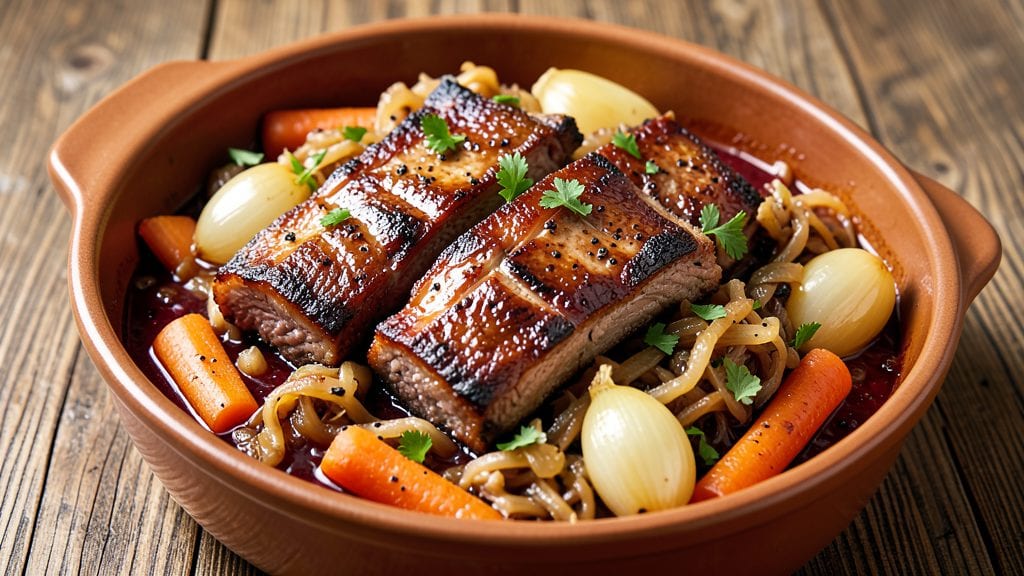
This beef short ribs and sauerkraut recipe delivers restaurant-quality comfort food with tender, fall-off-the-bone meat and tangy, crunchy sauerkraut that cuts through the richness. After years of perfecting braising techniques, I've developed a method that transforms tough short ribs into melt-in-your-mouth perfection while keeping the sauerkraut crisp and vibrant.
The key lies in proper searing and slow cooking—no shortcuts here, just deep flavor development.
The process begins with a deep brown sear that creates a flavorful crust, followed by deglazing to capture every bit of caramelized goodness. Then, the ribs braise in a rich combination of red wine, beef broth, and aromatic vegetables until they're fork-tender.
Meanwhile, the sauerkraut gets warmed just enough to soften slightly while retaining its signature crunch and tangy bite.
By the time you plate this dish, you'll have perfectly sauced short ribs with crisp edges and tender centers, served alongside sauerkraut that adds just the right amount of bite. The sauce clings to every bite, creating a symphony of flavors that balances sweet, savory, and tangy notes.
This is the kind of meal that makes your kitchen smell like a German beer hall and leaves everyone asking for seconds.
The beauty of this recipe is its versatility—serve it with crusty bread to soak up every last drop of sauce, or pair it with roasted potatoes for a complete meal.
The leftovers reheat beautifully, making it perfect for meal prep. Let's get started on creating this hearty, flavorful masterpiece that's sure to become a family favorite.
Ingredients for beef short ribs and sauerkraut
Four pounds of beef short ribs and tangy sauerkraut make this hearty dish unforgettable.
| Ingredient | Amount | Notes |
|---|---|---|
| Beef Short Ribs 🥩 | 4 lb | Bone-in, 1-1.5 inch thick |
| Yellow Onion 🧅 | 1 whole | Chopped into 1-inch pieces |
| Carrots 🥕 | 4 medium | Cut into 1-inch chunks |
| Garlic Cloves 🧄 | 6 cloves | Peeled and smashed |
| Red Wine 🍷 | 1 cup | Bold dry variety like Cabernet |
| Beef Broth 💧 | 2 cups | Low-sodium preferred |
| Tomato Paste 🍅 | 2 tbsp | Smooth, not chunky |
| Sauerkraut 🥬 | 2 cups | Unopened jar preferred |
| Bay Leaves 🍃 | 2 whole | Fresh preferred |
| Black Peppercorns 🌶️ | 1 tsp | Coarsely crushed |
| Salt 🧂 | 1 ½ tbsp | Kosher or sea salt |
| Olive Oil 🫒 | 2 tbsp | Extra-virgin for searing |
| Crusty Bread 🍞 | 1 loaf | For serving |
| Fresh Thyme 🌿 | ½ cup | Leaves only, chopped |
The beef short ribs are the star—look for bone-in cuts with good marbling at your butcher or grocery store's meat counter. Costco or Whole Foods often carry pre-cut ribs, but if buying whole, ask for the bone-in variety (they're cheaper and more flavorful). The ribs should be about 1-1.5 inches thick for even cooking. For the sauerkraut, grab an unopened jar from the refrigerated section—it's fresher and less watery than canned versions. If you can't find fresh thyme, dried works at one-third the amount.
No red wine? Substitute beef broth with 1 tbsp balsamic vinegar—it adds depth without alcohol. The carrots can be swapped for celery or parsnips if you prefer. For the tomato paste, Trader Joe's squeeze tubes are perfect—they're convenient and keep well. If your sauerkraut is too watery, drain it thoroughly and pat dry with a paper towel to keep it crisp when reheated. The bay leaves add subtle flavor, but if you're out, a sprig of rosemary works too.
This dish tastes even better the next day—braise the ribs for 3 hours, then refrigerate and reheat gently in the sauce. The ribs keep 4-5 days in the fridge, and the sauce freezes beautifully for 3 months. Serve with crusty bread to soak up every last drop of that rich, tangy sauce. I always make extra sauce to drizzle over roasted potatoes or eggs the next morning—it's that good.
Why You'll Love This Recipe
- One-Pan Magic: I swear by this recipe for lazy nights—just sear the ribs, toss in chopped onions and carrots, pour the wine, and let the oven do the work. No fancy techniques, no extra dishes, and the sauerkraut’s tang cuts through the richness like a breath of fresh air.
- Wine-Infused Richness: That splash of red wine? It’s not just for flavor—it tenderizes the ribs while adding depth that makes you want to close your eyes and savor every bite. The garlic and caramelized onions take it from good to "I’ll make this again tomorrow."
- Weeknight or Weekend: Honestly, it’s my go-to for both: a quick weeknight dinner with minimal effort, or a showstopper when friends drop by. The ribs are forgiving—great cold the next day in sandwiches, or reheated with a crispy edge for leftovers that still taste like a restaurant meal.
- Budget-Friendly Feast: Short ribs might seem fancy, but they stretch further than you’d think, especially with sauerkraut and veggies bulking it out. I’ve fed four people for under $20, and the leftovers? They’re my secret weapon for lunch the next two days—no sad, soggy reheats here.
Step-by-step instructions for beef short ribs and sauerkraut
Here's how to transform tough short ribs into melt-in-your-mouth perfection with tangy sauerkraut.
Sear the Short Ribs for Deep Flavor
Heat a large Dutch oven over medium-high heat until very hot. Add the 2 tablespoons olive oil and swirl to coat the bottom. Working in batches to avoid crowding, add the 4 lb beef short ribs and sear for 3-4 minutes per side until deeply browned. You're looking for a rich, caramelized crust that forms on the meat.
I like to press down gently on the ribs during the first minute of searing—this prevents them from curling and ensures even contact with the hot pan. Once all ribs are browned, transfer them to a plate and set aside. Don't wipe out the Dutch oven yet; those browned bits are pure flavor.
Build the Flavorful Base
In the same Dutch oven, add the 1 whole yellow onion and 4 medium carrots cut into chunks. Cook for 5-6 minutes until the vegetables begin to soften and take on color. Add the 6 cloves garlic cloves and 2 tablespoons tomato paste, stirring to coat everything in the paste.
Pour in the 1 cup red wine and scrape up all those delicious browned bits from the bottom of the pot. Let it simmer for 3-4 minutes until the wine reduces by half and the aroma becomes intense. This step develops the foundation of your sauce—don't skip it.
Braise Until Fork-Tender
Return the seared short ribs to the Dutch oven. Add the 2 cups beef broth, 2 cups sauerkraut, 2 whole bay leaves, 1 teaspoon black peppercorns, and 1.5 tablespoons salt. Stir gently to combine, then bring everything to a simmer.
Once simmering, cover the Dutch oven and transfer to a 300°F oven. Here's where patience pays off—braise for 3-3.5 hours until the meat is fork-tender and pulls away from the bone easily. I check at the 3-hour mark to ensure the ribs are tender without drying out.
Finish with Fresh Herbs and Sauerkraut
Remove the Dutch oven from the oven and let it sit uncovered for 10 minutes to allow the sauce to thicken slightly. Stir in the 0.5 cup fresh thyme leaves and the 2 cups sauerkraut (if you didn't add it all at once). Taste and adjust seasoning if needed—this is your chance to balance the tangy sauerkraut with the rich meat.
Let the short ribs rest for 15 minutes before serving. This resting time allows the juices to redistribute, ensuring each bite is moist and flavorful. The sauerkraut should be warmed through but still retain its crunchy texture.
Serve with Crusty Bread
Transfer the short ribs and their sauce to a serving platter. Spoon the tangy sauerkraut mixture over the top and garnish with additional fresh thyme if desired. Serve immediately with slices of crusty bread to soak up every last bit of that rich, flavorful sauce.
This dish tastes even better the next day, so if you have leftovers, store them in the refrigerator for up to 3 days. The flavors deepen as the sauce continues to meld with the meat. Enjoy your restaurant-quality meal at home!
Pro Tips For Making Beef Short Ribs And Sauerkraut
- Sear the Ribs Hard: Don’t be gentle—get that cast-iron screaming hot and let the short ribs develop a deep brown crust before adding anything else. I used to rush this, and the sauce never tasted as rich. Two minutes per side, no less, or you’ll miss the flavor foundation.
- Cut Carrots in Chunks: Skip the thin slices—big, ½-inch chunks stay intact and absorb the braising liquid better. Thin pieces turn to mush, and you’ll end up with a watery sauce instead of a thick, caramelized one.
- Deglaze with Wine First: After searing the ribs, pour in the red wine immediately while the pan is still hot. Let it bubble for 30 seconds to pull up all those browned bits before adding anything else. I learned this the hard way—skipping this step leaves your sauce bland.
- Add Sauerkraut Late: Toss the sauerkraut in only during the last 15 minutes of cooking. It’s delicate and will turn mushy if simmered too long. This keeps it crisp enough to cut through the tender ribs without turning into a sad, soggy mess.
Wine and beer pairings for this beef short ribs and sauerkraut
German Riesling Pairing
The tangy acidity of sauerkraut and the rich, caramelized beef short ribs call for a crisp, dry white wine that can cut through the fat without overpowering the dish. I always reach for a German Riesling—specifically a Kabinett or Spätlese from the Mosel region.
The bright citrus notes and mineral finish complement the sauerkraut’s tang while balancing the meat’s richness. Serve it slightly chilled (50-55°F) to enhance its refreshing qualities. 🍷
Malbec for Bold Lovers
If you prefer red wine, a Argentinian Malbec with its dark fruit flavors and soft tannins holds its own against the beef’s depth. Look for a Mendoza Valley bottle—its plummy blackberry and chocolate notes harmonize beautifully with the braised ribs while the sauerkraut’s acidity keeps the wine feeling fresh.
Decant for 30 minutes before serving to soften the tannins and let the wine breathe. 🍇
German Pilsner Beer
For beer lovers, a German Pilsner like Warsteiner or Bitburger is my go-to. The crisp, clean malt profile and hint of hop bitterness cleanse your palate between rich bites of short ribs.
The carbonation also helps cut through the dish’s richness, making each bite feel lighter. Serve at 45-50°F to preserve its refreshing qualities. 🍺
Sparkling Wine Contrast
A dry Prosecco or Spanish Cava adds a festive touch while providing bright acidity that contrasts the dish’s heartiness. The bubbles help reset your palate, making the sauerkraut’s tang and the beef’s depth shine even more.
Opt for a brut style to avoid sweetness clashing with the savory flavors. Serve well-chilled (40-45°F) for the best experience. ✨
Avoid These Pairings
Skip heavy, oaky Chardonnays—they’ll overwhelm the dish’s delicate balance. Tannic Cabernet Sauvignons can clash with the sauerkraut’s acidity, making the wine taste harsh. Even sweet Rieslings (like dessert styles) will compete with the natural sweetness in the braising liquid. Stick to dry, crisp, or medium-bodied options for harmony. 🚫
Serving Temperature Tips
White wines and beers should be chilled but not ice-cold—too cold dulls their flavors. Reds like Malbec should be slightly below room temperature (60-65°F) to soften tannins without losing complexity.
Always taste your wine or beer before serving—adjust the glassware or storage time if needed. A properly chilled glass makes all the difference. 🌡️
Nutrition facts
Frequently asked questions
How do I keep my sauerkraut crispy when cooking with beef short ribs?
Add the sauerkraut only in the last 10-15 minutes of braising to preserve its texture. Drain excess liquid before adding it to the pot, and avoid overcrowding. For extra crunch, serve it on the side and let guests add it themselves.
Can I substitute bone-in short ribs for boneless?
Yes, but adjust cooking time! Bone-in ribs take 3-3.5 hours while boneless may only need 2-2.5 hours. The bones add flavor, so if using boneless, add an extra 1/2 cup beef broth and 1 extra bay leaf to compensate.
What if my short ribs aren't tender after 3 hours?
Check your oven temperature—it should be 300°F. If ribs are still tough, add 1/2 cup more broth, cover tightly, and cook another 30-45 minutes. Never speed this up with higher heat—it'll make the meat dry.
How can I make this dish ahead of time?
Braise the ribs completely, then refrigerate in the sauce for up to 3 days. Reheat gently in a pot with extra broth until warmed through. The sauerkraut can be reheated separately—just warm it in a skillet for 3-4 minutes to revive its crunch.
Is there a quicker version of this recipe?
For a faster method, use a pressure cooker: Sear ribs as directed, then pressure cook with all ingredients for 60 minutes (plus 10 minutes natural release). The meat will be tender, though slightly less caramelized than oven-braised.