
Main Courses
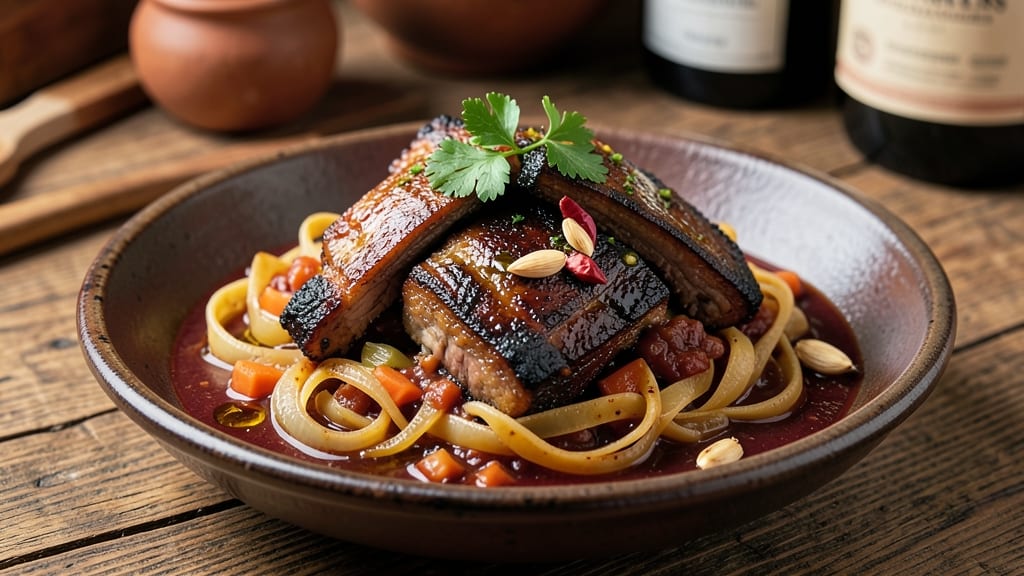
This beef short rib bolognese transforms tough cuts into melt-in-your-mouth perfection through slow braising—where rich, caramelized flavors develop over hours.
The secret lies in searing the ribs first to build deep umami, then simmering them until they fall apart, creating a sauce so velvety it clings to every strand of al dente pasta.
I perfected this recipe after years of testing, balancing traditional Italian technique with modern efficiency for home cooks.
What sets this apart is the marriage of beefy intensity with classic bolognese structure—tomatoes, wine, and herbs work together to create a sauce that's both complex and approachable.
The short ribs contribute marrow-rich depth that store-bought ground beef simply can't match, while the slow cooking process ensures tender meat that practically dissolves at the touch of a fork. This isn't just a pasta sauce; it's a meal in itself.
By the time you twirl that first forkful, you'll experience layers of flavor: the smoky richness of braised ribs, the bright acidity of tomatoes, and the earthy warmth of herbs all coming together in perfect harmony.
The result is a dish that feels indulgent yet balanced—rich enough to satisfy hearty appetites but with enough acidity to keep it from feeling heavy. Serve it with creamy polenta or crusty bread to soak up every last bit of that luxurious sauce.
This recipe delivers restaurant-quality results at home with just a few key techniques: proper searing, controlled simmering, and patience. The process may take time, but the reward—a deeply flavorful, restaurant-worthy bolognese—is worth every minute. Let's get cooking with a dish that transforms simple ingredients into something extraordinary.
Ingredients for beef short rib bolognese
Transform tough beef short ribs into luxurious bolognese with these carefully selected ingredients.
| Ingredient | Amount | Notes |
|---|---|---|
| Beef Short Ribs 🥩 | 2 ½ lb | Bone-in, 1-1.5 inches thick |
| Extra-Virgin Olive Oil 🫒 | ½ cup | High-quality, fruity variety |
| Yellow Onion 🧅 | 1 whole | Medium, diced |
| Carrots 🥕 | 1 lb | Peeled, cut into chunks |
| Celery Stalks 🥬 | 3 whole | Cut into 1-inch pieces |
| Garlic Cloves 🧄 | 6 cloves | Peeled, smashed |
| Dry Red Wine 🍷 | 1 ½ cups | Bold, like Cabernet Sauvignon |
| Tomato Paste 🍅 | ½ cup | Smooth, not chunky |
| Fresh Rosemary 🌿 | ¼ cup | Chopped, fresh sprigs |
| Fresh Thyme 🌿 | ¼ cup | Leaves only, fresh sprigs |
| Canned San Marzano Tomatoes 🍅 | 28 oz | Crushed, high-quality |
| Beef Broth 💧 | 2 cups | Homemade or quality store-bought |
| Bay Leaves 🌿 | 2 whole | Fresh or dried |
| Salt 🧂 | 1 ½ tsp | Diamond Crystal kosher |
| Black Peppercorns 🌶️ | 1 tsp | Freshly cracked |
The beef short ribs are the foundation—look for cuts with good marbling and a deep red color. Whole Foods or local butcher shops often carry the best quality, but the standard grocery store selection works fine if you trim any excess fat. The San Marzano tomatoes are non-negotiable for that authentic sweetness; Mutti or Cirneo brands are excellent choices. Fresh rosemary and thyme should be vibrant green with no browning—Whole Foods bulk section or Trader Joe's carry great options. For the wine, any bold red like Cabernet Sauvignon or Merlot will work—just avoid anything too fruity or overly oaked.
No San Marzano tomatoes? High-quality crushed tomatoes will suffice, but avoid the watery brands. Fresh herbs unavailable? Dried rosemary and thyme at one-third the amount work in a pinch, though fresh is ideal. Short on red wine? Beef broth with a splash of balsamic vinegar replicates the depth. The tomato paste can be substituted with whole canned tomatoes if needed, though it will alter the sauce's texture slightly. For the beef broth, homemade is best, but store-bought brands like Pacific Foods or Kettle & Fire are reliable alternatives.
This bolognese develops deeper flavor over time—4-5 days in the fridge is ideal for letting the flavors meld. Freeze portions for up to 3 months in airtight containers. The short ribs can be prepped ahead and refrigerated for 2 days before cooking. For optimal texture, cook the pasta al dente and toss it with the sauce immediately—this ensures it absorbs the rich flavors without becoming mushy.
Why You'll Love This Recipe
- Here’s what sold me: the next-day taste is even better. The flavors meld into something so rich, I’ll sneak bites straight from the pot while reheating. And because it’s budget-friendly, you can make a big batch without guilt.
- One-Pot Magic: That’s right—just one pot, no chopping frenzy. The short ribs braise right alongside the onions, carrots, and celery, turning tough cuts into melt-in-your-mouth goodness while you sip wine and pretend you’re not cooking.
- Rich Without Effort: Honestly, the short ribs do all the work. Their slow simmer in olive oil and aromatics releases layers of flavor—deep, savory, and slightly sweet—that make you forget you didn’t slave over this for hours.
- Weeknight to Dinner Party: Between us, this is my go-to for lazy Mondays and when my in-laws visit. The same simmered sauce works over pasta, polenta, or even toasted bread—so you’re always covered, no matter the occasion.
Step-by-step instructions for beef short rib bolognese
A slow-braised masterpiece where rich beef short ribs melt into a deep, aromatic sauce perfect for al dente pasta.
Sear the Beef Short Ribs for Maximum Flavor
Pat the 2.5 lb beef short ribs completely dry with paper towels—this ensures a proper sear. Heat the 0.5 cup extra-virgin olive oil in a large Dutch oven over medium-high heat until shimmering but not smoking. Working in batches if needed, add the ribs bone-side down and sear undisturbed for 5-6 minutes until deeply browned. Flip and sear the other side for another 5-6 minutes.
This initial searing creates the Maillard reaction, developing complex flavors that will infuse the entire sauce. Once all ribs are browned, transfer them to a plate and set aside. The rendered fat in the pot will become the foundation of your Bolognese—don't wipe it out.
Build the Aromatic Vegetable Base
In the same Dutch oven, reduce heat to medium and add the diced 1 whole yellow onion, 1 lb carrots cut into chunks, and 3 whole celery stalks cut into 1-inch pieces. Cook for 8-10 minutes, stirring occasionally, until the vegetables soften and begin to caramelize. Add the 6 peeled and smashed garlic cloves and cook for an additional 1 minute until fragrant.
The vegetables should release their moisture and create a rich, sweet base. If the pan becomes too dry, add 1-2 tablespoons of beef broth to deglaze. This step forms the flavor backbone of your Bolognese—don't rush it. The vegetables should be tender but not mushy.
Deglaze and Simmer with Wine and Herbs
Pour in the 1.5 cups dry red wine and scrape up all the browned bits from the bottom of the pot with a wooden spoon. This deglazing step captures all the concentrated flavors. Let the wine simmer for 5-7 minutes until reduced by half. Stir in the 0.5 cup tomato paste, 0.25 cup chopped fresh rosemary, 0.25 cup fresh thyme leaves, 2 whole bay leaves, 1.5 tsp salt, and 1 tsp freshly cracked black peppercorns.
The tomato paste will thicken the sauce while the herbs and spices infuse their flavors. The wine should be mostly evaporated, leaving behind a rich, concentrated base. This is where the complex layers of flavor begin to develop—let it simmer gently for 5 minutes to meld everything together.
Slow-Braise the Short Ribs Until Tender
Return the seared beef short ribs to the Dutch oven, along with their accumulated juices. Pour in the 28 oz canned San Marzano tomatoes and 2 cups beef broth. Bring the mixture to a gentle simmer, then reduce heat to low. Cover and let it cook for 2.5-3 hours, turning the ribs occasionally to ensure even cooking and prevent sticking.
The ribs are done when they are fork-tender and easily pull away from the bone. The sauce should have thickened significantly and developed a deep, rich color. If the sauce reduces too much, add small amounts of beef broth to maintain the desired consistency. This slow braising process is crucial—it transforms tough short ribs into melt-in-your-mouth perfection.
Finish and Serve Over Al Dente Pasta
Once the short ribs are tender, remove them from the sauce and let them rest on a cutting board for 10 minutes. Strain the sauce through a fine-mesh sieve to remove any herb stems or bay leaves, then return it to the pot. Skim off any excess fat if desired. Shred the meat from the bones using two forks, discarding any bones or connective tissue.
Return the shredded meat to the sauce and simmer for an additional 10 minutes to allow the flavors to meld. Serve the Bolognese immediately over freshly cooked al dente pasta, such as tagliatelle or pappardelle. The rich, umami-packed sauce should cling beautifully to each strand of pasta, creating a dish that's both hearty and elegant.
Pro Tips For Making Beef Short Rib Bolognese
- Brown the Bones First: Short ribs have fat to render, and that fat is your flavor insurance. Sear them bone-side down in a cold pan, then crank the heat to medium-high until the bones blacken slightly—this isn’t about color, it’s about extracting collagen. I used to rush this, and the sauce never had that deep, savory backbone.
- Dice the Onion Small: Tiny dice, not chunks. The onion should dissolve into the sauce without you noticing—think rice-sized pieces. Big pieces mean you’re chewing onion instead of tasting the slow-cooked richness. My grandmother called it "the disappearing act," and she was right.
- Deglaze with Wine Early: Once the ribs are browned, splash in a glug of red wine immediately—don’t wait for the veggies. The alcohol hits the hot pan and lifts all the stuck-on bits before they turn to bitter sludge. Skip this, and your sauce will taste like it’s missing something, even if you can’t put your finger on it.
- Simmer, Don’t Boil: Low heat is your friend here. A gentle simmer (tiny bubbles, occasional skimming) keeps the short ribs tender without turning them to mush. I learned this the hard way—boiling them made the meat fall apart like overcooked pasta. Cover the pot and let it do its thing for 2.5–3 hours.
Dietary considerations for this dish
Gluten-Free Adaptations
This bolognese is naturally gluten-free, but always double-check labels on ingredients like tomato paste, broth, and wine to ensure no hidden gluten additives. For extra insurance, use a gluten-free tomato paste like Muir Glen and a certified gluten-free red wine.
Serve over gluten-free pasta such as De Cecco Gluten-Free or Barilla Gluten-Free Tagliatelle—both hold up beautifully to the rich sauce. 🌾
Dairy-Free Options
The traditional recipe doesn’t include dairy, but if you want to enhance richness, stir in 2 tablespoons of nutritional yeast at the end for a cheesy flavor without dairy. For serving, pair with dairy-free polenta made with oat milk or cashew cream instead of butter.
The sauce’s natural richness stands on its own, so no adjustments are needed for most dairy-free diets.
Low-Carb/Keto Swaps
Replace the pasta with zucchini noodles or shirataki noodles for a low-carb option. For extra heartiness, serve the bolognese over cauliflower rice or a bed of roasted Brussels sprouts.
The short ribs provide plenty of protein and fat to keep the meal satisfying. Just ensure your tomato paste and broth are low-carb or homemade to avoid hidden sugars.
Vegetarian Substitutes
For a vegetarian version, swap the beef short ribs for mushrooms (like cremini or portobello) or lentils. Sauté 1.5 lbs mushrooms in the same way you sear the ribs, then proceed with the recipe.
Lentils can be used whole or mashed to mimic meat texture—brown or green lentils work best. The umami depth will still shine, though the texture will be different. 🌱
Allergen-Friendly Adjustments
For nut allergies, avoid any nut-based thickeners or garnishes. If you’re sensitive to sulfites, use fresh herbs instead of dried and opt for sulfite-free wine like Freixenet or La Crema.
For soy allergies, check your beef broth—some brands use soy-based additives. Always read labels carefully, and when in doubt, make your own broth from scratch for full control.
Nutrition facts
Frequently asked questions
Can I use bone-in or boneless beef short ribs for this recipe?
This recipe is designed for bone-in short ribs—they add incredible depth of flavor as they braise. If you must use boneless, reduce the cooking time by about 30 minutes since they'll cook faster. The bones release collagen that thickens the sauce, so boneless versions may yield a slightly thinner result.
How do I know when the beef short ribs are fully tender?
The ribs are done when they're fork-tender and easily pull away from the bone with minimal resistance. A visual test: the meat should look glossy and pull cleanly into shreds. If they're still tough after 3 hours, add ½ cup more broth and continue cooking 30 minutes longer. Never rush this step—the slow braising is what creates the melt-in-your-mouth texture.
Can I make this bolognese ahead of time?
This dish tastes even better the next day as flavors meld. Cook the sauce completely, then refrigerate in an airtight container for up to 4 days. Reheat gently on the stove with a splash of broth to restore moisture. For freezing, portion into containers and store for up to 3 months. Thaw overnight in the fridge before reheating.
What pasta works best with this rich sauce?
Wide, flat noodles like tagliatelle, pappardelle, or fettuccine are ideal—they cradle the sauce beautifully. For extra texture, try rigatoni or penne. Cook pasta 1 minute less than package instructions (al dente) so it doesn't turn mushy when tossed with the sauce.
Why did my sauce turn out too acidic?
This usually happens from overcooking the tomatoes or using too much wine. Balance it by adding 1 teaspoon sugar or ½ teaspoon baking soda (just a pinch!) to neutralize acidity. Next time, reduce wine to 1 cup and add a splash of broth instead. The ideal sauce should have bright tomato notes but not dominate the beefy richness.