
Soups & Stews
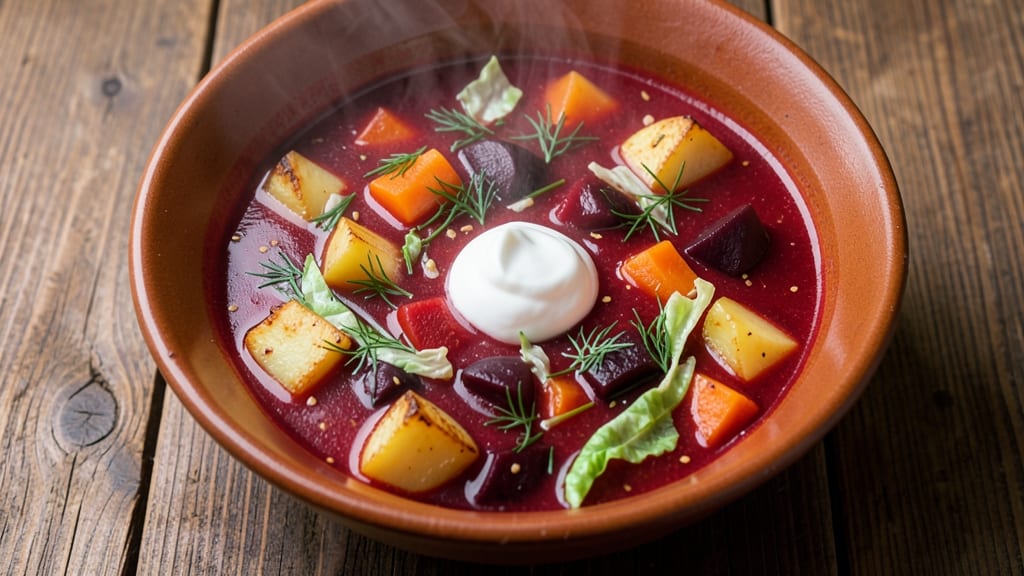
This authentic Russian borscht soup recipe delivers the deep, earthy flavor that makes it a staple in Slavic cuisine—where every spoonful tells a story of tradition.
The secret lies in slow-cooked beets that infuse the broth with their signature ruby hue and sweet-tart essence, balanced by tangy sour cream swirled just before serving.
I’ve perfected this version over years of testing, ensuring the vegetables stay tender while the broth develops layers of umami from traditional spices like bay leaves and black peppercorns.
The beauty of borscht is its versatility—whether you prepare it with beef for hearty depth or keep it vegetarian for a lighter take, the technique remains the same. Simmering the vegetables in stages allows each ingredient to release its flavors gradually, creating a harmonious blend that’s both comforting and complex.
The sour cream isn’t just a garnish; it’s the finishing touch that ties everything together, adding a creamy contrast to the vibrant soup.
What you’ll end up with is a bowl of soup that’s rich in color, texture, and tradition—where the beets shine but never overpower, and the sour cream swirl transforms each bite into a perfect balance of tangy and savory.
This isn’t just a recipe; it’s a taste of home, brought to life in your own kitchen. Let’s get started on making it authentically yours.
Serve it with a crusty rye bread to soak up every last drop of that beet-infused broth, or pair it with a side of pickled vegetables for an extra burst of flavor.
The leftovers keep well in the refrigerator for up to three days, making it an ideal meal for busy weeks or cozy gatherings. Here’s how to bring this classic dish to your table.
Ingredients for authentic russian borscht soup
Fresh beets, vibrant cabbage, and earthy spices—this is the heart of authentic borscht.
| Ingredient | Amount | Notes |
|---|---|---|
| Medium Beets 🍠 | 2 whole | Medium size, peeled and cubed |
| Yellow Onions 🧅 | 1 whole | Medium size, chopped |
| Fresh Garlic Cloves 🧄 | 4 cloves | Peeled and minced |
| Fresh Parsnips 🥕 | 2 whole | Medium size, peeled and chopped |
| Medium Carrots 🥕 | 2 whole | Peeled and sliced |
| Fresh Cabbage 🥬 | 4 cups | Green or red, shredded |
| Fresh Dill 🌿 | ½ cup | Chopped, stems removed |
| Vegetable Broth 💧 | 6 cups | Low sodium preferred |
| Apple Cider Vinegar 🍏 | 2 tbsp | For tangy brightness |
| Bay Leaves 🌿 | 2 whole | Fresh if possible |
| Black Peppercorns 🌶️ | ½ tsp | Crushed, fresh preferred |
| Salt 🧂 | 1 ½ tsp | Kosher or sea salt |
| Sour Cream 🥛 | ½ cup | Full-fat for creaminess |
| Extra-Virgin Olive Oil 🫒 | 2 tbsp | For sautéing vegetables |
| Potatoes 🥔 | 1 lb | Yukon gold, peeled and cubed |
The beets are non-negotiable—organic from the farmers market or the pre-cooked vacuum-packed kind at Whole Foods if you're short on time. Look for deep red, firm beets with no soft spots. I always grab extra because they keep so well in the fridge for 2 weeks. The cabbage should be crisp and fresh—green or red, whichever you prefer. If you're using green, it’ll give a slightly milder flavor, while red adds a touch of sweetness. For the broth, low-sodium vegetable broth is key—it lets the natural flavors of the vegetables shine without overpowering them.
No fresh dill? Dried dill at one-third the amount works in a pinch, but honestly, fresh is worth the trip to the market. Running out of apple cider vinegar? Lemon juice works too, though it’ll have a slightly different tang. The potatoes can be swapped for rutabaga or sweet potatoes if you’re feeling adventurous. For the spices, if you can’t find fresh bay leaves, dried bay leaves work fine—just add them a little earlier in the cooking process. And if you’re worried about the beets bleeding color, soak them in cold water for 10 minutes after peeling to preserve their vibrant hue.
This soup tastes even better the next day as the flavors meld together—3-4 days in the fridge is perfect. For freezing, portion it into containers with a little extra broth on top to prevent a skin from forming. It keeps for up to 3 months. I always make a double batch because it’s impossible to resist eating it all at once. Serve it warm with a dollop of full-fat sour cream swirled in just before eating—trust me, it’s worth the extra minute.
Why You'll Love This Recipe
- One-Pot Magic: I swear by this—just chop, simmer, and let the beets and parsnips do the work. No fancy gadgets, no extra pots; the onions and garlic caramelize right in the broth while you stir.
- Earthy Depth: That first spoonful of carrot-parsnip blend with roasted garlic? It’s like a hug in soup form. The beets add richness, but the parsnips bring a sweet, nutty balance—trust me, it’s better than any store-bought version.
- Leftovers That Win: Between us, this soup begs to be made extra. The flavors only get better the next day, and it reheats like a dream. Pack it for lunches or freeze it—your future self will thank you.
- Budget-Friendly Pantry Hero: I make this for $10 and feed four. Beets and carrots stretch forever, and the parsnips add complexity without breaking the bank. Plus, you’re using up those forgotten veggies in your crisper drawer.
Step-by-step instructions for authentic Russian borscht soup
Here's how to create a vibrant, traditional borscht with deep beet flavor and creamy sour cream swirls.
Prepare the Vegetable Base
Heat the 2 tablespoons extra-virgin olive oil in a large Dutch oven over medium heat. Add the 1 whole yellow onions and 2 whole medium carrots, cooking for 5 minutes until softened and translucent. Stir in the 2 whole fresh parsnips and 1 pound potatoes, all pre-cut into ½-inch cubes, and cook for another 3 minutes to lightly brown the edges.
Add the 2 whole medium beets, peeled and cubed, along with the 4 cups fresh cabbage, shredded, to the pot. Pour in the 6 cups vegetable broth and bring to a gentle boil. Reduce heat to medium-low and let simmer uncovered for 20 minutes, stirring occasionally. You want the vegetables to soften but not disintegrate—this builds the soup's hearty texture.
Season and Simmer the Broth
Add the 2 whole bay leaves, ½ teaspoon crushed black peppercorns, and 1½ teaspoons salt to the simmering soup. Stir in the 2 tablespoons apple cider vinegar—this adds the signature tang that balances the sweetness of the beets. Let the soup simmer for another 15 minutes until all vegetables are tender but still hold their shape.
Here's the thing—traditional Russian borscht relies on slow cooking to develop its rich flavor. If you rush this step, the beets will bleed too much color into the broth instead of maintaining their vibrant hue. Taste the broth after 15 minutes and adjust seasoning if needed, adding a pinch more salt or vinegar as necessary.
Finish with Aromatics and Fresh Dill
Remove the pot from heat and stir in the 4 cloves minced fresh garlic and ½ cup chopped fresh dill. Let the soup sit covered for 5 minutes to allow the garlic to infuse without burning. This is where the soup transforms from hearty to authentically aromatic—garlic and dill are essential for that classic Russian flavor profile.
While the soup rests, I like to taste it one last time. The beets should contribute a deep, earthy sweetness, the vinegar a bright tang, and the vegetables a satisfying bite. If the soup tastes too thin, you can reduce it further on the stove for 5-10 minutes to concentrate the flavors.
Serve with Sour Cream Swirl
Ladle the hot borscht into bowls, leaving room at the top. Dollop the ½ cup sour cream on each serving and gently swirl it into the soup with a spoon. The contrast between the warm, beet-rich broth and the cool, creamy sour cream is what makes this dish truly special.
For an authentic touch, serve with a side of crusty rye bread or black bread to soak up the flavorful broth. The sour cream swirl should melt slightly from the heat, creating a luxurious finish that ties all the flavors together. This isn't just soup—it's a celebration of Russian comfort food.
Pro Tips For Making Authentic Russian Borscht Soup
- Cook beets raw, not roasted: I learned this the hard way—peeling and grating beets raw keeps their earthy sweetness intact. Roasting mellows them too much, turning your borscht into a muddy, one-note soup. Grate them fresh right before adding to the pot, and trust me, the bright red color and sharp flavor will make all the difference.
- Sweat onions low and slow: High heat turns onions bitter faster than you’d think, especially with the garlic joining later. Cook them over medium-low for 8–10 minutes until translucent but not browned—this builds the flavor base without overpowering the soup. (Yes, even if you’re impatient like me.)
- Add parsnips last, not first: I used to throw them in with the carrots, but that makes them mushy and forgettable. Save them for the final 10 minutes of simmering so they stay tender-crisp, adding a subtle nuttiness that balances the beets. Think of them as the unsung hero—short but mighty.
- Strain the broth if you’re lazy: Does it look weird? Yes. Does it work? Every single time. If you’re short on time (or just don’t love chunks), strain the finished broth through a fine-mesh sieve before adding the sour cream or herbs. The result is silky smooth, and no one will guess you took a shortcut. (Your future self will thank you.)
Pro cooking tips for great authentic russian borscht soup
Beet Color Control
The secret to vibrant borscht lies in how you handle the beets. I always peel them first, then cut into ½-inch cubes—this prevents excessive bleeding. For extra color protection, soak the peeled beets in ice water for 10 minutes before cooking.
This trick preserves their deep red hue and prevents the broth from turning muddy. 💫
Layered Vegetable Cooking
Cook the vegetables in stages to maximize flavor. Start with onions and carrots to build a sweet base, then add parsnips and potatoes for structure. Finally, introduce the beets and cabbage together—they cook faster and release their flavors simultaneously.
This method ensures each ingredient maintains its texture and contributes distinct flavors.
Vinegar Timing Matters
Add the 2 tablespoons apple cider vinegar during the final 15 minutes of simmering, not at the beginning. This preserves its bright acidity rather than letting it cook off.
Taste the broth before adding it—if it already has enough tang, reduce to 1 tablespoon to avoid overpowering the beets' natural sweetness.
Dill and Garlic Infusion
Stir in the ½ cup fresh dill and 4 cloves minced garlic off the heat to prevent bitterness. Let the soup sit covered for 5 minutes—this allows the garlic to mellow while the dill releases its aromatic oils.
Fresh dill is non-negotiable; dried dill lacks the bright, citrusy notes that elevate the soup.
Sour Cream Swirl Technique
Add the ½ cup sour cream just before serving, not during cooking. Swirl it gently with a spoon to create ribbons of cream throughout the hot broth.
This creates a luxurious contrast between the warm soup and cool cream. For extra richness, use full-fat sour cream—it melts beautifully without curdling. 🥛
Broth Reduction Shortcut
If your borscht tastes too thin, simmer it uncovered for an extra 5-10 minutes to reduce the broth. This concentrates the flavors without overcooking the vegetables. For a deeper taste, I sometimes add 1 teaspoon tomato paste during the final simmer—it adds umami without altering the soup's signature color.
Nutrition facts
Frequently asked questions
Why does traditional borscht need to simmer for so long?
Slow simmering (about 35-40 minutes total) lets the beets develop their signature sweet-tart flavor while preventing them from bleeding too much color into the broth. This also allows all vegetables to soften evenly without turning mushy, creating that perfect hearty texture. Rushing this step often results in a muddy, less flavorful soup.
Can I make borscht without meat?
This vegetarian version is just as authentic—classic Russian borscht often includes beef or pork, but the vegetable-based version is equally beloved. The key is balancing the sweetness of the beets with tangy vinegar and rich sour cream. For extra depth, add 1 teaspoon tomato paste during the final simmer to enhance umami flavors.
What's the best way to store leftover borscht?
Store in an airtight container in the fridge for up to 4 days. The flavors actually improve overnight as the vegetables absorb more broth. For freezing, leave ½-inch headspace in containers and freeze for up to 3 months. When reheating, add a splash of water or broth to prevent thickening.
Why does my borscht look muddy instead of vibrant?
Overcooking the beets or using too much vinegar early can cause color bleeding. To fix it, stir in 1 tablespoon lemon juice before serving to brighten the color. For prevention: soak peeled beets in ice water for 10 minutes before cooking, and add vinegar only in the final 15 minutes of simmering.
Can I substitute any vegetables in this recipe?
Yes, with some adjustments! Swap potatoes for rutabaga or sweet potatoes for a different texture, or replace cabbage with kale or Swiss chard. For a lighter version, omit parsnips and add zucchini. Just remember: beets are the soul of borscht—don't reduce them below 2 medium or the flavor profile changes dramatically.