
Snacks
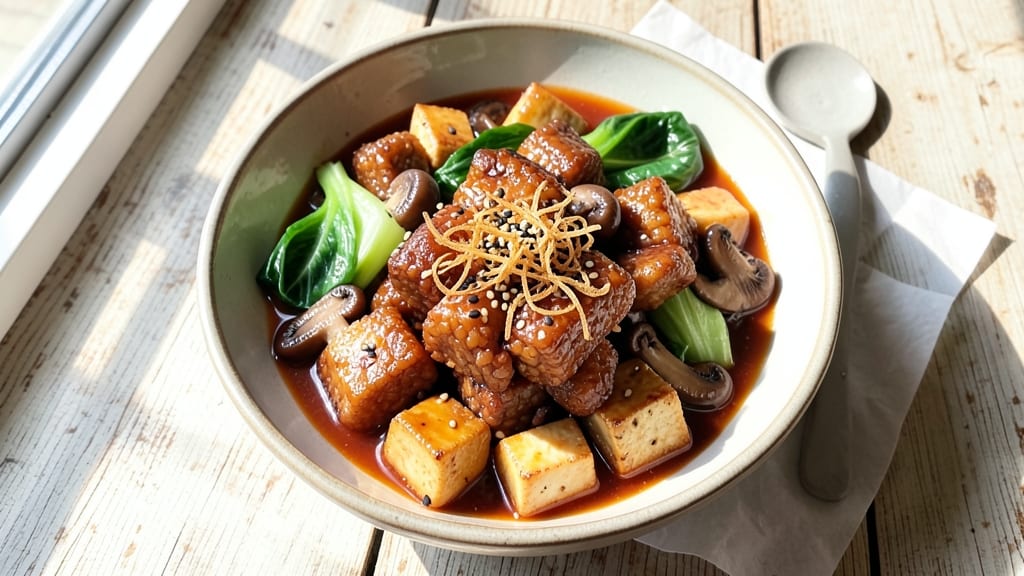
This tteokbokki veg recipe delivers the same bold, chewy, spicy flavors as the classic—just without a single animal product. The key lies in balancing fermented gochujang for that signature heat, mushroom broth for deep umami, and crispy tofu for satisfying texture.
I've perfected the sauce to be tangy, slightly sweet, and packed with layers of flavor that stick with you long after the last bite.
The beauty of this version is how it maintains the dish's traditional soul while adapting to plant-based needs. Instead of fish sauce, we use soy sauce and mushrooms for that oceanic depth, while vegan gochujang provides the signature spicy-sweet kick.
The rice cakes stay delightfully chewy, and the sauce clings to them perfectly, creating that addictive mouthfeel. This isn't just a vegan substitute—it's a standout dish in its own right.
What you'll end up with is a steaming bowl of vibrant red sauce studded with chewy rice cakes, crispy tofu pieces, and fresh green onions that add a bright contrast.
The aroma alone will have everyone gathering around your table, and the first bite delivers that perfect balance of heat, umami, and satisfying chewiness. It's the kind of dish that disappears quickly, so make extra if you can.
Serve this with steamed rice to soak up every last drop of that flavorful sauce, or pair it with crispy vegan fried rice cakes for added texture.
The recipe comes together in under 30 minutes, making it perfect for weeknight dinners or when you're craving something bold and comforting. Let's get cooking!
Ingredients for tteokbokki veg
Bold flavors, zero compromise—just 13 ingredients for this vegan tteokbokki masterpiece.
| Ingredient | Amount | Notes |
|---|---|---|
| Rice Cakes (Tteokbokki) 🍚 | 14 oz | Chewy variety, round or cylindrical |
| Extra-Firm Tofu 🥬 | 14 oz | Pressed and cubed |
| Vegan Gochujang 🌶️ | ⅓ cup | Fermented chili paste, spicy-sweet |
| Mushroom Broth 🍄 | 1 ½ cups | Homemade or store-bought |
| Soy Sauce 🥫 | 2 tbsp | For umami depth |
| Sesame Oil 🌿 | 1 tbsp | Toasted, for aroma |
| Maple Syrup 🍁 | 1 ½ tbsp | For subtle sweetness |
| Green Onions 🧅 | ¼ cup | Sliced, for freshness |
| Garlic Cloves 🧄 | 4 cloves | Minced for bold flavor |
| Cornstarch 🌾 | 1 tbsp | For crispy tofu |
| Vegetable Oil 🫒 | 2 tbsp | For frying tofu |
| Red Pepper Flakes 🌶️ | 1 tsp | Adjust for heat |
| Sea Salt 🧂 | ½ tsp | For seasoning |
The vegan gochujang is non-negotiable here—it's the soul of this dish. Hana Gochujang or Mae Ploy are my go-tos, but any reputable brand will work. If you can't find it, gochugaru chili flakes mixed with soy sauce is a decent stand-in (though less fermented). The rice cakes? Korean markets or Asian grocery stores carry the chewy kind—look for packages labeled 'tteokbokki' or 'rice cakes.' If you're using the pre-packaged kind, soak them in warm water for 10 minutes first. The tofu should be extra-firm—press it for 20 minutes to remove excess water before cubing.
No vegan gochujang? Mix 2 tbsp sriracha with 1 tbsp soy sauce and 1 tsp maple syrup for a quick substitute. The mushroom broth can be homemade (simmer shiitake or white mushrooms in water) or store-bought—Imagine or Pacific Foods have great options. Short on sesame oil? Toast sesame seeds in a dry pan and grind them for a budget-friendly aroma boost. The garlic can be roasted for a sweeter note (wrap cloves in foil, bake at 400°F for 15 minutes), but fresh minced works just fine. For extra crispiness, toss the tofu cubes in cornstarch twice—first before frying, then again after.
This sauce keeps for 5 days in the fridge, but the texture changes—it'll thicken up. Reheat gently with a splash of water to loosen. The tofu stays crispy for about 3 days if stored separately in an airtight container. Freeze the sauce in ice cube trays for single-serving portions—perfect for quick reheats. Double the batch if you're feeding a crowd; the flavors only get better as they meld. Serve immediately for that restaurant-style experience, or let it sit 10 minutes for deeper flavor development.
Why You'll Love This Recipe
- No-Cook Prep: I slice the tofu and soak the rice cakes—literally five minutes of work. The real magic happens in the pan, not the prep.
- Fiery-Sweet Balance: That vegan gochujang? It’s the star—sticky, smoky, and just spicy enough to wake up your taste buds. The mushroom broth keeps it rich without overpowering.
- Leftover Goldmine: This dish begs to be reheated. The rice cakes soften just enough to soak up extra flavor, and the tofu stays tender. I make double batches—trust me.
- Budget Meal Hero: Tofu, rice cakes, and pantry staples? This feeds four for under $10. Honestly, it’s the kind of recipe that makes me feel like I’m feeding a crowd without breaking the bank.
Step-by-step instructions for tteokbokki veg recipe
Here's how to create a rich, spicy-sweet vegan tteokbokki that's chewy, flavorful, and packed with umami.
Prepare and Crisp the Tofu
First, press the 14 oz extra-firm tofu between paper towels for 15 minutes to remove excess water. Cut it into 1-inch cubes and place them in a bowl. In a separate small bowl, whisk together 1 tablespoon cornstarch, 0.5 teaspoon sea salt, and 1 teaspoon red pepper flakes. Toss the tofu cubes in this mixture until evenly coated.
Heat 2 tablespoons vegetable oil in a large skillet over medium-high heat until shimmering. Add the tofu in a single layer and cook for 3-4 minutes per side until golden brown and crispy. The tofu should release easily from the pan—if not, it needs more time. Transfer the crispy tofu to a plate and set aside. Real talk: Don't overcrowd the pan or the tofu will steam instead of crisp.
Build the Spicy-Sweet Sauce
In the same skillet (no need to clean it—the flavor is in those browned bits), reduce the heat to medium and add 2 tablespoons vegetable oil if needed. Add the 4 cloves minced garlic and cook for 30 seconds until fragrant—you'll smell that nutty aroma. Immediately add 0.33 cup vegan gochujang and stir vigorously for 1 minute until it darkens slightly and becomes glossy.
Pour in the 1.5 cups mushroom broth and 2 tablespoons soy sauce, scraping up any browned bits from the bottom of the pan. Bring to a gentle simmer and let it cook for 3 minutes until slightly reduced. Here's where it gets good—stir in the 1.5 tablespoons maple syrup and 1 tablespoon sesame oil, letting the flavors meld together. The sauce should be thick enough to coat the back of a spoon but still pourable.
Cook the Rice Cakes
Add the 14 oz rice cakes to the sauce and gently stir to coat them evenly. Increase the heat to medium-high and bring the mixture to a boil. Once boiling, reduce the heat to medium and let it simmer for 5-6 minutes, stirring occasionally. You're looking for the rice cakes to soften slightly but still maintain their chewy texture—when they're tender but still hold their shape, they're ready.
During this time, the sauce will thicken as it absorbs the starch from the rice cakes. If it gets too thick, add 1-2 tablespoons water to loosen it. The rice cakes should be floating and the sauce should coat them completely. If any rice cakes stick to the bottom, gently scrape them up with a spatula—this ensures even cooking and prevents burning.
Finish and Serve
Remove the skillet from heat and stir in the 0.25 cup sliced green onions. Let the tteokbokki rest for 2-3 minutes to allow the flavors to meld together. Taste and adjust the seasoning if needed—you might want to add a pinch more red pepper flakes for heat or a splash of soy sauce for more umami.
Serve the tteokbokki immediately while it's hot and bubbly. The rice cakes should be chewy with a slightly sticky exterior from the sauce, and the tofu should add a satisfying crispy contrast. Garnish with extra green onions if you like, and serve with steamed rice to soak up all that delicious sauce. This dish is even better the next day as the flavors deepen!
Pro Tips For Making Tteokbokki Veg
- SOAK CAKES FIRST: I learned this the hard way—dry rice cakes turn to mush in the sauce. Toss them in warm water for 10 minutes before cooking. They’ll soften just enough to absorb flavor without falling apart, and you’ll skip the sad, soggy texture that ruins everything.
- CUT TOFU IN SLICES: Skip the cubes unless you want mushy tofu. Thin, even slices (about ¼-inch thick) crisp up faster and hold their shape. Press it first if you’re impatient, but even unpressed, slices work better than chunks in this dish—trust the process.
- SIMMER NOT BOIL: High heat makes the sauce separate. Once the tofu and rice cakes are in, reduce to a gentle simmer. You want bubbles, not a frenzy—otherwise, your gochujang will split and the broth will turn cloudy. Keep it steady.
- ADD SOY SAUCE LAST: Toss it in too early and the sauce turns flat. Wait until the very end, let it heat through for 30 seconds, then stir. That last-minute splash brightens the whole dish—sounds weird, but it works every time.
Storing and reheating this recipe
Fridge Storage Tips
Store your vegan tteokbokki in an airtight container with a tight-fitting lid to preserve freshness. The sauce and rice cakes will keep well in the fridge for up to 5 days, though the texture may thicken slightly.
I recommend transferring the crispy tofu separately to maintain its crunch—just pop it in a sealed container with a paper towel to absorb any moisture. Honestly, the flavors only get better after a day or two as the gochujang and soy sauce meld together. 🌶️
Freezer-Friendly Sauce
Freeze the sauce in ice cube trays for single-serving portions—just thaw and reheat with a splash of water. The sauce will last for 3 months in the freezer without losing its vibrant color or spicy-sweet balance.
For full meals, portion the entire dish (sauce + rice cakes) into freezer-safe containers, leaving 1 inch of headspace for expansion. The tofu may lose some crispiness after freezing, so I suggest adding fresh crispy tofu when reheating. ❄️
Reheating Perfection
For stovetop reheating, add 1-2 tablespoons of water or mushroom broth to the sauce to loosen it. Heat over medium-low heat for 3-5 minutes, stirring constantly until bubbly. If using the microwave, cover with a damp paper towel and heat in 30-second intervals, stirring between each.
The rice cakes should soften slightly but remain chewy—never let them boil dry, or they'll turn mushy. 🔥
Reviving Crispy Tofu
If your tofu loses crispiness after storage, revive it by tossing in 1 teaspoon cornstarch and reheating in a dry skillet over medium heat for 2-3 minutes per side.
For extra crunch, broil for 1-2 minutes at the end. I also like adding fresh tofu to reheated tteokbokki right before serving—it adds that satisfying contrast to every bite. 💡
Sauce Adjustments
If the sauce thickens too much after reheating, thin it with 1 tablespoon water or broth. For extra depth, add a splash of sesame oil or a pinch of red pepper flakes to reignite the heat.
The maple syrup might caramelize slightly—just stir in ½ teaspoon soy sauce to balance the sweetness. Honestly, the sauce often tastes even better the second day! 💛
Meal Prep Strategy
Double the recipe and store components separately for easy assembly. Keep the sauce and rice cakes in one container, and the tofu in another. Reheat just the sauce and rice cakes, then add fresh crispy tofu at the end.
This method keeps everything at its best—no soggy rice cakes or limp tofu. I prep a big batch on Sundays for quick weeknight dinners. ✨
Nutrition facts
Frequently asked questions
Can I make this vegan tteokbokki without tofu?
Swap the tofu for 14 oz king oyster mushrooms or crispy seitan cubes for a meaty texture. For extra crunch, try pan-fried rice cakes (cook a few separately until golden) or crispy chickpeas. Just adjust the cooking time—mushrooms need 5-6 minutes to crisp up properly.
How can I make the sauce less spicy?
Reduce the vegan gochujang to 2 tablespoons instead of ⅓ cup and omit the red pepper flakes. For extra mildness, stir in 1 teaspoon maple syrup or ½ teaspoon sugar to balance the heat. If you still need more sweetness, add 1 extra tablespoon maple syrup at the end.
What if I can't find vegan gochujang?
Mix 2 tablespoons sriracha with 1 tablespoon soy sauce and 1 teaspoon maple syrup for a quick substitute. For deeper flavor, blend 2 tablespoons gochugaru chili flakes with 1 tablespoon soy sauce and ½ teaspoon sugar until smooth. The texture won't be identical, but it'll capture the spicy-sweet essence!
Can I make this gluten-free?
Yes! Use tamari or coconut aminos instead of soy sauce, and ensure your vegan gochujang is gluten-free (check labels). For the rice cakes, look for gluten-free mochi or rice-based cakes (like sweet rice cakes). The tofu and mushrooms are naturally gluten-free, so the rest of the recipe stays safe.
Why did my rice cakes turn mushy?
Overcooking or high heat turns rice cakes mushy. Simmer them on medium-low heat for only 5-6 minutes, stirring gently. If the sauce reduces too much, add 1-2 tablespoons water or broth to keep it loose. Also, avoid boiling vigorously—gentle heat preserves their chewy texture.