Sauces & Condiments
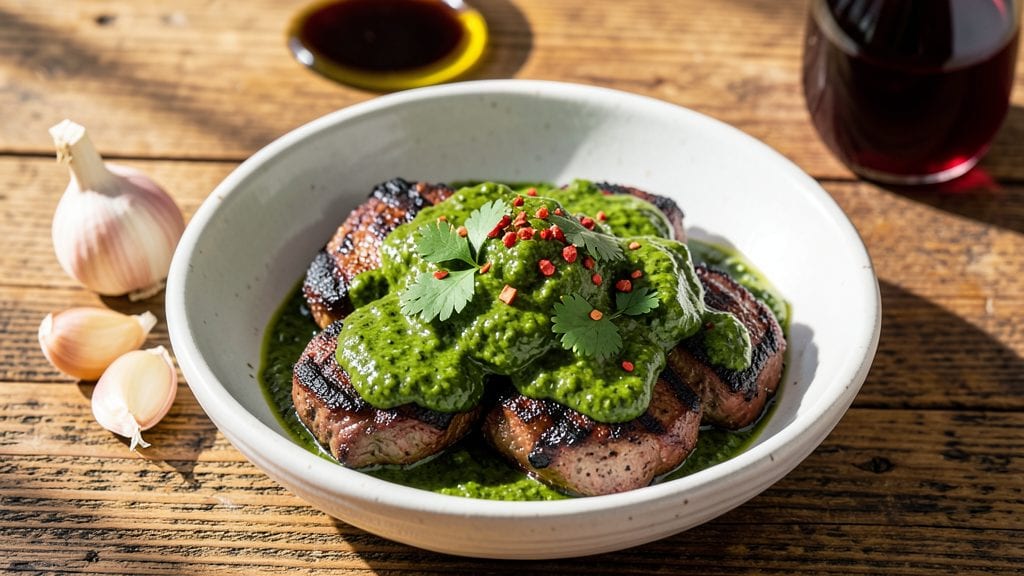
This traditional chimichurri recipe delivers the vibrant, herbaceous brightness that elevates grilled meats from ordinary to extraordinary. The classic Argentine sauce balances fresh parsley, garlic, and vinegar with rich olive oil, creating a tangy, peppery finish that cuts through rich flavors.
I've perfected this version over years of summer grilling, where it transforms simple steaks into restaurant-worthy dishes.
The beauty of traditional chimichurri lies in its simplicity—just six core ingredients, yet each plays a crucial role. The parsley provides freshness, garlic adds depth, and red pepper flakes introduce subtle heat.
Olive oil binds everything together while maintaining that signature vibrant green color. Unlike store-bought versions, this sauce develops more flavor with time, making it perfect for prepping ahead.
What you'll achieve is a sauce so bright and flavorful it enhances grilled meats without overpowering them. The perfect balance of acidity and oil creates a sauce that clings beautifully to steaks, chicken, or even eggs.
This isn't just a condiment—it's the secret weapon that turns everyday meals into memorable dining experiences.
Use it immediately on grilled meats or store it in the refrigerator for up to five days, where its flavors only deepen. The versatility makes it ideal for everything from weekend barbecues to quick weeknight dinners. Let's create this timeless Argentine classic that brings every bite to life.
Ingredients for traditional chimichurri
Six ingredients transform into Argentina's iconic herbaceous sauce for grilled meats.
| Ingredient | Amount | Notes |
|---|---|---|
| Fresh Flat-Leaf Parsley 🌿 | 1 ½ cups | Stems removed, tightly packed |
| Extra-Virgin Olive Oil 🫒 | ¾ cup | High-quality, fruity variety |
| Red Wine Vinegar 🍷 | ¼ cup | Dry, aged for tang |
| Garlic Cloves 🧄 | 6 cloves | Peeled, roughly chopped |
| Kosher Salt 🧂 | 1 ½ tsp | Diamond Crystal preferred |
| Crushed Red Pepper Flakes 🌶️ | 1 tsp | Adjust for heat preference |
| Ground Black Pepper 🌶️ | ½ tsp | Freshly cracked preferred |
The parsley is non-negotiable—flat-leaf varieties deliver the most intense flavor. Seek out the brightest green bunches at Whole Foods or your local farmers' market, where stems are firm and leaves show no wilting. For olive oil, California extra-virgin brands like Corto or Lucini provide that fruity depth without bitterness. The vinegar should be aged at least two years; Bartles & Jaymes or Bragg deliver consistent quality. Garlic cloves should be plump and firm, with no sprouting—organic varieties often have richer flavor profiles.
No fresh parsley? Cilantro or basil can substitute at equal volume, though flavor will differ slightly. Substituting white wine vinegar for red wine vinegar? Add 1/2 teaspoon more sugar to balance the sharper acidity. For heat adjustment, aleppo pepper offers a milder alternative to crushed red pepper flakes. The kosher salt should be Diamond Crystal or similar coarse variety—it dissolves more cleanly than table salt. If using a mortar and pestle, toast the garlic cloves first in a dry skillet for 30 seconds per side to deepen their aromatic compounds.
Chimichurri develops best when prepared 24 hours in advance, allowing flavors to meld. Store in an airtight container with a thin layer of olive oil on top to preserve color and freshness. Keeps for 5-7 days refrigerated, though texture may slightly soften. For longer storage, freeze in 1-tablespoon portions using ice cube trays—thaw at room temperature before use. The sauce pairs perfectly with grilled flank steak, skirt steak, or even shrimp, enhancing rather than overpowering their natural flavors.
Why You'll Love This Recipe
- No-Chop Nightmare: I swear by this—just pulse the parsley and garlic in the food processor, no knife skills required. The vinegar and olive oil do all the work while I’m still deciding what to eat for dinner.
- Garlic-Parsley Magic: That first bright bite? Crisp, herby, with just a hint of tang—like sunshine and confidence in sauce form. The salt makes the garlic sing without overpowering, and the olive oil ties it all into something dangerously addictive.
- Weeknight Superhero: Slather it on grilled steak, toss it with roasted veggies, or drizzle it over eggs. It’s the one sauce that turns "meh" into "wow" without extra effort. I keep a jar in the fridge for those nights when I need flavor but not a side project.
- Pantry Goldmine: Uses what you already have (check your spice rack and fridge). Stays fresh for days, so you’re never scrambling for a last-minute condiment. Honestly, the only thing I waste is the last drop—I always forget how much I’ll love it.
Step-by-step instructions for traditional chimichurri recipe
This classic Argentine sauce delivers bold, herby brightness with perfect balance every time.
Prepare the Herb Base
In a food processor, combine the 1.5 cups fresh flat-leaf parsley with the 6 peeled garlic cloves. Pulse until the parsley is finely chopped but not completely minced—you want visible herb texture. This ensures the sauce maintains its vibrant green color and fresh flavor profile. Avoid over-processing, as this can turn the mixture into a paste rather than a chunky sauce.
I like to work in batches if needed to avoid overfilling the food processor. The goal is to create a coarse, herb-forward base that will infuse the oil and vinegar without losing its rustic character. This step is where the sauce's signature freshness originates, so don't rush it.
Add Wet Ingredients and Season
With the food processor running, slowly drizzle in the 0.75 cup extra-virgin olive oil while pulsing continuously. This gradual addition emulsifies the oil with the herbs, creating a stable base. After the oil is incorporated, add the 0.25 cup red wine vinegar and pulse again just until combined—you want the vinegar to brighten the flavors without overpowering the herbs.
Next, add the 1.5 teaspoons kosher salt, 1 teaspoon crushed red pepper flakes, and 0.5 teaspoon ground black pepper. Pulse just once or twice to distribute the seasonings evenly. The salt enhances the parsley's natural sweetness, while the red pepper flakes and black pepper add depth and a subtle heat. Taste the mixture at this stage—it should be vibrant, tangy, and well-seasoned.
Rest and Adjust for Texture
Transfer the chimichurri to a bowl and let it rest at room temperature for 15-20 minutes. This resting period allows the flavors to meld and the texture to stabilize. The sauce should be thick but pourable, with visible herb flecks throughout. If it's too thick after resting, thin it with 1-2 teaspoons of water or additional red wine vinegar, 1 teaspoon at a time, until it reaches a loose, spoonable consistency.
Here's the thing—traditional chimichurri isn't meant to be overly smooth. The texture should be rustic, with herb bits distributed throughout. If you prefer a finer texture, you can strain it through a fine-mesh sieve, but I recommend leaving it slightly chunky for that authentic experience. This step ensures the sauce is ready to cling beautifully to grilled meats.
Serve Immediately or Store Properly
Chimichurri is best served fresh, so use it immediately after preparing it for the most vibrant flavor. However, if you need to store it, transfer it to an airtight container and refrigerate for up to 3 days. Before serving, give it a good stir and adjust the seasoning if needed—sometimes the flavors deepen overnight, and a splash of red wine vinegar or a pinch of salt can rebalance it.
This sauce pairs perfectly with grilled steaks, chicken, or even roasted vegetables. The key to serving it right is to drizzle it generously over hot food just before eating. The heat from the meat will intensify the flavors, making each bite burst with fresh parsley, garlicky brightness, and a touch of vinegar tang. Don't be shy—chimichurri is meant to be bold and abundant.
Pro Tips For Making Traditional Chimichurri
- STACK THE GARLIC: Use 2-3 whole peeled cloves (not minced) and smash them with the flat side of your knife—this keeps the texture coarse and prevents bitterness from over-processing. I learned this the hard way after making chimichurri taste like garlic paste.
- SALT THE PARSLEY FIRST: Toss the chopped parsley with ½ teaspoon kosher salt for 5 minutes before adding other ingredients—this softens the leaves slightly and makes them release more flavor when blended. (Yes, even if you’re impatient like me.)
- DON’T SKIP THE REST: Let the chimichurri sit 10-15 minutes after mixing before using—this lets the vinegar mellow and the flavors meld. I used to rush it, and the sharpness always ruined the dish.
- PULSE DON’T BLEND: Use a food processor to pulse (not liquefy) the chimichurri—you want chunks of parsley and garlic, not a smooth sauce. Over-blending turns it into pesto, which is a whole different dish.
Best sauces and condiments for this traditional chimichurri
Classic Pairings
Chimichurri shines brightest with grilled meats, especially flank steak or skirt steak—its herby tang cuts through rich, charred flavors beautifully. I recommend using it as a finishing sauce: let the meat rest for 10 minutes first, then drizzle generously just before serving.
The heat from the steak will intensify the parsley's freshness and the vinegar's bite. 🔥
For seafood lovers, try it with grilled shrimp or swordfish—the sauce's acidity balances the oceanic sweetness perfectly. I've also used it on grilled chicken thighs, where the fat cap soaks up the chimichurri like a sponge.
The key is to use it immediately after cooking to maintain that vibrant, fresh flavor profile.
Unexpected Uses
While chimichurri is famous with meats, it elevates soft-boiled eggs in a way that surprises guests. Drizzle it over the yolk and runny whites for a bright, herby contrast to the creamy texture.
I also love it on toasted sourdough with whipped feta—the combination is perfect for brunch or as a simple appetizer. 💫
For vegetarians, try it with roasted eggplant or grilled zucchini. The sauce's acidity helps cut through the richness of roasted vegetables, making them feel more dynamic. I once served chimichurri over warm polenta with shaved parmesan—it became an instant crowd-pleaser at my dinner party.
Wine Pairings
Argentine Malbec is the classic pairing—its bold fruit flavors complement chimichurri's herbaceous notes beautifully. I recommend a 2018 Bodega Norton Malbec, which has enough acidity to stand up to the sauce's tang.
For white wine lovers, a crisp Torrontés from Mendoza offers floral notes that harmonize with the parsley's freshness. 🍷
If you prefer beer, a crisp Argentine lager like Quilmes works surprisingly well. The carbonation cleanses your palate between bites, letting the chimichurri's flavors shine. For something more adventurous, try a radler-style beer—the citrus notes in these German-Austrian hybrids echo the red wine vinegar in the sauce.
Storage Hacks
Chimichurri keeps beautifully in the fridge for 3-5 days in an airtight container, but I like to preserve its vibrant color by keeping a thin layer of olive oil on top.
Before using, give it a good stir and adjust seasoning—sometimes it needs a splash of vinegar or a pinch of salt to rebalance. For longer storage, freeze it in 1-tablespoon portions using ice cube trays. 🧊
Pro tip: If the sauce separates after refrigeration, simply whisk it vigorously before using. The texture will return to its ideal consistency, and the flavors will remain just as vibrant.
I've even revived chimichurri that sat in the fridge for up to 7 days—just don't expect the same punch as when it's fresh.
Nutrition facts
Frequently asked questions
Can I make chimichurri without a food processor?
Use a mortar and pestle for the best texture. Crush the 6 garlic cloves first, then add the 1.5 cups parsley gradually, pressing firmly to create a coarse paste. Finish by whisking in the 0.75 cup olive oil and 0.25 cup vinegar in a bowl. This method preserves more herb texture and flavor intensity.
Why does my chimichurri turn brown or lose color?
The vibrant green color fades when exposed to air or light. Store it in an airtight container with a thin layer of olive oil on top to preserve color. Avoid using metal containers, as they can cause oxidation. For the freshest look, use it within 2-3 days of making it.
How much chimichurri should I make for a steak dinner?
Start with ½ cup for a 12-16 oz steak—this recipe yields about 1½ cups. Chimichurri is best used generously as a finishing sauce, so don't be shy! For a family of four, double the recipe. The sauce pairs beautifully with grilled chicken or shrimp too, using similar amounts.
Can I substitute white wine vinegar for red wine vinegar?
Yes, but add ½ teaspoon sugar to balance the sharper acidity. White wine vinegar has a milder flavor, so you might also want to add an extra ½ teaspoon crushed red pepper flakes for depth. The texture and color will remain similar, just with a slightly different tang.
What's the best way to revive separated chimichurri?
Whisk vigorously or pulse briefly in a food processor to re-emulsify. The texture will return to its ideal consistency. If it's too thick, thin with 1 teaspoon water or vinegar. This happens naturally when stored in the fridge, but the flavors stay vibrant—just give it a good stir before using.