
Sauces & Condiments
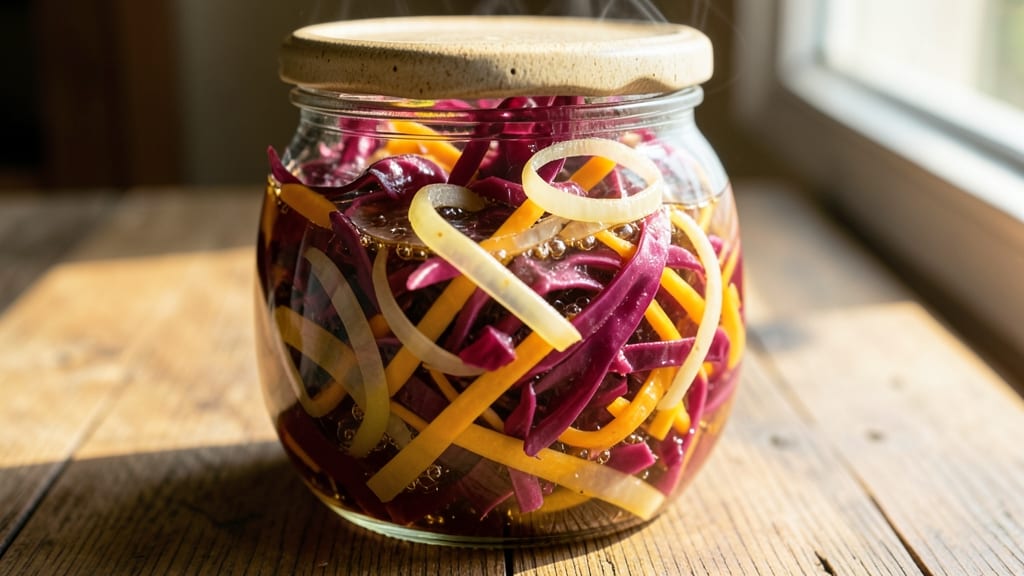
This sweet chow chow relish recipe brings back the bold, tangy-sweet flavors of classic Southern cooking—perfect for elevating sandwiches, BBQ, and charcuterie boards. The blend of vinegar, sugar, and spices creates a vibrant, crunchy relish that’s both nostalgic and foolproof to make at home.
I’ve perfected this version after years of testing, ensuring the right balance of heat, sweetness, and texture in every bite.
The secret lies in the vinegar-brine mixture, which tenderizes the vegetables while preserving their crunch. Cabbage, carrots, and onions simmer until just tender, then cool in a sweet-spiced syrup that locks in flavor.
This relish keeps for months in the fridge, making it a pantry staple for quick meals or holiday gatherings.
What you’ll end up with is a bright red, glossy relish with a perfect mix of sweet, tangy, and slightly spicy notes—ideal for spreading on sandwiches, mixing into BBQ sauces, or serving alongside cured meats. The texture stays crisp yet melts slightly when heated, adding depth to any dish.
Once you try this, you’ll never buy store-bought again. Let’s get started on making a batch that’ll last all year.
Ingredients for sweet chow chow relish
Nine simple ingredients transform into a vibrant, crunchy relish that tastes like Southern nostalgia.
| Ingredient | Amount | Notes |
|---|---|---|
| Red Cabbage 🥬 | 4 cups | Shredded, core removed |
| Carrots 🥕 | 2 cups | Julienned or thinly sliced |
| Yellow Onions 🧅 | 1 whole | Thinly sliced, white part only |
| White Vinegar 💧 | 2 cups | White or apple cider vinegar |
| Granulated Sugar 🍯 | 2 cups | White or light brown sugar |
| Water 💧 | 1 cup | Filtered or boiled for clarity |
| Salt 🧂 | 1 ½ tbsp | Diamond Crystal kosher salt |
| Ground Black Pepper 🌶️ | ½ tsp | Freshly ground preferred |
| Ground Allspice 🌶️ | 1 tsp | For classic Southern warmth |
| Mustard Seed 🌶️ | ½ tsp | Whole, lightly toasted |
The cabbage is the backbone—look for vibrant purple heads at the grocery store, not wilted ones. Trader Joe's or Whole Foods have the freshest cuts, but any reputable market will do. Carrots should be crisp and bright orange, not rubbery. The onions? Yellow or white work best—they hold up better than red during cooking. If you're feeling fancy, grab organic produce for deeper flavor, but conventional is fine too. The vinegar matters—white vinegar is traditional, but apple cider adds subtle sweetness if you prefer. Just make sure it's 5% acidity or higher for proper preservation.
No allspice? Cinnamon plus cloves at half the amount gets you close. Running low on mustard seeds? Ground mustard at double the amount works in a pinch. The sugar can be swapped for honey or maple syrup, but it'll change the texture slightly—stick with granulated for that classic crunch. If you're making a big batch, double the vinegar and sugar proportionally. The relish tastes even better after a week, so don't rush it. And trust me—skip the pre-shredded cabbage. It's always soggy. Grab a sharp knife and do it yourself.
This relish keeps for 3-4 months in the fridge, sealed in a jar with a tight lid. The longer it sits, the deeper the flavors get. I like to portion it into small glass jars for easy serving—perfect for BBQ spreads or sandwich toppings. If you want to store it longer, freeze portions for up to 6 months. Just thaw in the fridge overnight. The texture stays crisp if you keep it chilled, but it softens slightly when reheated—ideal for mixing into sauces. And if you make extra? Gift it. Everyone will ask for seconds.
Why You'll Love This Recipe
- Uses what you’ve got: cheap veggies, basic spices, and a jar you already own. Plus, it keeps for months—perfect for stocking your fridge or gifting to neighbors. (Yes, even I’ve been known to freeze batches.)
- No Chopping Chaos: I swear by the julienne peeler here—shreds carrots and cabbage in seconds. No knife skills needed, just a steady hand and a jar ready to go.
- Sweet-Tart Magic: That vinegar-sugar balance? It’s like a party in your mouth—bright, crisp cabbage cuts through the sweetness while the onions add just enough bite. Honestly, it’s the kind of relish that makes you reach for seconds without trying.
- Potluck MVP: Bring this to a picnic, BBQ, or holiday spread—it’s the one dish that everyone grabs. The colors pop, the flavor sings, and it travels well (no sad soggy sides here).
Step-by-step instructions for sweet chow chow relish
Here's the method that delivers that perfect balance of sweet, tangy, and spiced flavors everyone loves.
Prepare and Combine Vegetables
In a large non-reactive pot, combine the 4 cups shredded red cabbage, 2 cups julienned carrots, and 1 whole thinly sliced yellow onion. I always use a sharp knife for the cabbage to get even shreds—this ensures consistent texture throughout the relish. Give everything a quick stir to distribute the vegetables evenly in the pot.
This initial mixing creates a base where all ingredients can infuse properly. The cabbage will soften significantly during cooking, so starting with properly prepared vegetables prevents a mushy final texture. Keep the pot on the counter for now—we'll add liquids next.
Add Liquids and Seasonings
Pour in the 2 cups white vinegar, 1 cup water, and 2 cups granulated sugar. Stir vigorously until the sugar completely dissolves—this prevents grainy spots in your finished relish. Add the 1.5 tablespoons salt, 0.5 teaspoon ground black pepper, 1 teaspoon ground allspice, and 0.5 teaspoon mustard seed.
I like to toast the mustard seed lightly in a dry skillet for 30 seconds before adding it—this enhances its nutty flavor. The vinegar and sugar combination will create a syrupy base that tenderizes the vegetables while preserving their structure. Give everything another thorough stir to ensure even distribution of all seasonings.
Simmer Until Tender
Bring the mixture to a boil over medium-high heat, then immediately reduce to medium-low heat. Cover the pot and let it simmer gently for 45 minutes. Here's the thing—you want the vegetables to become tender but not mushy. After 45 minutes, check the texture by pressing a carrot slice with a fork—it should be fork-tender with just a slight bite remaining.
If the mixture looks too thick at this point, add 2-3 tablespoons of water to maintain proper consistency. The relish should coat the back of a spoon but still be spreadable. Keep the lid slightly ajar during the last 10 minutes of cooking to allow some moisture to evaporate—this helps develop that signature jammy texture.
Cool and Thicken
Remove the pot from heat and let the relish cool completely at room temperature. This cooling process is crucial—it allows the flavors to meld and the mixture to thicken naturally. I usually let it sit for at least 2 hours, though overnight cooling in the refrigerator gives even better results.
Once cooled, taste and adjust seasoning if needed. You might want to add a touch more sugar if it's too tangy, or a pinch more salt if the flavors need balancing. The relish should have a perfect harmony of sweet, tangy, and warm spice notes. If it's too thin after cooling, simmer it uncovered for 10-15 minutes to reduce further.
Store and Use
Transfer the cooled relish to clean, sterilized canning jars. I use wide-mouth pint jars for easy serving. Seal the jars tightly and store them in the refrigerator where they'll keep for up to 2 weeks. For longer storage, follow proper canning procedures to preserve the relish for months.
This relish makes an excellent topping for pulled pork sandwiches, a tangy side for grilled meats, or a sweet accompaniment to sharp cheeses. The perfect balance of flavors comes from the careful combination of vinegar, sugar, and spices working together during the slow simmer. You'll love how versatile this classic Southern relish is!
Pro Tips For Making Sweet Chow Chow Relish
- SHRED UNIFORMLY: Cut your red cabbage and carrots into matching sizes—no bigger than ¼-inch strips. I learned this the hard way: uneven chunks mean uneven cooking, and you’ll end up with mushy carrots or crunchy cabbage edges. Use a sharp knife and work in batches if needed.
- SAUTE ON MEDIUM-HIGH: Don’t walk away while the onions and cabbage are cooking—keep the heat steady but not scorching. After burning three batches, I finally figured out that medium-high is the sweet spot: you want the onions to soften and caramelize without turning to ash.
- WEIGH THE SUGAR: Skip the eyeballing—measure your sugar by weight (or at least by volume with a proper scoop). Too little and it’ll taste bland; too much and it’ll turn syrupy. I now use a scale for precision, but if you’re old-school, pack your measuring cup firmly—don’t tap it.
- LET IT COOL BEFORE PACKING: Hot relish packed into jars will create a vacuum seal that’s too tight, trapping moisture and making the texture soggy. Let it sit at room temp for 20–30 minutes first—yes, even if you’re impatient. Your future self will thank you when it stays crisp for months.
Storing and reheating this recipe
Fridge Storage Essentials
Store your sweet chow chow relish in sterilized glass jars with airtight lids to maintain freshness. I recommend Ball wide-mouth pint jars—they’re perfect for serving and easy to seal.
Keep it refrigerated at 40°F or below for up to 2 weeks, though the flavors actually deepen after 5-7 days. The relish stays crisp and vibrant when properly sealed, with no need for preservatives beyond the vinegar and sugar. 🥫
For best results, use amber or dark glass jars—they protect the relish from light exposure, which can degrade the vibrant red color over time. If you notice any mold or off smells, discard it immediately. The vinegar helps preserve freshness, but refrigeration is still critical for safety and texture.
Freezing for Long-Term Use
Portion the relish into small, freezer-safe containers (I use 4-ounce glass jars) before freezing. Leave ½-inch headspace to prevent cracking from ice expansion. Label each container with the date—this relish freezes beautifully for up to 6 months without losing its signature crunch.
Thaw overnight in the fridge for the best texture. ❄️
When reheating frozen relish, warm it gently on the stovetop over low heat for 5-7 minutes, stirring occasionally. Avoid microwaving—it can make the vegetables mushy. The relish works well in cooked dishes like BBQ sauces or chili, where the slight softening blends seamlessly.
Reheating for Serving
For fridge-stored relish, no reheating is needed—just scoop directly from the jar! If you want to warm it slightly (great for dipping or mixing into sauces), heat in a small saucepan over low heat for 3-5 minutes.
Stir frequently to prevent scorching, and add 1-2 tablespoons of water if it thickens too much. 🔥
I love using reheated relish as a glaze for grilled meats or a sweet-spicy topping for deviled eggs. The texture softens just enough to cling beautifully, while the flavors remain bright and tangy.
Just be sure to reheat only what you’ll use—once opened, the relish keeps best when stored in the fridge.
Canning for Pantry Staples
For long-term storage beyond 2 weeks, canning is the way to go. Process pint jars in a boiling water bath for 10 minutes to ensure safety. I use a Presto 23-Quart Pressure Canner—it’s reliable and handles glass jars safely.
The relish stays shelf-stable for up to 1 year when canned properly. 🏺
Always check jar seals after canning—press the center of the lid with your finger. If it doesn’t pop back, the seal is secure. Store canned relish in a cool, dark pantry away from heat sources.
The flavors mellow slightly over time, making it perfect for holiday gifts or emergency pantry stocking.
Texture Preservation Tips
To keep the relish crisp and vibrant, avoid overcooking during reheating. The cabbage and carrots should remain slightly firm—if they turn mushy, reduce heat immediately. For extra crunch, add 1-2 tablespoons of cold water to the reheating pot and cover for 1-2 minutes before serving. 🥕
If your relish loses crunch after storage, try reheating it with a splash of vinegar (about 1 teaspoon) to revive the tang. The acidity helps restore the bright, fresh flavor profile.
For best results, use the relish within 2 weeks of refrigeration—that’s when it’s at its peak texture and flavor.
Nutrition facts
Frequently asked questions
Can I make sweet chow chow relish without vinegar?
Vinegar is essential for both flavor and preservation in this recipe. The acidity tenderizes the vegetables while preventing spoilage. If you're avoiding vinegar for dietary reasons, try a mix of lemon juice and apple cider vinegar (1:1 ratio), but the taste will differ slightly. For a fermented version, you could experiment with a lacto-fermentation method, but it would require different techniques and ingredients.
How do I fix a relish that's too thin or too thick?
If your relish is too thin, simmer it uncovered for 10-15 minutes to reduce the liquid. For a thicker texture, stir in 1 tablespoon of cornstarch mixed with 2 tablespoons water and cook for 2-3 minutes until it thickens. If it's too thick while cooking, add 2-3 tablespoons of water to maintain proper consistency. The relish should be spreadable but still coat the back of a spoon.
What are the best ways to use sweet chow chow relish?
This versatile relish shines on pulled pork sandwiches, as a tangy topping for grilled chicken, or mixed into BBQ sauces. It also pairs beautifully with cheddar cheese on charcuterie boards or as a sweet-spicy dip for fries or pretzels. For a unique twist, stir it into deviled eggs or use it as a glaze for roasted vegetables. The possibilities are endless!
Why did my relish turn out too sweet or too sour?
Taste as you go! If it's too sweet, add a splash of vinegar (about 1 teaspoon) to balance. For a sour relish, stir in ½ teaspoon more sugar and let it sit for 24 hours to meld flavors. The key is the 2:1 sugar-to-vinegar ratio—adjust gradually. If you're unsure, start with slightly less sugar and add more if needed after tasting.
Can I add other vegetables to this recipe?
Try adding ½ cup diced bell peppers for extra color or ¼ cup chopped celery for crunch. Just be mindful of cooking times—harder vegetables like carrots and celery will take longer to soften. Avoid leafy greens or potatoes, as they can make the relish too watery. If experimenting, add new veggies in small amounts first to test the texture.