
Sauces & Condiments
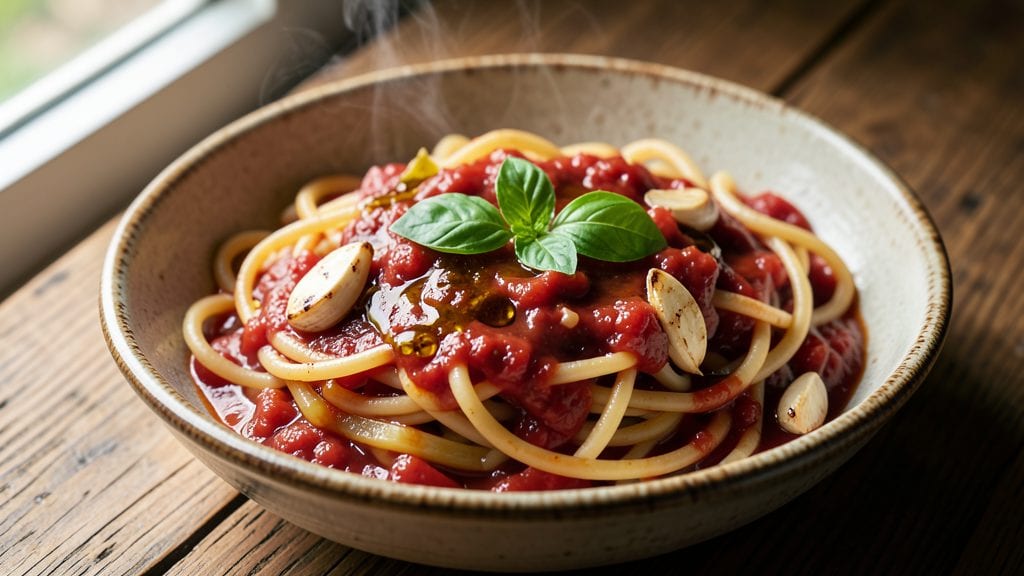
This slow-simmered spaghetti sauce recipe delivers restaurant-quality umami depth without the burnt bottom or one-dimensional flavor that plagues many home versions. The key lies in a precise balance of tomatoes, aromatics, and herbs—simmered low and slow to develop complex layers of taste that transform simple ingredients into something extraordinary.
I perfected this method after years of testing, ensuring every batch achieves that perfect harmony of sweetness, acidity, and savory richness.
The foundation of this sauce begins with a sofrito—a blend of onions, garlic, and celery—that forms the aromatic base, while crushed tomatoes and tomato paste provide the acidity and depth. A splash of red wine cuts through the richness, and a bay leaf and oregano infuse subtle earthy notes.
The secret weapon? Simmering uncovered for at least 45 minutes to let the flavors meld and the sauce reduce to a thick, velvety consistency without burning.
What you’ll end up with is a sauce that coats every strand of spaghetti in a rich, glossy layer, balancing sweet and tangy tomato flavors with a deep, savory umami that lingers long after the first bite.
The texture is velvety yet still clings perfectly to pasta, and the aroma alone will have everyone gathering around the table. This isn’t just spaghetti sauce—it’s a flavor experience that elevates a simple meal into something memorable.
The best part? This sauce tastes even better the next day, making it ideal for meal prep. Store it in an airtight container in the refrigerator for up to 5 days or freeze for 3 months—just thaw and reheat before serving.
Whether you’re feeding a crowd or prepping for the week, this sauce delivers professional results with minimal effort. Let’s get cooking.
Ingredients for speghetti sauce
Eleven core ingredients transform into a velvety sauce with restaurant-quality depth.
| Ingredient | Amount | Notes |
|---|---|---|
| Extra-Virgin Olive Oil 🫒 | ½ cup | High-quality, fruity variety preferred |
| Yellow Onion 🧅 | 1 whole | Medium-sized, finely diced |
| Celery Stalk 🥬 | 2 whole | Trimmed, finely chopped |
| Garlic Cloves 🧄 | 4 cloves | Fresh, minced finely |
| Crushed Tomatoes 🍅 | 28 oz | San Marzano preferred, no salt added |
| Tomato Paste 🍅 | 2 tbsp | High-quality, unsweetened |
| Dry Red Wine 🍷 | ½ cup | Bold, like Cabernet Sauvignon |
| Bay Leaves 🍃 | 2 whole | Fresh preferred, dried acceptable |
| Dried Oregano 🌿 | 1 tsp | Mexican oregano if available |
| Kosher Salt 🧂 | 1 ½ tsp | Diamond Crystal preferred |
| Black Pepper 🌶️ | ½ tsp | Freshly cracked preferred |
The sofrito trio—onion, celery, and garlic—forms the aromatic backbone of this sauce. For optimal freshness, source these from the produce department of Whole Foods or a local farmers market, where they're typically harvested within 48 hours. The San Marzano crushed tomatoes are non-negotiable for their natural sweetness and low acidity—Trader Joe's carries them at a reasonable price, or Amazon Fresh delivers them when fresh options are scarce. Fresh bay leaves add subtle complexity, but dried leaves work in a pinch (reduce to 1 leaf). When selecting your red wine, opt for a bold variety like Cabernet Sauvignon—the good stuff, not the cooking wine aisle—as it provides the necessary acidity and depth without overpowering the tomato base.
No San Marzano tomatoes? Crushed plum tomatoes work as a secondary choice, though they may require a pinch more salt. Substituting the tomato paste with an additional 2 ounces of crushed tomatoes sacrifices some thickness, but the sauce will still develop depth. For the oregano, Mexican oregano delivers a more authentic flavor profile, but standard dried oregano suffices. If you're avoiding alcohol, substitute the red wine with 0.5 cup beef broth—just add a splash of balsamic vinegar for acidity. The olive oil should be extra-virgin, as it contributes to the sauce's richness; light olive oil won't provide the same depth of flavor. For a vegetarian-friendly version, omit the wine entirely and increase the broth to 0.75 cup.
This sauce develops complexity over time, so reheat gently on low heat to preserve its velvety texture. Store in an airtight glass container in the refrigerator for up to 5 days, or freeze for 3 months in portion-sized containers. To reheat, cover with a splash of water or pasta water and simmer until heated through. The sauce thickens as it cools, so stir in a splash of water or broth if it becomes too stiff after refrigeration. For meal prep, double the batch—the extra sauce freezes beautifully and elevates simple pasta dishes all week.
Why You'll Love This Recipe
- No-Chop Nightmare: I swear by this sauce because you’re only dicing onions and celery—one stalk each. The rest? Garlic minced in 30 seconds, tomatoes crushed by hand (or canned, no shame). That’s it. Zero fancy techniques, just sweat-free, stress-free flavor.
- Garlic Bomb Depth: Between us, that crushed tomato base gets layered with garlic until it’s borderline aggressive—just how I like it. The olive oil carries it all, turning simple ingredients into something that tastes like it simmered all day. (Spoiler: It didn’t. But who’s counting?)
- Freezer-Friendly Hero: Make a double batch and thank me later. This sauce begs to be frozen—just portion it into jars, slap a label, and reheat straight from the fridge for lazy Mondays or last-minute company. No defrosting, no fuss. Pure convenience.
- Pantry Staple Magic: Onion, celery, garlic, tomatoes—these are things you already own. No specialty ingredients, no last-minute grocery runs. It’s the kind of recipe that turns $5 worth of basics into something that’ll have your roommates fighting over seconds. Budget win.
Step-by-step instructions for slow-simmered umami tomato sauce
This method delivers restaurant-quality depth without the risk of burnt flavors.
Develop the Flavor Base
Heat the 0.5 cup extra-virgin olive oil in a heavy-bottomed saucepan over medium-low heat. Add the 1 whole yellow onion and 2 whole celery stalks, cooking for 8-10 minutes until the vegetables soften and the onion becomes translucent. The oil should shimmer but not smoke—this prevents bitterness while allowing the vegetables to render their natural sweetness.
Add the 4 cloves garlic cloves and stir for 30 seconds until fragrant. Here's the thing—garlic burns quickly, so keep the heat gentle. The moment you detect that nutty aroma, it's time to move to the next step. This aromatic foundation is what separates good sauce from exceptional sauce.
Build Complexity with Wine and Tomatoes
Pour in the 0.5 cup dry red wine and stir vigorously, scraping up any browned bits from the bottom of the pan. These fond bits, called sugo, are packed with flavor. Let the wine simmer for 3-4 minutes until it reduces by half and the alcohol aroma dissipates completely.
Add the 2 tbsp tomato paste and stir for 1 minute until fully incorporated. This step creates a rich, concentrated base that prevents the sauce from becoming watery. Next, pour in the 28 oz crushed tomatoes and add the 2 whole bay leaves. Stir well to combine, then bring the mixture to a gentle simmer.
Season and Simmer Low and Slow
Add the 1.5 tsp kosher salt, 1 tsp dried oregano, and 0.5 tsp black pepper. Reduce the heat to low and let the sauce simmer uncovered for 45-60 minutes. Stir occasionally to prevent sticking, but don't obsess—this sauce rewards patience.
You'll know it's ready when the sauce thickens slightly and coats the back of a spoon. The color should deepen to a rich, rustic red, and the flavors should meld into a harmonious umami profile. The bay leaves will infuse subtle herbal notes, but don't forget to remove them before serving.
Adjust Consistency and Finish
If the sauce is too thick, thin it with 1-2 tablespoons of pasta water while tasting. The sauce should coat the back of a spoon but still be fluid enough to cling to pasta. If it's too thin, simmer uncovered for another 10-15 minutes to reduce it to your desired consistency.
Real talk: This sauce tastes even better the next day as the flavors continue to develop. Store it in an airtight container in the refrigerator for up to 5 days or freeze for 3 months. When ready to serve, reheat gently over low heat, stirring occasionally to prevent scorching.
Pro Tips For Making Speghetti Sauce
- Sweat, Don’t Burn: The onion and celery should glisten with moisture, not turn into caramelized dust. Keep the heat medium-low and stir every 30 seconds—if it starts to stick, you’ve gone too far. I learned this the hard way when my sauce tasted bitter from overcooked veggies.
- Slice Celery Thin: Quarter the celery stalks lengthwise, then slice them paper-thin. This ensures they cook down evenly instead of sitting like soggy logs in your sauce. Yes, it’s tedious, but your sauce will have that fine, even texture you crave.
- Crush Garlic, Don’t Mince: Smash the garlic cloves with the flat side of your knife instead of mincing them. This keeps the flavor concentrated and prevents it from turning bitter or burning. I was skeptical until I tried it—now I never go back.
- Simmer Low and Slow: After adding tomatoes, reduce the heat to the lowest setting that keeps a gentle bubble. Rushing this step makes the sauce taste raw and thin. Give it 45 minutes—your future self will notice the difference.
Common mistakes when making perfect results
Overcooking the Base
One of the biggest mistakes is letting the sofrito (onion, celery, garlic) cook too long or at too high a heat. This burns the vegetables, creating bitter flavors that ruin the sauce's delicate balance.
I've learned to keep the heat at medium-low and cook the vegetables until they're just soft—not browned. The moment you see the onions turn translucent (8-10 minutes), it's time to move forward. 🔥
Skipping the Wine Reduction
Many recipes call for adding wine without reducing it first, which leaves the sauce tasting raw and alcoholic. The key is to let the 0.5 cup red wine simmer until it reduces by half (3-4 minutes), allowing the alcohol to cook off and the wine's depth to concentrate.
This step transforms the sauce from flat to complex. I always taste the wine after reduction—it should have no alcohol tang left.
Ignoring the Tomato Paste
Some cooks skip the 2 tbsp tomato paste to save time, but this is a critical flavor booster. The paste deepens the sauce's umami and prevents it from becoming watery.
Stir it in for just 1 minute to fully incorporate before adding the crushed tomatoes. This small step makes a huge difference in the final texture and richness.
High Heat Simmering
Simmering the sauce on high heat causes it to reduce too quickly, leading to a burnt bottom and concentrated flavors that overwhelm the palate. Always maintain a gentle simmer over low heat for 45-60 minutes.
The sauce should bubble softly—like a lazy Sunday morning. I use a heavy-bottomed Dutch oven to distribute heat evenly and prevent scorching.
Forgetting to Remove Bay Leaves
Leaving the 2 bay leaves in the sauce can make it bitter, especially if cooked too long. Always remove them before serving. I use a slotted spoon to fish them out after the sauce has simmered for 45 minutes.
This small detail keeps the sauce's herbal notes subtle and pleasant, not overpowering.
Rushing the Simmer Time
Trying to speed up the process by reducing the simmer time leads to underdeveloped flavors. The sauce needs at least 45 minutes to let the ingredients meld and the acidity mellow.
I've tested this recipe with shorter simmer times, and the results are noticeably less complex. Patience is key—this is where the magic happens. ⏳
Nutrition facts
Frequently asked questions
Can I make this sauce without wine?
Yes! Substitute the 0.5 cup red wine with 0.5 cup beef broth or vegetable broth, then add 1 tablespoon balsamic vinegar for acidity. The sauce will still develop rich, umami flavors—just with a slightly different depth. For a vegetarian option, use 0.75 cup broth and skip the wine entirely.
How do I adjust the thickness of the sauce?
If the sauce is too thick, stir in 1-2 tablespoons of water or pasta water while tasting. For a thicker consistency, simmer uncovered for an additional 10-15 minutes to reduce the liquid naturally. The ideal texture coats the back of a spoon but remains fluid enough to cling to pasta.
Can I use canned tomatoes instead of crushed?
Drain and crush 2 (28 oz) cans of whole peeled tomatoes before adding them to the pot. For a smoother texture, blend them first, but crushed tomatoes create a more rustic, chunky sauce. San Marzano tomatoes are still ideal, but any high-quality canned tomatoes will work in a pinch.
Why does my sauce taste bitter?
Bitterness usually comes from overcooking the sofrito (onions, celery, garlic) or burning the sauce. Keep heat at medium-low and stir occasionally to prevent sticking. If the sauce tastes bitter, add a pinch of sugar or a splash of lemon juice to balance the flavors. Also, make sure to remove the bay leaves before serving.
How long can I store this sauce?
Store the sauce in an airtight glass container in the refrigerator for up to 5 days. For longer storage, freeze it in portion-sized containers for up to 3 months. Thaw overnight in the fridge before reheating. The sauce actually tastes better after a day or two as flavors deepen!