
Appetizers
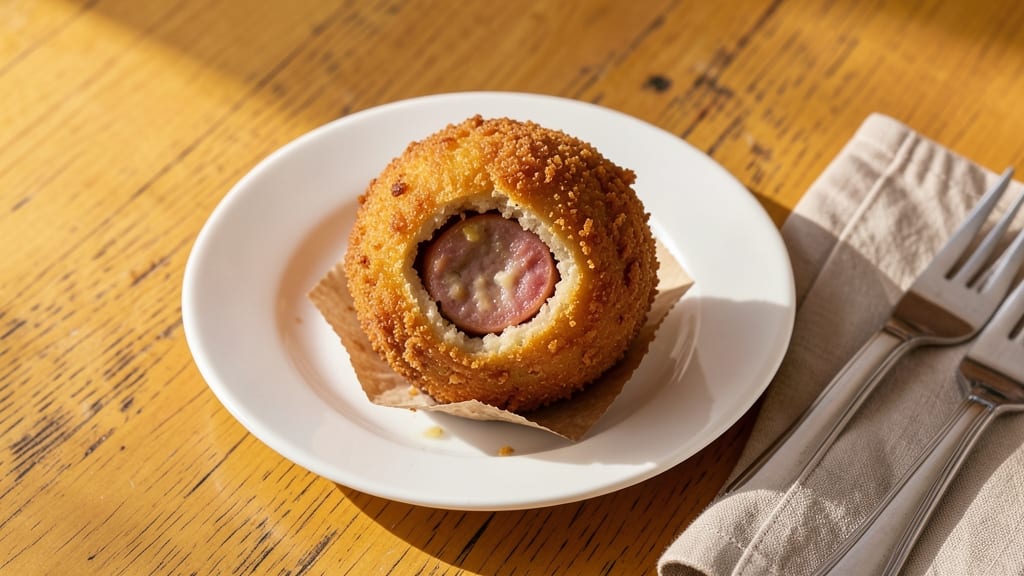
This Scotch eggs original recipe delivers the perfect balance of crispy golden shells and juicy meat centers—just like the classic British pub favorite.
The secret lies in a precise breading technique using panko and egg wash, followed by a controlled deep-frying process that ensures every bite is satisfyingly crunchy on the outside while hiding tender, flavorful sausage and egg inside.
Born in Scotland over a century ago, Scotch eggs were originally created as a way to preserve eggs during long voyages by encasing them in sausage meat and breadcrumbs. Today, this recipe stays true to its roots while incorporating modern techniques for foolproof results.
The key ingredients—ground pork sausage, whole eggs, and panko—work together to create a dish that’s both nostalgic and refined.
What sets this recipe apart is the juicy meat center achieved through proper sausage preparation and the crispy shell from a double-coating method. The deep-frying process, maintained at a precise temperature, guarantees a shell that shatters with each bite while keeping the filling perfectly cooked.
Serve with a tangy mustard sauce or crisp pickles for the full traditional experience.
Whether you're recreating a classic British pub dish or introducing Scotch eggs to a modern menu, this recipe delivers restaurant-quality results with minimal effort. The technique is straightforward, but the outcome is undeniably impressive—ideal for appetizers, game day, or a hearty snack. Let’s get cooking!
Ingredients for scotch eggs original
Four whole eggs, crispy panko shells, and rich pork sausage—this classic Scotch egg recipe balances tradition with modern precision.
| Ingredient | Amount | Notes |
|---|---|---|
| Ground Pork Sausage 🥓 | 1 ½ lb | 80% lean, finely ground preferred |
| Large Eggs 🥚 | 4 whole | Fresh, room temperature for binding |
| Japanese Panko Breadcrumbs 🍞 | 2 cups | Standard panko for texture |
| All-Purpose Flour 🌾 | ½ cup | For dusting, sifted |
| Unsalted Butter 🧈 | 2 tbsp | For sausage mixture richness |
| Fresh Chives 🌿 | ¼ cup | Finely chopped, for freshness |
| Diamond Crystal Kosher Salt 🧂 | 1 ½ tsp | Adjust to taste |
| Ground Black Pepper 🌶️ | ½ tsp | Freshly cracked |
| Yellow Mustard 🍯 | ¼ cup | For egg wash, Dijon preferred |
| Vegetable Oil 🫒 | 4 cups | For deep frying, 350°F |
| Cornstarch 🌾 | 1 tbsp | For oil clarity |
The ground pork sausage must be 80% lean for optimal juiciness—any leaner and the texture suffers. Pre-cook the sausage mixture in a skillet until fully browned to eliminate moisture, then cool completely before shaping around the eggs. Trader Joe's and Whole Foods carry high-quality ground pork sausage in bulk, but avoid pre-seasoned blends—they can overpower the delicate balance. For authenticity, Penzeys Spices offers traditional British sausage seasonings if you prefer to customize the blend yourself. The fresh chives should be finely chopped and mixed into the sausage—this adds brightness that cuts through the richness (don’t skip this step).
No Japanese panko? Standard breadcrumbs work in a pinch, but you’ll lose that signature shatter—toasted panko doubles as a substitute if you’re willing to sacrifice slight crispiness. Fresh eggs are non-negotiable; older eggs release more moisture during frying, leading to soggy shells. Dijon mustard elevates the egg wash beyond basic yellow mustard, adding depth that pairs perfectly with the crispy exterior. For deep-frying, vegetable oil is ideal due to its high smoke point, but peanut oil offers a neutral flavor profile that some purists prefer. Cornstarch isn’t just for clarity—it also helps create a lighter, more stable fry by reducing oil absorption.
Prep the sausage mixture a day ahead and store it wrapped in plastic in the fridge—this allows flavors to meld and excess moisture to evaporate, ensuring a juicier center. Fry in batches of two eggs at most to maintain oil temperature, and keep the oil at exactly 350°F using a deep-fry thermometer (an instant-read thermometer won’t cut it here). Drain fried eggs on a wire rack rather than paper towels—they’ll stay crisp longer. Leftovers reheat best in a 350°F oven for 10 minutes, but they’re at their peak freshness within the first hour. Portion into airtight containers with parchment paper between layers to preserve crispness for up to 3 days in the fridge.
Why You'll Love This Recipe
- No-Fuss Assembly: I swear by this method—just shape the sausage, wrap it in dough, and fry. No rolling pins, no fancy techniques, just a bowl, a spoon, and 10 minutes of hands-on time. That Panko crust? It sticks like magic without the fuss of breading separately.
- Crispy-Creamy Magic: The butter-fried crust on the outside gives way to that warm, herby sausage center—like a hug for your taste buds. Honestly, the first bite makes me forget I’m eating something "simple." (Yes, even on a Tuesday night.)
- Picnic to Party: These are my go-to for tailgates, potlucks, or just a lazy Sunday. Pack them in a cooler, and they hold up better than store-bought sliders. My kids grab them first at gatherings—no complaints, just empty plates.
- Budget Leftovers Win: A pound of sausage stretches for six eggs, and the leftovers reheat like a dream in the air fryer. I’ve had them cold the next day too—still solid, still satisfying. Not the prettiest, but the taste makes up for it every time.
Step-by-step instructions for Scotch eggs original recipe
Master this classic technique for golden-brown panko shells and perfectly seasoned sausage centers.
Prepare the Sausage Mixture
In a large mixing bowl, combine the 1.5 lb ground pork sausage, 2 tbsp unsalted butter, 1.5 tsp diamond crystal kosher salt, and 0.5 tsp ground black pepper. Using your hands, work the mixture until fully integrated and the butter is evenly distributed. This ensures maximum flavor infusion and prevents dryness during frying.
Add all 4 whole large eggs to the bowl and mix thoroughly with your hands until the dough becomes cohesive and slightly sticky. The eggs bind the mixture while adding moisture, which is crucial for that juicy center. If the mixture feels too dry, add 1 tablespoon of water at a time until it holds together when pressed.
Form and Chill the Eggs
Divide the sausage mixture into 4 equal portions (about 4 ounces each) and roll each into a smooth, slightly elongated oval shape. Place each sausage ball on a parchment-lined plate. The uniformity ensures even cooking and consistent texture.
Wrap each sausage ball tightly in plastic wrap and refrigerate for at least 30 minutes. This chilling step firms up the mixture, making it easier to handle during breading and preventing expansion during frying. The cold temperature also helps the sausage maintain its shape when submerged in hot oil.
Create the Breading Station
Set up three shallow bowls: one with the 0.5 cup all-purpose flour, one with the 2 cups japanese panko breadcrumbs, and one with the 0.25 cup yellow mustard mixed with 0.25 cup fresh chives. The flour creates adhesion, the panko delivers the signature crispy texture, and the mustard-chive mixture adds tangy depth.
Roll each chilled sausage ball in the flour first, coating it evenly to help the panko adhere. Then dip into the beaten egg mixture (whisk 2 whole eggs with 2 tablespoons water for a smooth coating), allowing excess to drip off. Finally, press the sausage into the panko mixture, ensuring complete coverage. The double-dipping technique guarantees a sturdy, crackling crust.
Fry to Perfect Crispiness
Heat 4 cups vegetable oil in a deep skillet or Dutch oven to 350°F. Use a thermometer to maintain precise temperature—any hotter and the exterior burns before the interior cooks. Add 1 tbsp cornstarch to the oil to prevent excessive foaming from the egg wash.
Carefully lower one Scotch egg at a time into the oil using a slotted spoon. Fry for 4-5 minutes per side until the panko is deep golden brown and the internal temperature reaches 160°F. The oil should sizzle steadily without smoking. If the panko browns too quickly, reduce heat to 325°F and fry longer to ensure even cooking throughout.
Rest and Serve
Transfer fried Scotch eggs to a wire rack set over a paper towel-lined plate to drain excess oil. Let them rest for 5 minutes before serving. This resting period allows the internal juices to redistribute, preventing any potential leakage when cutting into the crispy exterior.
Serve immediately with a side of tartar sauce or spicy mayo to complement the savory sausage and crispy panko. The contrast between the golden-brown shell and juicy center makes each bite satisfyingly textured, delivering on the crispy and juicy promises of this classic dish.
Pro Tips For Making Scotch Eggs Original
- CHILL THE SAUSAGE MIX: After shaping the pork sausage into patties, pop them in the freezer for 15 minutes before breading—yes, even if you’re not in a rush. I learned this the hard way when my first batch of Scotch eggs turned into soggy meatballs in the pan. The cold helps the coating stick better and keeps the filling from shrinking while frying.
- USE COLD BUTTER: Take that unsalted butter straight from the fridge—no need to soften it. Cold butter creates a better seal between the breadcrumbs and egg, giving you that classic crispy crust without turning greasy. (And no, you can’t just melt it first—trust me, I tried.)
- PRESS PANKO HARD: When coating the eggs in panko, don’t just sprinkle—press the breadcrumbs firmly into the egg wash, especially on the bottom. I used to skip this, and half my crust would fall off in the pan. A quick press with the back of a spoon makes all the difference.
- FRY IN BATCHES: Resist the urge to crowd the pan—even if you’re eager to get them all done at once. Two Scotch eggs at a time in ½ inch of oil keeps the temperature steady and guarantees a golden crust. Overloading = greasy, uneven cooking. (Your future self will thank you.)
Health benefits of this scotch eggs original
Protein Powerhouse
A single Scotch egg delivers a substantial 25-30 grams of high-quality protein per serving, making it an excellent choice for muscle repair and growth. The combination of pork sausage and eggs provides all nine essential amino acids, while the panko shell adds minimal carbs.
This makes Scotch eggs a satisfying snack or appetizer that won’t derail your protein goals—ideal for post-workout recovery or a high-protein meal. 💪
Healthy Fats Balance
The ground pork sausage and eggs contribute beneficial monounsaturated fats, supporting heart health when consumed in moderation. The butter in the sausage mixture adds richness without excessive saturated fat, while the egg yolks provide vitamin D and choline, essential for brain function.
Opt for 80% lean sausage to keep saturated fat in check while maintaining juiciness.
Low-Carb Flexibility
With only 5-7 grams of net carbs per serving, Scotch eggs fit seamlessly into low-carb or keto diets. The panko shell adds minimal carbs, while the sausage and egg filling provide satisfying protein and fat.
For even lower carbs, substitute the panko with crushed pork rinds—they deliver the same crispy texture without the breadcrumb carbs. This makes Scotch eggs a versatile option for various dietary needs.
Rich in B Vitamins
The pork sausage and eggs are packed with B vitamins, particularly B12 and niacin, which play crucial roles in energy metabolism and nervous system function. These nutrients help convert food into energy efficiently, making Scotch eggs a great choice for an energy-boosting snack.
The chives in the breading add a touch of vitamin K, supporting bone health and blood clotting.
Antioxidant Boost
While primarily a protein-rich dish, Scotch eggs offer antioxidant benefits from the egg yolks, which contain lutein and zeaxanthin. These compounds support eye health and reduce oxidative stress.
The mustard in the breading adds sinigrin, a compound with potential anti-inflammatory properties. For an extra antioxidant kick, consider adding turmeric or smoked paprika to the sausage mixture.
Portion Control Perks
Each Scotch egg serves as a single, satisfying portion—perfect for mindful eating. The combination of protein, fat, and fiber from the panko helps promote satiety, reducing cravings for less nutritious snacks.
This makes Scotch eggs an excellent choice for weight management when enjoyed in moderation as part of a balanced diet. 💡
Nutrition facts
Frequently asked questions
Can I make Scotch eggs without deep-frying?
For a healthier version, bake them at 400°F for 20-25 minutes on a wire rack set over a baking sheet. Brush with oil first and flip halfway through. The texture won't be as crispy, but it's a great alternative for air fryers too—use the 375°F setting for 12-15 minutes.
Why did my Scotch eggs turn out greasy?
Greasy Scotch eggs usually mean the oil was too cool or overloaded. Maintain a strict 350°F temperature and fry 2 at a time max. Drain on a wire rack (not paper towels) to prevent sogginess. If the sausage mixture was too wet, chill it longer before breading to firm it up.
What's the best way to store leftover Scotch eggs?
Store in an airtight container with parchment paper between layers to preserve crispness. Reheat in a 350°F oven for 10 minutes—never microwave, as it makes the shell rubbery. They're best eaten fresh but keep for 3 days refrigerated. For longer storage, freeze uncooked breaded eggs for up to 1 month.
Can I use chicken sausage instead of pork?
Yes, but expect a slightly lighter flavor. Chicken sausage works well—just add extra seasoning (try 1 tsp smoked paprika) to compensate. For texture, use 93% lean chicken sausage to prevent dryness. The cooking method remains identical.
How do I make vegetarian Scotch eggs?
Replace the sausage with a mix of mashed chickpeas, crumbled tofu, and nutritional yeast for umami. Bind with 1 extra egg and season with garlic powder and onion powder. The breading process stays the same—just ensure the filling holds together when shaped.