
Main Courses
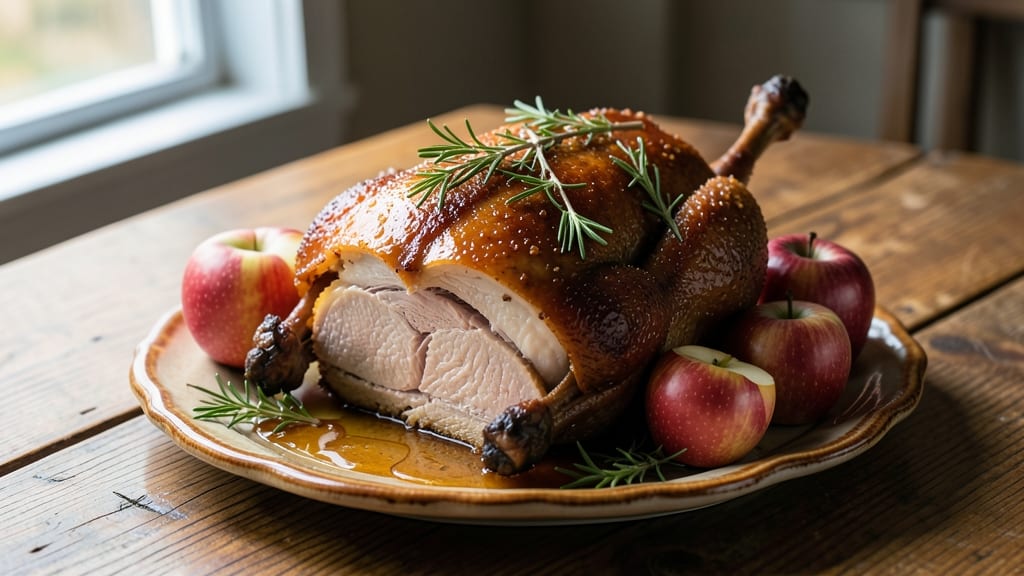
This roast duck with apples recipe delivers the perfect balance of crispy skin and juicy meat, elevated by a honey glaze that caramelizes beautifully with sweet-tart apples. The secret lies in a precise roasting technique that renders fat while keeping the meat tender—no guesswork involved.
I’ve perfected this method over years of holiday feasts, where it became the centerpiece dish that disappears faster than the gravy.
The apples play a dual role here: their natural acidity cuts through the duck’s richness while their caramelized sweetness in the glaze adds depth. You’ll start with a simple brine to ensure moisture, then roast the duck until the skin is golden and shatteringly crisp.
The honey-apple reduction ties everything together, creating a sauce that’s rich yet bright—ideal for drizzling over slices or serving alongside roasted vegetables.
What you’ll end up with is a restaurant-worthy main course that’s surprisingly approachable at home. The crispy skin gives way to succulent meat that practically melts in your mouth, while the honey-glazed apples add a touch of elegance without complexity.
This dish shines during holidays but works equally well for a special weeknight dinner when you want to impress.
Ready in about 2 hours (mostly hands-off time), this recipe scales perfectly for both intimate dinners and larger gatherings. The key is patience—letting the duck rest after roasting ensures every bite stays juicy while the skin maintains its perfect crunch. Let’s get to the step-by-step instructions where the magic happens.
Ingredients for roast duck with apples
Precision-crafted ingredients transform a simple duck into a showstopping centerpiece with crisp skin and tender meat.
| Ingredient | Amount | Notes |
|---|---|---|
| Whole Duck (5-6 lb) 🦆 | 1 whole | Fresh, skin-on, giblets removed |
| Sweet-Tart Apples (Braeburn or Honeycrisp) 🍎 | 4 medium | Peeled, cored, sliced |
| Extra-Virgin Olive Oil 🫒 | ¼ cup | For basting and glaze |
| Raw Honey 🍯 | ½ cup | Wildflower or clover variety |
| Fresh Thyme 🌿 | ¼ cup | Stems removed, leaves only |
| Fresh Rosemary 🌿 | ⅛ cup | Chopped, fresh sprigs preferred |
| Diamond Crystal Kosher Salt 🧂 | 2 tbsp | For brine and seasoning |
| Granulated Sugar 🍚 | 2 tbsp | Light brown preferred |
| Fresh Lemon Juice 🍋 | ¼ cup | From 1 large lemon |
| Garlic Cloves 🧄 | 4 cloves | Peeled, minced for glaze |
| Unsalted Butter 🧈 | ¼ cup | Cold, cubed for basting |
| Ground Black Pepper 🌶️ | 1 tsp | Freshly cracked |
| Apple Cider Vinegar 🍶 | 1 tbsp | For glaze acidity |
The duck is the foundation, so prioritize quality—look for 5-6 lb birds with even fat distribution. Whole Foods or high-end butchers often carry premium duck with marbling that renders beautifully. Avoid pre-basted ducks as the added salt disrupts the crisp skin. For apples, Braeburn or Honeycrisp provide the perfect balance of sweetness and tartness needed to cut through the duck's richness. If using frozen duck, thaw it overnight in the refrigerator—never at room temperature. The honey should be raw and unfiltered for optimal flavor, and Trader Joe's carries excellent wildflower varieties at reasonable prices.
Substitutions must maintain the dish's balance. For apples, Granny Smith adds more tartness but may require additional honey in the glaze. No fresh thyme? Dried thyme at one-third the amount works, but fresh imparts superior aroma. The apple cider vinegar can be swapped for white wine vinegar, though it lacks the subtle apple notes. If you're avoiding honey, maple syrup provides a comparable sweetness profile. For the butter, European-style butter with higher fat content yields better basting results. The salt is critical—Diamond Crystal dissolves more easily than table salt, so adjust to taste after brining.
Prep the duck and glaze ingredients ahead for convenience. The brine can be made 24 hours in advance and stored in the refrigerator. Apples should be peeled and sliced just before roasting to prevent browning. Store any leftover glaze in an airtight container in the refrigerator for up to 1 week, though it's best used immediately. The roasted duck reheats beautifully—wrap slices tightly in foil and warm in a 350°F oven for 15 minutes. For larger gatherings, double the recipe and roast two ducks simultaneously on the same rack, spacing them evenly to ensure even browning.
Why You'll Love This Recipe
- I’ll be real: this isn’t fancy. But it’s reliable. The duck doesn’t need babying—just season, roast, and let it do its thing while you sip wine and pretend you’re not cooking. And with apples and honey in the mix, it feels like a celebration, even on a Tuesday night.
- One-Pan Magic: I swear by this recipe when I don’t want to scrub a million dishes. The duck roasts right alongside the apples—no extra pans, no extra stress—just golden skin and caramelized fruit all in one go. Honestly, the cleanup feels like a victory.
- Sweet-Savory Balance: That honey glaze? It’s the star. The apples add just enough tartness to cut through the duck’s richness, while the thyme brings this earthy, herbal depth that makes every bite feel special. Between us, it’s the kind of flavor combo that makes people ask, “What’s in this?”
- Leftovers for Days: Roast duck doesn’t just taste great—it reappears in my fridge for days. Shred the meat for sandwiches, dice it into salads, or toss it into pasta. I’ve even turned the crispy skin into a crumbly topping for mashed potatoes. It’s my secret weapon for lazy lunches.
Step-by-step instructions for honey-glazed roast duck with apples
Master this technique for perfectly crisp skin and tender, juicy meat every time.
Prepare the Duck for Optimal Crisp and Juiciness
Remove the duck from the refrigerator and let it sit at room temperature for 30 minutes. This ensures even cooking throughout. Pat the skin completely dry with paper towels, focusing on the cavity and under the wings where moisture tends to accumulate. Any remaining moisture will prevent that coveted crisp skin.
In a small bowl, combine 2 tablespoons of the diamond crystal kosher salt and 1 teaspoon of ground black pepper. Rub this mixture generously over the entire duck, including the cavity. This seasoning not only enhances flavor but also helps draw out moisture for a better sear. Let the duck rest uncovered on a wire rack for 1 hour in the refrigerator. This step is critical—it allows the salt to penetrate the skin and creates a perfect foundation for crisping.
Create the Apple-Honey Glaze and Herb Rub
In a medium bowl, combine 0.25 cup of extra-virgin olive oil, 0.5 cup of raw honey, 0.25 cup of fresh lemon juice, 1 tablespoon of apple cider vinegar, 2 tablespoons of granulated sugar, 4 minced garlic cloves, 0.25 cup of fresh thyme, and 0.125 cup of fresh rosemary. Mix thoroughly until the sugar dissolves completely. This glaze will caramelize beautifully during roasting, creating a sticky, flavorful crust that complements the duck's richness.
Slice the 4 medium sweet-tart apples into ¼-inch thick rounds and toss them lightly with the remaining 1 tablespoon of diamond crystal kosher salt. The apples will soften during roasting and release their natural sweetness, balancing the duck's savory notes. Set the sliced apples aside—they'll be added later to infuse flavor into the roasting pan.
Roast the Duck to Perfect Doneness
Preheat your oven to 375°F. Place the duck breast-side up on a rack in a roasting pan. Pour 0.25 cup of cold unsalted butter into the pan and tilt it to coat the bottom evenly. The butter will render and baste the duck as it roasts, ensuring moisture and flavor. Add the sliced apples around the duck, arranging them in a single layer.
Roast the duck for 1 hour and 45 minutes, or until the internal temperature reaches 165°F when measured in the thickest part of the thigh. Avoid opening the oven during cooking—each time you do, you release heat and steam, potentially ruining the crisp skin. After 1 hour and 15 minutes, carefully spoon the accumulated pan juices over the duck every 15 minutes to keep it moist and enhance browning.
Glaze and Finish for Maximum Crisp
Remove the duck from the oven and transfer it to a cutting board. Tent loosely with foil and let it rest for 20 minutes. This resting period allows the juices to redistribute, ensuring every slice remains succulent. While the duck rests, increase the oven temperature to 425°F. Pour the apple-honey glaze into a small saucepan and bring it to a simmer over medium heat for 3-4 minutes, stirring constantly until it thickens slightly.
Brush the glaze generously over the duck's skin, focusing on the crispy areas. Return the duck to the oven and roast for an additional 10-12 minutes, or until the glaze caramelizes to a deep amber color and the skin reaches a rich, golden-brown hue. The aroma at this stage will be intoxicating—this is when the duck truly transforms into a showstopper.
Carve and Serve with Confidence
Using a sharp carving knife, slice the duck into ½-inch thick slices, cutting against the grain for maximum tenderness. The meat should be fork-tender with a crisp, caramelized skin that shatters slightly when pierced. Serve immediately with the roasted apples on the side, their natural sweetness cutting through the duck's richness. The glaze should cling to each slice, delivering a perfect balance of honey, apple, and herb notes with every bite.
For an elevated presentation, arrange the sliced duck on a platter with the roasted apples scattered around. The contrast of the crisp skin against the tender meat and the vibrant glaze will make this dish the centerpiece of any meal. Pair with a simple arugula salad dressed with a touch of lemon to cleanse the palate between bites.
Pro Tips For Making Roast Duck With Apples
- CRACK THE SKIN FIRST: I learned this the hard way—duck skin won’t crisp properly if it’s still sealed tight. Use tongs to pull it away from the meat in a few spots before roasting, then score it lightly with a sharp knife. This lets the fat render out and gives you that golden, shatteringly crisp crust you’re after.
- CORE THE APPLES: Skip the slices—whole apples stay juicy and caramelize better. Cut them in half, core them completely, and pack them tightly around the duck. The heat will soften them into a sweet, sticky glaze that clings to the meat, and you won’t waste time dealing with soggy apple bits.
- DON’T RUSH THE HONEY: That raw honey isn’t just for flavor—it’s the glue that makes the crisp happen. Brush it on after the duck has seared and the skin is starting to render fat, not at the beginning. If you add it too early, it’ll burn before the skin crisps, turning your glaze into bitter syrup.
- LOW AND SLOW AFTER SEARING: High heat for the crust, then drop the temp to 325°F once the skin is golden. Duck cooks best when it’s not fighting the oven—this keeps the meat juicy while the apples caramelize. I used to blast it the whole time, and the result was dry, sad duck with burnt apples. Not worth it.
Wine and beer pairings for these flavors
Red Wine Pairings
For duck’s rich, fatty profile, a Pinot Noir from Burgundy or Oregon is my go-to—its bright acidity and red fruit notes cut through the dish’s richness without overpowering.
Look for a 2019 Domaine Drouhin Oregon Pinot Noir ($45), which balances earthy undertones with juicy cherry flavors that echo the honey glaze. The wine’s moderate tannins won’t clash with the crisp skin or apple sweetness. 🍷
Dry Sparkling Wine
A crisp Champagne or Prosecco adds effervescence that cleanses your palate between bites. I love Laurent-Perrier Brut ($40) for its green apple and citrus notes, which mirror the roasted apples’ acidity. The bubbles also help cut through the duck’s fat, making each sip refreshing. Serve chilled to highlight its brightness.
Beer Complements
A Belgian Dubbel like Westmalle Tripel ($12) pairs surprisingly well—the malt sweetness complements the honey glaze, while the spiced notes (vanilla, caramel) enhance the duck’s depth. For a lighter option, try a German Helles Lager like Weihenstephaner Original ($10), which balances the dish’s richness without overwhelming it. 🍺
Avoid Heavy Reds
Skip bold reds like Cabernet Sauvignon or Syrah—their tannins and dark fruit flavors will clash with the duck’s crisp skin and honey’s sweetness. Instead, opt for wines with bright acidity and red fruit undertones to let the dish shine. The goal is harmony, not competition.
Non-Alcoholic Options
For a mocktail, mix sparkling apple cider (like Martinelli’s) with a splash of ginger beer and a squeeze of lemon. The apple notes tie into the dish, while ginger’s spice echoes the rosemary and thyme. Serve over ice for a refreshing contrast to the warm duck.
Nutrition facts
Frequently asked questions
Can I use bone-in duck legs instead of a whole duck?
Yes, but adjust the cooking time and temperature. Bone-in duck legs typically require 1 hour and 15 minutes at 375°F until the internal temperature reaches 165°F. The skin will crisp faster on legs, so watch closely after 45 minutes to prevent overcooking. Use the same glaze and apple method for complementary flavors.
How do I prevent the duck skin from sticking to the roasting pan?
Pat the skin completely dry before roasting and place the duck on a wire rack in the pan. The rack allows air circulation for even browning. Use cold butter in the pan to create a natural basting sauce, and avoid moving the duck during cooking. If needed, carefully lift the edges with a thin spatula to check for sticking after 30 minutes.
What if I don’t have fresh thyme or rosemary?
Use dried herbs at one-third the amount (e.g., 1 teaspoon dried thyme instead of 0.25 cup fresh). For rosemary, substitute with 1 teaspoon dried or 0.25 cup fresh parsley for brightness. The glaze will still work, though fresh herbs add superior aroma. If using dried, mix them into the glaze while warm to fully infuse the flavors.
Can I make this recipe ahead of time?
Roast the duck up to 2 days ahead and refrigerate uncovered. Reheat slices in a 350°F oven for 15 minutes wrapped in foil, then crisp the skin under a broiler for 2-3 minutes. The apples can be roasted separately and stored in an airtight container for 3 days. Reheat the glaze gently in a saucepan until warm before serving.
Why does my duck skin turn rubbery instead of crispy?
Overcooking or excess moisture are the usual culprits. Ensure the duck rests 1 hour uncovered after salting to draw out moisture, and avoid opening the oven during roasting. For extra crispness, finish under a broiler for 2-3 minutes at the end. If the skin feels dry, baste more frequently with rendered fat or glaze during cooking.