Breakfast & Brunch
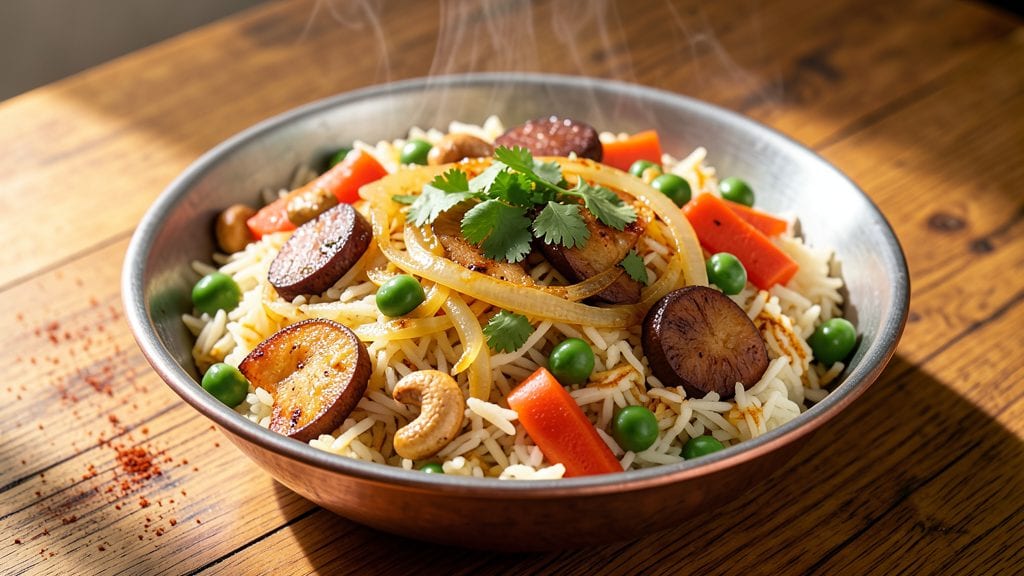
This restaurant-style veg pulao recipe transforms simple basmati rice into a fragrant, golden masterpiece that rivals your favorite Indian restaurant. The secret lies in parboiling the rice for perfect texture and layering spices in the right order—starting with whole spices that bloom into aromatic perfection.
I've perfected this dish over years of testing, and the crispy toasted nuts add a satisfying crunch that elevates every bite.
The foundation of great pulao is basmati rice cooked with saffron, which infuses the grains with a luxurious golden hue and delicate floral notes. We'll build flavor by sautéing vegetables like carrots, peas, and potatoes until tender-crisp, then finishing with a fragrant spice mix that includes cardamom, cinnamon, and cloves.
This method ensures each grain stays separate yet infused with the rich aroma of the spices.
By the time you serve this dish, you'll have perfectly fluffy basmati rice with a subtle golden tint from the saffron, tender vegetables holding their shape, and that signature crispy texture from the toasted nuts.
The aroma alone will have everyone at the table anticipating each bite—this is the kind of dish that makes you feel like a professional chef. Garnish with fried onions for extra crunch and fresh cilantro for brightness.
This recipe works beautifully for lunch or dinner, and leftovers reheat perfectly while maintaining that restaurant-quality texture. Whether you're feeding a family or hosting guests, this veg pulao will be the star of your meal. Let's get started on creating this showstopping dish.
Ingredients for restaurant style veg pulao
Simple ingredients that transform into restaurant-quality golden pulao with saffron and nutty crunch.
| Ingredient | Amount | Notes |
|---|---|---|
| Long-Grain Basmati Rice 🍚 | 2 cups | Uncooked, rinsed thoroughly |
| Saffron Threads 🌼 | ¼ tsp | High-quality, soaked in 2 tbsp warm water |
| Yellow Onions 🧅 | 1 whole | Thinly sliced, for frying |
| Carrots 🥕 | 1 ½ cups | Medium dice, firm variety |
| Green Peas 🌱 | 1 cup | Frozen or fresh, thawed |
| Russet Potatoes 🥔 | 1 lb | Small dice, peeled |
| Cashew Nuts 🥜 | ½ cup | Whole, toasted until golden |
| Almonds 🌰 | ¼ cup | Sliced, toasted with cashews |
| Vegetable Oil 🫒 | ½ cup | High smoke point, like sunflower |
| Cardamom Pods 🌿 | 6 whole | Lightly crushed, green variety |
| Cinnamon Sticks 🌿 | 2 whole | 2-inch pieces, lightly crushed |
| Cloves 🌶️ | 3 whole | Lightly crushed, aromatic |
| Bay Leaves 🍃 | 2 whole | Fresh or dried |
| Ground Cumin 🌿 | 1 tbsp | Toasted for deeper flavor |
| Ground Turmeric 🌶️ | ½ tsp | Bright yellow, fresh if possible |
| Fresh Cilantro 🌿 | ¼ cup | Chopped, for garnish |
| Salt 🧂 | 1 ½ tsp | Fine sea salt, adjust to taste |
| Water 💧 | 3 ½ cups | Room temperature |
The basmati rice is non-negotiable here—look for long-grain varieties like Tilda or India Gate at Indian grocery stores or the international aisle. The saffron should be bright orange-red threads, not powdered—Bakkal Markets or specialty spice shops have the best quality. Toast your nuts until they're a deep golden brown (about 5 minutes) for that signature crunch. I always double-check my cardamom pods—green ones have more flavor than the black variety. For the vegetables, frozen peas work perfectly if fresh are out of season, but don't skip thawing them first.
No saffron? Turmeric plus a pinch of paprika gives some golden color, though it won't have that floral aroma. Running low on cashews? Pistachios or peanuts toasted with the almonds work great—they just change the flavor profile slightly. The cinnamon sticks can be swapped for 1 tsp ground cinnamon, but whole spices give way more depth. For the onions, red or white onions both work, but yellow gives the most caramelization when fried. If you're short on time, pre-chopped frozen veggies save prep work without sacrificing flavor.
This pulao tastes even better the next day—reheats perfectly in the microwave with a splash of water. Store leftovers in an airtight container for 4-5 days in the fridge. For extra restaurant flair, serve in a large platter with a sprinkle of fried onions on top. The nuts keep their crunch for 1 week if stored in a sealed container away from light. Double the recipe—it's perfect for meal prep!
Why You'll Love This Recipe
- One-Pot Magic: I swear by this—no extra pans, no stress. Just chop onions, toss in the rice with saffron, and let the pot do the work. The peas and carrots soften perfectly while the basmati grains stay distinct, like a restaurant chef’s secret.
- Golden Threads Matter: That saffron? It’s not just a garnish—it’s the soul. A few strands steeped in warm water transform this into something luxurious, even when I’m too tired to fuss. The onions caramelize just enough to add depth without overpowering the bright, herby rice.
- Weeknight to Wedding: Honestly, this pulls double duty. I serve it with roti for a lazy Sunday or double the batch for a potluck—no one bats an eye. The veggie mix keeps it hearty, and the rice stays fluffy enough to impress even my picky in-laws.
- Leftovers That Win: Between us, my lunchbox gets jealous of how well this holds up. Reheat it, and the saffron aroma hits you like a warm hug. Plus, it’s cheap—basmati rice and frozen peas stretch to feed four for under $10. My wallet and my taste buds thank me every time.
Step-by-step instructions for restaurant-style veg pulao
Here's how to make this aromatic, nut-topped pulao that tastes like it came straight from a restaurant kitchen.
Prepare the Saffron Infusion and Toast the Spices
First, soak the 0.25 teaspoon saffron threads in 2 tablespoons warm water for 10 minutes to release their vibrant color and delicate flavor. This infusion will give your pulao that signature golden hue and luxurious aroma.
In a dry heavy-bottomed pan, heat 0.5 cup vegetable oil over medium heat. Add the 6 whole cardamom pods, 2 whole cinnamon sticks, 3 whole cloves, and 2 whole bay leaves. Toast for 1-2 minutes until the spices release their fragrance and the oil becomes lightly perfumed. Be careful not to burn them—just warm enough to awaken their flavors. Remove the pan from heat and set aside.
Fry the Aromatics and Vegetables
In the same pan with the spice-infused oil, add the 1 whole yellow onion sliced thinly. Fry over medium heat for 3-4 minutes until the onions turn golden brown and crispy at the edges. This step is crucial for building deep flavor—don't rush it.
Add the 1.5 cups medium diced carrots and 1 lb small diced russet potatoes. Cook for 5-6 minutes, stirring occasionally, until the vegetables begin to soften slightly. Sprinkle 1 tablespoon ground cumin and 0.5 teaspoon ground turmeric over the vegetables, and stir to coat them evenly. Cook for another 2 minutes until the spices release their aroma and the vegetables are tender but still hold their shape.
Parboil the Rice and Layer with Vegetables
Rinse the 2 cups long-grain basmati rice thoroughly under cold water until the water runs clear. This removes excess starch and prevents the rice from becoming gummy. In a large pot, bring 3.5 cups water to a boil, add 1 teaspoon salt, and carefully add the rinsed rice. Cook for 5 minutes until the rice is about 70% done—it should still have a slight bite to it. Drain the rice in a colander and set it aside.
In a heavy-bottomed pot large enough to hold all ingredients, spread a thin layer of the partially cooked rice at the bottom. Arrange half of the fried vegetables evenly over the rice. Sprinkle half of the 1 cup green peas on top. Add another thin layer of rice, followed by the remaining vegetables and peas. Finish with the remaining rice, pressing down gently but not too firmly—you want the rice to stay fluffy.
Cook the Pulao to Perfection
Pour the saffron infusion over the rice, spreading it evenly. Drizzle the spice-infused oil from the pan over the top, and sprinkle the remaining 0.5 teaspoon salt on top. Cover the pot tightly with a lid and cook on low heat for 15 minutes. This slow cooking allows the rice to steam gently and absorb all the flavors without turning mushy.
After 15 minutes, turn off the heat and let the pulao sit covered for another 10 minutes. This resting period ensures the rice absorbs all the liquid and flavors evenly. Open the lid carefully—you'll be greeted with a fragrant aroma that fills your kitchen.
Toast the Nuts and Garnish
In a separate small pan, toast the 0.5 cup cashew nuts and 0.25 cup sliced almonds over medium heat for 3-4 minutes until they turn a beautiful golden color and become crispy. Watch them closely to avoid burning. Remove from heat immediately and set aside.
Gently fluff the pulao with a fork, being careful not to break the grains. Sprinkle the toasted nuts evenly over the top and garnish with 0.25 cup chopped fresh cilantro. Serve immediately while the nuts are still crispy and the pulao is steaming hot. Each bite should deliver a perfect balance of fragrant basmati rice, tender vegetables, and the crunch of toasted nuts—just like a restaurant-quality dish.
Pro Tips For Making Restaurant Style Veg Pulao
- Bloom the Saffron: DESCRIPTION: Steep those threads in 2 tablespoons warm water for at least 10 minutes before adding to the rice—no, don’t skip this. Cold water? You’ll just get bitter, grainy rice. I used to rush it, and the pulao always tasted flat. Trust me, the color and flavor pay off.
- Sear the Onions Slow: DESCRIPTION: Caramelize those yellow onions on low heat for 15-20 minutes until deep amber, not brown. High heat = burnt bits that ruin the dish. Add a pinch of salt halfway through to draw out moisture—this makes them sweeter and prevents sticking. (Yes, it’s tedious, but the aroma is worth it.)
- Don’t Overcrowd the Pot: DESCRIPTION: Use a heavy-bottomed pot and keep the rice-to-water ratio at 1:1.5 (e.g., 1 cup rice to 1.5 cups broth). Packing it in too tight = mushy rice. After adding water, stir once to distribute the saffron, then let it sit undisturbed. I learned this after a batch turned into porridge.
- Parboil the Veggies: DESCRIPTION: Blanch carrots and peas in boiling water for exactly 2 minutes before adding to the pulao. This keeps them bright and slightly firm—not mushy. Drain, shock in ice water, and pat dry. (Pro move: Toss them with a teaspoon of lemon juice to preserve color.) Your pulao will look restaurant-fresh, not sad.
Flavor customization for this recipe
Spice Level Adjustments
For a milder version, reduce the ground cumin to ½ tablespoon and omit the cloves entirely. I often swap ½ teaspoon mild paprika for the cloves to add warmth without heat.
For heat lovers, add ½ teaspoon Kashmiri red chili powder (for color) and ¼ teaspoon cayenne pepper—this turns the pulao into a fiery Hyderabadi-style dish. 🌶️
Nutty Variations
Swap the cashews and almonds for peanuts (toasted with 1 tsp brown sugar and ½ tsp salt) for a South Indian-inspired twist. For a richer texture, try fried shallots instead of nuts—they add a crispy, savory crunch.
I’ve also used pistachios (lightly toasted) for a luxurious touch that pairs beautifully with the saffron. 🥜
Vegetable Swaps
Replace the potatoes with cauliflower florets (tossed in ½ tsp turmeric before frying) for a lighter, floral version. For a winter pulao, add diced sweet potatoes and roasted butternut squash—roast them separately with ½ tsp cinnamon and ¼ tsp nutmeg for depth.
Spring calls for asparagus spears and fresh green beans, lightly blanched before layering. 🌱
Herb & Garnish Upgrades
Swap cilantro for fresh mint leaves (chopped) for a Persian-inspired flavor profile. Add toasted cumin seeds (½ tsp) to the garnish for extra aroma. For a smoky touch, sprinkle ½ teaspoon smoked paprika over the nuts before toasting.
I also love finishing with edible rose petals (if available) for a restaurant-worthy presentation. ✨
Dairy & Creamy Options
Stir ¼ cup heavy cream into the saffron infusion for a luxurious twist—this works especially well with the peanut variation. For a yogurt-based pulao, mix ½ cup plain yogurt with 1 tsp chaat masala and drizzle it over the finished dish.
Both options add creaminess while keeping the dish vegetarian. 🥛
Regional Style Twists
For an Awadhi touch, add 1 tsp grated ginger and 1 minced garlic clove to the spice oil. A Bengali-style version includes mustard oil (heat until smoky) and shredded coconut (toasted with the nuts).
For Punjabi flair, fold in chopped fried onions and raisins (soaked in warm water) during the final layering step. 🗺️
Nutrition facts
Frequently asked questions
Why do you parboil the rice before layering?
Parboiling rice for 5 minutes ensures each grain stays separate and fluffy, preventing the classic mushy texture. This technique is key for restaurant-style pulao—it guarantees the perfect bite and allows the rice to absorb all the layered flavors without turning sticky.
Can I make this pulao in a pressure cooker?
Yes! Use the same parboiling method, then layer the rice and vegetables in your pressure cooker. Cook on low heat for 3 whistles (about 10 minutes) after layering. The key difference is you'll need to adjust the resting time—let it sit covered for 15 minutes after pressure releases.
What's the secret to getting the golden color?
The saffron infusion and slow cooking create that signature golden hue. For extra vibrancy, toast ½ teaspoon turmeric with the whole spices in the oil—this deepens the color naturally. The low-and-slow cooking method also helps develop the caramelized tones.
How do I prevent the nuts from burning?
Toast nuts on medium-low heat and stir constantly for 3-4 minutes until golden. Remove immediately when they smell nutty—overcooking by 30 seconds can turn them bitter. A light sprinkle of salt while toasting enhances flavor without risking burning.
Can I make this ahead of time?
This pulao tastes even better the next day! Store in an airtight container for 4-5 days. Reheat covered on low heat with a splash of water—stir gently to restore the fluffy texture. The nuts will lose some crunch but maintain flavor. For serving, add fresh toasted nuts on top.