
Sauces & Condiments
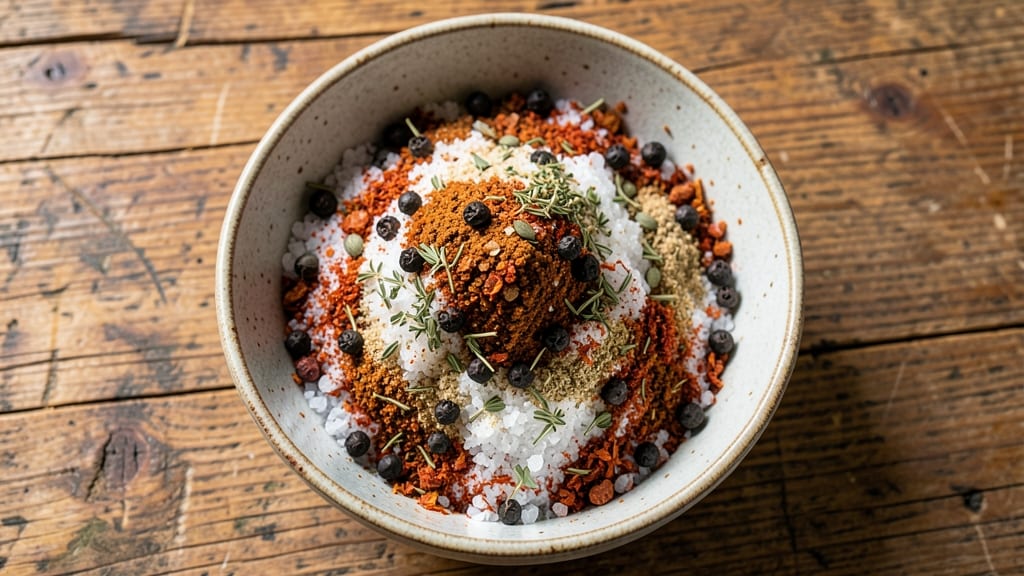
Transforming a simple prime rib roast into a showstopping centerpiece starts with this deep smoky crust rub made entirely from pantry staples. The perfect blend of coarse salt, black pepper, and aromatic spices creates a flavorful bark that locks in juices and delivers restaurant-quality results every time.
I've perfected this mix over years of holiday feasts, ensuring it's foolproof for both beginners and seasoned cooks alike.
What makes this recipe truly special is its versatility—just four core ingredients with optional additions for customization. The balance of salt and spices creates that coveted crust while keeping the interior tender and succulent.
Unlike store-bought blends, this mix delivers a rich, smoky depth that elevates even the most basic cut of prime rib. Ready in minutes, it transforms an ordinary roast into a centerpiece worthy of any special occasion.
This dry rub is designed for maximum flavor impact with minimal effort. Simply mix the ingredients, store them in an airtight container, and apply generously to your roast before cooking. The spices develop their full potential during the roasting process, creating a caramelized crust that's both flavorful and visually stunning.
Whether you're hosting a holiday dinner or treating yourself to a special meal, this rub guarantees impressive results.
The beauty of this recipe lies in its simplicity and adaptability. Use it as-is for a classic flavor profile, or customize with additional spices like smoked paprika or brown sugar for extra depth.
With proper storage, this mix keeps its potency for up to six months, making it a valuable addition to your holiday cooking arsenal. Let's create that perfect crust together.
Ingredients for prime rib roast rub
Four core ingredients create this legendary prime rib crust, with optional spices for depth.
| Ingredient | Amount | Notes |
|---|---|---|
| Coarse Kosher Salt 🧂 | 1 cup | Diamond Crystal preferred for texture |
| Freshly Ground Black Peppercorns 🌶️ | ½ cup | Freshly cracked for maximum aroma |
| Smoked Paprika 🌶️ | 2 tbsp | High-quality smoked variety |
| Garlic Powder 🧄 | 1 tbsp | Freshly ground preferred |
| Ground Coriander 🌿 | 1 tbsp | Adds subtle citrusy depth |
| Dried Thyme Leaves 🌿 | 1 tbsp | French thyme if available |
| Brown Sugar 🍯 | 1 tbsp | Light or dark preferred |
| Ground Mustard 🌶️ | ½ tbsp | Dry mustard powder |
| Ground Cinnamon 🌿 | ½ tsp | Optional for warmth |
The coarse kosher salt is non-negotiable—Diamond Crystal creates the perfect texture for crust formation, while Morton's is too fine. Freshly cracked black peppercorns (not pre-ground) deliver maximum aroma, so invest in a pepper grinder. For smoked paprika, Penzeys or McCormick brands offer superior quality with consistent smoke intensity. The garlic powder should smell vibrant, not stale—store in a cool, dark place to preserve freshness. French thyme adds a more complex herbal note than regular dried thyme, but standard dried works in a pinch.
No smoked paprika? Substitute with 1 tbsp regular paprika plus 1 tsp liquid smoke (like Annie's brand) for a similar smoky profile. Short on coriander? Cumin at half the amount mimics its earthy qualities. The brown sugar adds caramelization—light brown sugar gives a subtle molasses note, while dark brown intensifies the crust. Ground mustard is optional but enhances the rub's complexity. For extra depth, add 1 tsp onion powder or 1/2 tsp cayenne if you prefer heat. Always taste as you mix—adjust salt to your preference since it's the base flavor.
Store this rub in an airtight glass container away from light and moisture for up to six months. The spices develop even more depth over time, so make extra—it's perfect for holiday roasts, smoked meats, or even grilled vegetables. For best results, apply generously (about 2 tbsp per pound of meat) and let it sit at room temperature for 30 minutes before cooking to allow the spices to adhere. The rub keeps its potency indefinitely if stored properly, making it a versatile pantry staple for special occasions.
Why You'll Love This Recipe
- Five-Ingredient Magic: I swear by this blend—just salt, pepper, smoked paprika, garlic powder, and coriander. That’s it. No fancy spices to hunt down, no measuring cups to stress over. Honestly, I keep the dry ingredients in a jar by my stove and toss it on whenever I’m craving that deep, savory crust.
- Crust So Good: The coarse salt and smoked paprika work together to create this irresistible crust—crunchy on the outside, tender underneath. Between us, that first bite is the reason I don’t even bother with fancy steakhouse rubs anymore.
- Holiday or Tuesday: This rub turns a simple roast into the star of any meal. Slap it on for Thanksgiving, sure, but I’ll be real: it’s my go-to for weeknight dinners when I’m too tired to think. (Yes, even on a Tuesday night.)
- Leftovers That Don’t Suck: Prime rib stays moist for days, and this rub makes every slice taste like it just came out of the oven. I’ll take a sandwich on day three, and no one bats an eye. Budget-friendly? Absolutely. Reliable? Even more so.
Step-by-step instructions for prime rib roast rub
This method ensures a perfectly balanced, flavor-packed crust every time.
Combine Dry Ingredients in a Mixing Bowl
In a large mixing bowl, add all 1 cup coarse kosher salt and 0.5 cup freshly ground black peppercorns. Use your hands to break up any large salt crystals for even distribution. The coarse texture of Diamond Crystal salt helps create that signature crust, so don't grind it down completely.
Next, add the 2 tablespoons smoked paprika, 1 tablespoon garlic powder, and 1 tablespoon ground coriander. These ingredients form the aromatic backbone of the rub. The smoked paprika adds depth, while the coriander provides a subtle citrus note that brightens the rich beef flavor. Use a whisk or your fingers to thoroughly combine all ingredients until no dry spots remain.
Incorporate Herbs and Sweet Elements
Add the 1 tablespoon dried thyme leaves, 1 tablespoon brown sugar, 0.5 tablespoon ground mustard, and 0.5 teaspoon ground cinnamon to the bowl. The thyme brings earthy warmth, while the brown sugar caramelizes beautifully during cooking, creating a glossy, slightly sweet crust. The mustard adds a subtle tang, and the cinnamon provides a warm, aromatic finish.
Mix all ingredients together until completely homogeneous. You should see an even distribution of all components with no visible streaks of individual spices. For best results, I recommend using freshly ground black peppercorns and freshly ground spices whenever possible, as they provide the most vibrant flavor.
Test the Rub Consistency and Adjust as Needed
Take a small amount of the rub between your fingers and gently press it together. It should hold its shape but still be loose enough to crumble easily. If it feels too dry, you can add a few drops of water (about 1 teaspoon) to help the spices adhere better to the meat. If it feels too wet, add an additional 1 tablespoon coarse kosher salt to balance the moisture.
This rub should have a slightly gritty texture with a rich, complex aroma. The combination of smoky, spicy, sweet, and savory elements creates a perfect balance that complements the natural richness of prime rib. Once you're satisfied with the consistency, transfer the rub to an airtight container for storage.
Apply the Rub to Prime Rib for Optimal Flavor Development
Before applying the rub, make sure your prime rib roast is completely dry on the surface. Pat it down thoroughly with paper towels, as any moisture will prevent the rub from adhering properly. This step is crucial for developing that coveted crust during cooking.
Generously coat the entire surface of the prime rib with the rub, pressing it firmly into the meat to ensure good adhesion. Pay special attention to the fat cap and any crevices where the rub might not reach naturally. For best results, apply the rub about 24 hours before cooking to allow the flavors to penetrate deeply into the meat. If you're short on time, at least 4 hours will make a noticeable difference in flavor development.
Pro Tips For Making Prime Rib Roast Rub
- CRUSH THE SPICES: Freshly ground black peppercorns and coriander make all the difference—don’t use pre-ground powder. I learned this the hard way after making a rub with stale spices that tasted dull and flat. Grind them right before applying, and you’ll taste the brighter, more aromatic flavors in every bite.
- SALT THE NIGHT BEFORE: Apply the coarse kosher salt at least 12 hours ahead—overnight is ideal. This lets the salt penetrate deep into the prime rib, seasoning it evenly without over-salting the surface. (Yes, even if you’re impatient like me, trust the process.)
- SEAR HOT AND FAST: Get that pan screaming hot before adding the rib—you’re aiming for a deep, caramelized crust, not a slow steam. I used to rush this, and the rub would just stick instead of forming that golden, flavor-packed bark. High heat, minimal movement, and about 2-3 minutes per side.
- SKIP THE EXTRA GARLIC: Garlic powder is convenient, but if you’re using it, measure it carefully—too much can overpower the smoky, peppery notes of smoked paprika. I was skeptical until I tried a 1:3 ratio (1 tsp garlic powder to 3 tsp smoked paprika), and it balanced the flavors perfectly without tasting like a marinade.
Wine and beer pairings for this recipe
Bold Red Wine Pairings
A full-bodied Cabernet Sauvignon from Napa Valley is my go-to choice for this smoky rub—its dark fruit notes and tannic structure stand up beautifully to the crust while complementing the beef's richness. Look for a 2018 or newer vintage with at least 14% alcohol to match the dish's intensity.
A slightly cooler cellar temperature (60-65°F) helps preserve its fruit forwardness while the meal cooks. 🍷
Malbec for Smoky Depth
Argentinian Malbec from Mendoza offers a perfect balance of smoky undertones and plummy richness that harmonize with the rub's spices. I recommend a 2019 or 2020 vintage with 13.5-14% alcohol—these wines have enough body to handle the crust's intensity while their dark chocolate notes enhance the meat's natural flavors.
Serve slightly chilled (62-65°F) to highlight its velvety texture.
Beer Pairings: Amber Ales
For beer lovers, a hop-forward amber ale like New Belgium Fat Tire provides the perfect balance—its caramel malt sweetness contrasts the rub's smokiness while the hops' bitterness cuts through the richness.
Alternatively, try a Belgian-style dubbel like Westmalle Dubbel for a malty, slightly spiced complement that mirrors the rub's complexity. Serve both at 55-60°F to enhance their flavor profiles. 🍺
Port Wine Reduction
Elevate your prime rib experience by finishing with a tawny port reduction—simmer ½ cup tawny port with 1 tbsp brown sugar and 1 tsp fresh thyme for 10 minutes until syrupy.
Drizzle over sliced prime rib for a luxurious touch that enhances the rub's smoky-sweet balance. The port's nutty depth complements the crust beautifully while adding a sophisticated finish.
White Wine Contrast
For those who prefer white wine, a Chardonnay from Burgundy with noticeable oak offers surprising harmony. Look for a 2017 or newer vintage with 13-13.5% alcohol—the wine's buttery texture and vanilla notes from oak aging balance the rub's saltiness while the acidity refreshes the palate.
Serve at 50-55°F to preserve its crispness.
Non-Alcoholic Options
Create a sparkling cranberry spritzer by mixing ½ cup cranberry juice, ½ cup sparkling water, and a splash of ginger beer. The tartness cuts through the richness while the effervescence cleanses the palate—perfect for those who want to enjoy the meal without alcohol.
For a savory option, serve with chilled cucumber-infused water and a lemon wedge for brightness. 💧
Nutrition facts
Frequently asked questions
Can I make this prime rib rub without smoked paprika?
For a similar smoky flavor, substitute 2 tablespoons smoked paprika with 1 tablespoon regular paprika plus 1 teaspoon liquid smoke (like Annie's brand). The liquid smoke adds depth without altering the rub's texture. If you prefer a sweeter crust, you could also add an extra ½ tablespoon brown sugar to compensate for the missing smokiness.
How long should I let the rub sit on the meat before cooking?
For maximum flavor penetration, apply the rub 24 hours before cooking and refrigerate uncovered. This allows the spices to deeply infuse the meat. If you're short on time, at least 4 hours at room temperature will still make a noticeable difference. Just make sure the meat is completely dry before applying the rub to help it adhere properly.
Can I use this rub on other meats besides prime rib?
This versatile rub works beautifully on other beef cuts like ribeye steaks, pork chops, or even lamb chops. The smoky-sweet profile complements rich meats, though you may want to reduce the salt slightly for pork. For poultry, use half the amount of salt to avoid overpowering the delicate flavors. The key is to apply it generously and let it sit for at least 1 hour before cooking.
Why does my crust turn out too salty?
Over-salting usually happens when the rub isn't distributed evenly or the meat isn't dry before application. Start by patting the meat completely dry with paper towels, then apply the rub generously but evenly. For a 3-4 pound roast, use about 2 tablespoons of rub per pound. If you're unsure, taste a small amount before applying—remember, the crust will develop more saltiness during cooking.
How do I store leftover rub for future use?
Transfer any unused rub to an airtight glass container and store it in a cool, dark place for up to 6 months. The spices actually develop more depth over time, so it's perfect for holiday prep. If you notice the rub losing potency, simply add a pinch of fresh smoked paprika or garlic powder to revive the flavors before using.