
Main Courses
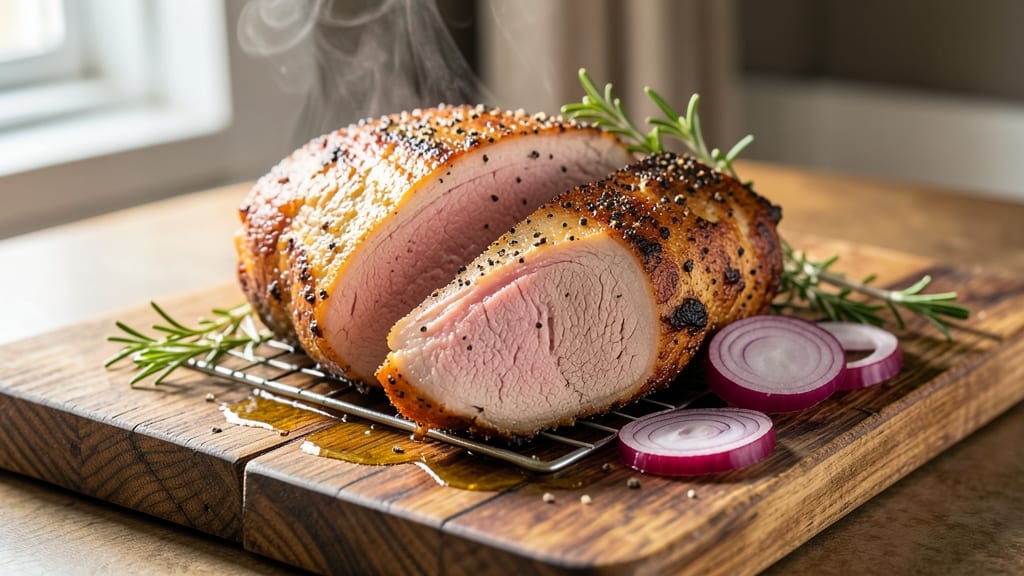
A pork loin rib end roast boneless recipe that delivers a juicy center with crispy bark in one pan is the kind of dinner that transforms a simple weeknight into a showstopper.
Growing up in small-town Georgia, I learned that pork's magic lies in its ability to balance richness with precision—something this method perfects without fuss. The secret is a high-heat sear followed by low-and-slow roasting, ensuring every bite delivers that perfect contrast.
This recipe simplifies what most butchers and cookbooks complicate: achieving a crispy exterior while keeping the meat tender and moist inside. With just a few key ingredients—a dry rub of salt, pepper, and smoked paprika—and a single roasting pan, you’ll create a dish that feels restaurant-worthy.
The process takes about 2 hours, including resting time, but requires minimal hands-on work, making it ideal for busy weeknights.
What you’ll end up with is a golden-brown roast with a crackling bark that gives way to succulent, pink meat inside. The aroma alone—smoky, savory, and rich—will have everyone at the table anticipating the first bite.
Serve it sliced thick with pan juices spooned over, or pair it with roasted root vegetables or a crisp green salad for a balanced meal.
Here’s the best part: this method works equally well for holidays or weeknight dinners, and leftovers reheat beautifully. Let’s get started—your taste buds (and dinner guests) will thank you.
Ingredients for pork loin rib end roast boneless
Six key ingredients transform simple pork into a restaurant-worthy roast with perfect crispy bark and juicy interior.
| Ingredient | Amount | Notes |
|---|---|---|
| Boneless Pork Loin Rib End Roast 🥩 | 4 lb | Center-cut for even cooking |
| Kosher Salt 🧂 | 1 ½ tbsp | Diamond Crystal preferred |
| Freshly Ground Black Pepper 🌶️ | 1 ½ tsp | Coarse grind for texture |
| Smoked Paprika 🌶️ | 1 tbsp | High-quality for smoky depth |
| Extra-Virgin Olive Oil 🫒 | 2 tbsp | For high-heat searing |
| Yellow Onion 🧅 | 1 whole | Quartered for pan aromatics |
| Fresh Rosemary 🌿 | 1 sprig | Woodsy aroma complement |
| Garlic Cloves 🧄 | 4 cloves | Smashed for robust flavor |
| Apple Cider Vinegar 🍎 | 1 tbsp | For tenderizing pre-sear |
| Unsalted Butter 🧈 | 2 tbsp | Cold for basting finish |
| Fresh Thyme 🌿 | 2 sprigs | Tied with rosemary for bouquet |
| Honey 🍯 | 1 tbsp | Optional glaze for caramelization |
The pork loin rib end roast is the star—center-cut ensures even cooking without excess fat. Local butchers or Whole Foods often carry the best quality, but standard grocery stores stock it too. Look for bright pink color and good marbling—avoid cuts with grayish edges. For a 4-pound roast, plan 1.5 hours roasting time at 325°F after searing. The rib end provides natural fat distribution, which renders beautifully during cooking. If your roast has a thick fat cap, trim it to ¼-inch thickness for even browning—this is where that crispy bark forms.
No smoked paprika? Substitute ½ tsp liquid smoke plus 1 tbsp regular paprika for depth. Fresh rosemary and thyme are ideal, but dried works at one-third the amount if needed. The apple cider vinegar pre-sear marinade (1 tbsp + 1 tbsp olive oil) tenderizes the meat—don't skip it. For honey glaze, agave or maple syrup works equally well. The butter basting at the end creates the signature crackling crust—use European-style butter like Plugrá for higher fat content. If your pan lacks depth, transfer the roast to a baking sheet for the final 15 minutes to prevent soggy bark.
Store any leftovers in an airtight container for up to 4 days in the fridge, or freeze for 3 months. The roast reheats best at 300°F for 15-20 minutes covered with foil, then uncovered to crisp the exterior. For make-ahead prep, season the roast and refrigerate overnight—this enhances flavor penetration. The pan juices can be reduced by half for a quick pan sauce using 1 tbsp cornstarch slurry. Serve with roasted carrots or mashed sweet potatoes to complement the rich pork flavors.
Why You'll Love This Recipe
- Five-Ingredient Magic: I swear by this combo—just salt, pepper, smoked paprika, olive oil, and that gorgeous rib-end roast. No fancy herbs, no confusing spices, just pure, smoky flavor that comes together while you sip your coffee.
- Weeknight Hero: Between us, this is the roast I pull out when I’m too tired to fuss. Sear it, roast it, rest it—done in under an hour. My kids don’t even notice it’s “fancy,” but the neighbors always ask for seconds.
- Leftover Luxury: Honestly, the real win is the leftovers. Slice it thin for sandwiches, dice it into pasta, or throw it in a grain bowl—it’s always better the second day. (Yes, even on a Tuesday night.)
- Budget Crowd-Pleaser: This roast feeds six for less than $20, and everyone leaves happy. The smoky paprika makes it taste like a restaurant cut, but my wallet stays intact. That’s the kind of deal I’ll take every time.
Step-by-step instructions for pork loin rib end roast boneless recipe
Master this technique for a perfectly balanced roast with tender interior and flawless crust.
Prepare the Roast for Maximum Flavor and Texture
Begin by patting the 4 lb boneless pork loin rib end roast completely dry with paper towels. This step is non-negotiable—moisture on the surface prevents proper browning and creates steam that softens the bark. Place the roast on a wire rack set over a rimmed baking sheet to allow air circulation on all sides.
In a small bowl, combine the 1.5 tbsp kosher salt, 1.5 tsp freshly ground black pepper, and 1 tbsp smoked paprika. Rub this mixture evenly over the entire surface of the roast, pressing firmly so the seasoning adheres. Let the seasoned roast sit at room temperature for 30 minutes while you prepare the aromatics. This resting period ensures even cooking from edge to center.
Create the Aromatic Base for Deep Flavor
Heat a large oven-safe skillet over medium-high heat and add the 2 tbsp extra-virgin olive oil. Once the oil shimmers, add the 1 whole yellow onion, cut into quarters, and cook for 5-6 minutes until the edges begin to caramelize. Remove the onion and set aside, reserving the rendered fat in the pan.
In the same skillet, add the 4 smashed garlic cloves and cook for 30 seconds until fragrant. Immediately pour in the 1 tbsp apple cider vinegar, scraping up any browned bits from the bottom. This deglazing step captures all the flavor compounds that would otherwise burn. Add the 1 sprig fresh rosemary and 2 sprigs fresh thyme, then return the onion quarters to the skillet.
Sear the Roast for Crispy Bark Development
Carefully place the seasoned roast into the skillet with the aromatics, fat-side down. Cook undisturbed for 4-5 minutes until a deep golden-brown crust forms. This initial sear is critical—it creates the Maillard reaction that gives the roast its complex flavor and crisp texture. Flip the roast and repeat on the second side for another 4-5 minutes. Transfer the skillet to a 425°F preheated oven.
Baste the roast with the rendered fat and aromatics every 15 minutes for the first 45 minutes of roasting. This basting technique ensures continuous moisture while building the bark. The roast should reach an internal temperature of 140°F at this stage—use a meat thermometer inserted into the thickest part to check.
Finish with Butter and Honey for Glaze and Moisture
Remove the roast from the oven and increase the heat to 450°F. Add the 2 tbsp cold unsalted butter and 1 tbsp honey to the skillet, tilting to coat the roast evenly. Return to the oven for 8-10 minutes until the butter melts and forms a glossy glaze. The internal temperature should now read 145°F—this is the perfect endpoint for medium-rare pork.
Let the roast rest for 10-15 minutes before slicing. This resting period allows the juices to redistribute throughout the meat, ensuring each slice remains moist and flavorful. The external temperature will rise 5-10°F during this time, reaching a final internal temperature of 150-155°F—ideal for juicy, tender pork.
Pro Tips For Making Pork Loin Rib End Roast Boneless
- Dry the Roast First: Pat the pork loin thoroughly with paper towels—this isn’t just about seasoning sticking. A dry surface = better crust. I used to skip this, and my roast always ended up steamed instead of golden.
- Start High, Finish Low: Sear the roast over max heat for 3-4 minutes per side—this locks in juices. Then drop to 325°F for the rest. After burning three batches, I learned: high heat first, patience after.
- Salt in Layers: Don’t just salt once. After searing, sprinkle another round of kosher salt (about 1 tsp) right before roasting. The meat absorbs it better when warm, and the crust gets that restaurant-quality crunch.
- Use Olive Oil Smart: Warm the oil in the pan until it shimmers (not smoking) before searing. Cold oil = greasy mess; hot oil = perfect crust. I was skeptical until I tried it—now I never skip this step.
Essential equipment for this recipe
Oven Essentials
Your oven is the heart of this recipe—precision matters. I use a Lodge cast iron Dutch oven for its even heat distribution and ability to transition from stovetop to oven seamlessly. If you don’t have one, a heavy-bottomed stainless steel skillet (like All-Clad) works just as well.
Preheat your oven to 425°F for the initial roast, then crank it up to 450°F for the final butter-honey glaze. A meat thermometer is non-negotiable—I swear by the Thermoworks Smoke for accuracy. 🌡️
Searing Tools
For that perfect crust, you’ll need a large oven-safe skillet with at least 2-inch sides—this prevents spills when basting. My go-to is a 12-inch Lodge pre-seasoned cast iron skillet, but a carbon steel pan (like De Buyer) works too.
Avoid nonstick—it can’t handle the high heat needed for proper browning. A tongs with a silicon grip (like OXO Good Grips) makes flipping the roast easier without slipping. I keep mine within arm’s reach while searing.
Resting Gear
After roasting, resting the meat is crucial—but you need the right tools. I use a wire rack (like the Amazon Basics version) placed over a rimmed baking sheet to let air circulate. This keeps the roast elevated, preventing soggy bottoms.
For serving, a large wooden cutting board (like John Boos) adds rustic charm, and a sharp carving knife (like Wüsthof Classic) ensures clean slices. A thermometer probe helps track the final internal temperature during resting. 🔪
Budget-Friendly Swaps
No cast iron? A heavy stainless steel roasting pan (like Cuisinart) works fine. Skip the Dutch oven but keep the same temperature steps. For thermometers, the Thermapen One is pricey, but a digital instant-read (like Taylor Precision Products) is affordable and reliable.
Need a rack? A cooling rack from a restaurant supply store (like WebstaurantStore) lasts forever. Even a clean wire cooling rack from the grocery store works in a pinch—just scrub it well before use.
Pro Upgrades
For the ultimate setup, invest in a Meater+ for wireless temperature monitoring—it syncs with your phone. My Lodge 12-inch camp oven doubles as a stovetop sear and oven roast, and its lid traps heat beautifully.
A smoker box (like the Lodge Smoker Box) lets you infuse the roast with hickory or applewood smoke for 10 minutes before searing—this adds depth without overpowering. For presentation, a wooden meat mallet (like Victorinox) helps crush garlic cloves evenly. 💡
Nutrition facts
Frequently asked questions
How do I know when my pork loin rib end roast is fully cooked?
Use a meat thermometer to check the internal temperature—it should reach 145°F for medium-rare pork. The final resting temperature will rise to 150-155°F due to carryover heat. For a well-done finish, aim for 160°F before resting.
Can I make this recipe without a cast iron skillet?
Yes! A heavy stainless steel skillet (like All-Clad) or even a Dutch oven works perfectly. Just avoid nonstick pans—they can't handle the high heat needed for proper browning. The key is using a pan with at least 2-inch sides to prevent spills during basting.
What's the best way to reheat leftovers?
Reheat slices in a 300°F oven for 15-20 minutes covered with foil, then uncover for the last 5 minutes to restore crispiness. For microwave reheating, use 50% power in 20-second bursts until warmed through—this prevents drying out.
Why did my roast turn out dry?
Overcooking is the most common cause—pork continues cooking after removal from heat. Always use a thermometer and remove at 145°F for medium-rare. Another culprit is skipping the rest time—juices need 10-15 minutes to redistribute. For extra moisture, baste frequently during roasting with rendered fat.
How can I make this recipe ahead of time?
Season the roast and refrigerate overnight for deeper flavor penetration. Cook it the next day as directed, then store leftovers in an airtight container for up to 4 days. For make-ahead prep, you can also partially cook to 130°F, refrigerate, then finish cooking to 145°F later.