
Main Courses
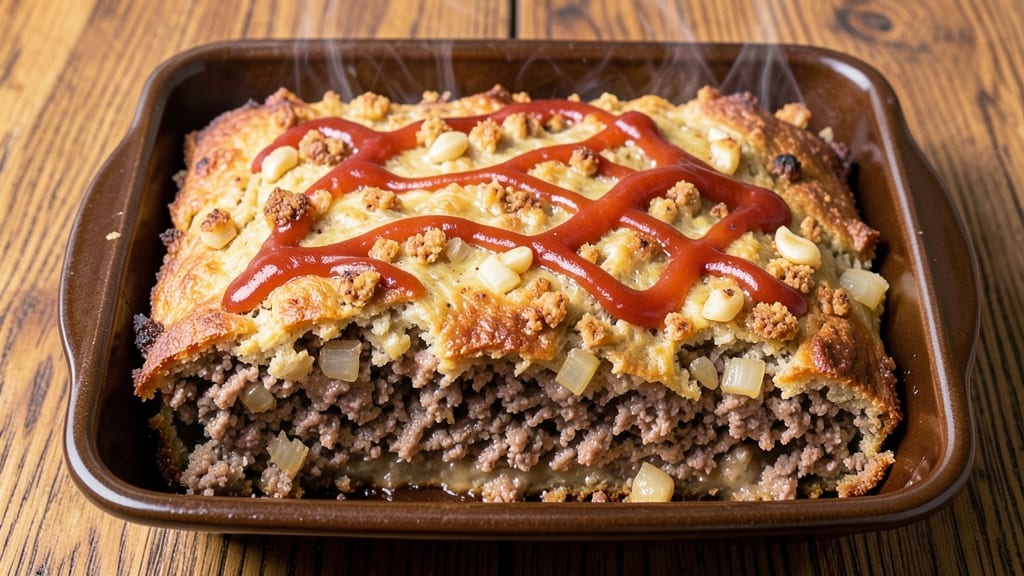
This old-fashioned meatloaf recipe with bread delivers the comforting, classic flavor we all remember—crusty golden top, perfectly juicy interior, and that satisfying bread component that ties it all together.
My grandmother used to make this version every Sunday, and I’ve spent years perfecting her method to ensure it never dries out or falls apart. The secret lies in the breadcrumbs and careful baking, which transform a simple mix of ground beef and spices into a showstopping centerpiece.
The beauty of this recipe is in its simplicity and reliability. You’ll need just a few basic ingredients—ground beef, breadcrumbs, eggs, and a handful of spices—and about an hour of hands-off time in the oven.
The bread component can be used in a few ways: toasted on the side, stuffed inside for extra texture, or even as a base for gravy. It’s the kind of dish that feels like a hug, perfect for family dinners or holiday gatherings.
What you’ll end up with is a meatloaf that’s crisp on the outside, tender and moist inside, and topped with a bread crust that adds just the right amount of crunch.
The aroma alone will have everyone gathering around the table, and the first bite delivers all the nostalgia of a classic comfort meal. This is the kind of recipe that proves good food doesn’t require complicated techniques—just patience and a few key tricks.
The best part? Leftovers reheat beautifully, making this an ideal dish for meal prep or feeding a crowd. Whether you’re serving it with mashed potatoes, roasted vegetables, or a simple green salad, this meatloaf will be the star of the meal.
Let’s get started on a recipe that brings back the warmth of home-cooked tradition.
Ingredients for old fashioned meatloaf recipe with bread
Classic comfort food with familiar flavors and a perfect breadcrumb crust.
| Ingredient | Amount | Notes |
|---|---|---|
| Ground Beef 🥩 | 1 ½ lb | 80% lean for juiciness |
| Breadcrumbs 🍞 | 1 cup | Panko for extra crunch |
| Large Eggs 🥚 | 2 whole | Room temperature preferred |
| Milk 🥛 | ½ cup | Whole milk for tenderness |
| Yellow Onion 🧅 | ½ cup | Finely chopped, about 1 medium |
| Garlic Cloves 🧄 | 3 cloves | Minced for even distribution |
| Ketchup 🍅 | ¼ cup | For glaze and moisture |
| Worcestershire Sauce 🥫 | 1 tbsp | For umami depth |
| Salt 🧂 | 1 tsp | Kosher or sea salt |
| Black Pepper 🌶️ | ½ tsp | Freshly ground preferred |
| Ground Mustard 🌿 | 1 tsp | Dry, for binding |
| Dried Parsley 🌿 | 1 tsp | For freshness, optional |
| Olive Oil 🫒 | 1 tbsp | For greasing pan |
The ground beef is crucial here—80% lean gives you that perfect balance of juiciness and structure. Most grocery stores carry it pre-ground, but if you're buying a whole chuck roast, ask the butcher to grind it fresh for even better flavor. Trader Joe's and Costco often have good prices on quality ground beef, and it's worth checking the sell-by date. For the breadcrumbs, panko creates that signature crispy texture, but regular breadcrumbs work in a pinch. Just make sure they're fresh—stale breadcrumbs lose their crunch and absorb too much moisture.
No Worcestershire sauce? Soy sauce or a splash of balsamic vinegar adds depth, though Worcestershire's unique tang is hard to replicate. The ketchup can be swapped for tomato paste mixed with a little water if you prefer a thicker glaze. Fresh parsley isn't mandatory, but it brightens up the flavor—dried parsley at half the amount works if you're in a hurry. The milk is key for tenderness, so don't skip it. If you're worried about the fat content, whole milk is actually better here than skim—it helps keep the meatloaf moist during baking.
This meatloaf reheats beautifully—350°F for 15-20 minutes until warmed through. Store leftovers in the fridge for up to 5 days, wrapped tightly in foil to keep it moist. For longer storage, freeze portions for up to 3 months. I like to slice it before freezing so I can just reheat individual portions. The breadcrumb topping stays crispy even after reheating if you keep it wrapped and reheat it covered with foil, then uncover for the last few minutes.
Why You'll Love This Recipe
- No-Fuss Mixing: I swear by this recipe because you just combine everything—no fancy techniques, no measuring cups of mystery. Toss ground beef, breadcrumbs, milk, and onion in a bowl, crack in those eggs, and call it done. Honestly, I’ve made it while scrolling through my phone.
- Crispy-Creamy Magic: That breadcrumb crust? Chef’s kiss. The milk and egg soak into the crumbs just right, giving you a golden, crackly exterior while the inside stays juicy. (Yes, even on a Tuesday night.) The onion adds this subtle sweetness that makes it taste like a hug from your grandma.
- Leftovers That Don’t Suck: This meatloaf reheats like a dream—no dry, sad slices here. I make a double batch, slice it up, and freeze half. When I’m too tired to cook, I just pop a few pieces in the microwave, and it’s like I made it fresh. (My kids don’t even know the difference.)
- Budget Breakfast Hack: Between us, I use this for everything. Leftover slices? Chopped into breakfast hash with eggs. Extra portions? Stuffed into sandwiches or tacos. The breadcrumbs stretch the beef, so it’s cheaper than takeout, and the flavor holds up no matter how you serve it. My secret weapon.
Step-by-step instructions for old fashioned meatloaf with bread
Here's the method that guarantees a perfectly crusty exterior and moist interior every time.
Prepare the Meat Mixture
In a large mixing bowl, combine the 1.5 lb ground beef, 1 cup breadcrumbs, 2 whole large eggs, 0.5 cup milk, 0.5 cup finely chopped yellow onion, 3 minced garlic cloves, 1 tbsp Worcestershire sauce, 1 tsp salt, 0.5 tsp black pepper, 1 tsp ground mustard, and 1 tsp dried parsley. Use your hands to gently mix everything until just combined—avoid overworking the meat, as this can make it dense.
The reason we mix by hand is to avoid developing too much gluten in the breadcrumbs, which would make the meatloaf tough. You're looking for a uniform color throughout, with no dry spots of breadcrumbs or raw-looking meat. If the mixture feels too wet, add 1-2 tablespoons more breadcrumbs to help bind it properly.
Shape and Prepare for Baking
Lightly grease a 9x5-inch loaf pan with 1 tbsp olive oil and spread an even layer of 0.25 cup ketchup on the bottom. This creates the classic glaze and prevents sticking. Transfer the meat mixture to the prepared pan and shape it evenly, pressing down gently to remove any air pockets. The top should be smooth for even browning.
Here's the thing—don't press too hard, or you'll squeeze out moisture. Instead, use the back of a spoon to gently smooth the surface. Cover the pan loosely with aluminum foil and refrigerate for 30 minutes. This chilling step helps the meatloaf hold its shape during baking and prevents it from falling apart when you remove it from the pan.
Bake to Juicy Perfection
Preheat your oven to 350°F. Remove the meatloaf from the refrigerator and spread another 2 tablespoons of ketchup evenly over the top. This extra layer creates that signature crusty glaze. Bake uncovered for 1 hour, then increase the heat to 400°F and continue baking for another 15-20 minutes until the internal temperature reaches 160°F and the top is deeply golden brown.
Your oven might run hot, so start checking at the 15-minute mark—the meatloaf is done when the edges pull away slightly from the pan and the crust has a rich, caramelized color. If it browns too quickly, tent it loosely with foil to prevent over-browning while it finishes cooking.
Rest and Serve
Remove the meatloaf from the oven and let it rest in the pan for 10 minutes. This resting period allows the juices to redistribute throughout the meat, ensuring each slice stays moist. During this time, you'll notice the meatloaf will hold its shape better and won't fall apart when sliced.
Slice into 6 equal portions and serve immediately. The interior should be tender and juicy, with just a hint of pink in the center, while the exterior has that classic crusty, slightly caramelized glaze. If you prefer a thicker glaze, you can brush on additional ketchup during the final 5 minutes of baking.
Pro Tips For Making Old Fashioned Meatloaf Recipe With Bread
- Prep Onions Like a Pro: Dice that onion small—no bigger than ¼-inch pieces. I used to leave them chunky, and they’d stay raw-tasting in the middle. A quick pulse in the food processor (or a sharp knife) gets them fine enough to cook through without turning to mush.
- Mix Breadcrumbs Dry First: Toss the breadcrumbs with salt and pepper before adding milk. I learned this the hard way—if you soak them too early, they turn into glue, and your loaf gets dense. Just a light dampening is enough; the eggs and milk will bind it later.
- Bake at 350°F—But Wait: Start it at 350°F, but after 20 minutes, crank the oven to 425°F for the last 10. This gives the crust time to set properly without drying out the inside. (Yes, even if you’re impatient like me.)
- Skip the Overmixing: Handle the meatloaf like it’s a fragile egg—gently fold the ingredients just until combined. Overworking it makes the texture tough. I used to punch it down like bread dough, and it turned out chewy. Light hands, please.
Essential equipment for this dish
Loaf Pan Essentials
You’ll need a 9x5-inch loaf pan—this size is standard for meatloaf and ensures even baking. I’ve tried everything from ceramic to stainless steel, but glass pans work best because they distribute heat evenly and help create that perfect crust.
If you don’t have one, a 9x13-inch baking dish works in a pinch, but the meatloaf will be wider and flatter. Grease it well with 1 tbsp olive oil or butter to prevent sticking—this is non-negotiable for easy release. 🥘
Measuring Tools
A kitchen scale is my secret weapon for meatloaf—weighing the 1.5 lb ground beef ensures consistency, especially if you’re making this regularly. For breadcrumbs, a standard measuring cup works, but I prefer panko for that extra crunch.
A fine-mesh strainer helps evenly distribute the breadcrumbs when mixing. Don’t skip the measuring spoons for spices like 1 tsp salt and ½ tsp black pepper—precise amounts make all the difference. ✨
Mixing Bowl Must-Haves
A large stainless steel bowl is ideal for mixing—it’s durable and won’t retain odors. If you’re using your hands to combine the ingredients (which I recommend), opt for a bowl that’s easy to clean.
A wooden spoon or rubber spatula helps scrape down the sides, but your hands work best for evenly distributing the breadcrumbs. Avoid plastic bowls—they can get slippery and make mixing messy. 💪
Oven Thermometer
Your oven’s temperature gauge can be off by 25°F or more, and that’s a game-changer for meatloaf. I always use a Thermoworks ThermoPop to confirm the oven is at 350°F before baking.
This ensures the meatloaf cooks evenly and reaches the perfect 160°F internal temperature. Pro tip: Place the thermometer near the meatloaf while it bakes—this gives you real-time accuracy. 🌡️
Optional Crust Tools
For an extra-crispy top, I sometimes use crushed Ritz crackers mixed into the breadcrumbs or sprinkled on top before baking. A pastry brush comes in handy for spreading the ketchup glaze evenly.
If you’re feeling fancy, a small offset spatula helps create those decorative ridges on top. But honestly? A spoon works just as well—don’t overcomplicate it. 🍞
Resting Tools
After baking, let the meatloaf rest in the pan for 10 minutes—this is where the juices redistribute. I like to loosely cover it with aluminum foil during this time to keep it warm.
A sharp carving knife (like a Dexter-Russell) makes slicing clean cuts, while a serving platter elevates the presentation. For leftovers, store in an airtight container to keep it moist. 🔪
Nutrition facts
Frequently asked questions
Why does this recipe use breadcrumbs instead of just bread?
The breadcrumbs create a perfect texture—adding just enough structure to hold the meatloaf together while keeping it tender inside. Using actual bread slices would make it too dense. Panko breadcrumbs also give that signature crispy crust on top that everyone loves. Plus, breadcrumbs absorb moisture better, helping prevent a dry meatloaf.
Can I make this meatloaf ahead of time?
This meatloaf actually tastes better the next day. Assemble it up to 24 hours ahead and refrigerate uncovered. Bake as directed, then store leftovers in an airtight container for up to 5 days. For freezing, wrap individual slices in plastic wrap and store for up to 3 months. Reheat covered at 350°F for 15-20 minutes until warmed through.
What's the best way to use the bread in this recipe?
You have three great options:
- Serve toasted bread slices on the side with butter,
- Mix chopped bread into the meatloaf mixture for extra texture, or
- Use it to make a simple gravy by sautéing breadcrumbs with the meatloaf drippings. My grandmother always did option 3—it adds a rich, savory element that ties everything together.
Why does my meatloaf fall apart when slicing?
This usually happens from overmixing or not letting it rest. Mix just until combined (by hand is best) and avoid pressing too hard when shaping. The 10-minute rest after baking is crucial—it lets the juices redistribute so the meatloaf holds together. If it still falls apart, try adding 1 extra tablespoon of breadcrumbs to your mixture next time.
Can I substitute ground turkey or chicken?
Yes, but expect a slightly different texture. Ground turkey (especially lean) works best—use 93% lean and add 1 extra tablespoon of milk to keep it moist. Ground chicken is too dry for this recipe. For best results, stick with beef for that classic old-fashioned flavor and texture.