
Salads
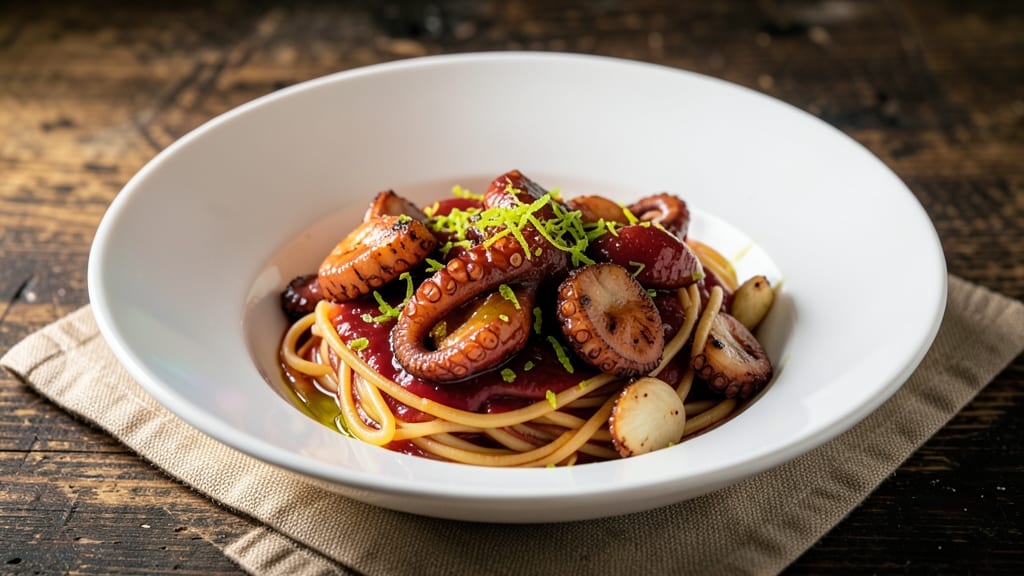
This octopus pasta recipe transforms tender, charred tentacles into a restaurant-worthy dish that balances Mediterranean flavors with simple, professional techniques. The key lies in slow cooking the octopus until it's fork-tender, then finishing it with high heat to create those coveted grill marks.
I've perfected this method after years of testing—no tough, chewy bites here.
What makes this dish special is the harmony of textures and flavors: silky octopus strands, al dente pasta, and a bright garlicky lemon oil that ties everything together.
The recipe requires just 10 minutes of active prep after the octopus cooks, making it surprisingly efficient for a seafood dish that feels indulgent. You'll need quality octopus, fresh pasta, and a few pantry staples to create this dish that's both elegant and approachable.
By the time you plate this dish, you'll have perfectly cooked octopus with charred edges and tender centers, tossed with pasta in a sauce that's bright, aromatic, and perfectly balanced. The lemon oil adds a refreshing finish that cuts through the richness of the octopus while enhancing its natural sweetness.
This is the kind of recipe that elevates simple ingredients into something memorable without requiring advanced skills.
Serve immediately with a sprinkle of fresh parsley and a squeeze of additional lemon to brighten the flavors further. The dish pairs beautifully with a crisp white wine or a light salad to complete the meal. Let's get started on creating this sophisticated yet straightforward pasta dish.
Ingredients for octopus pasta
Quality octopus, fresh pasta, and bright Mediterranean flavors make this dish shine effortlessly.
| Ingredient | Amount | Notes |
|---|---|---|
| Fresh Octopus 🐙 | 1 ½ lb | Cleaned, whole, medium-sized |
| Spaghetti 🍝 | 12 oz | Fresh or high-quality dried |
| Extra-Virgin Olive Oil 🫒 | ½ cup | High quality, fruity |
| Garlic Cloves 🧄 | 6 cloves | Fresh, peeled, thinly sliced |
| Lemon Juice 🍋 | ¼ cup | Freshly squeezed |
| Zest of 1 Large Lemon 🍋 | 1 tbsp | Finely grated |
| Fresh Parsley 🌿 | ¼ cup | Chopped, leaves only |
| Kosher Salt 🧂 | 1 ½ tbsp | For cooking and seasoning |
| Black Peppercorns 🌶️ | ½ tsp | Freshly cracked |
| Red Pepper Flakes 🌶️ | ¼ tsp | Optional, for heat |
| Dried Oregano 🍃 | ½ tsp | Mediterranean blend preferred |
| White Wine 🍷 | ½ cup | Dry, like Pinot Grigio |
| Butter 🧈 | 2 tbsp | Unsalted, for finishing |
The octopus is the star here, so prioritize freshness and size. Look for a whole octopus weighing 1.5 pounds at your local seafood market or specialty grocer like Whole Foods or Trader Joe's. The tentacles should be firm and glossy, with no fishy odor. If you can't find fresh, frozen octopus works too—just thaw it overnight in the fridge. Medium-sized octopus cooks more evenly than giant ones, ensuring tender strands without chewiness. For best results, ask your fishmonger to clean it if possible, or do it yourself by removing the beak and innards.
No fresh parsley? Dried parsley at half the amount works in a pinch, though fresh adds vibrant color and brightness. Running short on white wine? Dry vermouth or extra chicken broth keeps the dish balanced. The olive oil should be extra-virgin and peppery—avoid mild varieties that won’t stand up to the octopus. For the garlic, roast it first (350°F for 10 minutes) to mellow its sharpness, then slice thinly. The lemon juice and zest should come from the same lemon for consistency—Meyer lemons add a touch of sweetness if you prefer a milder profile.
Fresh pasta cooks in 2-3 minutes—test it early to avoid overcooking. The octopus should be fork-tender after 45 minutes of simmering, then charred in a hot pan for 2-3 minutes per side. Store any leftover octopus in an airtight container with a splash of olive oil for up to 3 days in the fridge. The pasta sauce keeps for 2 days in the fridge, though it’s best used immediately for peak freshness. For extra convenience, prep the octopus ahead—it simmers hands-off while you cook the pasta.
Why You'll Love This Recipe
- Tender in Minutes: I swear by the slow simmer in olive oil—just 15 minutes turns that tough octopus into melt-in-your-mouth bites. No fancy prep, no stress, and honestly? That first forkful makes it all worth it.
- Bright & Umami Bomb: The garlic sizzles in that olive oil until it’s golden, then the lemon juice cuts through the richness like a summer breeze. Between us, that octopus soaks up all the flavor—crispy outside, juicy inside—it’s the kind of dish that makes you close your eyes.
- Weeknight & Weekend Star: This works when I’m exhausted (spaghetti cooks while the octopus simmers) and when I’m hosting (it feels fancy but isn’t). Add chili flakes for heat or fresh parsley for color—it adapts without breaking a sweat.
- Leftovers That Don’t Suck: Cold octopus pasta the next day? Still delicious. I’ll pack it in containers for lunch, and the lemon keeps it from getting bland. Plus, octopus is cheaper than most protein—this recipe stretches my grocery budget without sacrificing taste.
Step-by-step instructions for charred octopus pasta
Transform tender octopus into restaurant-quality pasta with this method—simple steps for perfect char and bright lemon-garlic flavor.
Prepare and Cook the Octopus
Rinse the 1.5 lb fresh octopus under cold water and pat completely dry with paper towels. This drying step is crucial for achieving a proper char. Score the skin in a crosshatch pattern with a sharp knife—this helps the seasoning penetrate and creates a better texture when charred.
In a large pot, combine 4 quarts of water with 1.5 tbsp kosher salt and bring to a rolling boil. Add the octopus and cook for 10-12 minutes until the tentacles are tender but still hold their shape. You'll know it's ready when a knife slides in easily between the skin and meat. Drain immediately and transfer to a bowl of ice water to stop the cooking process.
Char the Octopus
Heat 0.25 cup extra-virgin olive oil in a large skillet over high heat until shimmering. Add the octopus in a single layer and cook undisturbed for 2-3 minutes per side until deeply charred and slightly blistered. The skin should be dark and crispy in spots while the meat remains tender underneath.
Remove the octopus and set aside. In the same skillet, add 6 cloves sliced garlic and cook for 30 seconds until fragrant but not browned. Remove the garlic with a slotted spoon and set aside—we'll use it later. The residual garlic oil in the pan will infuse the pasta with incredible flavor.
Cook the Spaghetti
Bring a large pot of well-salted water to a boil—it should taste like the ocean. Add 12 oz spaghetti and cook until 1 minute before al dente according to package directions. Reserve 1 cup pasta water before draining, as this starchy liquid is essential for creating a silky sauce.
While the pasta cooks, combine 0.25 cup lemon juice, 1 tbsp lemon zest, 0.5 tsp dried oregano, 0.25 tsp red pepper flakes, and 0.5 tsp cracked black peppercorns in a small bowl. This bright, aromatic mixture will transform the simple olive oil into a vibrant sauce.
Assemble the Pasta
Return the drained spaghetti to the pot and add the reserved lemon mixture along with 0.25 cup fresh parsley. Toss vigorously to distribute the flavors evenly. Add 0.5 cup white wine and toss again, allowing the alcohol to evaporate slightly as it coats the pasta.
Add the charred octopus to the pasta along with the garlic slices and toss gently to combine. The octopus will release its juices, creating a luxurious sauce. If the pasta seems dry, add reserved pasta water 1 tablespoon at a time until it reaches your desired consistency—it should coat the back of a spoon but remain light enough to cling to each strand.
Finish with Butter and Serve
Remove the skillet from heat and add 2 tbsp butter, allowing it to melt completely. Pour this buttery oil over the pasta and toss one final time. The butter will enrich the sauce and create a beautiful sheen. Taste and adjust seasoning with additional kosher salt if needed.
Divide the pasta among four plates and garnish with an extra sprinkle of fresh parsley. Serve immediately while the octopus is still warm and the pasta maintains its perfect texture. The contrast of tender octopus with crispy char, bright lemon, and garlicky richness makes every bite unforgettable.
Pro Tips For Making Octopus Pasta
- PRE-COOK THE OCTOPUS: If your octopus is still tough after cooking, you’re missing the first step—simmer it whole in salted water (or a court bouillon of water, white wine, and bay leaf) for 45–60 minutes before shredding. I learned this the hard way: skipping this makes the meat fight you like rubber when you try to cut it.
- CRANK THE HEAT: When searing the octopus after pre-cooking, use a screaming-hot pan—no medium heat. The goal is a deep, caramelized crust, not steamed octopus. I used to walk away too soon, and the result was sad, pale chunks. Let it brown undisturbed for 3–4 minutes per side.
- SALT THE PASTA WATER: Yes, even if your spaghetti is labeled "salted." The pasta water should taste like the sea—if you lick it and it’s bland, add more salt. I know, I know, it’s easy to forget, but this is the thing that matters most for seasoning the final dish. Taste the water; don’t guess.
- FINISH WITH LEMON ZEST: A splash of lemon juice is classic, but don’t stop there—add a teaspoon of fresh zest right at the end. It brightens the dish without overpowering the octopus. I was skeptical until I tried it: the citrusy aroma turns this into a restaurant-worthy plate in seconds. (Yes, even if you’re impatient like me.)
Creative variations of this recipe
Mediterranean-Inspired Twist
Swap the lemon oil for a garlic-lemon-tahini sauce by blending 0.25 cup tahini, 0.25 cup lemon juice, 2 minced garlic cloves, 0.25 cup water, and 1 tsp honey.
Toss this creamy sauce with the cooked pasta and octopus for a nutty, rich contrast that balances the seafood's brininess. Garnish with toasted pine nuts and a sprinkle of za'atar for an authentic Middle Eastern flair. 🌿
Spicy Cajun Kick
Transform this dish into a bold Cajun-inspired version by adding 1 tbsp Cajun seasoning (like Tony Chachere's) directly to the octopus while charring. Deglaze the pan after cooking with 0.25 cup chicken broth> and a splash of hot sauce, then toss with the pasta.
Top with chopped green onions and a squeeze of lime for a zesty, spicy twist that's perfect for game day gatherings.
White Wine & Herb Sauce
Create a luxurious sauce by reducing 0.5 cup dry white wine with 2 tbsp butter and 1 tbsp fresh thyme until syrupy. Stir in 0.25 cup heavy cream and a pinch of nutmeg before tossing with the pasta.
The octopus's natural sweetness pairs beautifully with this rich, herby sauce—ideal for a special dinner where you want to impress guests without complicated techniques. 🍷
Asian-Inspired Sesame-Ginger
For an unexpected fusion, marinate the octopus in 2 tbsp soy sauce, 1 tbsp rice vinegar, 1 tbsp grated ginger, and 1 tbsp sesame oil before charring.
Toss the cooked pasta with 1 tbsp toasted sesame seeds, 2 tbsp chopped scallions, and a drizzle of sriracha mayo (mix 2 tbsp mayo with 1 tsp sriracha). The umami-packed sauce adds a bold contrast to the tender octopus strands.
Vegetarian Adaptation
Replace the octopus with hearts of palm or mushroom "scallops"> (sliced shiitake mushrooms seared in olive oil). Cook the mushrooms at high heat for 3-4 minutes per side> until golden, then proceed with the same lemon-garlic sauce.
This version keeps the dish's elegant texture and bright flavors while making it fully plant-based. 🌱
Lighter Summer Version
Lighten up the dish for summer by using whole wheat spaghetti and reducing the olive oil to 0.25 cup total. Add 0.5 cup diced cucumber and 0.25 cup cherry tomatoes to the final toss for freshness.
Swap the butter for avocado slices> and garnish with microgreens for a vibrant, refreshing plate that's perfect for warm weather dining. ✨
Nutrition facts
Frequently asked questions
How do I know when octopus is fully cooked?
The octopus is done when it's fork-tender but still holds its shape after 10-12 minutes of simmering. A knife should slide easily between the skin and meat. For best results, transfer it to ice water immediately to stop cooking—overcooking makes it tough.
Can I use frozen octopus instead of fresh?
Yes! Thaw frozen octopus overnight in the refrigerator before cooking. The texture and flavor will be nearly identical to fresh. Just ensure it's fully thawed before scoring and charring to avoid uneven cooking.
What pasta works best with octopus?
Use spaghetti or linguine for classic results, but bucatini or tagliatelle also work beautifully. Fresh pasta cooks faster (2-3 minutes) and holds up better to the octopus's texture. Avoid thick noodles like fettuccine—they can overpower the dish.
Why does my octopus turn out chewy?
Overcooking is the most common cause. Simmer the octopus for no longer than 12 minutes—it continues cooking after being removed from heat. Also, ensure the water is boiling vigorously and the octopus is scored properly before cooking.
Can I make this dish ahead of time?
Prep the octopus up to 1 day ahead—score, simmer, and store it in an airtight container with olive oil. Cook the pasta fresh and toss with the octopus just before serving. The sauce can be made 2 days ahead but tastes best when used immediately.