Main Courses
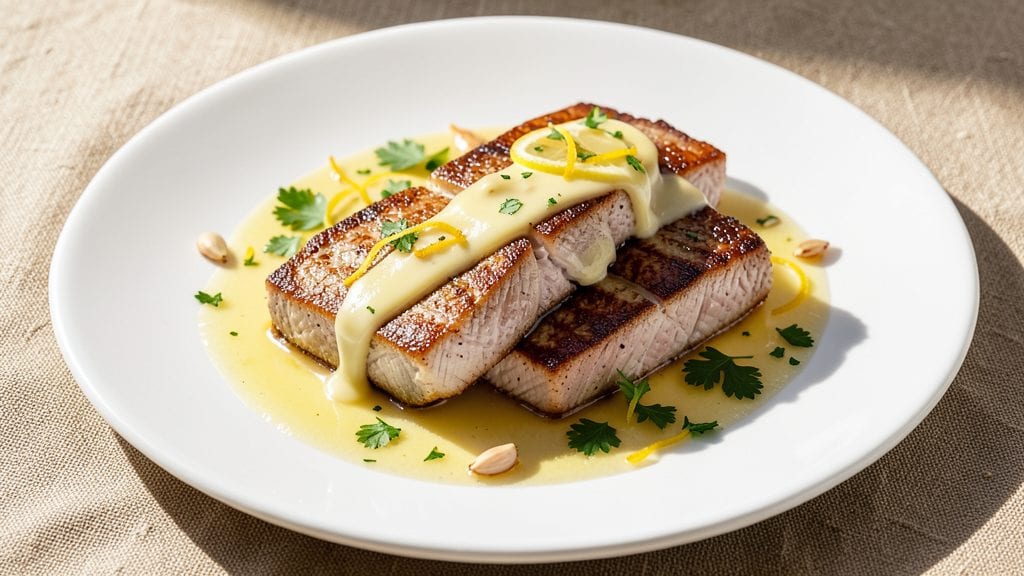
King fish steak transforms into a restaurant-worthy centerpiece when seared to a golden crust and basted with citrusy butter. This technique elevates simple ingredients into something elegant—tender fish with a crisp exterior and bright, herby butter that melts into every bite.
I’ve perfected this method after years of testing, ensuring the fish stays moist while developing that coveted crust.
The secret lies in precise timing and temperature control—high heat for the sear, then gentle basting to infuse flavor without overcooking. Fresh kingfish steak, cut into even medallions, absorbs the citrusy butter beautifully, balancing its natural sweetness with a tangy finish.
This dish delivers professional results with minimal effort, making it ideal for weeknight dinners or special occasions.
By the time you plate it, you’ll have perfectly seared steaks with a glossy, caramelized crust and a velvety center. The citrus butter adds layers of brightness that cut through the richness, while a sprinkle of fresh herbs or lemon zest elevates the presentation.
Pair it with roasted vegetables or a crisp white wine for a complete meal that feels indulgent yet refined.
This recipe scales effortlessly for guests, and leftovers reheat beautifully when gently warmed. Whether you’re cooking for two or a crowd, the technique remains the same—just adjust the quantity. Let’s get started on creating a dish that will impress even the most discerning palates.
Ingredients for king fish steak
Restaurant-quality kingfish steak relies on precise cuts, citrus brightness, and high-heat technique for that coveted crust.
| Ingredient | Amount | Notes |
|---|---|---|
| Fresh Kingfish Steak 🐟 | 1 ½ lb | Cut into 1-inch medallions, uniform thickness |
| Unsalted Butter 🧈 | ½ cup | Cold, cut into 1-inch cubes |
| Lemon Juice 🍋 | 2 tbsp | Freshly squeezed, strained |
| Garlic Cloves 🧄 | 4 cloves | Minced, fresh preferred |
| Fresh Parsley 🌿 | ¼ cup | Chopped, flat-leaf preferred |
| Lemon Zest 🍋 | 1 tbsp | From 1 organic lemon |
| Kosher Salt 🧂 | 1 ½ tsp | Diamond Crystal preferred |
| Ground Black Pepper 🌶️ | ½ tsp | Freshly cracked preferred |
| Extra-Virgin Olive Oil 🫒 | 2 tbsp | High smoke point, fruity |
| Fresh Thyme Leaves 🌿 | ¼ tsp | From 1 sprig, finely chopped |
| White Wine 🍷 | ¼ cup | Dry, chilled, optional |
The kingfish steak demands freshness and precision—opt for sushi-grade fillets from your seafood purveyor or trusted fishmonger. Whole Foods or Trader Joe's carry reliable frozen options if fresh isn't available, but thaw overnight in the fridge. Cut into uniform 1-inch medallions (use a sharp knife and steady hand) to ensure even cooking. The butter should be cold and cubed—this ensures proper searing before it melts into the basting sauce. For the lemon, organic is ideal—its zest carries more aromatic oils than conventional varieties. Penzeys or local farmers' markets often carry premium citrus for zesting.
No fresh thyme? Dried thyme at one-third the amount works in a pinch, but fresh delivers superior aroma. Substitute white wine with fish stock if needed, though the acidity is key for balancing the richness. Pre-grated lemon zest lacks potency—always zest fresh. For extra brightness, add a squeeze of extra lemon juice at the table. The olive oil should have a high smoke point (like Avocado oil) to prevent burning during the sear. Diamond Crystal kosher salt dissolves more easily than table salt, enhancing flavor without graininess. If you're scaling for more servings, adjust the butter and wine proportionally—they're the flavor carriers.
Store any unused kingfish in an airtight container with a paper towel over it for up to 2 days in the fridge. The basting butter mixture keeps for 3 days refrigerated, though it's best used immediately for peak freshness. Reheat gently in a saucepan over low heat—never microwave, as it can break the emulsion. For meal prep, portion the seared steaks into parchment-lined containers with a drizzle of reserved butter to prevent drying. This dish freezes poorly due to the butter's texture changes, so plan to cook fresh or use within 24 hours of preparation.
Why You'll Love This Recipe
- Pan-Fry Perfection: I swear by the sear—just 3 minutes in butter, no flipping drama. The steak stays tender while the edges turn golden, and honestly? That’s where the magic happens.
- Citrus-Garlic Magic: The lemon brightens every bite, while the garlic and parsley add depth that’s ridiculously good. It’s fresh, it’s bold, and it doesn’t need fancy sauces to shine.
- Weeknight to Dinner Party: Same recipe, different vibes. Serve it with crusty bread for a lazy night or pair it with roasted veggies for guests—no stress, just flavor.
- Budget-Friendly Luxury: Kingfish is leaner than other steaks but just as satisfying. A single fillet stretches for leftovers, and the butter/lemon costs pennies compared to restaurant prices. Win.
Step-by-step instructions for king fish steak recipe
Master this technique and you'll achieve a perfectly seared kingfish steak with a crisp crust and velvety citrus butter sauce.
Prepare the Kingfish Medallions
Pat the 1.5 lb fresh kingfish steak completely dry with paper towels—this is crucial for achieving that perfect crust. Using a sharp chef's knife, cut the steak into 1-inch medallions of uniform thickness. Arrange them on a plate and season both sides generously with 1.5 tsp kosher salt and 0.5 tsp freshly cracked ground black pepper.
Let the seasoned medallions sit at room temperature for 15 minutes while you prepare the rest of your ingredients. This brief resting period ensures even cooking throughout each piece. The salt will begin to penetrate the surface, creating a flavorful foundation for the searing process.
Create the Citrus Butter Sauce Base
In a small saucepan, melt 0.5 cup cold unsalted butter over medium-low heat. Once fully melted, remove from heat and stir in 2 tbsp freshly squeezed lemon juice, 1 tbsp lemon zest, 4 minced garlic cloves, and 0.25 tsp finely chopped fresh thyme leaves. Keep this mixture warm but not simmering.
This citrus-infused butter forms the luxurious sauce that will coat your kingfish. The acidity from the lemon juice brightens the rich butter flavor while the garlic and thyme add aromatic depth. The butter should remain smooth and emulsified—if it separates, simply whisk vigorously to recombine before using.
Sear the Kingfish to Perfect Doneness
Heat 2 tbsp extra-virgin olive oil in a large skillet over medium-high heat until shimmering. Add the kingfish medallions in a single layer, being careful not to overcrowd the pan. Sear for 2-3 minutes per side until golden brown crust forms and the fish releases easily from the pan.
For optimal results, I recommend searing the fish in batches if needed to avoid overcrowding. The high heat creates that desirable crust while keeping the interior tender. You'll know it's ready when the edges are beautifully seared and the fish flakes easily with a fork but still holds together.
Finish with White Wine and Fresh Herbs
After removing the seared kingfish to a warm plate, immediately deglaze the skillet with 0.25 cup chilled dry white wine, scraping up any browned bits from the bottom. Return the heat to medium and reduce the wine by half to concentrate its flavor. Pour this wine reduction over the kingfish medallions.
Spoon the warm citrus butter sauce over the kingfish, then garnish with 0.25 cup chopped fresh parsley. The wine adds a subtle acidity that cuts through the richness of the butter while enhancing the fish's natural sweetness. The parsley not only adds visual appeal but also fresh herbal notes that complement the dish.
Rest and Serve Immediately
Let the kingfish rest for 2-3 minutes before serving to allow the juices to redistribute throughout each medallion. This brief resting period ensures that each bite remains moist and flavorful. Serve immediately with the citrus butter sauce spooned generously over the top.
The result should be perfectly seared kingfish with a crisp exterior and tender interior, bathed in a velvety citrus butter sauce. Each bite delivers the delicate sweetness of the fish balanced by the bright acidity of the lemon and the rich depth of the butter. The white wine reduction adds a sophisticated touch that elevates this seafood dish to restaurant-quality standards.
Pro Tips For Making King Fish Steak
- PAT THE FISH DRY: Kingfish is delicate—if it’s wet or icy when you cook it, the butter will slide off instead of brown. Grab paper towels and press firmly on both sides before searing. I used to skip this and ended up with sad, greasy fish that didn’t crisp.
- SEAR IN BATCHES: Two thick kingfish steaks? Don’t crowd the pan. Cook them one at a time over medium-high heat for 3-4 minutes per side—this guarantees a golden crust, not a sad, steamed center. I learned this after turning out rubbery fish because I was impatient.
- GARLIC NEEDS TIME: Toss minced garlic into the pan after the fish is searing, not before. If you add it too early, it burns before the fish is done. Wait until the butter’s foaming, then let it sizzle for 30 seconds—just enough to perfume the oil without turning bitter.
- REST UNDER FOIL: Pull the fish off heat, tent it loosely with foil, and let it sit for 5 minutes. This keeps it moist while the butter finishes melting into a silky sauce. I know, it feels like cheating, but cutting into it too soon means juices running out—and nobody wants that.
Common mistakes when making great king fish steak
Overcooking the Fish
Kingfish steak cooks in a flash—just 2-3 minutes per side—so watch it like a hawk. I’ve ruined perfectly good fish by walking away for even 30 seconds while it sears.
The moment the edges turn golden and the fish flakes easily with a fork but still holds together, it’s done. Overcooking turns tender fish into a dry, rubbery mess. Use a timer and keep your heat at medium-high for consistent results. 🌡️
Uneven Thickness
Uneven medallions mean uneven cooking—some pieces will be raw while others turn tough. Always cut your kingfish into 1-inch medallions with uniform thickness using a sharp knife.
I recommend weighing your steak first to ensure even portions. If you’re working with a frozen fillet, thaw it completely before cutting to prevent uneven slices. 🔪
Skipping the Rest
Rushing to plate the fish immediately after searing is a classic mistake. Letting the kingfish rest for 2-3 minutes allows the juices to redistribute, ensuring each bite stays moist.
I’ve seen home cooks slice into fish too soon, causing all the flavorful juices to run out onto the plate instead of staying in the meat. Patience here makes all the difference. ⏳
Using Low-Quality Butter
Don’t skimp on the butter—it’s the star of this dish! Using margarine or low-fat butter will make your sauce separate and lose its rich, velvety texture. Stick with high-quality unsalted butter like Plugrá or Kerrygold, which have higher fat content and better flavor.
Cold butter cubes also help create a better crust during searing. 🧈
Overcrowding the Pan
Crowding the skillet causes the fish to steam instead of sear, resulting in a sad, limp texture. Cook your kingfish medallions in single layers, working in batches if needed.
I use a 10-inch cast-iron skillet for four medallions—any more than that, and the temperature drops too much. A hot pan is your best friend for that perfect crust. 🔥
Ignoring the Deglaze
Skipping the white wine deglaze means missing out on built-in flavor depth. The wine reduction captures all those delicious browned bits (fond) from the pan, adding richness and acidity that balances the butter.
If you’re avoiding alcohol, substitute with fish stock, but you’ll lose some of that bright acidity. Always scrape up those bits—they’re flavor gold! 🍷
Nutrition facts
Frequently asked questions
What’s the best way to store leftover kingfish steak?
Store seared kingfish in an airtight container with a paper towel on top to absorb moisture. It keeps fresh in the fridge for 1-2 days. For longer storage, freeze the medallions individually wrapped in plastic for up to 3 months. Thaw overnight in the fridge before reheating gently in a skillet with a splash of water to maintain moisture.
Can I substitute white wine in the recipe?
Yes! Use fish stock or dry vermouth for similar acidity. For a non-alcoholic option, try white grape juice reduced by half. The key is balancing the richness of the butter with acidity—just reduce the liquid by half to concentrate the flavor.
How do I know when the kingfish is fully cooked?
The fish is done when it reaches an internal temperature of 145°F and flakes easily with a fork but still holds together. The edges should be golden brown with a crisp crust. Overcooking by even 30 seconds can turn tender fish into a dry, rubbery mess. A meat thermometer is your best friend here!
What sides pair best with this dish?
Light, citrusy sides complement the rich butter sauce perfectly. Try garlic roasted asparagus, lemony quinoa salad, or crispy roasted Brussels sprouts. For a complete meal, add a simple arugula salad with lemon vinaigrette. The acidity in the sides cuts through the richness of the fish beautifully.
Can I make this ahead of time?
Prepare the citrus butter sauce up to 3 days ahead and store it refrigerated. For the fish, sear the medallions just before serving to maintain texture. If reheating, warm them gently in a skillet with a splash of water for 1-2 minutes per side—never microwave, as it can make the fish rubbery.