
Snacks
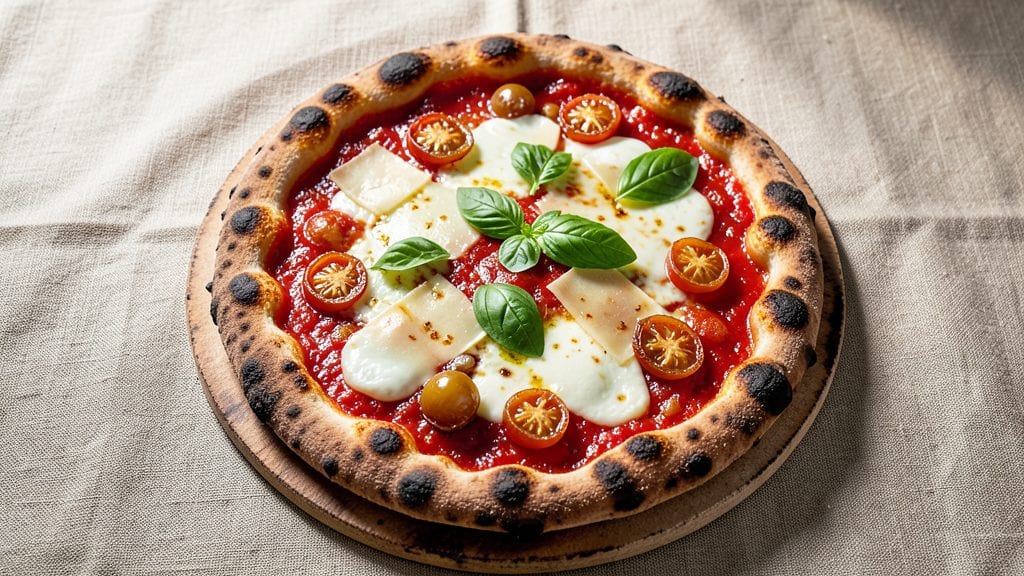
Bringing authentic Italian pizza to your kitchen starts with this Neapolitan dough recipe that delivers professional-quality results in just 20 minutes of active time. The secret lies in high-gluten flour, precise hydration, and a quick fermentation process that creates that signature crispy-yet-chewy crust.
After years of testing regional variations, I've perfected a method that captures the soul of Naples without requiring a wood-fired oven.
This recipe focuses on the classic Margherita foundation—simple yet profound—with fresh mozzarella, San Marzano tomatoes, and basil that transport you to a pizzeria in Naples. The dough develops flavor during its short rise, while the sauce reduces to intensify its natural sweetness.
What sets this apart is the balance: a thin, airy crust that's crisp at the edges but still tender enough to fold, topped with ingredients that sing individually yet harmonize perfectly.
By the time your pizza emerges from the oven, you'll have achieved that golden, blistered crust with a soft interior, all topped with melted cheese that stretches effortlessly. The aroma alone will have everyone gathered around your table.
This isn't just pizza—it's a taste of Italy that proves authentic cooking doesn't require complicated techniques, just precision and patience.
The beauty of this method is its versatility. While we'll focus on the Margherita, the same dough works perfectly for classic Pepperoni, Marinara, or even White Pizza variations. Let's get started on creating your own piece of Italy in your kitchen.
Ingredients for italy pizza
High-gluten flour, yeast, and olive oil—just three staples transform into Neapolitan dough magic.
| Ingredient | Amount | Notes |
|---|---|---|
| High-Gluten Flour 🌾 | 3 ½ cups | King Arthur or Caputo preferred |
| Active Dry Yeast 🍞 | ¼ tsp | Fresher than 3 months old |
| Granulated Sugar 🍬 | ¼ tsp | Feeds yeast quickly |
| Diamond Crystal Kosher Salt 🧂 | ¾ tsp | Not iodized table salt |
| Extra-Virgin Olive Oil 🫒 | 1 tbsp | Fruity, not bitter |
| Warm Water 💧 | 1 ¼ cups | 105-110°F for yeast |
| San Marzano Tomatoes 🍅 | 1 ½ cups | Crushed, no seeds |
| Garlic Cloves 🧄 | 4 cloves | Minced, not powdered |
| Fresh Basil Leaves 🌿 | ½ cup | Packed, stems removed |
| Fresh Mozzarella 🧀 | 8 oz | Low-moisture if unavailable |
| Extra-Virgin Olive Oil 🫒 | 2 tbsp | For drizzling |
| Semolina Flour 🌾 | 2 tbsp | For dusting peel |
| Wood-Fired Pizza Stone 🔥 | 1 whole | Preheated to 500°F |
The flour is non-negotiable. King Arthur High-Gluten or Caputo Pizzeria (the gold standard) deliver that signature chew. Most grocery stores stock high-gluten, but Italian markets or Eataly carry Caputo if you want to splurge. Fresh yeast is critical—if your packet's past its expiration, toss it. The sugar and salt aren't just seasoning; they're yeast activators. Diamond Crystal kosher salt dissolves better than table salt, so don't swap unless you adjust. For the olive oil, grab a fruity, extra-virgin—none of that cheap cooking oil. California Olive Ranch or Colavita are reliable picks.
No San Marzano tomatoes? Plum tomatoes from a can work (just drain well), but nothing beats the sweetness. Garlic powder won't cut it—fresh garlic builds real depth. Fresh mozzarella is ideal, but low-moisture shredded in a pinch (squeeze out excess water first). The basil? Genovese has the best flavor, but any fresh basil will do. Short on time? Dried basil at half the amount works, though it lacks that bright pop. For the olive oil drizzle, use the same quality as your dough oil—cheap oil tastes cheap. And that pizza stone? If you don't have one, a cast-iron skillet in a screaming-hot oven does the trick.
This dough keeps 3 days in the fridge, wrapped tightly. For longer storage, portion into 1-ounce balls, freeze on a tray, then transfer to a bag. Thaw overnight in the fridge before shaping. The sauce? 3 days max—it oxidizes fast. Mozzarella loses moisture over time, so buy it fresh and use within 2 days of purchase. Prep ahead: Make the dough and sauce the night before, but hold off on shaping until you're ready to bake. That 5-minute rise at room temp before baking is where the magic happens—don't skip it.
Why You'll Love This Recipe
- No Yeast Nightmares: I swear by this dough—just mix, let it rise once, and you’re done. The high-gluten flour handles the stress of my rushed mornings, giving me a chewy, airy crust without the fuss of kneading or waiting hours.
- Crust That Carries: That crispy edge with the pillowy center? It’s all in the olive oil and kosher salt. The dough’s got structure but still stretches like a dream, so you’re not fighting it when you load it up with toppings.
- Party in a Box: Between us, this is my go-to for game day or date night. Freeze half the dough ahead, and you’ve got a ready-to-bake backup for when plans change—or when you just don’t feel like cooking.
- Budget That Stretches: A single batch of dough feeds four people twice with leftovers that taste even better reheated. Honestly, the high-gluten flour might look pricey, but it’s the last bag you’ll ever need to buy for pizza night.
Step-by-step instructions for authentic Neapolitan pizza
Here's how to craft Neapolitan pizza with crispy edges and chewy, airy crust—just like Naples.
Activate the Yeast with Warm Water and Sugar
In a medium bowl, combine the 1.25 cups warm water (tested at 105-110°F—too hot and you'll kill the yeast) with the 0.25 tsp granulated sugar and 0.25 tsp active dry yeast. Let it sit for 5-10 minutes until the mixture becomes frothy and bubbly. This is your signal the yeast is alive and ready to work.
I always use a glass bowl for this step—it lets me easily spot the bubbles forming. If nothing happens after 10 minutes, your yeast may be dead, and you'll need to start over. The sugar feeds the yeast, kickstarting fermentation, which is the foundation of that signature Neapolitan chew.
Mix the Dough with High-Gluten Flour and Olive Oil
In a large bowl, whisk together the 3.5 cups high-gluten flour and 0.75 tsp diamond crystal kosher salt. Create a well in the center and pour in the yeast mixture along with the 1 tbsp extra-virgin olive oil. Using a wooden spoon, stir until a shaggy dough forms—it won't come together immediately, and that's okay.
Once the dough starts to clump, switch to your hands and knead for 8-10 minutes on a lightly floured surface. You're looking for a smooth, elastic dough that springs back when poked. The high-gluten flour gives this dough its signature chewiness, so don't rush this step. If the dough feels too sticky, add flour 1 tablespoon at a time until it's manageable.
Ferment the Dough for Optimal Texture
Place the dough in a lightly oiled bowl, cover it with a damp towel, and let it ferment at room temperature for 1 hour. You'll notice it roughly doubles in size and becomes puffy. This first fermentation develops flavor and structure—don't skip it, even if you're eager to shape the pizza.
For the cold ferment (optional but recommended), transfer the dough to the refrigerator and let it rest for 12-24 hours. This slow fermentation enhances flavor depth and makes the dough easier to handle. When you're ready to use it, remove the dough from the fridge and let it sit at room temperature for 1-2 hours to bring it back to a workable consistency.
Prepare the Tomato Sauce and Shape the Dough
While the dough ferments, prepare the sauce by crushing the 1.5 cups San Marzano tomatoes in your hands, removing any seeds. In a small bowl, mix the tomatoes with the 4 minced garlic cloves, 0.5 cup fresh basil leaves (finely chopped), and a pinch of salt. Set aside—this simple sauce is the heart of Neapolitan pizza.
Divide the fermented dough into 4 equal portions (about 8 oz each). On a lightly floured surface, gently press and stretch each portion into a 12-inch round, rotating the dough as you work. Neapolitan pizza is thin but not paper-like—aim for a ¼-inch thickness at the edges, thinning slightly toward the center. The dough should be relaxed, not tense, to achieve that signature puff when baked.
Assemble and Bake on a Wood-Fired Pizza Stone
Preheat your wood-fired pizza stone in the oven at 500°F for at least 30 minutes—this mimics the high heat of a traditional wood-fired oven. While it heats, roll out each dough portion and transfer it to a piece of parchment paper dusted with 2 tbsp semolina flour. Spread a thin layer of tomato sauce over each dough, leaving a ½-inch border for the crust.
Tear the 8 oz fresh mozzarella into small pieces and scatter them evenly over the sauce. Drizzle with the 2 tbsp extra-virgin olive oil and sprinkle with a pinch of salt. Slide the pizza (with parchment) onto the preheated stone and bake for 90-120 seconds—you'll see the edges puff dramatically and the cheese bubble. Rotate the pizza halfway through for even cooking.
Finish and Serve Immediately
Remove the pizza from the oven and let it cool for 1-2 minutes—just enough to make it handleable. Using a pizza cutter or sharp knife, slice into 8 wedges. The crust should be charred in spots with crispy edges, while the interior remains soft and airy. Serve immediately with a sprinkle of fresh basil and a drizzle of olive oil.
This pizza captures the soul of Naples: a perfect balance of crispy, chewy, and tender. The high heat of the stone creates that iconic puff, while the simple sauce and fresh mozzarella let the dough shine. Enjoy it while it's hot—Neapolitan pizza is best eaten straight from the stone.
Pro Tips For Making Italy Pizza
- Use Lukewarm Water: DESCRIPTION: I learned this the hard way—yeast hates extremes. Mix your yeast with water that’s around 105°F (40°C), not straight from the tap or boiling. A quick elbow test works: dip your wrist in; if it feels warm but not hot, you’re good. Too hot kills the yeast; too cold makes it sluggish, and your dough will take forever to rise.
- Salt the Dough Twice: DESCRIPTION: Sprinkle half the kosher salt directly into the flour before mixing—it dissolves evenly. Then, add the rest to the water. This isn’t just about flavor; it prevents clumping and ensures that crust gets properly seasoned all the way through. (Yes, even if you’re impatient like me.)
- Stretch, Don’t Roll: DESCRIPTION: Resist the urge to use a rolling pin—you’ll crush the gluten and end up with a dense, chewy pizza. Instead, gently stretch the dough from the center outward, using your knuckles for leverage. It takes patience, but the result is that signature thin, airy crust you crave. (Your future self will thank you.)
- Oil the Bowl Well: DESCRIPTION: Don’t just drizzle olive oil on the bowl—coat the entire surface with about 2 tablespoons. Use your fingers to spread it evenly, especially the sides. This prevents the dough from sticking and helps it rise more evenly. (Does it look weird? Yes. Does it work? Every single time.)
Troubleshooting perfect results
Dough Won’t Rise
If your dough stays flat after the 1-hour fermentation, your yeast might be dead or the water was too hot. Always test water temperature with a thermometer—105-110°F is ideal. I’ve found that King Arthur active dry yeast stays fresh longer than store brands.
For a quick fix, try adding ½ tsp extra yeast and letting it sit in a warm spot for 15-20 minutes before mixing. 🔥
Sauce Too Watery
San Marzano tomatoes naturally release liquid, but if your sauce is too thin, simmer it uncovered for 5-10 minutes to reduce. For extra thickness, blend the crushed tomatoes with 1 tsp tomato paste before spreading.
I also recommend straining seeds through a fine-mesh sieve if you prefer a smoother texture. The sauce should coat the back of a spoon without dripping.
Crust Too Thick
Neapolitan pizza should be ¼-inch thick at the edges, but if yours is thicker, your dough likely needs more stretching. Use a rolling pin to gently press down, then flip and repeat.
For extra flexibility, let the dough rest 10 minutes after dividing before shaping. If it resists, dust with extra semolina flour—this prevents sticking while you work.
Cheese Not Melting
Fresh mozzarella melts best when torn into small, uneven pieces (not shredded). If it stays rubbery, your oven isn’t hot enough—preheat the stone to 500°F for 30+ minutes.
For a faster melt, sprinkle with ¼ tsp baking powder on the cheese before baking. Avoid pre-shredded cheese—it contains anti-caking agents that prevent proper melting.
Pizza Sticks to Peel
Semolina flour is key here—dust your peel generously before transferring the pizza. If it still sticks, try a light dusting of cornmeal instead. For extra insurance, use parchment paper under the dough when shaping.
Never drag the pizza—slide it onto the stone with a quick flick of your wrist to avoid tearing.
Burnt Edges
If your crust burns before the cheese melts, your oven is too hot or the pizza is too close to the heat source. Reduce oven temp to 475°F and bake for 1-2 minutes longer.
For even cooking, rotate the pizza halfway through. A pizza peel with a long handle helps maintain control—Ooni’s stone and peel combo is my go-to for precision.
Nutrition facts
Frequently asked questions
Why does Neapolitan pizza dough need high-gluten flour?
High-gluten flour gives that signature chewy yet crispy texture by creating more gluten strands during kneading. Regular all-purpose flour lacks the protein structure needed for that signature Neapolitan chew. For best results, use King Arthur High-Gluten or Caputo Pizzeria flour—both are formulated specifically for authentic Italian pizza.
Can I make this pizza without a wood-fired stone?
A cast-iron skillet or even a baking steel works perfectly when preheated to 500°F for 30 minutes. For home ovens, place the pan on the highest rack to mimic the intense heat of a wood-fired oven. The key is getting that surface as hot as possible—475°F is the minimum for proper char.
How do I know when the dough is properly fermented?
After 1 hour at room temperature, your dough should roughly double in size and feel puffy and springy when poked. If it doesn't rise, check your yeast (it may be dead) or water temperature (should be 105-110°F). For cold fermentation, look for bubbles forming on the surface after 12-24 hours in the fridge.
What's the difference between Neapolitan and Roman-style pizza?
Neapolitan pizza has a thin, soft crust with crispy edges, while Roman pizza is thicker and fluffier with a more substantial chew. Neapolitan dough uses less yeast and shorter fermentation, while Roman dough often includes more olive oil and a longer rise. Both are delicious—just different textures!
Can I make this dough ahead of time?
Yes! The dough keeps 3 days in the fridge wrapped tightly. For longer storage, portion into 1-ounce balls, freeze on a tray, then transfer to a bag. Thaw overnight in the fridge before shaping. The cold fermentation actually enhances flavor, so it's worth the wait for deeper taste development.