Soups & Stews
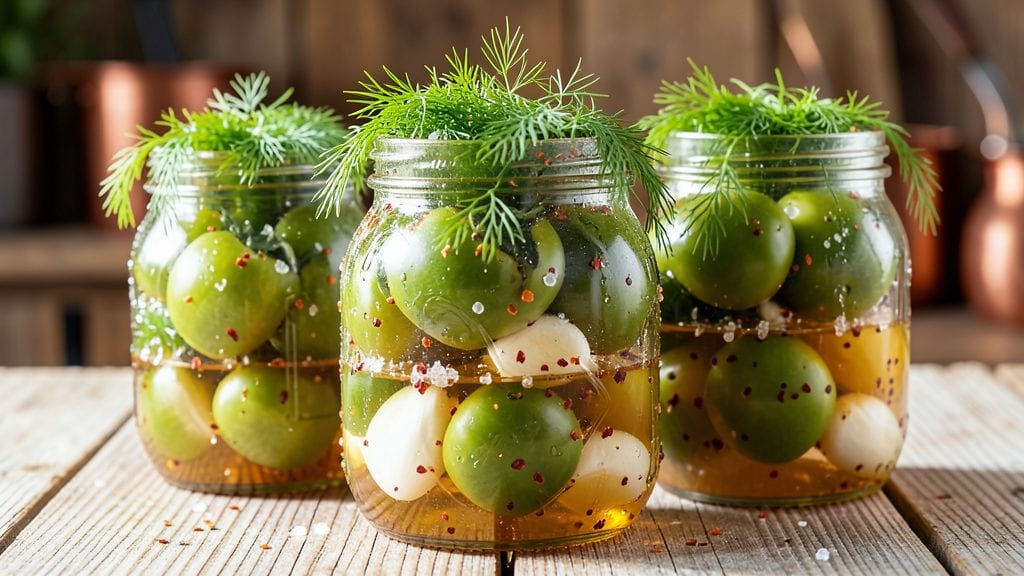
This green tomato canning recipe turns summer’s harvest into tangy, vinegar-bright pickles that last all year. The secret lies in precise acidity and texture—firm slices that stay crisp even after months on the shelf.
I’ve perfected this method through careful sterilization and the right vinegar-to-tomato ratio, ensuring both safety and flavor.
This recipe delivers restaurant-quality pickles with a tangy, slightly sweet profile that pairs perfectly with sandwiches, burgers, or fried green tomatoes. The process requires just 30 minutes of active prep, followed by a water bath canning session that preserves the vibrant green color and satisfying crunch.
Every batch yields 4 quart jars, enough to stock your pantry for holiday meals.
What sets these pickles apart is their crisp texture—achieved by slicing tomatoes uniformly and using a high-quality apple cider vinegar. The sterilization process guarantees shelf stability for up to 12 months, while the bright flavor develops richer over time.
This isn’t just preservation; it’s a way to savor summer’s freshness long after harvest.
Use these pickles as a tangy side for grilled meats, a topping for charcuterie boards, or as a base for homemade fried green tomato sandwiches. The versatility makes them a kitchen staple worth mastering. Let’s get started on preserving that garden harvest safely and deliciously.
Ingredients for green tomato canning
Four pounds of green tomatoes transform into vinegar-bright pickles with crisp texture and restaurant-quality tang.
| Ingredient | Amount | Notes |
|---|---|---|
| Green Tomatoes 🍅 | 4 lb | Firm, unripe, uniform slices |
| White Vinegar 💧 | 4 cups | 5% acidity minimum for safety |
| Apple Cider Vinegar 🍏 | 2 cups | High-quality, unfiltered preferred |
| Granulated Sugar 🍚 | 2 cups | White or raw cane preferred |
| Sea Salt 🧂 | 1 tbsp | Diamond Crystal preferred |
| Garlic Cloves 🧄 | 4 cloves | Thinly sliced, peeled |
| Fresh Dill Sprigs 🌿 | ¼ cup | Tightly packed, stems removed |
| Black Peppercorns 🌶️ | 1 tbsp | Crushed, not ground |
| Mustard Seeds 🌱 | 1 tsp | Yellow or brown preferred |
| Bay Leaves 🍃 | 2 whole | Fresh, not dried |
| Water 💧 | 8 cups | Filtered or distilled preferred |
| Quart-Sized Mason Jars 🥫 | 4 whole | New, unopened, with lids |
The quality of your green tomatoes is non-negotiable—select firm, unblemished specimens with a vibrant green hue. Local farmers markets often carry the best varieties, particularly those labeled for pickling. If using store-bought, opt for organic when possible to avoid wax coatings that impede texture. For vinegar, apple cider vinegar from Mott's or Bragg's provides the ideal balance of acidity and flavor complexity. The white vinegar should be food-grade with at least 5% acidity—check the label or use a dedicated canning vinegar. Sugar selection matters less here, but raw cane sugar adds subtle molasses notes that complement the tang. Sterilize your jars by boiling lids and rings in simmering water for 10 minutes—this critical step prevents spoilage and ensures shelf stability.
Substitutions require careful consideration to maintain both safety and flavor balance. If apple cider vinegar is unavailable, white vinegar alone works, though the flavor profile will be sharper. For sugar, honey or maple syrup can replace up to half the quantity, but adjust vinegar by 1 tbsp per cup of sugar reduced to maintain proper acidity. Fresh dill is ideal, but dried dill at one-third the amount suffices in a pinch—just ensure it's labeled as culinary-grade. Mustard seeds can be omitted entirely if you prefer a milder pickle, though they add delightful pops of texture. For garlic, garlic powder at half the amount works, though fresh is preferred for authentic flavor. Always maintain the 1:1 vinegar-to-water ratio for safe canning—never compromise on acidity.
Proper storage extends these pickles' shelf life to 12 months when processed correctly. After water bath canning, let jars cool undisturbed for 24 hours before storing in a cool, dark pantry. The flavor intensifies over time, reaching peak deliciousness after 6-8 weeks. For best texture, avoid opening jars more than necessary—each time you do, some crispness is lost. If you notice softening or off odors, discard immediately. The sterilization process makes these pickles safe to eat straight from the jar, though they're best enjoyed at room temperature. Portion into smaller containers for gifts—pint jars make excellent presents and help preserve quality longer.
Why You'll Love This Recipe
- I’ll be real: canning green tomatoes used to scare me. But this recipe? Just slice, pack, and boil—no fancy tools, no stress. The vinegar-sugar brine does all the work while I sip iced tea.
- No-Fuss Preservation: I’ll be real: canning green tomatoes used to scare me. But this recipe? Just slice, pack, and boil—no fancy tools, no stress. The vinegar-sugar brine does all the work while I sip iced tea.
- Tangy-Sweet Magic: That balance of sharp apple cider vinegar and just-right sugar? It turns tough green tomatoes into ridiculously good pickles. Crunchy outside, tender inside—every bite’s a win.
- Year-Round Backup Plan: Frozen or canned, these last forever. Toss them on sandwiches, chop into salads, or serve as a snack when fresh tomatoes vanish. (Yes, even on a Tuesday night.)
Step-by-step instructions for vinegar-bright green tomato pickles
Here's the precise method to achieve perfectly preserved green tomatoes with vibrant flavor and satisfying crunch.
Prepare and Pack the Mason Jars
Begin by thoroughly washing the quart-sized mason jars and their lids in hot, soapy water, then rinse with boiling water to sterilize. This critical preparation prevents contamination during the canning process. Arrange the 4 cloves of garlic cloves, 0.25 cup of fresh dill sprigs, 1 tbsp of crushed black peppercorns, 1 tsp of mustard seeds, and 2 whole bay leaves in the bottom of each jar. Distribute them evenly to ensure flavor penetration throughout the pickles.
Next, carefully slice the 4 lb of green tomatoes into uniform ½-inch thick rounds. Pack the tomato slices tightly into each jar, leaving about 1-inch of headspace at the top. Use a wooden spoon to press down gently on the tomatoes to eliminate air pockets—this ensures proper liquid coverage during processing. The tomatoes should be completely submerged after adding the brine.
Create the Brine Solution
In a large, non-reactive pot, combine the 8 cups of water, 4 cups of white vinegar, 2 cups of apple cider vinegar, and 2 cups of granulated sugar. Stir over medium heat until the sugar completely dissolves, then add the 1 tbsp of sea salt. Bring the mixture to a gentle boil, then reduce heat to maintain a simmer. This brine should be hot enough to sterilize the jars and tomatoes while infusing them with flavor.
I recommend using a candy or deep-fry thermometer to verify the brine reaches 180°F—this temperature ensures proper preservation. The combination of vinegars creates a balanced acidity that preserves color and texture while delivering complex flavor. Let the brine simmer for 5 minutes to allow the flavors to meld before proceeding.
Process the Jars for Perfect Preservation
Using a ladle or funnel, carefully pour the hot brine into each jar until the tomatoes are completely covered by at least 1 inch of liquid. Wipe the rims of the jars with a clean, damp cloth to remove any residue that could prevent proper sealing. Place the lids on the jars and screw on the bands until fingertip-tight.
Process the jars in a boiling water bath for 15 minutes. Place the jars in the canner, ensuring they remain upright and are completely submerged. Start timing only after the water returns to a full rolling boil. The 15-minute processing time at this temperature creates an airtight seal while preserving the vibrant green color and crisp texture of the tomatoes.
Cool and Store for Long-Term Enjoyment
Remove the jars from the water bath using jar lifters and place them on a clean towel. Let them cool undisturbed for 12-24 hours. This cooling period allows the lids to form a proper seal. You'll hear a distinct popping sound as the lids seal—this confirms successful preservation. If any jars don't seal properly, refrigerate and use those pickles within 1 week.
Once completely cooled, store the sealed jars in a cool, dark place. The vinegar-bright pickles will maintain their quality for up to 1 year. The combination of white and apple cider vinegars creates a tangy yet balanced flavor profile, while the sugar adds subtle sweetness that complements the tomatoes' natural acidity. The fresh dill and mustard seeds contribute herbal notes that make these pickles exceptional as sandwich toppings or alongside charcuterie boards.
Pro Tips For Making Green Tomato Canning
- Boil Water Faster: DESCRIPTION: Fill your canning pot with cold water and a handful of whole garlic cloves or peppercorns—it’ll boil 20% quicker without burning your tomatoes. (Yes, I’ve tried the “just dump hot water” trick, and it’s a disaster waiting to happen.)
- Slice Tomatoes Evenly: DESCRIPTION: Use a sharp knife and cut green tomatoes into consistent ¼-inch slices—thicker pieces stay crunchy, thinner ones turn mushy. My first batch looked like a crime scene until I invested in a mandoline (or just practiced patience).
- Don’t Skimp on Salt: DESCRIPTION: Add all the salt upfront—1½ teaspoons per quart jar—so it dissolves fully. I learned this after opening a jar with grainy, uneven flavor. (Your taste buds will notice the difference.)
- Mix Vinegars First: DESCRIPTION: Combine white and apple cider vinegar before heating—it smooths the sharpness and cuts down on bubbles during processing. I used to add them separately, and the jars would foam over like a science experiment gone wrong.
Wine and beer pairings for green tomato canning
White Wine Pairings
For these vinegar-bright pickles, I reach for a crisp, dry Sauvignon Blanc from New Zealand or Loire Valley. The wine’s zesty acidity and citrus notes mirror the pickles’ tangy profile, creating a harmonious balance.
Look for bottles with 12-13% ABV—the acidity cuts through the richness of fried green tomato sandwiches beautifully. A chilled glass at 45-50°F enhances the herbal dill and mustard seed flavors in the pickles. 🍷
Light Beer Complements
A Belgian Witbier like Hoegaarden or Stella Artois provides the perfect beer pairing. The coriander and orange peel notes in these beers complement the pickles’ herbal and slightly sweet profile.
Serve the beer well-chilled (38-40°F) to contrast the pickles’ room-temperature crunch. For a craft option, try a German Helles Lager—its subtle malt sweetness balances the vinegar’s sharpness. 🍺
Red Wine for Contrast
If you prefer red wine, a light-bodied Pinot Noir from Oregon or Burgundy works surprisingly well. The wine’s earthy undertones and bright acidity stand up to the pickles’ complexity.
Opt for a 12.5% ABV bottle with 45-50 minutes of decanting to soften tannins. This pairing shines when serving pickles alongside charcuterie or grilled meats like pork chops. 🍇
Cider for Rustic Appeal
For a seasonal twist, pair these pickles with dry hard cider like Strongbow Original or Angry Orchard. The cider’s apple notes harmonize with the apple cider vinegar in the pickles, creating a cohesive flavor experience.
Serve the cider chilled (40-45°F) to enhance its crispness and refresh the palate between bites. 🍎
Sparkling Wine Elevation
For special occasions, a dry Prosecco or Spanish Cava elevates the pickles to gourmet status. The bubbles cleanse the palate, while the wine’s acidity complements the vinegar’s tang.
Choose a 11-12% ABV bottle and serve well-chilled (40-45°F). This pairing works beautifully with pickles as an appetizer or alongside seafood dishes. ✨
Nutrition facts
Frequently asked questions
Why should I peel green tomatoes before canning?
Peeling ensures a cleaner, more uniform texture in your preserved tomatoes. The skins can become rubbery when processed, especially if the tomatoes are large. For a restaurant-quality finish, use a vegetable peeler or paring knife to remove the skin completely before slicing into ½-inch rounds. This step also helps maintain the bright green color during canning.
Can I use white vinegar alone instead of mixing with apple cider vinegar?
Yes, but your pickles will have a sharper, more acidic flavor. The apple cider vinegar adds depth and subtle sweetness that balances the tang. For a budget-friendly option, use 6 cups white vinegar and reduce the water to 6 cups while keeping all other ingredients the same. The key is maintaining the 1:1 vinegar-to-water ratio for safe preservation.
How do I know if my canned green tomatoes are spoiled?
Check for these red flags: bulging lids, cloudy liquid, or a foul odor when opening. If the tomatoes are mushy or have an off taste, discard immediately. Properly sealed jars should have concave lids that don't flex when pressed. When in doubt, refrigerate and use within 1 week rather than risking foodborne illness.
Can I adjust the sweetness level in this recipe?
Reduce sugar by ½ cup for a tangier pickle, or increase by ½ cup for more sweetness. For a honey-infused version, replace 1 cup sugar with honey and add 1 tbsp extra vinegar to maintain proper acidity. Always adjust in ½-cup increments to avoid flavor imbalances.
What's the best way to store unprocessed green tomatoes before canning?
Keep them in a cool, dark place like a root cellar or basement at 55-60°F. Avoid refrigeration until ready to use, as cold temperatures convert their starches into sugars, altering texture. For short-term storage (2 weeks), place in a paper bag with a few apple slices to absorb excess moisture.