
Desserts
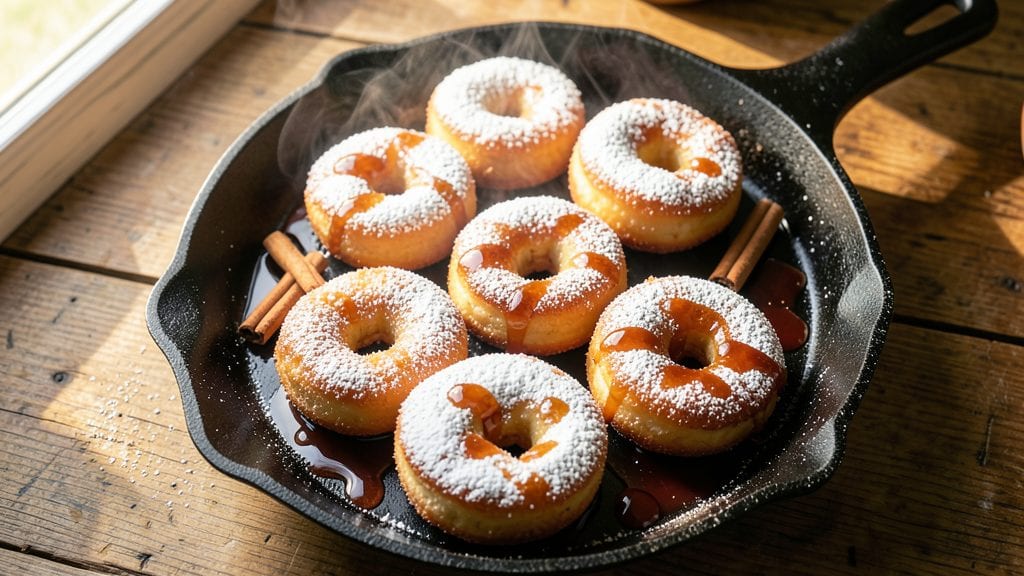
Grandma’s old-fashioned apple cider donuts bring back the cozy warmth of autumn afternoons, where the kitchen smelled like cinnamon and caramelized apples. This recipe captures that nostalgic magic with tender, fluffy donuts infused with real apple cider and a signature crunchy cinnamon-sugar coating.
The secret lies in proofing the dough just right—patiently letting it rise until light and airy, then frying to golden perfection before drenching in that signature glaze.
The dough itself is simple but transformative: a blend of flour, yeast, and a touch of apple cider that keeps the flavor vibrant without overpowering. After frying, the donuts get tossed in a mix of cinnamon and sugar that sticks to every nook, creating that iconic crunch.
For extra indulgence, I drizzle a homemade apple glaze—just powdered sugar, apple cider, and a pinch of vanilla—that hardens just enough to hold its shape while staying irresistibly sticky.
What makes these donuts truly special is the balance of textures: soft, pillowy centers give way to crispy edges, all wrapped in that caramelized cinnamon crust. The aroma alone—warm spice and apple—will have everyone gathering around the table.
This recipe is designed to feel like a hug from your grandma, with every bite tasting like childhood memories.
Perfect for fall gatherings, holiday mornings, or whenever you crave a taste of tradition. The dough can be made ahead, and the glazing process is foolproof—no fancy techniques required. Just follow the steps, and you’ll have donuts that taste like they’ve been simmering in a kitchen for generations.
Ingredients for grandma's old fashioned apple cider donut
Twelve ingredients, all nostalgic and cozy—just like Grandma’s kitchen.
| Ingredient | Amount | Notes |
|---|---|---|
| All-Purpose Flour 🌾 | 4 cups | Sifted for light texture |
| Granulated Sugar 🍚 | ½ cup | For dough sweetness |
| Unsalted Butter 🧈 | ½ cup | Cold, cubed for dough |
| Large Eggs 🥚 | 2 whole | Room temperature |
| Active Dry Yeast 🍞 | 0.03 oz | 1 packet or 2¼ tsp |
| Unsweetened Apple Cider 🍎 | ½ cup | Warm for activating yeast |
| Salt 🧂 | ½ tsp | Kosher or fine sea |
| Ground Cinnamon 🌿 | 2 tbsp | For dough infusion |
| Vegetable Oil 🫒 | 2 cups | For frying (peanut oil preferred) |
| Granulated Sugar 🍚 | 1 cup | For cinnamon-sugar coating |
| Ground Cinnamon 🌿 | ¼ cup | Extra for coating |
| Powdered Sugar 🍚 | 2 cups | For glaze base |
| Unsweetened Apple Cider 🍎 | ¼ cup | For glaze |
| Pure Vanilla Extract 🍯 | 1 tsp | For glaze aroma |
The apple cider is the soul of these donuts. Local farm stands often have the best unsweetened variety—look for vibrant color and no added sugar. I grab mine in quart bottles from Trader Joe's when I can’t find fresh. The yeast needs that warm cider to activate, so heat it to about 100°F—just warm to the touch. For the butter, Land O’Lakes or Organic Valley work best; don’t use salted. The cinnamon? Penzeys or McCormick ground cinnamon sticks have the richest flavor, but regular grocery store brands are fine in a pinch.
No apple cider? Unsweetened apple juice works, but it lacks that deep caramelized flavor. Short on butter? Coconut oil or shortening keeps the texture light—just don’t overmix. The dough needs to rise twice, so proofing in a warm spot (like a turned-off oven with a bowl of hot water) is key. For the glaze, if you can’t find pure vanilla, imitation vanilla extract will work, but real vanilla makes all the difference. The cinnamon-sugar coating? Mix it in a bowl and toss the donuts right after frying while they’re still hot—the sugar will stick like magic.
Dough keeps for 24 hours in the fridge, wrapped tightly in plastic. The frying oil stays hot for about 10-12 donuts before it needs a refresh—keep a thermometer handy and aim for 350°F. Glazed donuts stay fresh for 3 days if stored in an airtight container, but honestly? They won’t last that long. Freeze unglazed donuts for up to 3 months—just thaw and reheat before glazing. The aroma alone will have your whole house smelling like autumn.
Why You'll Love This Recipe
- No-Fuss Yeast Magic: I swear by this dough—just flour, sugar, butter, and yeast. No fancy mixers or complicated steps; a simple knead, a little rise time, and you’re golden. The yeast does all the heavy lifting while you sip your morning coffee.
- Cider-Soaked Heaven: That warm apple cider glaze? It’s not just sweet—it’s deep. The butter-rich dough soaks it up like a dream, giving you a crispy outside and a tender, slightly sticky center. Honestly, it’s the kind of bite that makes you reach for another.
- Breakfast or Dessert: Serve them fresh with coffee for a lazy Sunday morning, or pack a batch in the fridge for a quick school-day treat. (Yes, even on a Tuesday night.) The dough’s forgiving enough to freeze, too—just thaw and fry when you’re ready.
- Pantry Staple Power: Five ingredients, zero specialty items. If you’ve got flour, sugar, and butter, you’ve got this. And because the dough keeps well, I make a big batch—enough to feed the family for days without breaking the bank. Budget-friendly? Absolutely.
Step-by-step instructions for grandma's old-fashioned apple cider donuts
Let's make these classic donuts with a warm apple cider aroma and perfect crunchy glaze.
Activate the Yeast with Warm Apple Cider
In a small bowl, combine the 0.5 cup unsweetened apple cider with a pinch of the 0.5 cup granulated sugar and the 0.025 oz active dry yeast. Let it sit for 5-10 minutes until it becomes frothy and bubbly—this tells you the yeast is alive and ready to work. I always test the cider temperature first by dipping my finger in; it should feel warm but not hot to the touch.
If the mixture doesn't bubble after 10 minutes, your yeast might be old or the cider too cold. Start fresh with new yeast and slightly warmer cider. The apple cider's warmth activates the yeast while adding that signature autumnal flavor right from the beginning. Don't skip this step—proper yeast activation makes all the difference in texture and rise.
Mix the Dough for Perfect Lightness
In a large mixing bowl, combine the 4 cups all-purpose flour, 0.5 tsp salt, and 2 tbsp ground cinnamon. Whisk these dry ingredients together to remove any lumps. In a separate bowl, beat the 2 whole large eggs until lightly frothy, then add the 0.5 cup cold unsalted butter cut into small cubes.
Gradually mix the dry ingredients into the wet mixture, alternating with the yeast mixture, until a shaggy dough forms. I use a wooden spoon first, then switch to my hands to bring it together. The dough should be soft but not sticky—if it feels too dry, add a teaspoon of the apple cider. Knead the dough on a lightly floured surface for 5-7 minutes until smooth and elastic. You'll know it's ready when it springs back slowly when poked.
Let the Dough Rise for Maximum Fluffiness
Shape the dough into a ball and place it in a lightly greased bowl. Cover it with a clean kitchen towel and let it rise in a warm place for 1-1.5 hours or until it has doubled in size. I like to place the bowl near the oven with the light on for gentle warmth—this creates the perfect environment for even rising.
When the dough has risen, you'll see it puff up noticeably and feel light when pressed gently. Poke it with your finger; if the indentation stays, it's ready. If the dough doesn't rise properly, it might be too cold or the yeast wasn't active. This resting period develops the gluten structure, which gives those classic donuts their tender, pillowy texture.
Fry the Donuts to Golden Perfection
Heat 2 cups vegetable oil in a deep fryer or heavy pot to 360-370°F. Use a candy thermometer to monitor the temperature—this is crucial for getting that perfect golden brown color without burning. Cut the risen dough into 12 equal pieces and shape each into a ring or ball, about 1.5 inches thick.
Fry the donuts in batches, being careful not to overcrowd the pot. They're ready when they float to the surface and turn a rich golden brown color, which should take about 1-2 minutes per side. Immediately transfer them to a wire rack set over a paper towel-lined plate to drain excess oil. The oil temperature drops when you add the dough, so monitor it closely and adjust the heat as needed to maintain the proper temperature.
Coat and Glaze for Irresistible Crunch
While the donuts are still warm, prepare the cinnamon-sugar coating by mixing the 1 cup granulated sugar with the 0.25 cup ground cinnamon in a shallow bowl. Roll each donut in this mixture until fully coated, pressing gently to adhere the sugar.
For the glaze, whisk together the 2 cups powdered sugar, 0.25 cup unsweetened apple cider, and 1 tsp pure vanilla extract until smooth. Dip the bottom half of each donut into the glaze, letting any excess drip off. The glaze should be thick enough to coat but still pourable—if it's too thick, add a few drops of apple cider to loosen it.
Let the donuts cool for 5 minutes before serving to allow the glaze to set slightly. The contrast of the warm, spiced donut with the cool, crunchy glaze is what makes these donuts so special. Serve immediately while they're still warm and crispy—these donuts are best enjoyed fresh from the fryer!
Pro Tips For Making Grandma'S Old Fashioned Apple Cider Donut
- TEST YEAST FIRST: Skip the guesswork—mix 1 packet yeast, 1 tsp sugar, and ¼ cup warm water (110°F) in a small bowl. If it doesn’t foam in 5 minutes, your yeast is dead, and your donuts will turn out dense. Trust me, I’ve made this mistake twice with a freezer-burned packet.
- COOL BUTTER BEFORE CREAMING: Take that unsalted butter straight from the fridge—no thawing needed. Cold butter creates flakier layers in the dough, and it won’t melt into a greasy mess when you’re mixing. I learned this the hard way after a batch turned out more like a cake than donuts.
- DON’T OVERMIX THE DOUGH: Once the flour is incorporated, stop mixing as soon as the dough pulls away from the bowl. Overworking it develops gluten, and your donuts will turn out tough instead of light. Two minutes max—set a timer if you’re distracted like I am.
- FRY IN SMALL BATCHES: Crowding the pot lowers the oil temperature, leading to greasy, uneven donuts. Fry 2–3 at a time in 350°F oil, and use a thermometer—yes, even if your grandma didn’t. The donuts will brown faster and stay crispy longer. Worth the extra 10 minutes.
Essential equipment for great grandma's old fashioned apple cider donut
Deep Fryer Essentials
For crispy, golden donuts, a deep fryer is my go-to tool—it maintains consistent oil temperature better than a pot. I use the Presto 02711 4-Quart Aluminum Deep Fryer because it holds enough oil for batches and has precise temperature controls.
If you don’t have one, a heavy-bottomed Dutch oven works too—just monitor the oil closely. Never overfill the fryer; keep oil levels below the fill line for safety. 🌡️
For temperature accuracy, invest in a candy thermometer like the Thermoworks Thermapen ONE. It reads oil temps instantly, preventing burnt donuts or soggy centers. Maintain oil at 360-370°F—any lower, and donuts absorb too much oil; any higher, and they burn before cooking through.
A wire cooling rack placed over a baking sheet is essential for draining excess oil after frying.
Mixing & Kneading Tools
A stand mixer with a dough hook attachment—like the KitchenAid Artisan Series—saves time and effort when mixing the dough. For hand mixers, use the KitchenAid KHM500PS Classic with the dough hook. If you’re mixing by hand, a wooden spoon followed by floured hands works just as well.
The dough needs to be smooth and elastic, so kneading for 5-7 minutes on a lightly floured surface is key. 💪
For shaping donuts, I use a donut cutter (like the OXO Good Grips) or a round cookie cutter for rings. A pizza cutter works for cutting dough into balls.
Keep a pastry brush nearby to lightly oil your hands while shaping—this prevents sticking and makes rolling easier. A lightweight rolling pin helps flatten dough balls evenly before frying.
Glazing & Coating Supplies
The secret to that signature crunchy cinnamon-sugar coating lies in a shallow glass or ceramic bowl—it’s nonporous and easy to clean. I use a small mixing bowl for the glaze, but a ramekin works too.
A fine-mesh sieve ensures even sugar distribution when coating donuts. For glazing, a small offset spatula helps spread the glaze evenly without dripping. 🍯
To avoid sticky glaze, chill the glazed donuts for 5 minutes before serving. A cooling rack keeps them from sitting in their own glaze. For extra flair, I drizzle a small squeeze bottle with leftover glaze for decorative swirls.
Store glazed donuts in an airtight container with parchment paper between layers to prevent sticking.
Safety Gear
Frying donuts involves hot oil, so safety first! Wear heat-resistant oven mitts (like Olla Kitchen Silicone Mitts) to handle the fryer or pot. A long-handled tongs set keeps your hands away from the oil while flipping donuts.
Keep a fire extinguisher (like the Kidde F1500) nearby—never leave hot oil unattended. 🔥
For ventilation, use a range hood or open windows to disperse frying odors. A small fan near the fryer area helps circulate air. If you’re frying in a pot, place it on a heat-resistant trivet to protect countertops.
Always have a metal lid nearby to smother any potential grease fires—never use water!
Nutrition facts
Frequently asked questions
Can I make these donuts without a deep fryer?
Use a heavy-bottomed pot with at least 2 cups of oil and a candy thermometer to monitor the 360-370°F temperature. A Dutch oven works best—just keep the oil level below the fill line for safety. Fry in batches of 2-3 donuts at a time to maintain temperature.
Why does my dough taste bitter or smell like yeast?
Overproofed dough is the likely culprit! If your donut dough smells strongly of yeast or tastes bitter, it’s been left to rise too long. The ideal time is 1-1.5 hours until doubled in size. For next time, place the dough in a warmer spot (like a turned-off oven with a bowl of hot water) to speed up rising. Always check for readiness by pressing gently—if it springs back slowly, it’s perfect.
Can I bake these donuts instead of frying?
Yes, but texture will differ! Preheat oven to 375°F and bake shaped donuts for 12-15 minutes on a parchment-lined sheet. For crispiness, brush with melted butter before baking. Baked donuts will be lighter but won’t have that classic fried crunch. The apple cider flavor still shines through—just expect a softer result.
How do I store leftover glazed donuts?
Keep them in an airtight container at room temperature for up to 3 days. For longer storage, freeze unglazed donuts for 3 months—thaw and reheat in a 350°F oven for 5 minutes before glazing. Re-glaze with a thin layer of warmed apple cider glaze after reheating. The glaze may soften slightly but will set as it cools.
What’s the best way to make these donuts extra crispy?
For maximum crunch, fry at 370°F and drain on a wire rack (not paper towels) to remove excess oil. Immediately coat in cinnamon-sugar while hot, then chill glazed donuts for 10 minutes before serving. The cold glaze sets firmer, creating that perfect crunch. For extra texture, sprinkle crushed graham crackers into the cinnamon-sugar mix.