
Appetizers
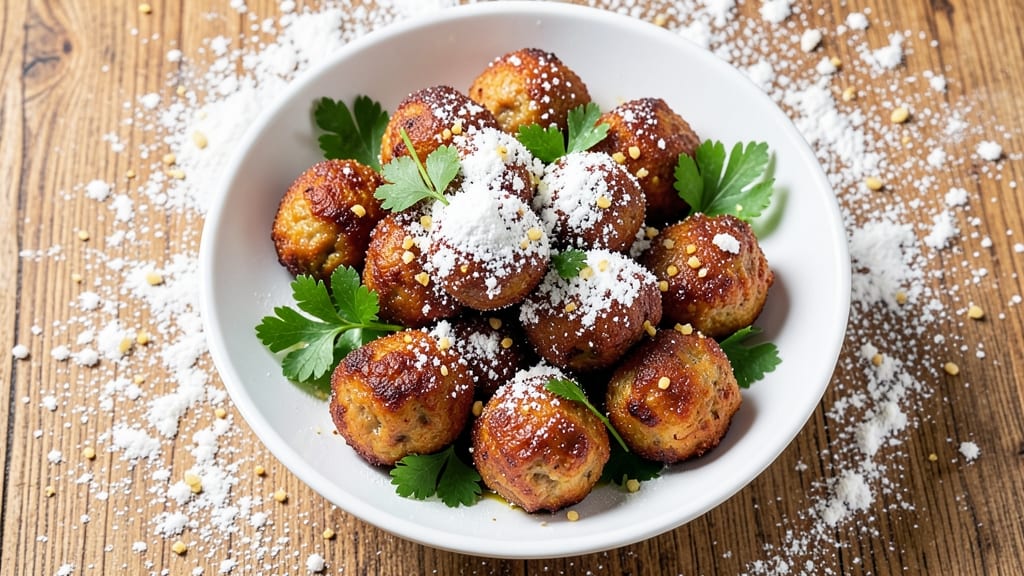
This fried meatballs recipe delivers golden crispy bites that balance tender centers with a crunchy exterior—the kind that disappears from the plate before you finish dipping.
Standing on a step stool in my grandmother's kitchen in Sicily, I learned how a simple herbed panade transforms ordinary meatballs into something extraordinary. The secret lies in the breading technique, where flour, herbs, and a touch of Parmesan create that perfect textural contrast.
What makes these meatballs truly special is the foolproof method that ensures consistent results every time. You'll start with ground meat mixed with just the right amount of seasoning, then coat them in a herbed panade that crisps to perfection when fried.
The key? Using the right oil temperature and frying in batches to maintain even cooking—no more greasy or undercooked meatballs here.
By the time you're done, you'll have a platter of crispy, golden meatballs that are impossible to resist. They're perfect for appetizers, game day, or as a standalone snack with marinara or garlic aioli.
The aroma alone will have everyone gathering around your table, and the first bite will have them asking for seconds.
These meatballs pair beautifully with warm marinara, a tangy dipping sauce, or even a simple lemon aioli. The technique is straightforward, but the results are restaurant-quality—something you can achieve in your own kitchen with just a few simple ingredients and a little patience. Let's get started!
Ingredients for fried meatballs
Fifteen simple ingredients transform ordinary meatballs into golden, crispy bites with a secret herbed panade.
| Ingredient | Amount | Notes |
|---|---|---|
| Ground Pork Shoulder 🐖 | 1 ½ lb | 80% lean for juiciness |
| Large Eggs 🥚 | 2 whole | Room temperature for even coating |
| All-Purpose Flour 🌾 | 1 cup | Sifted for light texture |
| Fresh Parsley 🌿 | ¼ cup | Finely chopped, stems included |
| Fresh Basil 🌿 | ¼ cup | Finely chopped, for herbed flavor |
| Granulated Garlic 🧄 | 1 tbsp | Freshly minced preferred |
| Diamond Crystal Kosher Salt 🧂 | 1 tsp | For seasoning meat mixture |
| Ground Black Pepper 🌶️ | ½ tsp | Freshly cracked for aroma |
| Grated Parmesan Cheese 🧀 | ½ cup | Freshly grated, nutmeg optional |
| Vegetable Oil 🫒 | 3 cups | High smoke point for frying |
| Extra-Virgin Olive Oil 🫒 | 1 tbsp | For finishing drizzle |
| Lemon Zest 🍋 | 1 tsp | Brightens the panade |
The ground pork shoulder is non-negotiable here—80% lean gives you that perfect balance of juiciness and structure. Costco or your local butcher usually have it pre-ground, but if you're buying whole, ask for shoulder cuts. Fresh herbs are a game-changer: Trader Joe's sells pre-chopped parsley and basil in little containers, which saves time. For the Parmesan, grate it yourself from a wedge—pre-grated gets clumpy and ruins the texture. The granulated garlic is a time-saver, but if you've got fresh, mince it yourself for that extra depth.
No fresh herbs? Dried parsley and basil at half the amount work in a pinch, though they won't have the same brightness. Running out of pork? Ground beef or chicken at the same weight will work, but pork stays juicier. The vegetable oil is key—Crisco or generic brands are fine, but avoid anything with a low smoke point. For the panade, sift the flour to avoid lumps, and use a mix of Parmesan and lemon zest to keep the coating light and flavorful. Pro tip: Chill the meat mixture for 30 minutes before shaping—it makes rolling them so much easier.
These meatballs are best served fresh, but they reheat beautifully—350°F oven for 10 minutes brings back that crispy exterior. Store leftovers in an airtight container for 3 days, though they rarely last that long. For a party, double the batch and freeze half—they thaw and fry just like fresh. The oil can be reused once or twice if strained through a fine-mesh sieve, but never reuse oil with food residue—safety first.
Why You'll Love This Recipe
- No-Fuss Mixing: I swear by the 5-minute prep—just pork, egg, flour, and herbs tossed in a bowl. No food processor, no fuss, and zero cleanup beyond a single spoon.
- Herb-Packed Crunch: That crispy flour crust gives way to juicy pork, and the parsley and basil? They turn every bite into a little burst of freshness—like a sunny Italian afternoon in your mouth.
- Game for Any Meal: Need a quick lunch? Toss them in a sandwich. Hosting? Serve with marinara or a drizzle of honey-mustard. Even my picky teenage nephew grabs seconds—(yes, even on a Tuesday night).
- Budget-Friendly Leftovers: Pork shoulder stretches further than chicken, and these meatballs reheat like a dream. Make a double batch, freeze half, and thank me when you’re eating well all week without breaking the bank.
Step-by-step instructions for golden crispy fried meatballs
Here's how to craft perfectly golden meatballs with a herbed panade that seals in juices and delivers that coveted crunch.
Prepare the Herbed Panade Mixture
In a medium bowl, whisk together the 1 cup all-purpose flour, 1 tsp diamond crystal kosher salt, 0.5 tsp ground black pepper, 0.25 cup finely chopped fresh parsley, 0.25 cup finely chopped fresh basil, 1 tbsp granulated garlic, and 0.5 cup freshly grated parmesan cheese. The mixture should resemble fine crumbs with visible herb flecks. I like to press the herbs through a fine-mesh sieve for even distribution—this ensures every bite carries that bright herbed flavor.
Next, create a well in the center and add the 2 whole large eggs at room temperature. Whisk vigorously until you achieve a thick, dough-like consistency that clings together when pressed between fingers. The panade should be moist but not soupy—if it feels too dry, add 1 teaspoon water at a time until it binds properly. This herbed coating is what creates that signature crispy exterior while keeping the meatballs tender inside.
Form and Chill the Meatballs
In a separate large bowl, gently combine the 1.5 lb ground pork shoulder, 1 tsp lemon zest, and 1 tbsp extra-virgin olive oil. The pork should feel cool to the touch—if it's warm, chill it for 10 minutes first. Using your hands, mix just until combined, being careful not to overwork the meat, which would make the meatballs tough.
Divide the pork mixture into 16 equal portions (about 30 grams each) and roll them into smooth, compact balls about 1.5 inches in diameter. Place them on a parchment-lined plate and refrigerate for 30 minutes while you prepare the frying setup. This chilling step is crucial—it firms up the meatballs so they hold their shape during frying and prevents them from falling apart when you add the panade coating.
Create the Double-Coated Meatballs
Working in batches to avoid crowding, dip each chilled meatball into the herbed panade mixture, pressing gently to ensure full coverage. The coating should adhere firmly—if it crumbles off, add 1 more teaspoon water to the panade and mix well. Place the coated meatballs on a wire rack set over a baking sheet, leaving 1 inch between each. This spacing prevents them from steaming instead of frying.
Return the meatballs to the refrigerator for another 20 minutes while you heat the oil. This second chilling ensures the panade sets up properly, creating that perfect crispy shell when fried. The longer they rest, the better the texture—don't skip this step, even if you're eager to fry.
Fry to Golden Perfection
Fill a deep skillet or Dutch oven with 3 cups vegetable oil and heat over medium heat until it reaches 350°F on a deep-fry thermometer. The oil should be hot enough to create small bubbles around the meatballs when they're added, but not so hot that it smokes excessively. Test the temperature by dropping in a small piece of bread—it should sizzle and turn golden in 30 seconds.
Carefully add 4-5 meatballs at a time to the hot oil, being cautious of splattering. Fry for 3-4 minutes until they turn a deep golden brown color. You'll know they're done when they float to the surface and develop a crispy exterior that resists gentle pressing with tongs. Use a slotted spoon to transfer them to a paper towel-lined plate to drain excess oil. Maintain the oil temperature at 350°F throughout frying—fluctuations will result in uneven cooking.
Serve Immediately with Fresh Herbs
Once all meatballs are fried, transfer them to a serving platter and immediately sprinkle with additional finely chopped fresh parsley and basil. The residual heat will make them slightly softer, but they'll maintain that beautiful crispy exterior. Serve while still warm—these meatballs are best enjoyed immediately when the panade is at its crispiest and the pork is at its juiciest.
For an extra touch, drizzle with the remaining 1 tbsp extra-virgin olive oil and a pinch of freshly cracked black pepper. The contrast of the crispy exterior with the tender, herbed pork inside makes these meatballs irresistible. They pair perfectly with marinara sauce, lemon aioli, or even a simple arugula salad for a complete meal.
Pro Tips For Making Fried Meatballs
- CHILL THE MIX: I learned this the hard way—skipping this step means greasy, dense meatballs. After mixing your pork, egg, and herbs, pop the bowl in the fridge for 15 minutes. The cold helps the flour absorb better and keeps the meatballs from falling apart when frying.
- SALT THE PORK FIRST: Season the ground pork shoulder before anything else—at least 1 teaspoon per pound. I used to add salt later, but this makes a real difference in flavor distribution. Let it sit for 5 minutes while you prep the rest.
- DON’T OVERMIX THE DOUGH: Once you add the egg and flour, stop stirring after 2-3 turns. Overworking the mixture makes meatballs tough, and you’ll end up with dense, chewy balls instead of tender ones. Just combine until barely cohesive.
- FRY IN BATCHES: Crowding the pan drops the temperature fast, leading to soggy meatballs. Fry 6-8 at a time in 2 tablespoons of oil over medium-high heat—yes, even if you’re impatient like me. Give them space, and they’ll brown properly.
Essential equipment for this dish
Deep Fryer Essentials
For perfect fried meatballs, a deep fryer is my go-to tool—it maintains consistent oil temperature and eliminates the guesswork. I use the Cuisinart CPD-600 because it holds 3 cups of oil (enough for all 16 meatballs at once) and has precise temperature controls.
If you're frying in a skillet, opt for a heavy-bottomed Dutch oven like Lodge 5.5-quart—it distributes heat evenly and prevents hot spots. 🌡️
Thermometer Accuracy
Never fry without a deep-fry thermometer—I swear by the Thermoworks Thermapen One. The ideal oil temperature is 350°F, but fluctuations can ruin your meatballs. Test it by dropping in a small piece of bread—if it turns golden in 30 seconds, you're ready.
Without a thermometer, watch for small bubbles forming around the meatballs when they hit the oil.
Coating Tools
Two tools make coating meatballs effortless: a wire rack (like OXO Good Grips) for draining excess oil and a fine-mesh sieve (I use KitchenAid) to press herbs through for even distribution.
For shaping, my hands work best, but a meatball maker (like OXO Good Grips) saves time if you're making a big batch. Keep a small bowl of water nearby to moisten the panade if it gets too dry.
Oil Filtration System
Reusing oil is cost-effective, but only if filtered properly. After frying, strain the oil through a fine-mesh sieve into a glass jar (like Ball Mason) and let it settle for 10 minutes. Skim off any debris, then store in the fridge for up to 1 week.
For deep cleaning, use Fry Daddy Oil Filter—it removes food particles and extends oil life. Never reuse oil with visible food residue or a burnt smell.
Serving Setup
Keep fried meatballs warm and crispy with a chafing dish (like Cuisinart) set to 200°F while you finish frying. For serving, arrange them on a wooden board or slate platter (I love West Elm's rustic options) and garnish with fresh herbs.
A dipping sauce station with small bowls of marinara, aioli, and lemon wedges completes the presentation. 🍽️
Nutrition facts
Frequently asked questions
Why do your meatballs stay crispy instead of getting soggy?
The secret lies in the double-chilling process and herbed panade. First, we chill the raw meatballs for 30 minutes before coating, then refrigerate them again for 20 minutes after dipping. This sets the panade into a firm, crispy shell that locks in moisture. Using freshly grated Parmesan in the coating also helps absorb excess moisture during frying.
Can I make these meatballs ahead of time?
Shape and coat the meatballs up to 24 hours ahead, then refrigerate them on a wire rack. When ready to fry, let them sit at room temperature for 30 minutes first. For freezing, coat and freeze the meatballs on a tray before transferring to a bag. Fry from frozen, adding 1 extra minute to the cooking time. The texture stays perfect when reheated at 350°F for 5 minutes.
What's the best oil for frying these meatballs?
Use vegetable oil with a high smoke point (400°F+) like Crisco or generic brands. Avoid olive oil—it burns at 350°F and creates bitter flavors. For extra crispiness, I recommend peanut oil (smoke point 450°F). Always use 3 cups for 16 meatballs, and maintain the temperature at 350°F using a thermometer.
How do I fix meatballs that fall apart when coating?
This usually happens when the meat is too warm or overworked. First, ensure your pork is chilled for 30 minutes before shaping. Use 80% lean pork shoulder—leaner meats lack fat to bind. Add 1 tbsp breadcrumbs to the meat mixture if needed. For coating, make sure your panade isn't too dry (add 1 tsp water if crumbling). Work quickly and keep everything cold.
What are the best dipping sauces for these meatballs?
These crispy meatballs shine with marinara sauce, but try these crowd-pleasers too: garlic aioli (mix mayo, minced garlic, lemon juice, and parsley), spicy mayo (add sriracha or hot sauce), or lemon-herb yogurt dip (Greek yogurt + lemon zest + dill). For a Sicilian touch, serve with caponata (sweet and tangy roasted vegetable relish).