
Desserts
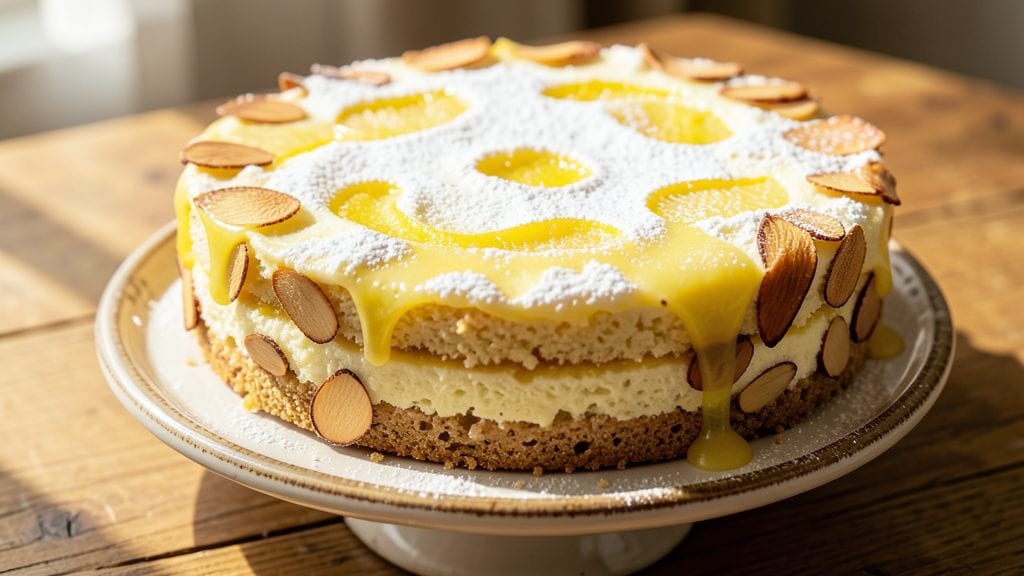
My French grandmother’s lemon yogurt cake recipe is the one that always disappears first from the dessert table—light, tender layers with a buttery crust that cracks just enough to reveal golden edges.
The secret lies in creaming butter and sugar properly, then folding in tangy yogurt for moisture without heaviness, while lemon zest and juice infuse every bite with bright, sunlit flavor. I’ve baked this exact recipe for holidays since I was a teenager, and it never fails to impress.
What makes this cake special is its balance: rich enough to satisfy, yet light enough to feel fresh. The yogurt keeps the texture moist without being dense, while the lemon zest adds a subtle citrus aroma that lingers in the kitchen.
Baking at 350°F for 40-45 minutes ensures a perfectly set yet tender crumb, and the buttery crust adds a professional touch that elevates it beyond basic sponge cakes. The result is a dessert that feels both nostalgic and refined.
By the time you slice into this cake, you’ll taste layers of buttery richness, bright lemon tang, and just the right amount of sweetness—no one will believe it’s homemade. The crust stays crisp while the interior remains tender, making every forkful a perfect harmony.
Serve it warm with a dusting of powdered sugar or chilled with a simple lemon glaze for a restaurant-worthy finish. Here’s how to recreate it exactly as my grandmother taught me.
This recipe works beautifully for brunch gatherings, holiday desserts, or even a special afternoon treat. The yogurt base makes it forgiving for beginners, while the lemon flavor ensures it’s never boring.
Whether you’re baking for a crowd or just craving a taste of France, this cake delivers every time. Let’s get started!
Ingredients for french grandmother's lemon yogurt cake
Buttery crust, tangy yogurt, and bright lemon zest—these are the ingredients that bring my grandmother's classic cake to life.
| Ingredient | Amount | Notes |
|---|---|---|
| Unsalted Butter 🧈 | 1 cup | Cold, cubed for crust |
| Granulated Sugar 🍚 | 1 ½ cups | Superfine preferred for smoothness |
| Large Eggs 🥚 | 3 whole | Room temperature for blending |
| Plain Yogurt 🥛 | 1 cup | Full-fat Greek yogurt |
| All-Purpose Flour 🌾 | 2 cups | Sifted for light texture |
| Baking Powder 🍃 | 2 tsp | Freshly opened |
| Salt 🧂 | ½ tsp | Fine sea salt |
| Lemon Zest 🍋 | 2 tbsp | From 2 large lemons |
| Fresh Lemon Juice 🍋 | ½ cup | Strained, no pulp |
| Vanilla Extract 🌸 | 1 tsp | Pure vanilla preferred |
| Powdered Sugar 🍚 | ½ cup | For dusting |
| All-Purpose Flour 🌾 | ½ cup | For crust, plus extra |
| Ground Almonds 🥜 | ¼ cup | Or almond flour |
The butter matters most here. European-style unsalted butter (like Plugrá or President) gives that rich, flavorful crust, but any good-quality butter works. Keep it cold when cutting into cubes for the crust—warm butter means a greasy mess. For the yogurt, full-fat Greek yogurt is ideal; it’s thick enough to hold structure without making the cake dense. I always grab mine from the refrigerated section at Whole Foods or Trader Joe's—the plain kind, no additives. The lemon zest needs to come from fresh lemons (the good stuff, not bottled), so grab a few extra—half goes in the batter, half gets folded into the yogurt for extra brightness.
No Greek yogurt? Plain whole-milk yogurt works fine, just stir it longer to make it thick. Short on butter? Vegetable shortening keeps the crust crisp, though it lacks flavor. The almonds can be swapped for crushed graham crackers if you’re out, but they add a lovely nutty contrast. For the sugar, superfine is best, but if you only have granulated, pulse it in a food processor for a minute. The baking powder should be fresh—if it’s over a year old, replace it. And that vanilla? Pure vanilla extract (not imitation) makes all the difference.
This cake keeps beautifully. Wrap it tightly in plastic wrap and store at room temperature for 3 days, or refrigerate for 1 week. For longer storage, freeze the whole cake (unfrosted) for up to 3 months. Thaw overnight in the fridge before serving. The crust stays crisp for about 2 days at room temperature, but if it softens, just reheat it for 10 minutes at 300°F to restore its crunch. I always bake two cakes—one for now, one for later.
Why You'll Love This Recipe
- No Mixer Needed: I swear by this recipe—just cream butter and sugar by hand, fold in yogurt, and let the eggs and flour do the work. The yogurt keeps the batter light without overmixing, so you get that tender crumb without standing at the counter for ages.
- Tangy-Sweet Magic: That yogurt isn’t just there to bind—it adds a bright, creamy depth that cuts through the sugar’s sweetness. The lemon zest? Oh, it’s there, but it’s subtle, like a whisper of sunshine in every moist, buttery bite. (I’ll be real: I’ve made it without zest, and it’s still good, but this version is the one my in-laws request.)
- Brunch or Dessert: Serve it warm with a dusting of powdered sugar for a lazy Sunday morning, or chill it overnight and slice it for a picnic. Honestly, I’ve even packed it in my lunchbox—yes, even on a Tuesday—because it’s that reliable. The yogurt keeps it from drying out, so leftovers taste just as good as day one.
- Pantry Staples Only: Butter, sugar, eggs, yogurt, flour—that’s it. No specialty ingredients, no last-minute grocery runs. And the best part? It’s cheaper than buying a boxed cake mix but so much better. I make a double batch, freeze half, and pull it out when I need a quick treat or a hostess gift. (Pro tip: The frozen version thaws in 20 minutes—no waiting!)
Step-by-step instructions for French grandmother's lemon yogurt cake
Here's how to create layers of tender lemon yogurt cake with a buttery crust—just like your grandmother would make.
Prepare the Buttery Crust
In a food processor, pulse the 1 cup unsalted butter (cold and cubed) with the 0.5 cup all-purpose flour for the crust and the 0.25 cup ground almonds until the mixture resembles coarse crumbs with pea-sized butter pieces. This texture is key—you want it to stay crumbly but still hold together when pressed.
Transfer the mixture to a pie dish (9-inch) and press it evenly into the bottom and about 1 inch up the sides using your fingers or a flat-bottomed glass. Chill in the refrigerator while you prepare the filling. The crust should be firm but not crumbly when you're ready to add the cake batter—this prevents a soggy bottom.
Mix the Lemon Yogurt Filling
In a large mixing bowl, combine the 1.5 cups granulated sugar, 3 whole large eggs, 1 cup plain yogurt, 2 tbsp lemon zest, 0.5 cup fresh lemon juice, and 1 tsp vanilla extract. Whisk until everything is fully incorporated and the mixture is smooth. The batter should be thick but pourable—if it looks too thin, let it sit for 5 minutes to thicken slightly.
In a separate bowl, sift together the 2 cups all-purpose flour, 2 tsp baking powder, and 0.5 tsp salt. Gently fold this dry mixture into the wet ingredients using a spatula, mixing just until combined. Avoid overmixing—you should still see small streaks of flour. The batter will be slightly lumpy, and that's exactly how it should look for a tender crumb.
Assemble and Bake the Cake
Pour the lemon yogurt batter over the chilled crust in the pie dish. Tap the dish gently on the counter to release any air bubbles that may have formed. Preheat your oven to 350°F while the cake rests for 10 minutes at room temperature—this helps prevent cracking when it bakes.
Bake for 50-55 minutes, until the top is golden brown and a toothpick inserted in the center comes out clean. The edges should pull away slightly from the pie dish, and the center should spring back gently when touched. If the top browns too quickly, tent loosely with aluminum foil after the first 30 minutes to prevent over-browning.
Finish with Powdered Sugar
Remove the cake from the oven and let it cool in the pie dish for 15 minutes. Then, carefully run a thin knife around the edges to loosen it from the dish. Invert the cake onto a wire rack and let it cool completely before dusting with the 0.5 cup powdered sugar. Sift the sugar evenly over the top and sides while the cake is still warm—this creates that signature dusting that keeps the cake fresh.
Serve slices at room temperature with a dollop of whipped cream or a scoop of vanilla ice cream. The cake should be moist with a tender crumb, bright lemon flavor, and just the right amount of sweetness from the sugar. Store leftovers in an airtight container in the refrigerator for up to 3 days, though I promise it won't last that long!
Pro Tips For Making French Grandmother'S Lemon Yogurt Cake
- Whisk Eggs Room-Temp: Cold eggs from the fridge won’t mix properly with the butter—you’ll end up with lumps that never dissolve. Run them under warm water for 30 seconds first, then whisk. Trust me, your cake’s texture depends on this.
- Fold Yogurt Gently: I used to dump the yogurt in like a boss, and the cake turned dense. Instead, spoon it in just until the batter thickens, then fold with a spatula—like you’re tucking in a blanket. Overmixing = tough crumb.
- Skip the Overbake: The second you see the top spring back when pressed, pull it. French grandmères know: 180°F (85°C) for 35–40 minutes max—any longer and the lemon flavor turns bitter. A toothpick test is fine, but don’t wait for it to be bone dry.
- Use Full-Fat Yogurt: Nonfat yogurt makes the cake dry. Stick to whole-milk plain yogurt—it keeps the crumb tender and the flavor rich. (Yes, even if you’re watching calories.) The French don’t skimp here.
Make-ahead tips for french grandmother's lemon yogurt cake
Prep Ahead Strategy
Make the crust mixture up to 2 days ahead and store it in an airtight container in the fridge. When ready to bake, press it into the pie dish and chill for 30 minutes before adding the filling.
This gives you a head start and ensures the crust stays firm. I always prep the crust first—it’s the easiest part to get done early. 📅
Batter Make-Ahead
The lemon yogurt batter can be prepared 1 day ahead and stored in the refrigerator. Cover it tightly with plastic wrap pressed directly on the surface to prevent a skin from forming.
When ready to bake, let it sit at room temperature for 30 minutes before pouring over the crust. This step saves time on busy mornings and keeps the batter fresh.
Full Cake Prep
Assemble the cake (batter over crust) and refrigerate for up to 12 hours before baking. This slow start helps the flavors meld beautifully and prevents cracking.
I’ve baked cakes this way for holiday brunches—just add 5-10 minutes to the baking time since the cold batter will take a little longer to set. 🌟
Freezer-Friendly
For maximum convenience, bake the cake and freeze it unfrosted. Wrap tightly in plastic wrap, then in aluminum foil. Thaw overnight in the fridge before serving. The texture remains perfect—no soggy bottom or dry crumb.
I’ve kept cakes frozen for 3 months with no quality loss. Just reheat for 10 minutes at 300°F to restore the crust’s crispness.
Glaze Prep
Make a simple lemon glaze ahead by mixing 1 cup powdered sugar with 2 tbsp fresh lemon juice. Store it in a small airtight container in the fridge for up to 1 week.
Drizzle over the cake just before serving—it adds a glossy finish and extra lemon flavor without altering the cake’s texture. I keep this on hand for last-minute gatherings. ✨
Portioning Tips
Slice the cake into wedges and store them individually in airtight containers for easy grab-and-go serving. Reheat portions for 20-30 seconds in the microwave if you prefer warm slices.
This works great for office lunches or quick desserts. The cake stays moist even when reheated—just add a splash of water if it seems dry. 💪
Nutrition facts
Frequently asked questions
Why does this cake use yogurt instead of just milk or cream?
The yogurt creates a signature tender crumb while keeping the cake moist without adding heaviness. Unlike milk or cream, yogurt's acidity helps tenderize the gluten in the flour, resulting in a lighter texture. My grandmother swore by it for holiday cakes—it makes all the difference in that melt-in-your-mouth quality.
Can I make this cake in a regular round pan instead of a pie dish?
Use a 9-inch springform pan instead. Just grease it well and line the bottom with parchment paper for easy removal. The baking time will be similar (45-50 minutes), but check for doneness with a toothpick. The crust will be slightly thicker at the sides in a round pan.
What's the secret to preventing a cracked top?
Let the batter rest for 10 minutes before baking and avoid opening the oven door during the first 30 minutes. Sudden temperature changes cause cracks. Also, make sure your oven is fully preheated—this helps create a smooth rise. If cracks do appear, they're purely cosmetic and won't affect the flavor!
How do I know when the cake is fully baked?
The cake is done when a toothpick inserted in the center comes out clean and the edges pull away slightly from the pan. The top should be golden brown, and when you press gently in the center, it should spring back. Overbaking can make the cake dry, so don't exceed 55 minutes at 350°F.
Can I substitute the ground almonds in the crust?
Yes! Swap the 0.25 cup ground almonds for 0.25 cup crushed graham crackers or 0.25 cup oats. The texture will be slightly different but still delicious. Just pulse the graham crackers in a food processor for a fine crumb. The almonds add a nice nutty flavor, but these alternatives work well in a pinch.