
Desserts
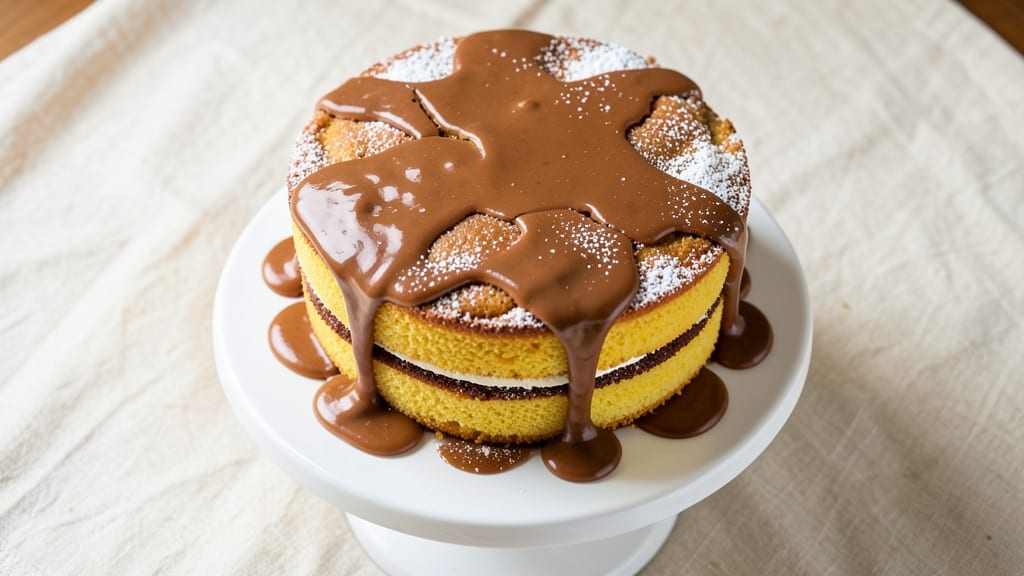
Baking a fudge-iced golden cake at home means capturing that nostalgic Entenmann’s magic without the bakery trip. The secret lies in two perfect layers of tender golden cake, sandwiched with velvety fudge frosting that stays rich and creamy—not grainy or overly sweet.
I’ve perfected this recipe after years of testing, ensuring the layers stay moist and the fudge icing holds its signature texture.
The process starts with a simple yet precise cake batter that bakes up golden and tender, never dry. A light crumb structure is key—this isn’t a dense pound cake, but a delicate, buttery layer that pairs beautifully with the fudge.
The frosting, made with just butter, powdered sugar, and a touch of vanilla, requires patience to achieve that signature smoothness and snap.
What you’ll end up with is a cake that tastes exactly like the one from your favorite bakery—layers of golden cake separated by thick, glossy fudge frosting that clings perfectly.
The texture is the star: a tender crumb that melts in your mouth, balanced by the rich, slightly sweet frosting that’s neither too heavy nor too light. This is the kind of dessert that disappears in minutes.
Whether you’re baking for a special occasion or just craving a taste of nostalgia, this recipe delivers bakery-quality results with a fraction of the effort. The best part?
You can adapt it with boxed cake mix for convenience or go all-in with scratch baking for that authentic touch. Let’s get started on this classic treat.
Ingredients for entenmann's fudge iced golden cake
Golden cake layers, velvety fudge frosting, and nostalgic bakery magic—just 13 ingredients.
| Ingredient | Amount | Notes |
|---|---|---|
| All-Purpose Flour 🌾 | 4 cups | Sifted for light texture |
| Granulated Sugar 🍚 | 2 ½ cups | Divided for batter and frosting |
| Unsalted Butter 🧈 | 2 cups | Room temperature, full-fat |
| Large Eggs 🥚 | 6 whole | Room temperature, separated |
| Baking Powder 🍞 | 2 tsp | Pure baking powder, not baking soda |
| Salt 🧂 | ½ tsp | Fine sea salt preferred |
| Vanilla Extract 🍯 | 2 tsp | Pure vanilla, not imitation |
| Milk 🥛 | 1 ½ cups | Room temperature, whole preferred |
| Powdered Sugar 🍚 | 6 cups | Sifted for smooth frosting |
| Heavy Whipping Cream 🥛 | 1 cup | Cold for whipping |
| Dark Brown Sugar 🍚 | 1 cup | Packed, for fudge flavor |
| Semisweet Chocolate Chips 🍫 | 1 ½ cups | High-quality, not baking chips |
| Vegetable Oil 🫒 | ½ cup | For cake layers |
The butter and eggs are non-negotiable for that tender crumb. Use European-style butter if you can find it—it's richer and gives a better texture. Whole milk makes the cake moister than reduced-fat options. For the chocolate chips, Ghirardelli or Guittard—they melt beautifully and add depth. The vanilla extract should be pure, not the imitation stuff. If you're in a pinch, vanilla bean paste works too, but it's pricier. Sift that flour—twice if you can—because no one likes a dense cake.
No powdered sugar? Granulated sugar whipped with a little cornstarch gets you close. Running short on butter? Vegetable shortening at half the amount keeps things tender, though it won't taste as rich. The chocolate chips can be swapped for chopped dark chocolate (use the same amount), but they're easier to work with. For the frosting, if you can't find heavy whipping cream, half-and-half whipped with a pinch of cream of tartar mimics the texture. And trust me, room temperature eggs and butter are worth the 10-minute wait—they mix so much smoother.
This cake keeps beautifully—3 days covered at room temperature or 1 week in the fridge. The frosting hardens in the fridge, so bring it to room temp before serving. Freeze the unfrosted layers for up to 3 months—just wrap them tightly in plastic. I always make a double batch because it disappears fast. The leftovers? Warm slices in the microwave for 10 seconds—they taste almost as good as fresh.
Why You'll Love This Recipe
- One-Bowl Wonder: I swear by this recipe because it’s that simple—just mix everything in one bowl, pour it in, and bake. No fancy techniques, no stressing over layers or frosting messes. The golden cake base comes together while you’re still deciding what to watch on TV.
- Rich Without Effort: That fudge icing? It’s like biting into a classic Entenmann’s cake but better—smooth, not too sweet, with just the right crackly top. The butter and sugar combo in the cake makes every slice taste like a bakery secret, not a homemade attempt.
- Party in a Box: Here’s what sold me—it’s the ultimate crowd-pleaser. Serve it at birthday parties, potlucks, or even as a "just because" dessert. The golden cake stays moist for days, and the fudge icing makes it look impressive without the fuss.
- Budget Dessert Hero: Between us, this recipe uses pantry staples—flour, sugar, butter, eggs—and stretches to feed a family for days. I’ve had leftovers for breakfast (yes, really) and still wanted more. It’s the kind of dessert that doesn’t break the bank but feels like a treat.
Step-by-step instructions for Entenmann's fudge iced golden cake
Let's bring that bakery magic home with this foolproof method for golden layers and rich fudge frosting.
Prepare the Cake Batter
Preheat your oven to 350°F and grease three 9-inch round cake pans with vegetable oil, then line the bottoms with parchment paper. In a large mixing bowl, combine the 4 cups all-purpose flour, 2 tsp baking powder, and 0.5 tsp salt. Whisk until evenly distributed—this ensures light, airy layers.
In a separate large bowl, cream together the 2 cups unsalted butter and 1.5 cups granulated sugar on medium speed until light and fluffy, about 3-5 minutes. Add the 6 whole large eggs one at a time, mixing well after each addition. Scrape down the sides of the bowl to ensure everything is incorporated.
Gradually alternate adding the dry flour mixture and 1.5 cups milk to the butter mixture, beginning and ending with the flour. Mix on low speed until just combined—don't overmix, or the cake will be dense. Fold in the 1.5 cups semisweet chocolate chips and 2 tsp vanilla extract until evenly distributed. Divide the batter evenly among the prepared pans.
Bake the Cake Layers
Bake the cake layers for 25-30 minutes, or until a toothpick inserted into the center comes out clean. The edges should be golden brown, and the top should spring back when gently pressed. Rotate the pans halfway through baking for even browning.
I like to check the cakes at the 25-minute mark—they're done when the center is set but still slightly moist. Let the cakes cool in the pans for 10 minutes, then transfer them to a wire rack to cool completely. This gradual cooling prevents cracking and ensures even layers for stacking.
Make the Fudge Frosting
In a medium saucepan, combine the 1 cup dark brown sugar, 1 cup heavy whipping cream, and 1 cup milk. Bring to a boil over medium heat, stirring constantly until the sugar dissolves completely. Remove from heat and let it cool slightly.
In a separate large bowl, beat the 6 cups powdered sugar until smooth and fluffy. Slowly pour the warm sugar mixture into the powdered sugar while beating on low speed. Once combined, increase the speed to medium-high and beat for 3-5 minutes until the frosting is thick, glossy, and holds its shape. This is your signature fudge frosting—rich, smooth, and packed with flavor.
Assemble the Cake
Once the cake layers are completely cool, place the first layer on a cake stand or plate. Spread a generous layer of frosting over the top, then place the second layer on top. Repeat with the third layer, ensuring each layer is level for an even finish. Frost the entire cake with the remaining frosting, creating a smooth, even surface.
For that classic Entenmann's look, I like to use an offset spatula to create a slight swirl pattern on the sides. Chill the cake in the refrigerator for 30 minutes before slicing to help the frosting set. This step ensures clean slices and prevents any mess when serving.
Final Touches and Serving
Before serving, let the cake sit at room temperature for 10-15 minutes to soften slightly. This makes it easier to slice and gives the frosting a perfect texture—neither too hard nor too soft. Cut into 12 even slices for your serving size.
The cake should have moist, tender layers with a hint of chocolate from the chips, all wrapped in that signature fudge frosting. Serve immediately for the best experience—this cake is best enjoyed fresh out of the oven, but it keeps well in the refrigerator for up to 3 days, covered tightly.
Pro Tips For Making Entenmann'S Fudge Iced Golden Cake
- Cream Butter Properly: Use a wooden spoon or rubber spatula to beat the butter and sugar until it’s pale and fluffy—about 3-4 minutes with an electric mixer. I learned this the hard way: skipping this step means a denser cake that won’t rise as well, and the fudge frosting will pool instead of clinging.
- Sift Dry Ingredients: Sift the flour, baking powder, and salt together before mixing—even if the recipe doesn’t say so. I used to eyeball it, and my cakes turned out gummy. A quick sift aerates the flour, ensuring a lighter crumb and even baking.
- Check Doneness Early: Pull the cake from the oven when the center just springs back when pressed—it’ll keep cooking off the heat. Overbaking dries out the golden layer, making the fudge frosting taste cloying. A toothpick with a few moist crumbs? Perfect.
- Chill the Cake Layers: Let the cake layers cool on a wire rack for 10 minutes, then refrigerate for 20-30 minutes before frosting. Warm layers melt the butter in the frosting, turning it into a sticky mess. Trust me, this small wait makes all the difference.
Common mistakes when making your entenmann's fudge iced golden cake
Overmixing the Batter
The biggest rookie mistake is overmixing the cake batter after adding the flour. Once you incorporate the dry ingredients and milk, mix just until combined—about 20-30 seconds on low speed. Overmixing develops gluten, which creates a tough, dense cake instead of that tender, bakery-style crumb.
I’ve seen cakes turn into rubbery bricks when mixed for more than 1 minute after adding flour. Stop mixing as soon as the batter is smooth and no dry spots remain. 🥄
Skipping Room Temp Ingredients
Using cold butter or eggs is a fast track to uneven texture. Room-temperature butter should be soft enough to press with your finger but not greasy. Eggs should sit at room temp for 30 minutes before using.
Cold ingredients create pockets of fat that don’t emulsify properly, leading to dry layers or uneven baking. Pro tip: Place butter in the microwave for 10-15 seconds if you’re in a hurry—just make sure it’s fully melted and then let it sit for 5 minutes to cool slightly.
Inconsistent Layer Thickness
Uneven cake layers are a common assembly fail. Always level your baked layers with a serrated knife before frosting. I use a long, sharp serrated knife and gently saw back and forth to create perfectly even surfaces.
Skipping this step causes lopsided cakes that don’t stack neatly or hold frosting well. Trust me, the 10 extra minutes spent leveling makes all the difference in presentation.
Undercooked or Overbaked Layers
Baking time varies by oven, but 25-30 minutes at 350°F is your target. Underbaked layers stay gummy and collapse when sliced, while overbaked layers turn dry. Check doneness at 25 minutes—insert a toothpick into the center.
If it comes out with a few moist crumbs but no wet batter, it’s ready. Overbaking by even 2 minutes can ruin the texture. Rotate pans halfway through for even baking.
Frosting Too Thin or Too Thick
The frosting needs to be thick enough to hold its shape but smooth enough to spread easily. If it’s too thin, beat it longer—it should hold a peak when the beaters are lifted. If it’s too thick, add 1 tsp milk or heavy cream at a time.
I’ve ruined many cakes by using frosting that was too runny—it slides off the sides and makes a mess. The key is patience: let the sugar mixture cool slightly before combining with powdered sugar to avoid graininess.
Rushing the Cooling Process
Never frost warm cake layers—this causes the frosting to melt and slide off. Let layers cool completely (at least 2 hours) before assembling. I’ve seen frosting pool at the bottom of plates when rushed.
Chill the assembled cake for 30 minutes before slicing to help the frosting set properly. Patience here ensures clean slices and a professional finish. ⏳
Nutrition facts
Frequently asked questions
Can I use boxed cake mix for this recipe?
Yes! For a shortcut, use a 2-layer vanilla or white cake mix (about 18.75 oz total). Replace the milk with water, and add 1 extra egg to the mix for moisture. The frosting recipe stays the same—just adjust the cake layers to fit your pan size. The texture won’t be exactly like scratch, but it’s still delicious and much easier.
Why does my frosting turn grainy?
Grainy frosting usually means the sugar mixture cooled too quickly or wasn’t incorporated smoothly. Always let the warm sugar syrup cool to 100°F before mixing with powdered sugar. Beat on low speed first to avoid splattering, and use a hand mixer (not a stand mixer) for better control. If it’s already grainy, strain it through a fine-mesh sieve to salvage it.
How do I store leftovers?
Cover tightly with plastic wrap or an airtight container and store at room temperature for 2 days, or refrigerate for up to 5 days. The frosting firms up in the fridge, so let slices sit at room temp for 10 minutes before serving. For longer storage, freeze unfrosted layers (wrapped individually) for 3 months. Thaw overnight in the fridge before assembling.
Can I make this cake without chocolate chips?
Replace the 1.5 cups chocolate chips with 1.5 cups chopped walnuts or pecans for crunch, or add 1 tsp cinnamon for warmth. For a classic version, skip them entirely—the cake’s buttery flavor still shines. If you love chocolate, melt 1 oz dark chocolate and swirl it into the batter instead.
What’s the secret to the perfect fudge frosting texture?
The key is patience! The frosting needs to be thick but spreadable, not stiff. Beat it until it holds a peak when the beaters lift (about 3-5 minutes total). If it’s too soft, chill it for 15 minutes and rebeat. For extra richness, add 1 tbsp cocoa powder to the frosting. The secret? Don’t rush—let the sugar mixture cool slightly before mixing.