
Sauces & Condiments
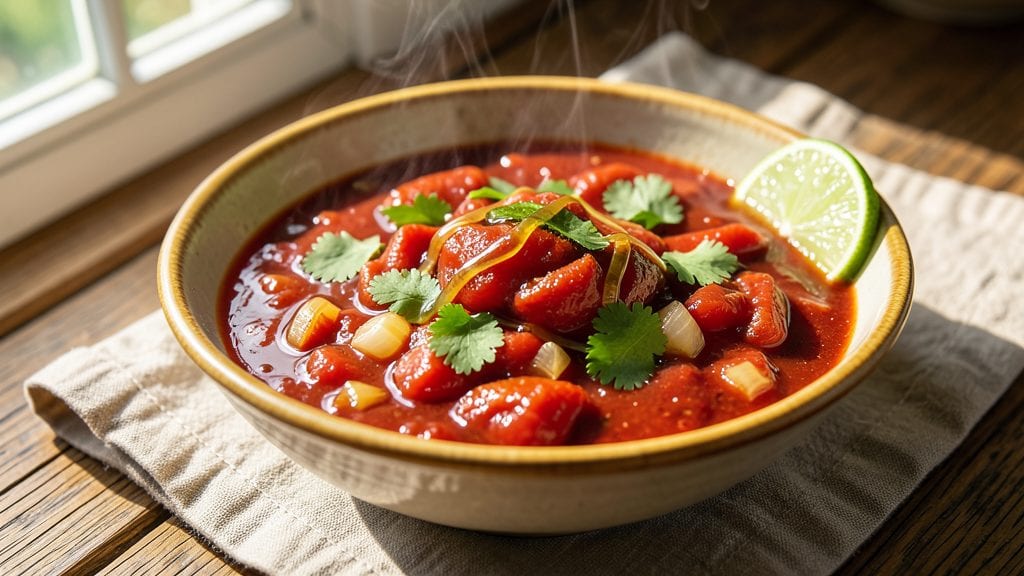
This cooked tomato salsa sauce recipe turns humble pantry staples into a velvety, simmered condiment that brings depth to tacos, grilled meats, and more. I developed it during a particularly busy week when fresh salsa just wouldn't cut it—this version keeps beautifully for days while delivering restaurant-quality depth.
The secret lies in balancing acidity and sweetness through careful simmering, which develops flavors far beyond what you'd get from raw ingredients alone.
What makes this sauce special is its versatility—it works as a marinade, a topping, or a quick weeknight sauce without requiring fresh tomatoes or complicated techniques.
With just 15 minutes of active prep and 30 minutes of simmering, you'll have a smooth, velvety sauce that's rich enough to stand alone but bright enough to complement any dish. The blend of canned tomatoes, garlic, and spices creates a complex flavor profile that's both comforting and vibrant.
By the time you're done, you'll have a smooth, aromatic sauce with a perfect balance of sweetness and acidity—ideal for drizzling over grilled proteins, stirring into soups, or serving as a dip.
Unlike fresh salsa, this version maintains its texture and flavor for up to 5 days in the refrigerator, making it a game-changer for meal prep and busy weeknights.
Whether you're prepping for a crowd or stocking your pantry for quick meals, this sauce delivers restaurant-quality results with minimal effort. Here's how to make it—no fancy equipment required.
Ingredients for cooked tomato salsa sauce
Pantry staples meet bold flavors—this simmered sauce delivers restaurant-quality depth with minimal effort.
| Ingredient | Amount | Notes |
|---|---|---|
| Canned San Marzano Tomatoes 🍅 | 28 oz | Crushed by hand for texture |
| Extra-Virgin Olive Oil 🫒 | ½ cup | High-quality, fruity variety |
| Garlic Cloves 🧄 | 6 cloves | Peeled, roughly chopped |
| Yellow Onion 🧅 | 1 whole | Medium size, diced finely |
| Fresh Cilantro 🌿 | ½ cup | Stems removed, chopped |
| Lime Juice 🍋 | ¼ cup | Freshly squeezed, strained |
| Cumin Seeds 🌶️ | 1 tsp | Toasted lightly for aroma |
| Ground Cumin 🌶️ | ½ tsp | For depth of flavor |
| Smoked Paprika 🌶️ | 1 tsp | Adds subtle smokiness |
| Diamond Crystal Kosher Salt 🧂 | 1 ½ tsp | Adjust to taste |
The tomatoes are the foundation, so San Marzano is worth the splurge—they're sweeter and less acidic than standard brands. Grab a 28-oz can for the best balance of texture and flavor. Fresh cilantro adds brightness, but if you're short on time, dried cilantro at one-third the amount works in a pinch. For the cumin, toast the seeds in a dry pan for 30 seconds—they release an amazing aroma that elevates everything. Whole Foods or Trader Joe's usually carry high-quality spices in bulk, but even the grocery store stuff works if it's fresh.
No fresh cilantro? Fresh parsley at the same amount gives a similar freshness, though it's milder. Swapping smoked paprika for regular paprika removes that subtle smokiness, but you can add a pinch of chipotle powder for a similar effect. The lime juice is key for brightness—if you're out, lemon juice works but tastes slightly harsher. For a smoother texture, blend the sauce after simmering, but I like keeping it slightly rustic. The olive oil should be extra-virgin—cheap oil will make the whole sauce taste flat. And if you're feeling fancy, add a pinch of sugar to balance the acidity.
This sauce keeps beautifully in the fridge for 5-6 days, so make a double batch. Store it in an airtight container with a thin layer of olive oil on top to preserve freshness. Freezes for 3 months too—just thaw in the fridge overnight. I love using it as a marinade for grilled chicken or as a dip for tortilla chips. The flavors actually deepen the next day, so it's perfect for meal prep. If it gets too thick, just stir in a splash of water or broth.
Why You'll Love This Recipe
- Minimal Chopping Required: I swear by this—just dice one onion and crush a few garlic cloves while the tomatoes simmer. The San Marzano plumps up perfectly on its own, so no peeling, no seeding, no fuss. My hands stay clean, and my sauce still tastes like I spent hours in the kitchen.
- Garlic-Cilantro Magic: That first hit of sizzling garlic in olive oil? Pure flavor payoff. Then the cilantro—bright, herby, and just enough to make every spoonful sing. Honestly, I’ve tried store-bought salsa sauces, and this one outshines them all with zero additives.
- Weeknight to Party Hero: Same sauce, endless uses. Toss it over pasta for a quick dinner, drizzle it on grilled chicken for a crowd, or serve it chilled with crusty bread when friends drop by. Between us, I’ve even used it as a pizza base—yes, even on a Tuesday night.
- Leftovers That Don’t Suck: This sauce actually improves after a day in the fridge. The flavors meld, the acidity mellows, and it’s still vibrant. I make a big batch on Sundays, freeze half, and never waste money on takeout. My wallet and my taste buds thank me.
Step-by-step instructions for cooked tomato salsa sauce
Here's how to transform simple pantry staples into a rich, balanced tomato sauce with layers of flavor.
Toast the Aromatics for Depth of Flavor
Heat the 0.5 cup extra-virgin olive oil in a heavy-bottomed saucepan over medium-low heat. Add the 6 cloves garlic cloves and 1 whole yellow onion (finely diced), stirring occasionally for 5-7 minutes until the onion softens and the garlic becomes golden but not browned. This gentle toasting develops sweetness without bitterness.
Next, add the 1 teaspoon cumin seeds and toast them for 30 seconds until fragrant—you'll smell their nutty aroma. Immediately remove the pan from heat and stir in the 0.5 teaspoon ground cumin and 1 teaspoon smoked paprika. This prevents burning while ensuring the spices meld into the oil. The spices should smell warm and earthy, setting the foundation for the sauce's complexity.
Crush and Simmer the Tomatoes
Return the pan to medium heat and add the 28 ounces canned San Marzano tomatoes. Using your hands or a wooden spoon, crush the tomatoes against the pan's sides to break them down—this creates a rustic, textured sauce rather than a smooth one. The goal is a balance between chunky and velvety.
Bring the mixture to a gentle simmer, then reduce heat to low and let it cook uncovered for 20-25 minutes. Stir occasionally to prevent sticking, and watch for the sauce to thicken slightly—it should coat the back of a spoon but still be loose enough to drizzle. The tomatoes will release their natural sweetness while developing a deeper, caramelized flavor. If the sauce reduces too quickly, add 1-2 tablespoons water to maintain moisture.
Finish with Bright Acid and Fresh Herbs
Remove the pan from heat and stir in the 0.25 cup lime juice and 1.5 teaspoons Diamond Crystal kosher salt. Taste and adjust the salt—this sauce should be vibrant and balanced, with the acidity cutting through the richness of the tomatoes. The lime juice also brightens the flavors, preventing the sauce from tasting flat.
Finally, fold in the 0.5 cup fresh cilantro (stems removed and chopped) just before serving. The herbs should be finely distributed but still visible, adding a fresh contrast to the warm, simmered tomatoes. Let the sauce rest for 5 minutes to allow the flavors to meld completely—this is when the true depth of the sauce reveals itself.
Adjust Consistency and Serve
If the sauce is too thick after resting, thin it with 1-2 tablespoons water or reserved tomato juice, stirring until smooth. For extra richness, drizzle in an additional 1 tablespoon extra-virgin olive oil just before serving. The sauce should be vibrant red with visible tomato pieces, aromatic from the spices, and tangy from the lime.
Serve immediately over pasta, drizzled on grilled meats, or as a dip for crusty bread. The sauce will keep in the refrigerator for up to 5 days, but it tastes best within the first 2 days when the flavors are at their peak. For a smoother texture, blend briefly before serving—just don't over-blend, or you'll lose the rustic charm of this pantry-friendly sauce.
Pro Tips For Making Cooked Tomato Salsa Sauce
- Sear the Onion: DESCRIPTION: Don’t just chop and toss—cook your onion in olive oil until it’s deep golden, not just soft. I used to rush this, but taking the extra 5 minutes caramelizes the sugars and adds a rich depth that makes the whole sauce taste more complex. (Yes, even if you’re impatient like me.)
- Crush Garlic, Don’t Dice: DESCRIPTION: Smash the garlic cloves with the flat side of your knife before adding them to the pan. This releases more flavor without burning, and you’ll taste the difference—no need to overcrowd the pot. I learned this the hard way after burning three batches of garlic into oblivion.
- Simmer, Don’t Boil: DESCRIPTION: Keep the heat low enough that tiny bubbles just break the surface, not a full-on rolling boil. High heat turns San Marzano tomatoes mushy and bitter; a gentle simmer lets their natural sweetness shine. (Your future self will notice.)
- Finish with Cold Oil: DESCRIPTION: Stir in a tablespoon of fresh extra-virgin olive oil at the very end—it cools the sauce slightly, brightens the acidity, and gives it a silky finish. Sounds weird, but it works: the texture becomes smoother, and the flavor pops. (Trust me, it’s worth the extra step.)
Essential equipment for cooked tomato salsa sauce
Heavy-Bottomed Saucepan
This is my non-negotiable tool for simmering sauces—nothing creates even heat distribution like a stainless steel or cast iron saucepan. I swear by my All-Clad Stainless Steel Saucepan (1.5-quart size) because it handles the 20-25 minute simmer without hot spots that can burn your sauce.
For budget-friendly options, Cuisinart MultiClad or Tramontina are excellent alternatives. The key is avoiding thin aluminum pans—they heat unevenly and can make your sauce taste metallic. 🔥
Immersion Blender (Optional)
While this sauce works beautifully rustic with visible tomato pieces, an immersion blender transforms it into a velvety version in seconds. I use the Ninja BN601 for its powerful motor—just pulse briefly to break down chunks without over-blending.
If you prefer smooth textures, blend for 10-15 seconds after simmering. For a true chunky texture, skip blending entirely and use a wooden spoon to gently crush tomatoes by hand. 💫
Wooden Spoon & Spatula
A heat-resistant silicone spatula and wooden spoon are essential for stirring without scratching your pan. I keep a OXO Good Grips silicone spatula in my kitchen—it’s heat-safe up to 500°F and won’t melt when scraping the bottom.
The wooden spoon helps crush tomatoes manually, adding rustic texture. Avoid metal utensils after simmering to prevent altering the sauce’s flavor. ✨
Fine-Mesh Strainer
For a smoother sauce without blending, strain the simmered tomatoes through a fine-mesh strainer lined with cheesecloth. I use a Mesh King Strainer from Amazon—it removes skins and seeds while keeping the rich tomato liquid.
This technique works especially well if you’re using canned tomatoes with more seeds. Reserve the strained pulp for soups or stews—it’s packed with flavor! 💡
Measuring Spoons & Scale
Precision matters with spices and liquids. My OXO Stainless Steel Measuring Spoons are my go-to for the 1 tsp smoked paprika and 0.5 tsp ground cumin. For the 28 oz canned tomatoes, I confirm weight using a digital kitchen scale—this ensures consistency if you’re doubling the recipe.
A 16 oz scale like the Escali Primo handles this perfectly. 📏
Air-Tight Storage Containers
Once your sauce cools, transfer it to glass airtight containers for storage. I love Le Parfait glass jars (8 oz or 16 oz sizes) because they’re microwave-safe and stack neatly in the fridge.
For freezer storage, use quart-sized freezer bags—leave 1 inch headspace to prevent expansion cracks. Always cool sauce completely before sealing to avoid condensation. ❄️
Nutrition facts
Frequently asked questions
Can I use fresh tomatoes instead of canned?
Fresh tomatoes work but require extra prep! Roast 4-5 large ripe tomatoes (halved, skin-side up) at 400°F for 20 minutes first to concentrate their flavor. Then peel, seed, and blend until smooth before using in place of canned tomatoes. The texture will be smoother but less rustic. For best results, combine half fresh roasted tomatoes with half canned to balance freshness and convenience.
How do I adjust the spice level?
Start with the base recipe, then tweak to taste. For extra heat, add ½ teaspoon cayenne or 1 chopped jalapeño (seeds removed) during the final simmer. To mellow flavors, reduce smoked paprika to ½ teaspoon and omit the cumin seeds. Always taste before serving—this sauce builds depth as it cools, so adjust gradually.
Can I make this sauce in a slow cooker?
Combine all ingredients (except cilantro and lime) in your slow cooker and cook on low for 4-5 hours or high for 2-3 hours, stirring occasionally. The slow cooking deepens the caramelization naturally. Finish with lime and cilantro as directed. The texture will be even smoother since there's less evaporation. Perfect for hands-off prep!
Why did my sauce turn out too acidic?
This usually happens when canned tomatoes are overly acidic (like some vine-ripened varieties) or when lime juice isn't balanced. Next time, reduce lime to 2 tablespoons and add ½ teaspoon sugar during simmering. For existing sauce, stir in 1 teaspoon honey or maple syrup to offset the tartness. Always taste before adding more acid—you can't reverse it!
What are the best ways to use this sauce?
This versatile sauce shines as a marinade for grilled chicken or shrimp, a pasta sauce (toss with ½ cup pasta water), or a dip for warm tortilla chips. Drizzle it over pizza before baking or mix into black beans for tacos. The smoky depth also pairs beautifully with roasted vegetables or as a finishing sauce for steak sandwiches. Freeze extras in ice cube trays for portion control!