
Sauces & Condiments
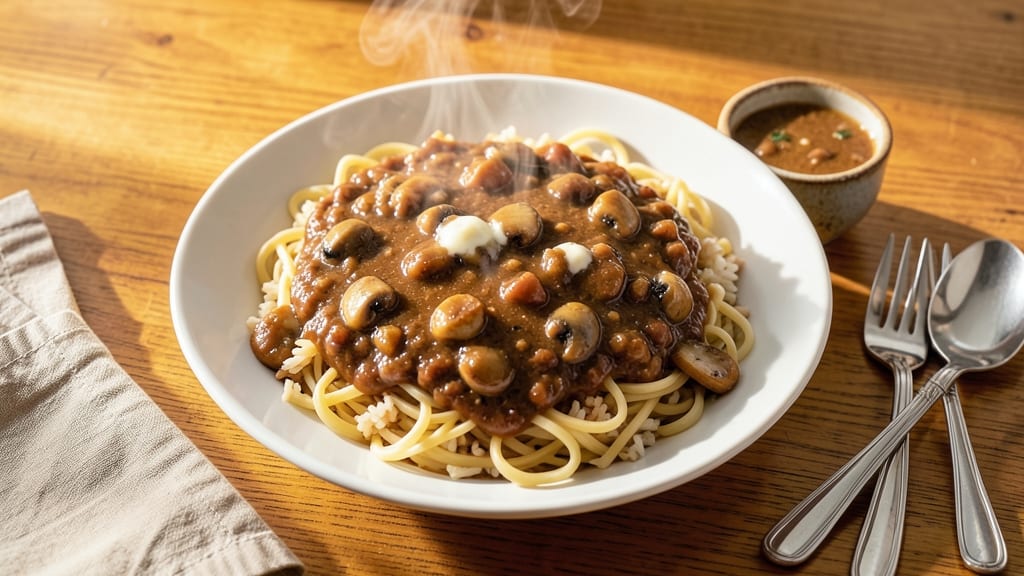
This classic stroganoff sauce recipe delivers the velvety richness that makes the dish legendary—smooth, creamy, and perfectly balanced between earthy mushrooms and tangy sour cream.
The secret lies in cooking the mushrooms until deeply flavorful before blending them into a silky sauce that coats every strand of noodle or bite of protein. I developed this version after years of testing, ensuring the sauce stays luscious without curdling or separating.
The foundation of great stroganoff begins with sautéing mushrooms until they release their natural juices, creating a rich umami base.
A splash of mustard adds depth while keeping the sauce from becoming too heavy, and the sour cream is folded in at the very end to maintain its signature creamy texture.
This method guarantees a sauce that's smooth enough to drizzle over pasta or pair with beef, yet robust enough to stand up to hearty dishes.
What sets this recipe apart is its foolproof technique—no lumps, no curdling, just velvety perfection that clings beautifully to noodles or meat. The sauce develops a subtle caramelized note from the mushrooms while the sour cream adds that signature tang that makes stroganoff unmistakable.
Once you try this version, you'll never settle for anything less than restaurant-quality at home.
Use this sauce as the star of beef stroganoff, chicken stroganoff, or even as a creamy pasta sauce—its versatility makes it a kitchen essential. The recipe yields enough for two servings, but it freezes beautifully for future meals. Let's create this timeless sauce that brings comfort to every plate.
Ingredients for classic stroganoff sauce
Ten essential ingredients transform into velvety stroganoff sauce that pairs perfectly with beef or noodles.
| Ingredient | Amount | Notes |
|---|---|---|
| White Button Mushrooms 🍄 | 1 ½ lb | Fresh, sliced into even pieces |
| Yellow Onion 🧅 | 1 whole | Medium size, finely chopped |
| Garlic Cloves 🧄 | 4 cloves | Fresh, minced finely |
| Unsalted Butter 🧈 | 4 tbsp | Cold, cut into small cubes |
| All-Purpose Flour 🌾 | 2 tbsp | For thickening roux |
| Dijon Mustard 🍯 | 1 tbsp | For depth and tang |
| Beef Broth 💧 | 1 ½ cups | Low-sodium preferred |
| Sour Cream 🥛 | ½ cup | Full-fat for creaminess |
| Dry Sherry 🍷 | 2 tbsp | Or substitute with white wine |
| Sea Salt 🧂 | ¾ tsp | Adjust to taste |
| Freshly Ground Black Pepper 🌶️ | ½ tsp | For finishing |
The mushrooms are the heart of this sauce—cremini or wild mushrooms add even more depth, but white buttons work perfectly. Whole Foods and Trader Joe's carry pre-sliced mushrooms for convenience, but slicing your own ensures even cooking. For the onion, avoid pre-chopped (it oxidizes fast)—chop fresh right before cooking. The butter should be cold when added to the mushrooms to create a proper fond. If you're using a high-quality imported butter like Plugrá, use slightly less (it's more flavorful). The garlic should be minced finely—a microplane works best for even distribution.
No sherry? White wine or even apple cider vinegar works in a pinch, though sherry adds that classic depth. For the mustard, Dijon is non-negotiable—it balances the richness without overpowering. If you're using a low-fat sour cream, add 1 tbsp heavy cream to maintain that signature texture. The beef broth should be low-sodium—most store brands are fine, but homemade is ideal. For a vegetarian version, swap the broth for mushroom broth plus 1 tsp soy sauce. The flour is for thickening—all-purpose works, but gluten-free blends need an extra 1 tsp xanthan gum.
This sauce keeps beautifully—3-4 days in the fridge sealed in an airtight container, or up to 3 months frozen. For freezing, portion into ice cube trays before transferring to a bag. The texture thickens when cold, so reheat gently over low heat while stirring constantly. It reheats best when added to dishes rather than alone—think beef stroganoff or creamy pasta. The sauce doubles as a creamy soup base if thinned with extra broth.
Why You'll Love This Recipe
- One-Pot Magic: I swear by this—just mushrooms, onions, and butter in one pan. No chopping boards to scrub, no extra dishes. The flour thickens it like a dream, so you’re left with a rich sauce that tastes like it simmered all day (but didn’t).
- Umami Bomb: That first sear of mushrooms? Chef’s kiss. The onions caramelize while the garlic hits just right—sweet, savory, with a depth that makes store-bought sauce taste flat. Honestly, the butter and flour roux tie it all together so smoothly, you’ll forget how little effort it took.
- Weeknight Workhorse: Serve it over noodles for a quick dinner, dollop it on roasted chicken, or even stir it into mashed potatoes. My kids ask for it after school, and my partner makes it for lazy Sundays. It’s the kind of sauce that turns basic meals into something special without trying too hard.
- Budget-Friendly Luxury: Mushrooms and onions are cheap, butter is a pantry staple, and flour won’t break the bank. Yet it tastes like a fancy restaurant dish—rich, velvety, and impossible to resist. Between us, I’ve made this for 10 people with leftovers for days, and no one ever complains.
Step-by-step instructions for classic stroganoff sauce
Here's the authentic method that delivers velvety, restaurant-quality stroganoff every time.
Prepare the Mushroom Base
Heat 2 tablespoons of the unsalted butter in a large skillet over medium-high heat. Add the sliced white button mushrooms and cook for 8-10 minutes, stirring occasionally, until they release their moisture and begin to brown. You'll notice the mushrooms shrink slightly as they cook down—this is normal and indicates they're releasing their rich umami flavors.
Push the mushrooms to one side of the skillet and add the remaining 2 tablespoons of butter. Toss in the finely chopped yellow onion and minced garlic cloves, cooking for 3-4 minutes until the onion becomes translucent and the garlic is fragrant. Here's the thing—don't let the garlic burn. Remove the skillet from heat if it starts to darken too quickly, then return it to the burner when ready to continue cooking.
Build the Roux and Deglaze
Reduce the heat to medium-low and sprinkle the 2 tablespoons of all-purpose flour over the mushroom mixture. Stir constantly for 1-2 minutes until the flour is fully incorporated and the mixture forms a thick paste. This creates your roux—the foundation of the sauce's velvety texture.
Pour in the 2 tablespoons of dry sherry and scrape up any browned bits from the bottom of the pan with a wooden spoon. These bits, called fond, are packed with flavor. Let the mixture simmer for 2-3 minutes until the alcohol smell dissipates completely. This ensures your sauce has a smooth, balanced flavor without any harsh alcohol notes.
Simmer with Beef Broth and Mustard
Gradually pour in the 1.5 cups of beef broth while stirring continuously to prevent lumps from forming. Add the 1 tablespoon of Dijon mustard and bring the mixture to a gentle simmer. Let it cook uncovered for 10-12 minutes, stirring occasionally, until the sauce has thickened slightly and coats the back of a spoon.
Season with 0.75 teaspoon sea salt and 0.5 teaspoon freshly ground black pepper. Taste and adjust the seasoning if needed—this is where you'll notice if your broth was too salty or if the mushrooms needed more salt. The sauce should be rich but not overpowering, with a subtle tang from the mustard that brightens the earthy mushrooms.
Finish with Sour Cream for Creaminess
Remove the skillet from heat and stir in the 0.5 cup of sour cream. Be gentle here—you want to incorporate it smoothly without creating lumps. Return the skillet to low heat and let the sauce warm through for 2-3 minutes, stirring constantly. The heat should be just enough to warm the sour cream without curdling it.
Here's the moment that matters: the sauce should now be silky smooth with a velvety texture that coats the back of a spoon. If it's too thick, you can thin it with a splash of warm beef broth. Conversely, if it's too thin, simmer it uncovered for another minute or two to reduce slightly. The perfect stroganoff sauce should cling to the back of a spoon but still flow smoothly when stirred.
Rest and Serve
Transfer the stroganoff sauce to a serving bowl and let it rest for 5 minutes at room temperature. This allows the flavors to meld and the sauce to reach its ideal consistency. The resting period also prevents the sauce from continuing to thicken as it sits, which can happen if you serve it immediately.
Serve the stroganoff sauce over 4 servings of cooked egg noodles, rice, or roasted potatoes. Garnish with additional freshly ground black pepper if desired. The classic presentation includes a sprinkle of parsley, though I prefer to keep it simple and let the rich mushroom and sour cream flavors shine. Each bite should deliver a perfect balance of earthy mushrooms, tangy mustard, and creamy sour cream with a smooth, velvety texture.
Pro Tips For Making Classic Stroganoff Sauce
- Sear the Onion Dry: Let that yellow onion sweat in butter until it’s golden and translucent—no water needed. I used to add a splash, but it dilutes the sauce later. Push the onions around the pan for 8-10 minutes, scraping up those browned bits. That’s where the flavor hides.
- Pulse Mushrooms Coarse: Skip the food processor—chop those white buttons into uneven chunks, about ¼-inch thick. Even pieces cook at the same rate; uneven ones caramelize better and add texture. If you’re lazy, a knife works, but don’t make them too small or they’ll turn to mush.
- Bloom the Flour Slow: When you toss in that flour, lower the heat immediately and whisk like you’re trying to win a race. If you rush this, you’ll get lumps that turn into floury bits in your sauce. Give it 2-3 minutes until it smells nutty and the raw taste fades—this is non-negotiable.
- Deglaze with Wine Early: As soon as the mushrooms hit the pan, pour in that splash of white wine (or broth) right away. It stops them from drying out while you finish cooking the onions. Let it simmer for a minute so the alcohol burns off—this makes a real difference in the depth of flavor. (Yes, even if you’re impatient like me.)
Regional styles of these flavors
Russian Origins
The classic stroganoff sauce traces its roots to 19th-century Russia, where it was first created for Count Stroganoff, a nobleman in the court of Tsar Alexander II. The original recipe featured beef strips rather than mushrooms, cooked in a creamy sauce with sour cream and Dijon mustard.
This version was served at lavish banquets in Saint Petersburg, where the sauce's velvety texture and rich flavors made it an instant hit among aristocrats. 🌍
French Influence
Despite its Russian name, stroganoff sauce owes much to French culinary techniques. The use of a roux (butter and flour base) and the method of deglazing with dry sherry (or wine) were French innovations adopted by Russian chefs.
The French also introduced the concept of sauce reductions, which became central to stroganoff’s depth. This cross-cultural fusion created a sauce that was both elegant and hearty—perfect for imperial Russian dining.
Hungarian Adaptations
Hungary claims its own version of stroganoff, where the sauce is often thicker and includes paprika for a smoky depth. Hungarian stroganoff frequently features chicken or veal instead of beef, and the mushrooms are sometimes replaced with onions or bell peppers.
The Hungarian adaptation also leans into spicier flavors, using hot paprika or carrots for added sweetness. This version is common in Central European cuisine, especially in Budapest.
American Twist
When stroganoff reached the U.S. in the mid-20th century, it evolved into a comfort food staple, often served over egg noodles or mashed potatoes. American versions tend to be richer and creamier, sometimes incorporating Worcestershire sauce or beef consommé for extra depth.
The sauce also became a go-to for casseroles and baked dishes, reflecting the U.S. love for one-pot meals. Many American recipes even swap sour cream for cream cheese for a tangier finish.
Modern Variations
Today, stroganoff sauce has gone global, with adaptations like vegetarian stroganoff (using mushroom or lentil broth) and spicy stroganoff (with chili flakes or hot sauce). Some chefs even experiment with truffle-infused sour cream or smoked paprika for a gourmet twist.
The key remains the same: a balance of earthy mushrooms, tangy cream, and umami richness that makes stroganoff universally loved. 💫
Nutrition facts
Frequently asked questions
Why does my stroganoff sauce curdle when I add sour cream?
The most common cause is adding the sour cream to a sauce that's still too hot. Always remove the pan from heat first, then gently stir in the sour cream. Reheat only over low heat for 2-3 minutes while stirring constantly. If it starts to separate, whisk in 1 teaspoon of cold water or broth to stabilize it.
Can I make this sauce ahead of time?
This sauce actually tastes better the next day as flavors meld. Store it in an airtight container in the fridge for 3-4 days. For freezing, portion into ice cube trays before transferring to a freezer bag—this makes it easy to thaw exactly what you need. Thaw overnight in the fridge and reheat gently over low heat while stirring.
What's the best way to thicken stroganoff sauce if it's too thin?
Simmer the sauce uncovered for 5-10 minutes to reduce the liquid naturally. For instant thickening, mix 1 teaspoon cornstarch with 1 tablespoon cold water, then whisk it into the sauce while it simmers. Alternatively, stir in 1 tablespoon of cold butter—the fat content will help emulsify the sauce. Always taste as you go to avoid over-thickening.
Can I substitute cream cheese for sour cream?
Yes, but the texture will be slightly different. Use the same amount of cream cheese, but it will make the sauce denser. For a lighter texture, mix 3/4 cup cream cheese with 2 tablespoons sour cream. The flavor will be tangier and slightly sweeter than traditional sour cream stroganoff. This substitution works well for baked dishes where extra richness is desired.
How can I make this vegetarian?
Replace the beef broth with mushroom or vegetable broth, and add 1 teaspoon soy sauce for umami depth. For extra richness, stir in 2 tablespoons nutritional yeast when finishing. The earthy mushrooms will still shine, and the sauce maintains its signature velvety texture. This version works beautifully with roasted vegetables or tofu.