
Main Courses
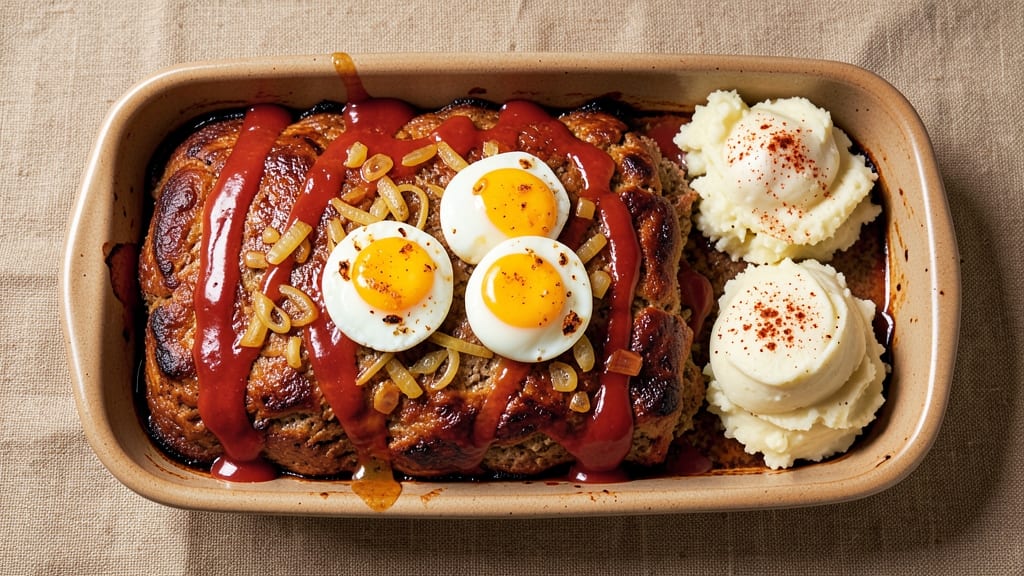
This classic meatloaf recipe with Lipton onion soup mix delivers the comforting, homestyle flavor we all love—juicy, tender, and packed with savory depth. The onion soup mix isn’t just a shortcut; it’s the secret to that perfect balance of tangy, umami richness that makes this meatloaf unforgettable.
I’ve perfected this version over years of testing, ensuring every slice stays moist while developing a golden-brown crust that’s impossible to resist.
The beauty of this recipe lies in its simplicity—just a handful of ingredients that come together in 30 minutes of prep time before baking at 350°F for 50–60 minutes.
The onion soup mix infuses the meat mixture with subtle onion and garlic notes, while the glaze (a mix of ketchup and a touch of honey) adds that signature sweet-savory finish. This isn’t your grandmother’s dry meatloaf; it’s a restaurant-quality dish that’s foolproof for any home cook.
What you’ll end up with is a meatloaf so flavorful it disappears faster than you can say “seconds.” The glaze caramelizes into a sticky, glossy coating, while the interior stays juicy and tender—no dry bites here.
Serve it alongside creamy mashed potatoes or roasted green beans for the ultimate comfort meal. The onion soup mix ensures every slice tastes like a warm hug from your favorite homestyle kitchen.
This recipe is perfect for family dinners, holiday gatherings, or even a cozy Sunday supper. The best part? It’s flexible—swap the glaze for BBQ sauce or keep it classic with just ketchup. Let’s get cooking!
Ingredients for classic meatloaf recipe with lipton onion soup mix
Just 14 ingredients transform into that perfect, juicy meatloaf you crave every Sunday night.
| Ingredient | Amount | Notes |
|---|---|---|
| Ground Beef 🥩 | 1 ½ lb | 80% lean, finely ground preferred |
| Lipton Onion Soup Mix 🧅 | 1 tbsp | Granulated, not powdered |
| Large Egg 🥚 | 1 whole | Room temperature for best binding |
| Ketchup 🍅 | ½ cup | Heinz or similar preferred |
| Honey 🍯 | 1 tbsp | Pure, for glaze sweetness |
| Yellow Onion 🧅 | ½ cup | Finely diced, fresh or frozen |
| Garlic Cloves 🧄 | 2 cloves | Minced, for extra aroma |
| Breadcrumbs 🍞 | ½ cup | Panko for extra crunch |
| Milk 🥛 | ¼ cup | Whole milk for moisture |
| Salt 🧂 | 1 tsp | Kosher or sea salt |
| Black Pepper 🌶️ | ½ tsp | Freshly ground preferred |
| Worcestershire Sauce 🍶 | 1 tbsp | For umami depth |
| Olive Oil 🫒 | 1 tbsp | For greasing loaf pan |
| Fresh Parsley 🌿 | 2 tbsp | Chopped, for garnish |
The ground beef is non-negotiable—80% lean gives you that perfect balance of flavor and moisture. Grab the finest grind you can find, usually labeled as such at Kroger or Walmart. The Lipton Onion Soup Mix is the magic ingredient here—don't substitute with homemade! It's got that perfect balance of onion, garlic, and seasonings that elevates everything. For the breadcrumbs, panko adds that extra crunch to the crust, but regular breadcrumbs work in a pinch. The Heinz ketchup is my go-to, but any quality brand will do—just avoid the watery stuff.
No Lipton Onion Soup Mix? 1 tbsp onion powder + 1/2 tsp garlic powder + 1/4 tsp salt gets you close. Short on ketchup? BBQ sauce or tomato paste works too—just add a splash of water to thin it out. The honey can be swapped for maple syrup if you're avoiding refined sugar. For the onion and garlic, frozen chopped works in a pinch (no need to thaw), but fresh gives you that extra punch. The Worcestershire sauce might be hard to find in some stores, but Trader Joe's always has it. If you can't find it, a dash of soy sauce will add some umami depth.
This meatloaf keeps beautifully—3-4 days in the fridge, 3 months in the freezer. I like to slice it after it's fully cooled and store it in airtight containers. The glaze gets even better the next day once it's had time to set, so always make it ahead if you can. For serving, I like to garnish with fresh parsley right before eating—it adds that pop of color and freshness that makes it look restaurant-worthy. Leftovers reheat perfectly in the microwave or oven—just cover with foil to keep it moist.
Why You'll Love This Recipe
- No-Fuss Assembly: I swear by this—just mix the raw beef, soup mix, egg, and a splash of ketchup right in the pan. No measuring cups, no stress, no extra bowls. That onion soup packet does all the work for you.
- Sweet-Savory Magic: The honey-ketchup glaze caramelizes into a sticky, tangy crust while the soup mix gives it that deep, umami-rich crumb. It’s the kind of flavor that makes you reach for seconds without even thinking.
- Leftovers That Win: This meatloaf actually tastes better the next day—crispy edges soften just enough, and the flavors meld into something even richer. I double the batch on Sundays just so I can reheat slices all week.
- Budget Powerhouse: Ground beef and a dollar-store soup mix? That’s a meal for four for under $10. Add a bag of potatoes or some frozen veggies, and you’ve got a full dinner that won’t break the bank—or your sanity.
Step-by-step instructions for classic meatloaf recipe with Lipton onion soup mix
Here's how to make the ultimate comfort food—juicy, flavorful, and topped with that perfect sweet glaze.
Mix the Meatloaf Filling
In a large bowl, combine the 1.5 lb ground beef, 0.5 cup finely diced yellow onion, and 2 cloves minced garlic cloves. This base gives you that classic meatloaf texture and depth of flavor right from the start. Use your hands to break up any large clumps of beef—this ensures even cooking and maximum moisture retention.
Next, add the 1 tbsp Lipton onion soup mix, 1 tsp salt, 0.5 tsp black pepper, and 1 tbsp Worcestershire sauce. The onion soup mix is the secret weapon here—it adds that savory, umami-rich flavor that makes this meatloaf stand out. Mix everything together until just combined, being careful not to overwork the meat, which can make the loaf tough.
In a separate bowl, whisk together the 1 whole large egg, 0.25 cup milk, and 0.5 cup breadcrumbs. The egg acts as a binder, the milk adds moisture, and the breadcrumbs help create that perfect crumbly texture. Pour this mixture into the meat bowl and gently fold everything together with your hands until fully incorporated. The mixture should hold together when pressed but still feel slightly loose—this ensures a tender, not dense, meatloaf.
Shape and Prepare for Baking
Lightly grease a 9x5-inch loaf pan with 1 tbsp olive oil to prevent sticking. Transfer the meat mixture to the pan and shape it evenly, pressing gently but firmly to remove any air pockets. The loaf should fit snugly in the pan—this helps it hold its shape during baking. Smooth the top with your hands or a spatula for an even surface.
Here's the thing—don't skip greasing the pan. I've learned the hard way that dry pans can lead to meatloaf sticking like glue, making it nearly impossible to remove without breaking apart. A lightly oiled pan ensures easy release and a perfectly shaped loaf every time. Once shaped, let the loaf sit at room temperature for 10 minutes before baking—this helps it hold together better in the oven.
Bake the Meatloaf
Preheat your oven to 350°F. This moderate temperature is key—it allows the meatloaf to cook through evenly without drying out. Place the loaf pan in the center rack of the oven and bake for 50-60 minutes. You'll know it's done when the internal temperature reaches 160°F and the edges pull away slightly from the pan.
Don't be tempted to open the oven door early to check on it. Every time you do, you lose heat and steam, which can lead to a dry meatloaf. Instead, trust the timer and the internal temperature. If the top starts to brown too quickly, loosely tent it with aluminum foil to prevent over-browning while still allowing it to cook through.
Prepare the Glaze
While the meatloaf bakes, prepare the glaze by mixing 0.5 cup ketchup and 1 tbsp honey in a small bowl. The honey adds a touch of sweetness that balances the tangy ketchup, creating that iconic meatloaf glaze. Stir well to combine—this mixture should be smooth and free of lumps. Set it aside until the meatloaf is nearly done baking.
I like to brush the glaze on in two stages. First, after 40 minutes of baking, brush about half of the glaze over the top of the meatloaf. This helps create a sticky, caramelized crust that everyone loves. Then, after another 10 minutes of baking, brush on the remaining glaze. The residual heat from the oven will help it set into a glossy, slightly crisp finish.
Rest and Serve
Once the meatloaf reaches 160°F internally and the glaze is beautifully caramelized, remove it from the oven and let it rest for 10-15 minutes. This resting period allows the juices to redistribute throughout the meatloaf, ensuring every slice is moist and flavorful. Skipping this step can lead to a meatloaf that's dry on the outside and juicy only in the center.
To serve, carefully remove the meatloaf from the pan by running a thin knife around the edges. If it's sticking, gently wiggle the pan back and forth while lifting—this usually does the trick without breaking the loaf. Slice into ½-inch thick pieces and garnish with 2 tbsp chopped fresh parsley for a pop of color and freshness. Serve with mashed potatoes, roasted vegetables, or crusty bread to soak up that delicious glaze.
Pro Tips For Making Classic Meatloaf Recipe With Lipton Onion Soup Mix
- Preheat Pan First: I learned this the hard way—sliding a cold meatloaf into a hot pan makes it sweat like a marathon runner. Heat your baking dish for 5 minutes before adding the loaf so the edges crisp up instead of turning into a sad, soggy mess.
- Mix Dry First: Combine the Lipton onion soup mix with the ground beef before cracking in the egg. This ensures the seasoning distributes evenly—no dry pockets or flavorless spots. (Yes, even if you’re impatient like me.)
- Skip the Overmixing: Once you add the egg and ketchup, stop stirring after 30 seconds. Overworking the meat turns it dense and rubbery—like chewing on a shoe. Just fold until combined, then shape it gently.
- Add Honey Last: Drizzle the honey over the top of the loaf right before baking, not into the mix. It caramelizes into a glossy crust instead of steaming away into the oven air. (Your future self will notice the difference.)
Common mistakes when making your classic meatloaf recipe with lipton onion soup mix
Overmixing the Meat
The biggest mistake I see is overworking the meat mixture. Once you add the egg and breadcrumbs, handle the mixture gently—just enough to combine. Overmixing develops gluten in the beef, which leads to a tough, dense loaf instead of tender, juicy slices.
I’ve ruined a perfectly good meatloaf by kneading it like dough. 💪
Skipping the Rest Time
After baking, many people can’t wait to slice into their meatloaf. But that 10-15 minute rest is crucial—it lets the juices redistribute so every bite stays moist.
I’ve seen meatloaves that looked perfect but were dry on the outside and raw inside because they were sliced too soon. Trust the process!
Using the Wrong Pan
A nonstick pan isn’t always the answer—it can make the meatloaf stick if not greased properly. I recommend a 9x5-inch loaf pan (glass or metal) with a light coating of olive oil.
If your meatloaf sticks, it’s usually because the pan wasn’t oiled enough or the loaf wasn’t shaped tightly. A little patience here saves a lot of frustration later.
Ignoring Internal Temp
Guessing when your meatloaf is done is a recipe for disaster. Use a meat thermometer to check for 160°F internal temperature—this ensures it’s fully cooked without overbaking. I’ve had meatloaves that were dry because I pulled them out too early, and others that were undercooked because I didn’t check.
A thermometer is your best friend here.
Overloading the Glaze
Too much glaze can make your meatloaf soggy. The ½ cup ketchup + 1 tbsp honey ratio is perfect—any more, and you’ll end up with a sticky mess.
I’ve seen people drown their meatloaf in sauce, turning it into a mushy pile. Brush it on in thin layers and let it caramelize naturally. Less is more!
Not Preheating the Oven
Skipping the preheat step can lead to uneven cooking. Always preheat your oven to 350°F for 10-15 minutes before baking. A cold oven means your meatloaf starts cooking slower, which can cause uneven doneness.
I’ve had meatloaves where one side was raw and the other was overcooked because I rushed this step. Patience pays off! 🔥
Nutrition facts
Frequently asked questions
Why does Lipton onion soup mix make this meatloaf so flavorful?
The mix contains dehydrated onion, garlic, and savory seasonings that dissolve into the meat mixture, adding deep umami flavor without overpowering. It replaces multiple individual spices while keeping prep simple. The secret is letting it sit with the raw meat for 5 minutes before mixing everything—this lets the flavors bloom fully.
Can I make this meatloaf ahead of time?
This meatloaf actually tastes better the next day. Bake it fresh, let it cool completely, then wrap tightly in plastic wrap or foil. Store in the fridge for 3-4 days or freeze for 3 months. Reheat covered with foil at 300°F for 15-20 minutes—the glaze will be even more caramelized.
What's the best way to slice meatloaf without it falling apart?
Wait until the meatloaf has rested for 10-15 minutes after baking—this lets the juices set. Then, run a thin knife around the edges to loosen it from the pan. For clean slices, chill the meatloaf in the fridge for 1 hour before cutting. Slice against the grain for tender pieces. Never slice while warm or it'll crumble!
Can I substitute ground turkey or pork for the beef?
Ground turkey works well (use 85% lean for best texture), but pork should be 80% lean and baked at 325°F instead of 350°F to prevent drying. For turkey, add 1 extra tbsp milk to compensate for lower fat content. Pork benefits from 5 extra minutes of resting time before slicing. Both alternatives work but require slight adjustments.
How do I fix a meatloaf that's too dry?
If your meatloaf turns out dry, try slicing it thin and reheating with 2 tbsp beef broth in a skillet for 3-4 minutes per side. For next time, use 70% lean ground beef instead of 80%, add 1 extra tbsp milk, and don't overbake—pull it out when internal temp hits 155°F and let it rest longer. The onion soup mix helps retain moisture, but fat content matters most.