Sauces & Condiments
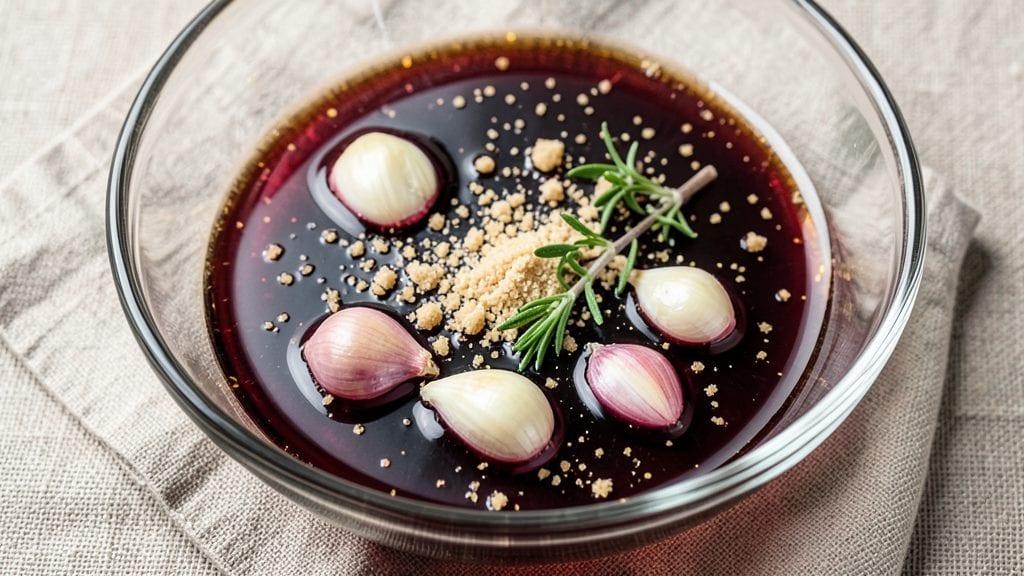
This Chicago steak marinade recipe transforms tough cuts into melt-in-your-mouth perfection with just pantry staples and a few key techniques. The secret lies in balancing soy sauce, Worcestershire, and vinegar to create a deep umami crust that locks in flavor while tenderizing the meat.
I developed this marinade after years of testing—it’s the one that finally gave me that signature Chicago-style restaurant quality at home.
The beauty of this marinade is its simplicity: 30 minutes of active prep, followed by 2-12 hours of marinating (never longer, or the meat can absorb too much liquid). It works best on thick cuts like porterhouse or ribeye, where the crust can truly shine.
The combination of brown sugar and spices caramelizes during searing, adding a touch of sweetness that complements the savory depth.
What you’ll end up with is steak that’s juicy inside, crusty outside, and packed with layers of flavor—no special ingredients required. The marinade’s acidity tenderizes while the umami-rich components build a crust that’s impossible to resist.
This is the kind of marinade that makes even a simple steak feel like a special occasion.
Use it immediately or store in the fridge for up to 5 days—just give it a stir before applying. Pair with a high-heat sear for best results. Let’s get started on that restaurant-worthy crust.
Ingredients for chicago steak marinade
Pantry staples plus a few key ingredients create this legendary Chicago-style marinade.
| Ingredient | Amount | Notes |
|---|---|---|
| Soy Sauce 🍶 | ½ cup | High-quality, low-sodium preferred |
| Worcestershire Sauce 🍶 | ¼ cup | Lea & Perrins for authentic depth |
| Red Wine Vinegar 🍷 | ¼ cup | Dry, not balsamic |
| Light Brown Sugar 🍚 | ¼ cup | Packed, not granulated |
| Garlic Cloves 🧄 | 6 cloves | Freshly minced, not pre-minced |
| Onion Powder 🧅 | 1 tbsp | Freshly ground preferred |
| Ground Black Pepper 🌶️ | 1 tbsp | Freshly cracked preferred |
| Smoked Paprika 🌶️ | 1 tbsp | Smoked, not sweet |
| Kosher Salt 🧂 | 1 ½ tsp | Diamond Crystal preferred |
| Fresh Thyme Leaves 🌿 | ¼ cup | Chopped, stems removed |
The soy sauce and Worcestershire are non-negotiable for that signature umami punch. Lea & Perrins Worcestershire is the gold standard—don't skimp. The vinegar needs to be dry red wine vinegar (not apple cider or balsamic), and Trader Joe's usually has a great organic option. Brown sugar should be packed, not granulated, for proper dissolution. For the garlic, peel and mince fresh—pre-minced has a metallic aftertaste. If you're using a mortar and pestle for the spices, toast them lightly first for deeper flavor. The thyme adds a subtle earthiness that balances the richness.
No Worcestershire? Substitute with 1 tbsp fish sauce plus 1 tbsp soy sauce—it won't be identical, but close. Running low on red wine vinegar? White wine vinegar works in a pinch, though it'll be slightly less complex. The smoked paprika can be swapped for regular paprika, but you'll lose that signature smoky depth. Fresh thyme unavailable? Dried thyme at one-third the amount is fine, but fresh is worth seeking out. The kosher salt is crucial—it dissolves better than table salt and enhances flavor without overpowering. If you're using Diamond Crystal kosher salt (which has a coarser grain), you'll need slightly more than standard measurements.
This marinade keeps beautifully in an airtight container in the fridge for up to 5 days, though it's best used within 3 days for peak flavor. The sugar will caramelize slightly over time, which is fine—just give it a good stir before using. For storage, I like to use a glass jar with a tight seal—it preserves the aromatics better than plastic. If you make extra, freeze it in ice cube trays for single-use portions. Thaw overnight in the fridge before using. Always discard any unused portion after 5 days, as the acidity can degrade over time.
Why You'll Love This Recipe
- Five-Ingredient Formula: Honestly, I swear by this marinade because it’s that simple—just stir together soy, Worcestershire, vinegar, brown sugar, and garlic. No blender, no straining, no fancy steps. I’ve made it in a shot glass while waiting for the grill to heat up.
- Umami Bomb: That combo of soy and Worcestershire? It’s like a flavor grenade—deep, savory, and just a little tangy. The brown sugar caramelizes on the steak, giving it this perfect balance of sweet and smoky, while the garlic? It’s the cherry on top that makes you want to lick the plate.
- Grill or Pan, Same Magic: Between us, this marinade works everywhere. Slather it on steaks for the grill, toss it with chicken thighs for sheet-pan dinner, or even use it as a quick sauce for stir-fries. I’ve even drizzled the leftover marinade over eggs in the morning—yes, really—and it still tasted amazing.
- Budget Meal, Big Impact: A little goes a long way, and since it’s mostly pantry staples, it won’t break the bank. I made a double batch once, marinated a whole pack of steaks, and still had enough left to use in a stir-fry later. That’s right—one recipe, two meals, zero waste. My wallet and my taste buds both win.
Step-by-step instructions for Chicago steak marinade
This marinade delivers that signature Chicago-style depth—bold, balanced, and packed with umami. Let's blend these pantry staples into a crust-worthy sauce.
Whisk Together the Wet Ingredients
In a medium bowl, combine the 0.5 cup soy sauce, 0.25 cup Worcestershire sauce, and 0.25 cup red wine vinegar. The vinegar will cut through the richness of the soy and Worcestershire, creating a bright, tangy foundation. Stir vigorously for 30 seconds until fully emulsified—you should see a smooth, glossy mixture with no streaks.
Next, add the 0.25 cup packed light brown sugar and whisk until completely dissolved. The sugar will help caramelize during cooking, forming that prized dark crust. If you notice any gritty bits, strain the mixture through a fine-mesh sieve to ensure a silky marinade. This step is crucial for preventing clumps that could ruin your steak's texture.
Incorporate Aromatics and Spices
Add the 6 cloves freshly minced garlic, 1 tablespoon onion powder, 1 tablespoon smoked paprika, 1 tablespoon freshly cracked ground black pepper, and 1.5 teaspoons kosher salt to the wet mixture. The garlic and onion powder provide a savory depth, while the smoked paprika adds warmth and that signature Chicago smokiness. Stir well to distribute the spices evenly—you should smell a complex blend of umami, garlic, and subtle smokiness.
For the 0.25 cup chopped fresh thyme leaves, I like to add them last and stir gently to preserve their delicate flavor. The thyme will infuse the marinade with an earthy, slightly floral note that balances the richness. If you're using dried thyme, reduce to 1 teaspoon—fresh is always better for vibrant flavor. Let the mixture sit for 5 minutes to allow the spices to bloom and release their full aroma.
Blend for Maximum Flavor Penetration
Transfer the marinade to a blender or immersion blender and pulse until completely smooth. This step ensures even distribution of all ingredients, especially the garlic and thyme, which can settle at the bottom. A smooth marinade coats the steak more evenly, guaranteeing consistent flavor and crust development. If you don't have a blender, a whisk and thorough stirring will work, though you may need to strain it again to remove any garlic chunks.
The marinade should now have a thick, syrupy consistency—almost like a glaze. If it's too thin, let it sit uncovered at room temperature for 10-15 minutes to reduce slightly. This concentration is key for creating that iconic Chicago-style crust. Once ready, transfer the marinade to an airtight container with a lid or resealable bag for easy pouring.
Marinate the Steak Properly
Pat your steak dry with paper towels—this is non-negotiable for a good sear. Place the steak in a shallow dish or resealable bag and pour the marinade over it, ensuring it's fully coated on all sides. For best results, marinate for 4-12 hours in the refrigerator. The shorter time preserves texture for tender cuts like ribeye, while the longer time works better for tougher cuts like flank steak.
I recommend flipping the steak halfway through marinating to ensure even exposure. If using a bag, gently massage the marinade into the meat. Avoid marinating for more than 24 hours, as the acid in the vinegar can start breaking down the muscle fibers, leading to a mushy texture. When ready to cook, remove the steak from the marinade and let it sit at room temperature for 30 minutes before grilling or searing to ensure an even cook.
Pro Tips For Making Chicago Steak Marinade
- Mince the Garlic Fine: I used to crush whole cloves in the mortar, but that leaves uneven bits that don’t dissolve. Grab a small knife and chop those garlic cloves into a paste—no food processor needed. The marinade will be smoother, and you’ll taste every clove’s punch.
- Balance the Vinegar First: Taste your mix before adding steak. That red wine vinegar can sneak up on you—if it’s too sharp, cut it with a splash of water or even a pinch of sugar. I’ve ruined a batch by skipping this, and you’ll regret it too.
- Marinate Just 30 Minutes: Any longer and the vinegar starts cooking the meat instead of just seasoning it. Thirty minutes is enough to let the flavors sink in without turning your steak into a sad, mushy mess. Trust me, I learned this after a disastrous overnight soak.
- Use Light Brown Sugar: The dark stuff adds bitterness that fights with the soy and Worcestershire. Light brown sugar caramelizes beautifully and keeps the marinade’s sweetness in harmony. No need to buy fancy—just grab the basic pantry version.
Wine and beer pairings for these flavors
Bold Red Wine Pairings
This marinade’s deep umami and smoky notes demand a bold red wine with enough body to stand up to the richness. My go-to is a Cabernet Sauvignon from Napa Valley—look for one with 14-15% ABV and flavors of blackcurrant, vanilla, and subtle oak.
The tannins in Cabernet cut through the marinade’s sweetness while complementing the soy and Worcestershire. For a more affordable option, try a Malbec from Argentina—its dark fruit and smoky undertones mirror the marinade’s complexity perfectly. 🍷
Malbec Magic
Argentinian Malbec is my secret weapon for this marinade because its plummy, blackberry-forward profile enhances the steak’s crust without overpowering it. I recommend a 2019 Trapiche or Catena Zapata—both offer great value and depth.
The wine’s natural acidity also helps cleanse your palate between bites of the rich, caramelized steak. If you prefer a cooler climate Malbec, Chilean versions like Concha y Toro work beautifully too.
Beer Pairings
For beer lovers, a dark amber ale with caramel and toasted malt notes bridges the gap between the marinade’s sweetness and the steak’s smokiness. I love pairing this with a Belgian-style dubbel like Westmalle Dubbel—its raisin and chocolate undertones complement the brown sugar and smoked paprika.
For a lighter option, try a honey brown ale like New Belgium Fat Tire, which adds a touch of sweetness that mirrors the marinade’s caramelized crust.
Whiskey Cocktail Twist
If you’re serving this steak at a dinner party, consider a bourbon old-fashioned as a pre-dinner drink. The whiskey’s vanilla and oak notes harmonize with the marinade’s caramelized sweetness, while the sugar cube adds a touch of brightness.
For a non-alcoholic option, a smoky mezcal margarita with tajín rim enhances the smoky, spicy elements of the marinade without competing flavors. The lime in the margarita also cuts through the richness beautifully. 🍹
Regional Wine Adaptations
In Chicago’s deep-dish pizza country, locals often pair steak with Italian reds like Sangiovese or Chianti. A Brunello di Montalcino adds earthy notes that echo the thyme and smoked paprika in the marinade.
For a West Coast twist, try a Zinfandel from California—its jammy fruit and peppery finish make it a perfect match for the bold flavors. The key is balancing the wine’s acidity with the marinade’s sweetness.
Final Sip Strategy
To maximize flavor pairing, serve the wine or beer room temperature—this enhances the aromatics and lets you taste the full complexity of both the steak and the drink. I like to take a sip of wine between bites to reset my palate, especially when enjoying the crust’s caramelized layers.
For beer pairings, a cold glass (just above freezing) works best to highlight the malt sweetness that complements the marinade’s depth. 💫
Nutrition facts
Frequently asked questions
Can I use this marinade on other meats besides steak?
This marinade works beautifully on pork chops and chicken thighs, but avoid lean cuts like breast or tenderloin—the acidity can make them tough. For pork, marinate for 2-4 hours max. Chicken benefits from the same 4-12 hour window as steak, but pat dry thoroughly before cooking to prevent splattering. The soy and Worcestershire add amazing depth to pork, while the brown sugar caramelizes perfectly on chicken skin.
Why does my marinade look too thin or too thick?
If your marinade is too thin, let it reduce uncovered at room temperature for 10-15 minutes—the sugar will concentrate and create that ideal syrupy consistency. Too thick? Add 1-2 tablespoons of water or broth and whisk gently. The perfect texture should coat the back of a spoon like a light glaze. Remember: the sugar is key for that signature Chicago-style crust, so don't dilute it too much.
Can I make this marinade ahead of time?
This marinade keeps in an airtight container in the fridge for up to 5 days, though it's best used within 3 days for peak flavor. The sugar may caramelize slightly over time, which is fine—just stir well before using. For long-term storage, freeze it in ice cube trays. Thaw overnight in the fridge and give it a good stir before applying. The acidity will be slightly more potent after freezing, so marinate for 2-4 hours max after thawing.
What's the best way to remove excess marinade before cooking?
Pat the steak dry with paper towels for 2-3 minutes before cooking—this is critical for creating that perfect crust. For extra insurance, let the steak sit uncovered on a wire rack for 5 minutes in the fridge. This evaporates surface moisture while keeping the interior juicy. Never rinse the marinade off, as it contains the flavor compounds you want to caramelize. The dry surface will sear beautifully while the marinade's sugars create that iconic dark crust.
How do I adjust this for a grill vs. pan-searing?
For grilling, marinate for 4-6 hours max to prevent over-tenderizing. Use a two-zone fire (direct heat for searing, indirect for cooking through) and baste with any leftover marinade during the last 3-5 minutes of cooking. For pan-searing, marinate for 8-12 hours—the longer time works better with the high heat of a cast-iron skillet. After searing, let the steak rest for 10 minutes before slicing to let the crust set properly. The grill method gives you more control over heat zones, while pan-searing creates a more concentrated crust.