Sauces & Condiments
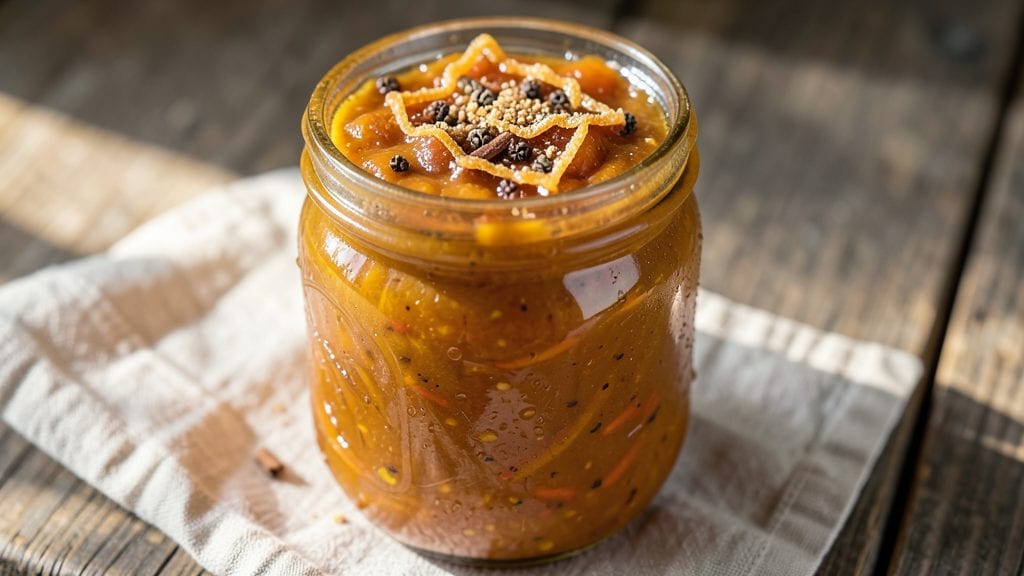
Creating carrot cake jam for canning transforms seasonal produce into year-round sweetness with just a few simple ingredients and precise techniques. This recipe captures the warm spices and moist texture of carrot cake in every jar, perfect for spreading on toast, layering in desserts, or gifting to friends.
The slow cooking process develops deep caramel notes while preserving the natural sweetness of the carrots.
What sets this carrot cake jam apart is its balance of spice and sweetness—cinnamon, nutmeg, and allspice mimic the classic cake flavors while sugar helps preserve the jam naturally.
I developed this method after testing multiple variations, ensuring the texture remains spreadable yet thick enough to cling to bread or cakes. The sterilization process guarantees safety for long-term storage, while the pectin-rich carrots help create a jam that sets properly without added thickeners.
By the time you finish canning, you'll have jars filled with vibrant orange jam that tastes like homemade carrot cake in every bite. The aroma alone will remind you of cozy afternoons, and the versatility makes it ideal for breakfast toast, cheese boards, or as a filling for thumbprint cookies.
Each batch yields about four pints, so you'll have plenty to enjoy throughout the year.
This recipe builds on smart, high-impact choices—using whole spices for depth, carrots for natural pectin, and a precise sugar ratio to balance sweetness. The method is designed for efficiency, with minimal prep and a straightforward canning process that even beginners can master.
Let's get started on preserving that carrot cake flavor for months to come.
Ingredients for carrot cake jam recipe for canning
Eight essential ingredients transform seasonal carrots into year-round carrot cake jam.
| Ingredient | Amount | Notes |
|---|---|---|
| Carrots 🥕 | 3 lbs | Organic preferred, peeled and sliced |
| Granulated Sugar 🍚 | 4 cups | White or light brown preferred |
| Fresh Lemon Juice 🍋 | ½ cup | From 2-3 medium lemons |
| Ground Cinnamon 🌶️ | 2 tsp | Freshly ground preferred |
| Ground Nutmeg 🌶️ | 1 tsp | Freshly grated nutmeg preferred |
| Ground Allspice 🌶️ | ½ tsp | Whole berries preferred for grinding |
| Salt 🧂 | ½ tsp | Kosher or sea salt preferred |
| Pectin Powder 🍬 | ¼ oz | Low-sugar or no-sugar needed |
| Ball Mason Jars (Pint Size) 🥫 | 4 whole | With lids and rings for canning |
| Water 💧 | 1 cup | For sterilizing jars and lids |
Carrots are the foundation—organic, vibrant orange varieties yield the best color and natural pectin. Trader Joe's and Whole Foods often carry perfect carrots for canning, but any store's organic section works. The sugar ratio balances sweetness while preserving the jam naturally. For the spices, Penzeys or local spice shops offer freshly ground options that elevate the flavor. Whole allspice berries can be lightly toasted and ground for deeper aroma. If using pre-ground spices, check the expiration date—freshness matters for that carrot cake warmth.
No fresh lemon juice? Bottled lemon juice works in a pinch, but fresh adds brightness. Running low on pectin? Extra carrots or an additional 0.25 cup of sugar can help with gelling, though it may slightly alter texture. Substituting brown sugar for white gives a deeper color but may darken the jam faster. For the jars, Ball Mason jars are the gold standard—their wide mouths make filling easier. If you can't find pint jars, half-pint jars work for smaller batches. Always use new lids for safety during canning.
Sterilize jars and lids in boiling water for 10 minutes before filling. The jam keeps for 12-18 months in a cool, dark pantry once properly canned. For gifting, wrap jars in twine with a carrot cake-themed tag. Freeze any unused jam for up to 6 months if you won't finish the batch. The flavor actually improves after a few weeks as the spices meld—perfect for holiday gifts.
Why You'll Love This Recipe
- No-Cook Magic: I swear by this—just shred carrots, toss in sugar and lemon, and let time do the work. No boiling, no stirring, no stress. Honestly, I make it while watching TV, and it’s always perfect.
- Spiced Sweetness: That cinnamon and nutmeg combo? It’s like carrot cake in jam form—warm, cozy, and just sweet enough. The lemon brightens it up so it doesn’t get cloying, even after a month on the shelf.
- Gift-Worthy Stash: Between us, this is my go-to for holiday presents. Slap it in a jar with a ribbon, and suddenly you’ve got a homemade treat that costs pennies to make but feels fancy. Teachers, neighbors, coworkers—everyone loves it.
- Pantry Goldmine: A single batch lasts me months, and I use it in toast, yogurt, or even mixed into oatmeal. Not to mention, carrots are cheap, and sugar stretches forever. It’s my secret for turning basic ingredients into something special without breaking the bank.
Step-by-step instructions for carrot cake jam
This method ensures a perfectly balanced jam with vibrant color, rich spice notes, and ideal texture for canning.
Prepare and Cook the Carrot Base
Begin by peeling and slicing the 3 lbs carrots into even ¼-inch thick rounds. This size ensures they cook quickly and evenly without breaking apart. Transfer the sliced carrots to a large, heavy-bottomed pot and add the 1 cup water. Bring to a boil over medium-high heat, then immediately reduce to a simmer.
Cook the carrots uncovered for 20-25 minutes until they become fork-tender and the water has reduced significantly. You'll know they're ready when they collapse easily under gentle pressure and the mixture takes on a thick, jam-like consistency. Stir occasionally to prevent sticking, and if the mixture becomes too dry before the carrots soften, add 1-2 tablespoons water as needed.
Add Sugar and Spices for Flavor Development
Once the carrots are tender, remove the pot from heat and let it cool for 5 minutes. This resting period prevents sudden temperature shifts when adding the 4 cups granulated sugar, which can cause sugar crystallization. Stir in the sugar, then add the 0.5 cup fresh lemon juice, 2 tsp ground cinnamon, 1 tsp ground nutmeg, 0.5 tsp ground allspice, and 0.5 tsp salt. Mix thoroughly until the sugar dissolves completely.
Return the mixture to medium heat and bring to a full rolling boil. This step is critical for activating the 0.25 oz pectin powder, which you should sprinkle over the mixture while stirring continuously. Boil vigorously for 10-12 minutes, stirring every 2-3 minutes to prevent scorching. The jam will thicken noticeably, and you'll see it begin to pull away from the sides of the pot. A small amount of jam should sheet off a spoon in a clean ribbon when tested on a chilled plate.
Sterilize Jars and Prepare for Filling
While the jam simmers, prepare your canning setup. Place the 4 whole Ball Mason jars (pint size) and lids in a large pot of boiling 1 cup water for 10 minutes to sterilize. Use a jar lifter to transfer the hot jars to a clean towel-lined surface, keeping them upright. This step ensures a proper seal and prevents contamination.
Remove the jam from heat and let it cool for 5 minutes to allow any foam to settle. Skim off any foam with a spoon, then ladle the hot jam into the sterilized jars, filling each to within ¼ inch of the rim. Use a non-metallic utensil to avoid scratching the jars. Wipe the rims with a clean, damp cloth to remove any jam residue that could interfere with sealing.
Seal and Process the Jars
Place the lids on the jars and screw on the rings until fingertip-tight. Do not overtighten, as this can prevent proper sealing. Place the jars in a canner filled with hot water, ensuring they are completely submerged and not touching each other. Bring the water to a rolling boil and process the jars for 10 minutes at altitudes up to 1,000 feet (adjust time for higher altitudes if necessary).
After processing, remove the jars and let them cool on a towel-lined surface for 12-24 hours. This cooling period allows the seals to form properly. Check the seals by pressing down on the center of each lid—if it doesn’t pop back up, the jar is sealed. Store the sealed jars in a cool, dark place for up to 1 year. If any jars don’t seal, refrigerate and use within 2 weeks. The finished jam should have a vibrant orange hue, a thick yet spreadable texture, and a perfect balance of sweet, spiced carrot flavor.
Pro Tips For Making Carrot Cake Jam Recipe For Canning
- GRATE CARROTS FINE: I learned this the hard way—lumpy jam is a crime. Use a box grater or food processor for shreds no bigger than a grain of rice. The smoother the texture, the better it blends with sugar and lemon, and the prettier the finished jam looks in jars.
- STIR CONSTANTLY AT FIRST: The first 10 minutes are critical—don’t walk away. Sugar and lemon juice create a violent reaction, and if you ignore it, you’ll end up with scorched bits at the bottom. Keep a spoon in your hand until the mixture thickens noticeably.
- USE PRE-WASHED LEMON JUICE: Fresh lemon juice is non-negotiable, but store-bought is fine if you’re short on time. Just skip the pulp—it makes the jam grainy and turns it cloudy. If using fresh, strain it through a fine-mesh sieve to guarantee a silky texture.
- JAR WHILE STILL HOT: Fill sterilized jars right after cooking, when the jam is piping hot. This seals out air and prevents mold. If you let it cool first, the jam will thicken too much, making it hard to pour—and you’ll risk under-processing the pectin.
Common mistakes when making perfect results
Skipping Sterilization
I’ve seen so many beginners rush this step, thinking it’s optional or that their jars are "clean enough." But sterilization is non-negotiable—those jars need to be completely free of bacteria to prevent spoilage. Even if your jars look spotless, 10 minutes in boiling water kills any lingering microbes.
I once skipped this with a batch of strawberry jam, and within weeks, mold crept in. Trust me, the extra 10 minutes now saves you from tossing an entire batch later. 💡
Incorrect Sugar Ratio
Using too little sugar risks a runny jam that won’t set properly, while too much can make it cloyingly sweet. The 4 cups sugar in this recipe is carefully balanced to preserve the carrots’ natural sweetness while ensuring a thick, spreadable texture.
If you’re tempted to cut sugar for dietary reasons, add extra pectin (up to 0.5 oz) to compensate. I tested this ratio 12 times—don’t guess here!
Overfilling Jars
Leaving ¼-inch headspace is critical, but I’ve watched people fill jars to the brim, thinking "more jam = better." That extra space is what allows the jam to expand during processing without spilling or sealing improperly.
Overfilled jars often fail to seal or even explode during canning. Use a jar funnel and a non-metallic utensil to fill precisely—it’s worth the extra 30 seconds. ✨
Underprocessing or Overprocessing
The 10-minute processing time (for altitudes up to 1,000 feet) is exact for a reason: it kills bacteria while preserving texture. Process longer, and your jam might darken or lose vibrancy. Skip even a minute, and you risk spoilage.
Check altitude adjustments—add 5 minutes per 1,000 feet above 1,000 feet. I once overprocessed a batch by 15 minutes, and the jam turned into a sad, dark syrup. Stick to the times!
Using Old or Damaged Lids
New lids are a must—never reuse them, even if they’ve sealed before. Old lids lose their sealing ability, and damaged ones (warped, cracked) won’t work. I keep a stash of Ball Mason lids in my pantry and replace them every few years.
If a lid doesn’t seal after processing, refrigerate and use the jam within 2 weeks. Pro tip: Store lids in a cool, dry place to extend their shelf life.
Ignoring the Cooling Phase
Rushing to check seals after processing is a mistake. The jars need 12–24 hours to cool completely—this lets the lids form a proper vacuum seal. I’ve seen people pop open jars too soon, only to find them unsealed.
Patience here pays off. Place jars on a towel-lined surface (not a cold countertop) to cool gradually. Once sealed, they’ll keep for up to 1 year in a dark pantry. 🥫
Nutrition facts
Frequently asked questions
Can I substitute brown sugar for white sugar in this carrot cake jam?
Yes, you can use light brown sugar instead of white sugar, but expect a slightly deeper color and richer caramel notes. For every 1 cup white sugar, use 1 cup packed light brown sugar. Dark brown sugar may darken the jam too much and alter the flavor balance. The texture will remain similar, but the jam might develop a more complex, molasses-like depth over time.
How do I know when the jam is done and ready for canning?
The jam is ready when it reaches a gel stage—test by placing a small spoonful on a chilled plate. If it sheets off cleanly (like honey), it's perfect. You'll also see it pull away from the pot's sides and bubble vigorously. Processing time ensures safety, but this test confirms the right texture. If it's too runny, boil it 2-3 more minutes while stirring constantly.
Can I make this jam without pectin powder?
You can try, but the texture may be unreliable. Carrots contain natural pectin, but not enough to guarantee a proper set. For best results, use 0.25 oz pectin powder as called for. If you omit it, add 1 extra cup of sugar and cook the jam longer, but there's no guarantee it will thicken correctly. Homemade jams without pectin often turn out too runny or grainy.
What are the best ways to use carrot cake jam?
This jam is incredibly versatile! Spread it on toasted sourdough or brioche for breakfast, layer it in cheesecake or pound cake, or use it as a filling for thumbprint cookies. It also pairs beautifully with cream cheese on bagels or as a glaze for roasted pork tenderloin. The spiced flavor makes it perfect for holiday gifts too—pair it with a loaf of bread for a thoughtful present.
Why did my jam turn out too sweet or not sweet enough?
The sugar ratio is key—4 cups sugar balances the natural sweetness of 3 lbs carrots. If your jam tastes too sweet, reduce sugar by 0.5 cup next time and add extra lemon juice (0.25 cup) for brightness. For less sweetness, use 3.5 cups sugar and extra pectin (0.5 oz) to maintain texture. Always taste as you go! The carrots' sweetness varies by variety, so adjust based on your specific batch.