
Main Courses
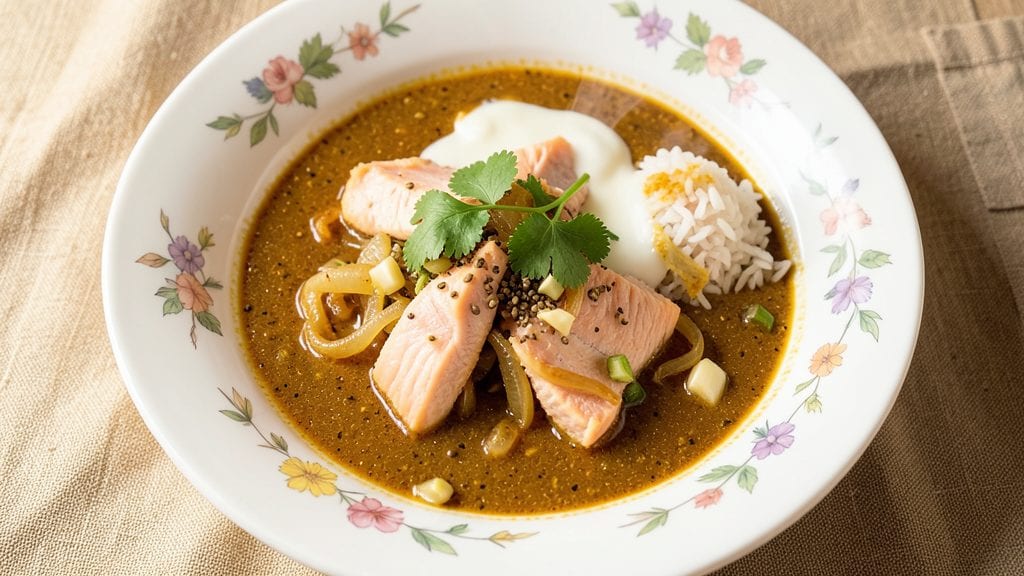
This canned salmon curry recipe delivers restaurant-quality depth in just 25 minutes, proving that pantry staples can create bold flavors without fuss. The secret lies in balancing smoky coconut milk with aromatic turmeric and ginger, creating a dish that's both comforting and sophisticated.
I developed this version after testing countless shortcuts—this one actually tastes like it simmered for hours, not minutes.
The beauty of using canned salmon is its melt-in-your-mouth texture and rich flavor that infuses perfectly into the curry. You'll start with a fragrant base of onions, garlic, and ginger sautéed until golden, then build layers of warmth with ground spices before adding coconut milk and broth.
The salmon breaks apart easily, distributing its savory notes throughout the sauce.
By the time you're done, you'll have a velvety curry with tender salmon pieces swimming in a fragrant, slightly sweet-spicy sauce. The turmeric gives it that signature golden hue, while the coconut milk adds natural creaminess.
Serve it over steamed jasmine rice or with warm naan for the full experience—this curry is hearty enough for a weeknight dinner but elegant enough for company.
Optional garnishes like fresh cilantro or a squeeze of lime brighten the dish further, but the base recipe stands strong on its own. Perfect for busy weeknights when you crave flavor but not complexity, this curry proves that convenience and sophistication can coexist beautifully.
Let's get cooking—your taste buds will thank you.
Ingredients for canned salmon curry
Pantry staples meet bold flavors—just 14 ingredients for restaurant-worthy curry.
| Ingredient | Amount | Notes |
|---|---|---|
| Canned Salmon 🐟 | 2 cans | Wild-caught preferred, drained |
| Light Coconut Milk 🥥 | 1 can | Full-fat for creamier texture |
| Yellow Onion 🧅 | 1 whole | Medium, finely diced |
| Garlic Cloves 🧄 | 4 cloves | Freshly minced |
| Fresh Ginger 🌿 | 1 tbsp | Grated, or 1 tsp ground |
| Ground Turmeric 🌶️ | 1 tsp | Bright yellow for color |
| Ground Cumin 🌿 | 1 tsp | Toasted for deeper flavor |
| Ground Coriander 🌶️ | 1 tsp | Freshly ground preferred |
| Chicken Broth 💧 | 1 cup | Low-sodium preferred |
| Tomato Paste 🍅 | 1 tbsp | Squeeze tube or canned |
| Extra-Virgin Olive Oil 🫒 | 2 tbsp | For sautéing |
| Lemon Juice 🍋 | 1 tbsp | Freshly squeezed |
| Salt 🧂 | ½ tsp | Adjust to taste |
| Black Pepper 🌶️ | ¼ tsp | Freshly ground |
| Fresh Cilantro 🌿 | ¼ cup | Chopped, for garnish |
The salmon makes this curry shine. Wild-caught has richer flavor, but any canned salmon works—just drain it well. Trader Joe's and Wild Planet brands are my go-tos, but the store brand is fine too. Look for cans with no added salt if you're watching sodium. The coconut milk is non-negotiable here—full-fat makes it creamier, but light works for a lighter version. Fresh ginger and garlic? Don't skip them—they're the aromatic base that makes this taste homemade. If you're short on time, pre-minced garlic works, but fresh is always better.
No fresh ginger? Ground ginger at half the amount gets you close. Short on tomato paste? Canned diced tomatoes work too—just use half a cup and skip the extra water. The spices are key: toast your cumin and coriander in a dry pan for 30 seconds before adding them to the curry. It deepens the flavor instantly. No chicken broth? Vegetable broth or water with a pinch of salt works. The lemon juice brightens everything, so if you're using bottled, add an extra half tablespoon. For extra smokiness, add a pinch of smoked paprika.
This curry tastes even better the next day—make extra and freeze portions. Keeps 4-5 days in the fridge or 3 months frozen. I like to portion it into containers with rice on the side for easy lunches. The cilantro is optional but adds freshness—if you hate it, skip it. Store the extra coconut milk in the fridge for up to 1 week or freeze it for 6 months. The salmon cans? Recycle them—they're not food-safe once opened.
Why You'll Love This Recipe
- Pantry Magic: I swear by this recipe when my fridge is bare—just open a can of salmon, pour in coconut milk, and boom. The ginger and garlic sing together without needing a single fresh herb.
- Creamy Yet Bright: That light coconut milk keeps it luscious, but the salmon’s natural oil and zesty ginger cut through the richness. It’s the kind of curry that feels indulgent but never heavy.
- Meal Prep MVP: Double the batch, store it for up to 4 days, and reheat with rice or toast. I make it on Sundays so I can grab a jar for lazy nights—no last-minute grocery runs.
- Budget-Friendly Luxe: Canned salmon costs a fraction of fresh, and coconut milk adds depth without breaking the bank. Honestly, it’s the frugal way to eat like you’re at a seafood spot.
Step-by-step instructions for smoky coconut salmon curry
Here's how to create a rich, aromatic curry with just 15 minutes of active work.
Sauté Aromatics Until Fragrant
Heat the 2 tablespoons extra-virgin olive oil in a medium saucepan over medium heat. Add the finely diced yellow onion and cook for 3-4 minutes until softened and translucent. You'll know it's ready when the onion releases its sweet aroma and turns slightly golden around the edges.
Add the 4 minced garlic cloves and 1 tablespoon grated fresh ginger, stirring constantly for 30 seconds until the raw garlic smell disappears. This quick cooking prevents the garlic from burning while releasing its full flavor. Be careful not to let the ginger brown—it should remain pale yellow to maintain its fresh taste.
Build the Spice Base
Stir in the 1 teaspoon ground turmeric, 1 teaspoon ground cumin, and 1 teaspoon ground coriander, cooking for 1 minute until the spices are fragrant. The mixture should look vibrant with the bright yellow turmeric coloring the oil. This step develops the curry's signature warm, earthy flavors that will infuse the entire dish.
Add the 1 tablespoon tomato paste and cook for another 30 seconds, stirring constantly. The tomato paste will darken slightly and blend smoothly with the spices, creating a rich foundation for the coconut milk to come. This step prevents the curry from becoming too thin when the coconut milk is added later.
Simmer the Coconut Milk and Broth
Pour in the 1 can light coconut milk and 1 cup chicken broth, stirring well to combine. Bring the mixture to a gentle simmer over medium heat, then reduce heat to low. Let it cook uncovered for 5 minutes, stirring occasionally, until the coconut milk begins to thicken slightly and small bubbles form around the edges of the pan.
During this time, you'll notice the spices will continue to bloom, releasing their full aroma. This low-and-slow simmering process allows the flavors to meld together beautifully without the coconut milk separating. The curry should smell rich and inviting—like a warm hug in a bowl.
Incorporate the Salmon and Finish
Gently fold in the 2 cans drained canned salmon using a spatula, being careful not to break up the flakes too much. Add the 0.5 teaspoon salt and 0.25 teaspoon black pepper, stirring just until the salmon is evenly distributed throughout the curry. The salmon should heat through in about 3-4 minutes—just until warm, not cooked like fish fillets.
Remove the pan from heat and stir in the 1 tablespoon lemon juice. This bright citrus note cuts through the richness of the coconut milk and balances the spices. Let the curry sit off the heat for 2 minutes to allow all the flavors to fully meld together. The lemon juice will also help prevent the coconut milk from curdling.
Serve with Fresh Garnish
Taste and adjust seasoning if needed—you might want to add a pinch more salt or a splash of lemon juice for brightness. Ladle the curry into bowls and garnish immediately with the 0.25 cup chopped fresh cilantro. The cilantro adds a fresh, herbal note that contrasts beautifully with the rich coconut and smoky spices.
Serve with steamed basmati rice or warm naan bread to soak up all that delicious sauce. The curry should be creamy yet not too heavy, with tender salmon flakes swimming in a fragrant, aromatic broth. Each bite should deliver a perfect balance of smoky, spicy, and creamy flavors that come together in harmony.
Pro Tips For Making Canned Salmon Curry
- Sear the Onions Low: I learned this the hard way—cranking the heat too high turns onions bitter before they even soften. Simmer them on medium-low with a splash of coconut milk from the start. They’ll caramelize slowly, building flavor without burning, and you won’t taste that sad, raw onion punch in your curry.
- Drain and Rinse Salmon: That briny canned salmon liquid? It’s a flavor bomb if you don’t control it. Drain the salmon well, then rinse it under cold water to cut the saltiness—especially if your recipe calls for extra seasoning. Trust me, your curry won’t taste like a pickle jar if you do this step.
- Bloom Spices First: Tossing spices straight into coconut milk? You’re missing out. Dry-toast your curry powder (or garam masala) in the pot for 30 seconds before adding onions—just until it smells like a spice market. This step makes the spices sing instead of hiding in the background.
- Stir in Coconut Milk Gradually: Dumping all the coconut milk at once? Your curry will turn into a thin, watery mess. Start with half, let it thicken slightly, then add the rest. This keeps the texture rich and velvety, not like a diluted soup—especially if you’re using light coconut milk.
Dietary considerations for this recipe
Pescatarian-Friendly
This curry is a pescatarian dream—canned salmon provides all the protein without any meat. The dish delivers omega-3 fatty acids (great for heart health) while keeping it light and flavorful. I always make this when I want a satisfying meal without compromising my pescatarian lifestyle. 🐟
Gluten-Free Adaptations
All the ingredients in this recipe are naturally gluten-free, but always double-check your broth and spices for hidden gluten. I use Better Than Bouillon gluten-free chicken broth and Penzeys Spices for certified gluten-free blends.
The canned salmon brands I recommend (like Wild Planet) are also gluten-free. No modifications needed—just stick to trusted brands!
Dairy-Free Options
This curry is already dairy-free, but you can enhance it with optional toppings like toasted coconut flakes or avocado slices for extra creaminess. I sometimes add a drizzle of tahini (about 1 tablespoon) for a nutty depth.
The coconut milk provides all the richness without dairy—perfect for lactose-intolerant diets. 🥥
Low-Sodium Considerations
Watch your sodium levels by using low-sodium chicken broth and no-salt-added canned salmon. I also reduce the salt to ¼ teaspoon instead of ½ teaspoon—you can always add more to taste at the end.
The lemon juice and fresh herbs help balance flavors without relying on salt. For extra flavor, add ½ teaspoon fish sauce (like Red Boat) for umami depth.
Vegetarian Swap
For a vegetarian version, replace the salmon with extra-firm tofu (about 12 oz) or chickpeas (1 can, drained). Press the tofu first to remove excess water, then pan-fry it until golden before adding to the curry.
Chickpeas work well too—just simmer them in the curry for 5 minutes to absorb the flavors. The dish stays hearty and satisfying! 🌱
Allergen Awareness
This recipe contains fish (salmon) and coconut. If you have allergies, substitute the salmon with white beans (for fiber) or hearts of palm (for texture). For coconut allergies, use cashew cream (blend ½ cup soaked cashews with ½ cup water) instead of coconut milk.
Always check labels—some brands process products in coconut facilities. Stay safe and enjoy! ✨
Nutrition facts
Frequently asked questions
Can I use different types of canned fish in this curry?
While canned salmon works perfectly, you can substitute with canned tuna or chickpeas for a vegetarian option. Tuna will give a slightly different texture but similar flavor profile. Avoid chunky white fish like sardines—they may not break down as nicely in the coconut milk. For a meat alternative, try canned lentils (drained well) for a hearty plant-based protein.
Why does my curry taste too thin or too thick?
Thin curry? Simmer uncovered for 2-3 extra minutes to thicken naturally. Too thick? Stir in 1-2 tablespoons warm water or broth while heating. The coconut milk can separate if overcooked—keep heat at medium-low after adding it. For extra creaminess, whisk in 1 tablespoon cornstarch mixed with water at the end.
How can I make this curry spicier?
Add ½ teaspoon cayenne pepper or 1 teaspoon chili flakes when toasting the spices. For heat lovers, stir in 1 tablespoon sriracha or 1 fresh red chili (seeds in) at the end. Remember to adjust gradually—you can always add more, but you can't remove it.
Can I prepare this curry ahead of time?
Yes! This curry tastes even better the next day. Store in an airtight container in the fridge for 4-5 days or freeze for 3 months. Reheat gently on low heat, stirring occasionally. Add a splash of water if it thickens too much during reheating. The flavors deepen overnight, making it perfect for meal prep.
What are the best sides to serve with salmon curry?
Classic pairings include steamed jasmine rice, warm naan or roti, or crusty bread to soak up the sauce. For a lighter option, try cucumber raita or a simple mango salad. The creamy curry also works well with roasted sweet potatoes or quinoa for extra protein.