
Sauces & Condiments
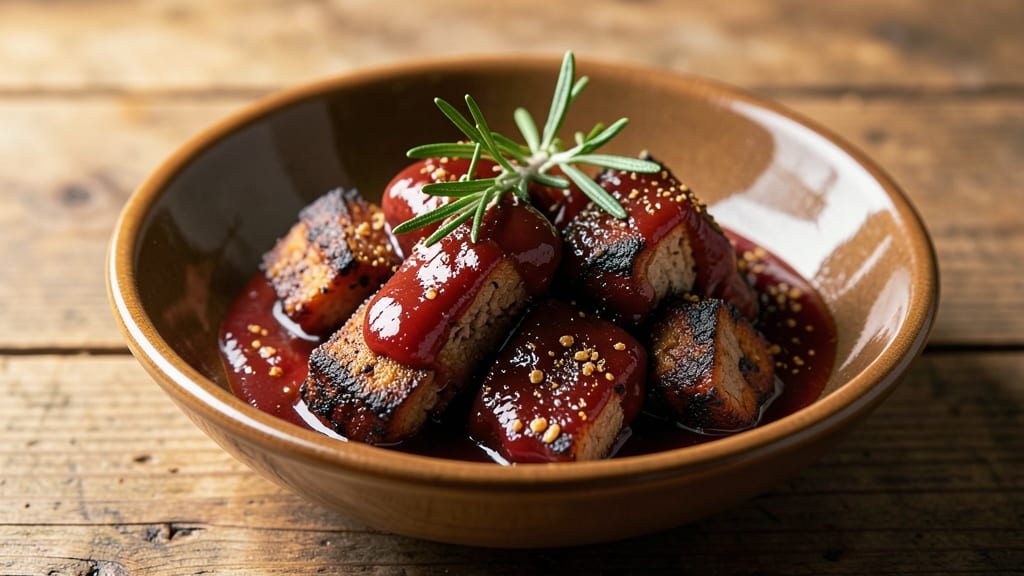
This burnt ends sauce recipe transforms ordinary pulled pork or ribs into a sticky, caramelized masterpiece with just 15 minutes of active work. The secret lies in balancing smoky spices, tangy vinegar, and sweet ketchup for that signature deep, glossy glaze.
I developed this after years of testing—it’s the one sauce that elevates any slow-cooked meat into a restaurant-worthy dish.
The magic happens through simmering and reducing, which intensifies the flavors while creating that signature glossy finish. You’ll need just 8 ingredients—no fancy techniques, just precise timing and a heavy-bottomed pot to prevent burning.
This sauce isn’t just for burnt ends; it works equally well on brisket, pulled chicken, or even as a dipping sauce for fries.
What you’ll end up with is a rich, slightly sticky glaze that’s sweet, smoky, and packed with umami depth. The sauce thickens as it cools, making it perfect for drizzling or tossing.
It keeps for up to 2 weeks in the fridge, so you can make a big batch and use it all week—no waste, just flavor.
Whether you’re hosting a BBQ or meal prepping for the week, this sauce delivers restaurant-quality results with minimal effort. Let’s get started—your taste buds will thank you.
Ingredients for burnt ends sauce
Eight simple ingredients combine for a restaurant-style glaze that transforms any meat into a sticky, smoky masterpiece.
| Ingredient | Amount | Notes |
|---|---|---|
| Ketchup 🍅 | ½ cup | High-quality, no sugar added preferred |
| Apple Cider Vinegar 🍏 | ¼ cup | For tangy depth |
| Brown Sugar 🍚 | ¼ cup | Light or dark variety |
| Smoked Paprika 🌶️ | 1 tbsp | For authentic smoky flavor |
| Worcestershire Sauce 🍶 | 1 tbsp | For umami punch |
| Garlic Powder 🧄 | 1 tsp | Freshly ground preferred |
| Onion Powder 🧅 | 1 tsp | For aromatic base |
| Black Pepper 🌶️ | ½ tsp | Freshly cracked |
The ketchup is your foundation—Heinz 57 Varieties or Hunt's are solid choices, but skip the low-quality store brands. Apple cider vinegar adds that signature tang, so grab the Mott's or Bragg from the natural foods section for extra depth. Brown sugar? Domino works fine, but if you've got organic cane sugar, it'll give a slightly richer caramel note. Smoked paprika is non-negotiable for that authentic BBQ smokiness—Penzeys or the bulk bins at Whole Foods have the best quality. Quick tip: if your smoked paprika smells like dust, toss it and buy fresh.
No Worcestershire sauce? Soy sauce plus a pinch of sugar gets you close, but you'll lose some complexity. Short on brown sugar? Maple syrup at half the amount works in a pinch, though it'll be slightly thinner. The garlic and onion powders are just flavor boosters—if you've got fresh, use one-third the amount of dried. Black pepper should be freshly cracked (that's the secret to good cooking). Want more heat? Add a dash of cayenne. For a sweeter glaze, bump the brown sugar to one-third cup. This sauce is incredibly flexible—adjust to your taste after the first simmer.
This sauce thickens as it cools, so don't panic if it looks thin right after simmering. Store in an airtight container in the fridge for up to 2 weeks, or freeze for 3 months. I like to portion it into small jars—perfect for meal prep or BBQ sides. The flavors actually improve after a day or two, so make extra if you can. If it separates, just stir and reheat—it'll come back together. Pro tip: drizzle over hot meat right before serving for that glossy, caramelized finish.
Why You'll Love This Recipe
- Pantry Magic: I swear, this sauce comes together with stuff you already have. No fancy shopping trips—just ketchup, vinegar, and a dash of smoked paprika for that deep, smoky kick. Honestly, I’ve made it three times this month because it’s that reliable.
- Sweet-Smoky Bomb: That brown sugar and vinegar combo? It’s where the magic happens. The Worcestershire adds umami depth, while the smoked paprika gives it a slow-cooked, almost barbecue-like richness—like someone took all the best flavors and bottled them.
- Game for Any Meal: Slather it on burnt ends, toss it with fries, or drizzle it over grilled chicken. I’ve even used it as a marinade for ribs. Between us, it’s my go-to for game day snacks or lazy Sunday brunches—no one ever turns it down.
- Leftovers That Don’t Suck: This sauce actually improves the next day. The flavors meld even more, and it keeps well in the fridge for up to a week. I’ll be real: I’ve reheated a jar from last Tuesday and still reached for it. Budget-friendly? Absolutely. Waste-free? Even better.
Step-by-step instructions for smoky, sweet glaze for ribs and pulled pork
This rich, balanced sauce comes together in minutes with just a few simple ingredients.
Combine Wet Ingredients for the Base
In a medium saucepan, pour in the 0.5 cup ketchup and 0.25 cup apple cider vinegar. Stir them together over medium heat until they begin to warm through—this usually takes about 2-3 minutes. The vinegar will cut through the sweetness of the ketchup, creating a bright foundation for the sauce.
Here's the thing—don't rush this step. You want the ketchup to fully incorporate with the vinegar before adding anything else. The mixture should be smooth and homogeneous, with no visible streaks of ketchup. If you see any separation, give it another 30 seconds of gentle stirring to ensure everything blends properly.
Sweeten and Season the Mixture
Add the 0.25 cup brown sugar to the saucepan and stir continuously for 1-2 minutes until the sugar fully dissolves. You'll notice the mixture begin to thicken slightly as the sugar integrates. This is where the sauce starts to develop its signature caramelized depth.
Next, sprinkle in the 1 tablespoon smoked paprika, 1 tablespoon Worcestershire sauce, 1 teaspoon garlic powder, 1 teaspoon onion powder, and 0.5 teaspoon black pepper. Stir everything together for another 30 seconds to ensure the spices are evenly distributed. The paprika will infuse the sauce with a deep, smoky aroma, while the Worcestershire sauce adds that unmistakable umami punch. The garlic and onion powders work together to create a well-rounded aromatic base.
Simmer Until Thick and Glossy
Reduce the heat to low and let the sauce simmer gently for 10-12 minutes. You're looking for a noticeable reduction in volume and a glossy sheen on the surface—this indicates the sauce is concentrating and developing its signature stickiness. Stir occasionally to prevent any sticking or scorching at the bottom of the pan.
Real talk: If the sauce starts to look too thick before the 10 minutes is up, you can add 1-2 tablespoons of water to loosen it slightly. The goal is a sauce that coats the back of a spoon but still has enough body to cling beautifully to ribs or pulled pork. Taste as you go—you may want to adjust the seasoning slightly at this point. If it needs more sweetness, add a pinch more brown sugar. If it needs more tang, a splash of apple cider vinegar will do the trick.
Strain and Prepare for Serving
Once the sauce reaches your desired consistency, remove it from the heat and let it cool for 2-3 minutes. Then, strain it through a fine-mesh sieve into a clean bowl or saucepan. This step ensures a silky-smooth texture without any gritty spice particles. The strained sauce will have a velvety appearance that's perfect for drizzling or basting.
Your burnt ends sauce is now ready to use immediately or store for later. For best results, use it within 3-4 days when refrigerated, or freeze it for up to 3 months. When reheating, warm it gently over low heat, stirring occasionally until it reaches your desired serving temperature. This sauce makes ribs fall-off-the-bone tender and transforms pulled pork into a sticky, flavorful masterpiece.
Pro Tips For Making Burnt Ends Sauce
- Simmer Slow and Steady: Burnt ends sauce isn’t a race—after combining all ingredients, keep the heat at a gentle simmer (not a boil) for at least 15 minutes. I used to rush it and ended up with a thin, vinegary mess; patience lets the flavors meld and the sugar caramelize properly.
- Whisk in the Vinegar First: Add the apple cider vinegar to the ketchup before dumping in the brown sugar and Worcestershire. This prevents clumping (yes, even with brown sugar) and gives the acid a chance to brighten the ketchup’s sweetness right away—no last-minute scrambling to fix a grainy sauce.
- Skip the Cheap Worcestershire: Worcestershire makes or breaks this sauce. The good stuff (like Lea & Perrins) has depth; the store-brand version tastes like vinegar with a side of regret. If you’re using a substitute, at least add a pinch of garlic powder and a dash of soy sauce to mimic the umami.
- Deglaze with a Splash of Water: After simmering, if the sauce thickens too much, don’t scrap the pot—just add 2 tablespoons of water and stir. I learned this the hard way when I turned a perfect sauce into glue; a quick deglaze saves you from starting over.
Common mistakes when making this dish
Overcooking the Sauce
Watch the heat like a hawk—this sauce burns faster than you think. Once you add the brown sugar, keep the temperature at low heat to prevent scorching. I’ve seen good sauces turn bitter and acrid when overheated.
If it starts to bubble too aggressively, immediately reduce the heat or remove it from the stove for 30 seconds to cool slightly. The goal is a slow simmer, not a rolling boil. 🔥
Skipping the Strain
Straining isn’t optional—it’s what separates homemade sauce from store-bought. Those little bits of smoked paprika or undissolved sugar can make the texture gritty. Use a fine-mesh sieve or even a cheesecloth-lined strainer for the smoothest finish.
I’ve tasted sauces where people skipped this step, and the difference in mouthfeel is noticeable. Trust me, your ribs will thank you.
Ignoring the Vinegar
The apple cider vinegar isn’t just there to add tang—it’s the secret to balancing the sweetness. If you skip it or use a weaker vinegar (like white vinegar), your sauce will taste flat and one-dimensional.
The acidity also helps the sauce thicken properly during simmering. For extra depth, I like to use raw, unfiltered vinegar—it’s got more flavor complexity. Don’t cut corners here.
Using Low-Quality Ketchup
Not all ketchups are created equal. Store-brand ketchups with artificial colors and high-fructose corn syrup will make your sauce taste artificial and overly sweet. Stick with Heinz 57 Varieties or Hunt’s for that classic, balanced tomato flavor.
If you’re feeling fancy, try a tomato paste reduction (simmer ½ cup paste with ¼ cup water) for even deeper flavor. The difference is night and day. 🍅
Rushing the Simmer Time
This sauce needs time to develop its signature stickiness and depth. Skipping the 10-12 minutes of simmering means you’ll miss out on the caramelization that makes it irresistible. If you’re in a hurry, at least simmer for 8 minutes—but don’t expect the same rich, glossy finish.
Patience here pays off in flavor. Think of it like making caramel: slow and steady wins the race.
Not Tasting as You Go
You’d be surprised how often people make this sauce without tasting it until the very end. The sauce should be balanced—sweet, smoky, and tangy all at once. Taste it after 5 minutes of simmering, then again at 10 minutes.
Adjust with brown sugar (for sweetness), vinegar (for tang), or smoked paprika (for smokiness) as needed. This is your chance to customize it to your exact taste. 💡
Nutrition facts
Frequently asked questions
Can I make this sauce without ketchup?
Yes, but you'll need to replace it with ½ cup tomato paste mixed with ¼ cup water to create a similar base. Simmer this mixture first for 3-4 minutes until it thickens slightly before adding the remaining ingredients. The sauce will have a deeper tomato flavor without the sweetness of ketchup.
Why does my sauce turn out too thin or too thick?
Sauce consistency depends on simmering time and heat control. For thinner sauce, add 1-2 tablespoons of water during simmering. For thicker sauce, simmer longer (15-20 minutes) or reduce by ¼ cup before straining. The ideal texture coats the back of a spoon but remains pourable.
How can I make this sauce spicier?
Add ½ teaspoon cayenne pepper or 1 teaspoon hot sauce (like Tabasco) to the simmering mixture. For extra heat, stir in ½ teaspoon crushed red pepper flakes after straining. Remember to taste as you go—you can always add more, but you can't remove excess spice!
Can I use this sauce on other meats besides ribs and pulled pork?
This versatile sauce works perfectly on grilled chicken, pulled chicken, brisket, meatloaf, or even as a dipping sauce for fries or onion rings. The smoky-sweet profile complements many proteins. For fish, reduce the sugar slightly to prevent overpowering delicate flavors.
How do I reheat leftover sauce?
Gently warm the sauce in a saucepan over low heat, stirring frequently, until it reaches 165°F. Add 1-2 tablespoons of water if it thickens too much. For microwave reheating, use 30-second intervals on medium power, stirring between each interval to prevent uneven heating.