
Salads
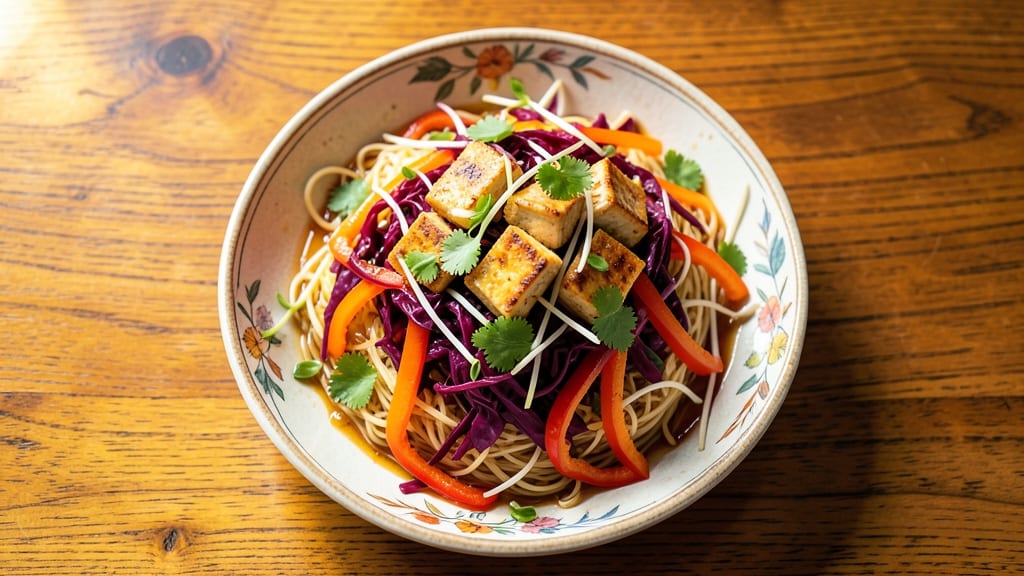
This Buddha salad recipe transforms simple ingredients into a vibrant, protein-packed dish that balances textures and flavors perfectly. 🌟 Born in Thai cuisine, it’s a vegan staple that’s equally satisfying as a light meal or hearty lunch—especially when you add crispy tofu or peanuts for extra substance.
The key lies in the tangy peanut dressing, which binds everything together with a creamy, slightly sweet contrast to the fresh vegetables and chewy noodles.
What makes this salad truly special is its adaptability—swap in gluten-free noodles, omit peanuts for nut-free versions, or adjust spice levels to suit your taste. The preparation is straightforward yet rewarding: cook and chill the noodles, chop fresh vegetables, and toss everything with the dressing just before serving.
This ensures the noodles stay al dente and the salad remains crisp, not soggy.
The result is a visually stunning dish with layers of color and texture: bright shredded cabbage, crunchy carrots, tender bean sprouts, and chewy noodles all coated in a glossy peanut sauce. It’s the kind of meal that feels both nourishing and indulgent, perfect for weeknight dinners or meal prep.
The dressing’s rich, nutty depth elevates the freshness of the vegetables, making every bite satisfying.
For extra protein, crisp up tofu in the pan or sprinkle with crushed peanuts. Serve with lime wedges for a zesty finish or a side of steamed greens to round out the plate. Let’s bring this vibrant, customizable dish to your table—it’s easier and more flavorful than takeout!
Ingredients for buddha salad
Simple ingredients create this vibrant vegan Buddha salad with perfect crunch and tangy dressing.
| Ingredient | Amount | Notes |
|---|---|---|
| Vermicelli Noodles 🍜 | 8 oz | Rice noodles preferred, uncooked |
| Red Cabbage 🥬 | 3 cups | Shredded, thinly sliced |
| Carrots 🥕 | 2 medium | Julienned or matchstick cut |
| Bean Sprouts 🌱 | 2 cups | Fresh, rinsed well |
| Red Bell Pepper 🌶️ | 1 medium | Thinly sliced, seeds removed |
| Crispy Tofu 🍛 | 1 block | Firm tofu, cubed and pan-fried |
| Raw Peanuts 🥜 | ½ cup | Crushed, unsalted preferred |
| Lime Juice 🍋 | ½ cup | Freshly squeezed, strained |
| Peanut Butter 🥜 | ½ cup | Natural, unsweetened |
| Soy Sauce 🍶 | 3 tbsp | Low-sodium preferred |
| Maple Syrup 🍯 | 2 tbsp | Pure, grade A |
| Sesame Oil 🫒 | 1 tbsp | Toasted sesame oil |
| Garlic Cloves 🧄 | 3 cloves | Minced, fresh preferred |
| Fresh Cilantro 🌿 | ¼ cup | Chopped, stems removed |
| Red Chili Flakes 🌶️ | ½ tsp | Adjust to taste |
The noodles are the base—rice vermicelli holds up best to the dressing without getting mushy. Look for Thai Kitchen brand in the Asian aisle or bulk bins at Whole Foods for the freshest. Red cabbage adds color and crunch; buy it pre-shredded to save time, but whole heads last longer in the fridge. Bean sprouts should be bright white and firm—avoid wilted or yellowing sprouts. For the tofu, Nasoya brand crispy cubes are a game-changer, but homemade pan-fried tofu gives the best texture. Store-bought peanut butter? Natural, unsweetened varieties like Smucker's work best—avoid the sweetened kind.
No red cabbage? Green cabbage or coleslaw mix works just as well. Swap carrots for jicama or daikon radish for a different texture. The dressing is where you can get creative—almond butter makes a great substitute for peanut butter, though the flavor will be slightly different. No sesame oil? Avocado oil or neutral oil works, but you'll lose that nutty aroma. For extra protein, add edamame or chickpeas to the mix. The lime juice is crucial—Mexican limes are more acidic than Persian, so adjust to taste. If you can't find fresh cilantro, dried cilantro works at half the amount, though it won't have the same bright flavor.
Noodles keep best in an airtight container in the fridge for 3-4 days, but the salad is best made fresh. The dressing can be prepped 2 days ahead and stored in a jar—just shake well before using. For meal prep, store the salad components separately and toss with dressing just before serving. The tofu stays crispy for 2 days refrigerated, while fresh veggies like cabbage and carrots keep for 5-7 days. Freeze the dressing in ice cube trays for easy single-use portions—perfect for quick lunches.
Why You'll Love This Recipe
- I swear by this trick: soak the vermicelli while I chop—no boiling, no waiting. The cabbage and carrots stay crisp, and the bell pepper adds a pop of color without any fuss. Fifteen minutes tops, and zero cleanup.
- No-Cook Prep Magic: I swear by this trick: soak the vermicelli while I chop—no boiling, no waiting. The cabbage and carrots stay crisp, and the bell pepper adds a pop of color without any fuss. Fifteen minutes tops, and zero cleanup.
- Crunchy Yet Creamy: That contrast? Chef’s kiss. The noodles soak up just enough dressing to be silky, while the sprouts and shredded cabbage keep it bright and snappy. Add a squeeze of lime, and suddenly, it’s restaurant-quality without the pretension.
- Lunchbox Legend: Pack it in jars for work or school—layers keep everything fresh, and it’s way more exciting than a sad sandwich. Honestly, my kids beg for this on Fridays, and I’ve sent it to potlucks where it disappears first.
Step-by-step instructions for crunchy noodle salad
Here's the method you need for a perfectly balanced Buddha bowl every time.
👨🍳 Step 1: Prepare All Vegetable Components
Start by prepping the vegetables while the dressing comes together. Thinly slice the 3 cups red cabbage into matchstick strips—this ensures even cooking and maximum crunch. For the 2 medium carrots, julienne them into thin matchsticks or use a peeler for ribbons. Remove seeds from the 1 medium red bell pepper and slice it into thin strips.
Rinse the 2 cups bean sprouts thoroughly to remove any dirt, then drain well. If using pre-shredded cabbage, give it a quick rinse to remove any excess moisture that could make your salad soggy. Arrange all prepped vegetables in separate containers until ready to assemble—this keeps everything fresh and organized.
🍳 Step 2: Cook the Vermicelli Noodles Al Dente
Bring a large pot of water to a rolling boil and add 8 oz vermicelli noodles. Cook for 4-5 minutes—they should be tender but still have a slight bite. Drain immediately in a colander and rinse under cold water for 30 seconds to stop the cooking process. This prevents them from becoming mushy when tossed with the dressing.
Spread the noodles on a clean kitchen towel and gently fluff with your fingers to separate any clumps. Let them cool slightly before adding to the salad—this helps them absorb the dressing better without turning limp. The noodles should be warm but not hot when combined with other ingredients.
🥘 Step 3: Make the Tangy Peanut Dressing
In a small bowl, whisk together the 0.5 cup peanut butter, 0.5 cup lime juice, 3 tbsp soy sauce, 2 tbsp maple syrup, 1 tbsp sesame oil, and 0.5 tsp red chili flakes until completely smooth. The mixture should be thick but pourable—if it's too stiff, add 1-2 tablespoons warm water to reach your desired consistency.
Add the 3 minced garlic cloves and stir well. Taste and adjust seasoning—you might want to add a pinch more chili flakes for heat or a splash more lime juice for brightness. This dressing is the heart of your salad, so don't rush this step. The peanut butter should emulsify completely for a creamy, cohesive sauce.
🥘 Step 4: Assemble the Buddha Salad
In a large mixing bowl, combine the cooked vermicelli noodles, crispy tofu, red cabbage, carrots, bean sprouts, and red bell pepper. Pour the peanut dressing over everything and toss gently but thoroughly to coat all ingredients evenly. The noodles and vegetables should glisten slightly from the dressing, indicating even distribution.
Sprinkle the 0.25 cup chopped fresh cilantro and 0.5 cup crushed raw peanuts over the top. Fold these in gently—the peanuts add texture while the cilantro provides a fresh finish. Taste one piece of noodle to check the balance: the dressing should complement the crunch without overpowering the fresh vegetables.
⏰ Step 5: Serve Immediately for Maximum Crunch
Divide the salad among 4 serving bowls and serve immediately. The best Buddha bowls are enjoyed fresh when all the textures—crisp vegetables, tender noodles, and crunchy tofu—are at their peak. If you need to prepare ahead, store components separately in the fridge and assemble just before serving to maintain that perfect crunch.
Garnish with additional crushed peanuts or a sprinkle of red chili flakes if desired. The contrast of warm, nutty dressing with cool, crisp vegetables makes this salad a refreshing yet satisfying meal. Enjoy immediately while everything is at its best!
Pro Tips For Making Buddha Salad
- Soak Noodles Separately: I learned this the hard way—tossing vermicelli directly into the salad bowl after cooking makes them gummy. Instead, soak them in warm water for 5-7 minutes (no boiling needed), drain, and rinse with cold water immediately. The cold shock stops cooking and keeps them springy.
- Shred Cabbage Thin: Thin, even shreds of red cabbage stay crisp longer and mix better. Use a sharp knife or mandoline—aim for ribbons no wider than 1/8-inch. Thicker slices turn soggy faster, and nobody wants mushy cabbage in their Buddha bowl.
- Skip the Overcrowding: When stir-frying or blanching veggies (like carrots or bell peppers), resist the urge to pile everything in the pan at once. Crowding steams them instead of searing, and you’ll end up with limp, flavorless bits. Work in batches if needed—crisp-tender is the goal.
- Add Sprouts Last: Bean sprouts wilt faster than you’d think. Toss them in just before serving or drizzle dressing lightly over them afterward. They’ll stay fresh and crunchy, not turning into sad, limp pudding at the bottom of the bowl.
Storing and reheating this recipe
Fridge Storage Tips
Store cooked vermicelli noodles in an airtight container with a damp paper towel to prevent drying. They’ll keep for 3-4 days at 40°F or below, but the texture softens over time.
For the vegetables, keep them in separate containers—the red cabbage and carrots last 5-7 days, while bean sprouts stay fresh for 3-4 days if rinsed and dried well before storing. 🥬
Keep the crispy tofu in the container it came in or transfer to an airtight container with parchment paper between layers. This prevents sogginess and maintains crispiness for 2 days.
The peanut dressing can be stored in a sealed jar in the fridge for up to 5 days, but shake well before using to re-emulsify any separated ingredients.
Freezer-Friendly Components
While the full salad doesn’t freeze well, you can freeze individual components for later use. Cooked noodles freeze beautifully for up to 2 months—just spread them on a tray to freeze solid first, then transfer to a freezer bag.
Thaw in the fridge overnight before using. The peanut dressing also freezes well; portion it into ice cube trays for single-use servings. 🧊
For the vegetables, only red cabbage and carrots freeze well. Blanch them for 2 minutes, then plunge into ice water to stop cooking. Drain, dry thoroughly, and freeze in single layers on a tray before transferring to a freezer bag. Use within 3 months for best texture.
Reheating for Optimal Texture
If you’ve prepped components ahead, never reheat the entire salad—instead, cook the noodles fresh and toss with cold vegetables and dressing. For tofu, reheat in a dry skillet over medium heat for 2-3 minutes to restore crispiness.
If using frozen noodles, cook them in boiling water for 1-2 minutes less than package instructions to avoid mushiness. 🔥
The dressing can be reheated gently in a small saucepan over low heat for 1-2 minutes, stirring constantly. Avoid microwaving—it can separate the peanut butter.
For vegetables, simply rinse and drain before tossing with fresh ingredients. This keeps the salad crisp and vibrant, just like when you first made it.
Meal Prep Strategy
For the best results, prep components in advance but assemble the salad fresh. Store the noodles, vegetables, tofu, and dressing separately in stackable containers for easy grab-and-go lunches.
When ready to eat, combine everything and toss with dressing just before serving. This ensures the crunch stays intact and the flavors are at their peak. ✨
Label containers with dates to track freshness—this helps you use ingredients before they lose texture. If you’re short on time, pre-cut vegetables and store them in resealable bags with paper towels to absorb excess moisture.
The peanut dressing can even be made a day ahead, making this salad a perfect weeknight meal prep option.
Nutrition facts
Frequently asked questions
Can I make this Buddha bowl gluten-free?
Swap the vermicelli noodles for rice noodles (already gluten-free) or try zucchini noodles for a low-carb option. For extra protein, add chickpeas or edamame instead of peanuts. Just check all ingredients—some brands of peanut butter or soy sauce may contain gluten traces.
How do I prevent the noodles from getting soggy?
Cook the noodles al dente (just tender) and rinse them in cold water immediately after draining. Toss them with a tiny bit of oil before assembling to create a barrier. Store components separately in the fridge and combine with dressing only when ready to eat. This keeps everything crisp!
What if I don't like peanuts? Can I substitute?
Try almond butter or cashew butter for a similar creamy texture. For nut-free versions, use sunflower seed butter or blend silken tofu with lime and soy sauce. The dressing will still be rich—just adjust sweetness with extra maple syrup if needed.
Can I make this salad ahead of time?
Prep all components separately and store them in airtight containers. Keep the dressing in a jar and toss everything together just before serving. The noodles should be cooked fresh or reheated briefly to maintain texture. This method preserves the crunch for up to 2 days in the fridge.
Why does my dressing separate?
This happens when the peanut butter and liquid aren't properly emulsified. Whisk vigorously or use an immersion blender to combine ingredients. Add 1-2 tbsp warm water if too thick, or a splash of lime juice if it separates after storing. Always shake well before using!