
Main Courses
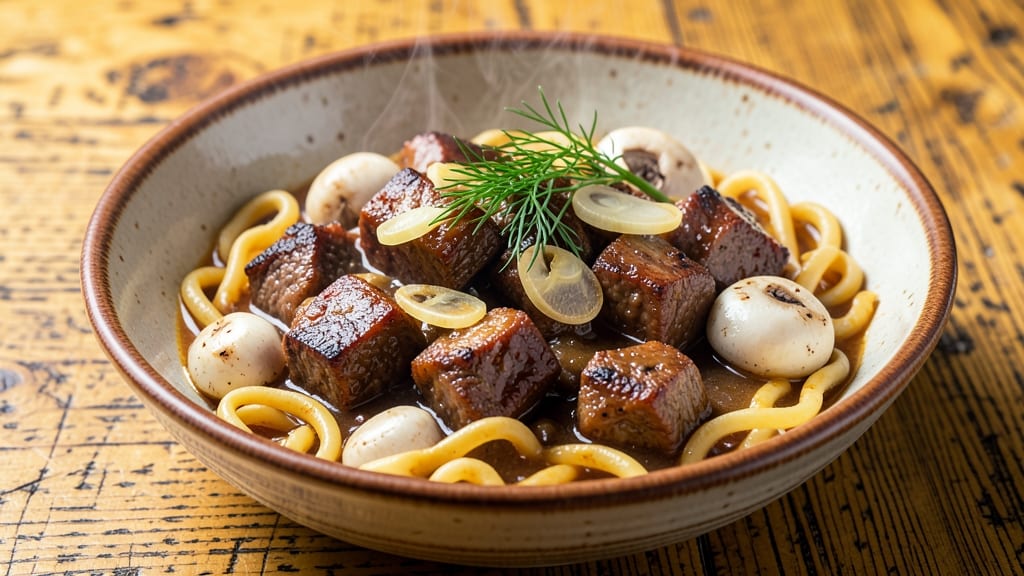
This beef stroganoff recipe transforms simple ingredients into a rich, velvety dish that tastes like a restaurant classic without the fuss. The secret lies in properly browning the beef and building flavor through slow simmering—techniques that elevate this one-pan meal from ordinary to extraordinary.
I developed this version after years of testing, ensuring the sauce remains perfectly balanced between creamy and tangy, with mushrooms that melt into the broth.
The beauty of this recipe is its versatility—whether you're serving it over egg noodles, basmati rice, or even crusty bread, the creamy mushroom sauce delivers every time. Modern shortcuts like quick-cook beef or pre-made roux keep the process efficient without sacrificing depth of flavor.
For those who prefer traditional methods, the step-by-step browning and sauce reduction ensure a sauce that's rich, velvety, and impossible to resist.
What you'll achieve is a dish that's creamy yet light, with tender beef and earthy mushrooms swimming in a sauce that's perfectly balanced. The sour cream adds tang, the mustard brings a subtle kick, and the slow simmer develops a depth of flavor that makes this stroganoff unforgettable.
This is comfort food at its finest—warm, satisfying, and ready in under an hour.
Serve it as a hearty weeknight dinner or bring it to a gathering where it will disappear faster than you can say "seconds, please." The recipe scales easily, so you can make it for two or feed a crowd without breaking a sweat.
Here's how to create this creamy mushroom masterpiece in your own kitchen.
Ingredients for beef strogenoff
Simple ingredients transform into creamy, restaurant-quality beef stroganoff with proper technique.
| Ingredient | Amount | Notes |
|---|---|---|
| Beef Chuck Roast 🥩 | 1 ½ lb | Cut into 1-inch cubes, boneless |
| Egg Noodles 🍝 | 8 oz | Fresh or dried, medium width |
| White Button Mushrooms 🍄 | 8 oz | Sliced 1/4-inch thick, stems removed |
| Shallots 🧅 | 2 whole | Minced, or substitute 1/4 cup onion |
| Garlic Cloves 🧄 | 4 cloves | Minced, fresh preferred |
| Unsalted Butter 🧈 | 4 tbsp | Full-fat for richness |
| All-Purpose Flour 🌾 | 2 tbsp | For roux, use sifted flour |
| Beef Broth 💧 | 1 ½ cups | Low-sodium preferred |
| Sour Cream 🥛 | ½ cup | Full-fat for creaminess |
| Dijon Mustard 🍯 | 1 tbsp | For subtle tang |
| Dry White Wine 🍷 | ½ cup | Substitute beef broth if needed |
| Salt 🧂 | 1 tsp | Kosher or sea salt |
| Black Pepper 🌶️ | ½ tsp | Freshly ground preferred |
| Fresh Parsley 🌿 | ¼ cup | Chopped, for garnish |
The beef is the foundation—chuck roast delivers the best texture when properly browned. Most grocery stores carry pre-cubed chuck, but if buying whole, ask the butcher to cut it into 1-inch cubes for even cooking. Costco or Walmart often have good prices on beef chuck, and look for pieces with visible fat marbling for extra flavor. Mushrooms should be firm and white, not bruised or slimy. Trader Joe's sells pre-sliced mushrooms in convenient packages, but whole mushrooms yield more sauce when cooked down. For the shallots, fresh is ideal, but jarred minced shallots work in a pinch—just drain and rinse them first.
No white wine? Beef broth with 1 tbsp lemon juice mimics the acidity perfectly. The Dijon mustard adds depth, but whole-grain mustard thinned with water works if you're out. For the flour, Diamond Crystal brand absorbs more liquid than others, so use it if you have it—otherwise, any all-purpose flour will do. Sour cream can be substituted with Greek yogurt for a tangier profile, though it won't be as rich. If you're using dried egg noodles, cook them al dente and toss with a bit of olive oil to prevent sticking. The parsley is purely decorative, but dried parsley at half the amount works if fresh isn't available.
This stroganoff reheats beautifully—cover with foil to prevent drying out. Store leftovers in the fridge for up to 4 days or freeze for 3 months. For meal prep, cook the sauce ahead and reheat with fresh noodles to avoid mushiness. The sauce thickens as it cools, so add a splash of broth if it seems too stiff when reheating. Garnish with extra parsley or a drizzle of sour cream right before serving for the best presentation.
Why You'll Love This Recipe
- One-Pan Magic: I swear by this recipe because it’s the kind of dish where you don’t even need to wash an extra bowl. Sear the chuck roast, toss in the mushrooms and shallots, and let the garlic-infused sauce do the rest—all while the noodles boil. Minimal chopping, zero fuss, and that rich, caramelized crust on the beef? Worth every second.
- Umami Bomb: That moment when the mushrooms break down into a velvety, meaty sauce? Chef’s kiss. The shallots add a subtle sweetness, the garlic hits just right, and the beef—oh, the beef—turns so tender it melts. It’s the kind of flavor that makes you slow down mid-bite, like you’re savoring a restaurant dish at home.
- Leftover Heaven: Between us, this is my secret weapon for busy weeks. Make a big batch, and you’ve got lunch for three days—reheat it, and it’s just as good. (Yes, even on a Tuesday night.) The noodles soak up the sauce perfectly, so every bite tastes like the first, and the beef stays juicy no matter how many times you warm it up.
- Budget Stretch: A single chuck roast feeds four for dinner and two for lunch the next day—no takeout needed. Mushrooms and shallots are cheap staples, and garlic? Always affordable. It’s one of those dishes where you spend a little upfront but save big on convenience and satisfaction. Plus, it feels fancy without breaking the bank.
Step-by-step instructions for beef stroganoff
This method delivers rich, velvety sauce and tender beef in one pan—no complicated techniques required.
Sear the Beef Chuck Roast Until Browned
Heat a large skillet over medium-high heat. Add the 4 tablespoons unsalted butter and let it melt completely, swirling to coat the pan evenly. Add the 1.5 lb beef chuck roast cut into 1-inch cubes, working in batches if needed to avoid crowding. Sear the beef for 4-5 minutes per side until deeply browned and cooked to medium-rare—this creates the foundation for rich flavor.
I press down gently on the cubes during the first minute to prevent curling, which ensures even contact with the pan. If the pan gets too crowded, reduce heat slightly to avoid steaming. Once browned, remove the beef and set aside on a plate, leaving the rendered juices in the pan.
Build the Flavor Base with Shallots and Mushrooms
In the same skillet, reduce heat to medium and add the 2 minced shallots. Cook for 2 minutes until softened and translucent. Add the 8 oz sliced white button mushrooms and cook for an additional 5-6 minutes until they release their moisture and begin to brown. Stir occasionally to prevent sticking.
Here's where it gets aromatic—add the 4 minced garlic cloves and cook for 30 seconds until fragrant. The mushrooms should be tender but still hold their shape, not mushy. If they release too much liquid, let it evaporate completely before proceeding—this prevents a watery sauce later.
Create the Roux and Deglaze with Wine
Sprinkle the 2 tablespoons all-purpose flour over the mushrooms and shallots. Stir immediately to prevent lumps from forming, and cook for 1-2 minutes until the flour turns a light golden color. This creates a roux that will thicken your sauce beautifully.
Pour in the 0.5 cup dry white wine and scrape up any browned bits from the bottom of the pan with a wooden spoon. Let the wine simmer for 2-3 minutes until reduced by half. This deglazing step captures all the meaty flavor that would otherwise stick to the pan.
Simmer with Broth and Mustard for Depth
Add the 1.5 cups beef broth and 1 tablespoon Dijon mustard to the skillet. Stir well to combine, then return the seared beef to the pan. Bring the mixture to a gentle simmer, then reduce heat to low. Cover and let it cook for 20-25 minutes, stirring occasionally, until the beef is fork-tender and the sauce has thickened slightly.
I like to check the sauce consistency at the 15-minute mark—if it's too thin, uncover and simmer uncovered for another 5 minutes to reduce it further. The mustard adds a subtle tang that balances the richness, so don't skip this step.
Finish with Sour Cream and Fresh Parsley
Remove the skillet from heat and stir in the 0.5 cup sour cream and 1 teaspoon salt. The sauce will thicken noticeably as the sour cream incorporates. Taste and adjust seasoning with 0.5 teaspoon black pepper if needed—this is where you can really refine the flavor.
Return the skillet to low heat and stir in the 0.25 cup chopped fresh parsley. Keep the heat gentle to prevent curdling the sour cream. Serve immediately over 8 oz cooked egg noodles, spooning generous amounts of the creamy stroganoff sauce on top. The noodles will absorb some of the sauce, creating the perfect balance of textures.
Pro Tips For Making Beef Strogenoff
- SEAR THE CHUCK ROAST: After burning three batches of beef strogenoff, I finally learned—high heat, no excuses. Pat the chuck roast bone-dry with paper towels, then sear it in a screaming-hot skillet with 1 tablespoon of oil per side for 3-4 minutes until deep brown. That crust locks in flavor when it braises later. (Yes, even if you’re impatient like me—wait for the color.)
- SLICE MUSHROOMS THIN: Thick mushroom chunks turn to mush in strogenoff sauce. Grab a sharp knife and slice the white buttons paper-thin—about 1/8-inch or less. They’ll cook fast and soak up the sauce without falling apart. Pro move: Toss them in a pinch of salt and flour before sautéing to keep them intact.
- DEGLAZE WITH BEER AND BROTH: I used to skip the broth, thinking beer alone was enough. Big mistake. After searing the beef and mushrooms, splash in half a cup of beef broth first to lift the browned bits, then add the beer. The broth cuts the alcohol’s sharpness and deepens the sauce. (No non-alcoholic version? Use extra broth + a splash of vinegar.)
- REST THE BEEF BEFORE SHREDDING: The moment you pull that chuck roast from the pot, tent it with foil and let it sit for 10 minutes. I know, you’re starving, but rushing this step means dry, stringy meat. The residual heat finishes the cook, and the fibers relax so it shreds like butter. (Your future self will thank you—trust me.)
Storing and reheating this recipe
Refrigerator Storage
Transfer your stroganoff to an airtight container within 2 hours of cooking to preserve freshness. The creamy sauce thickens as it cools, so I recommend adding 1-2 tablespoons of beef broth before sealing to maintain consistency.
Store at 40°F or below for up to 4 days. The flavors actually deepen overnight, making leftovers even more delicious. 💡
Freezer Prep Tips
For long-term storage, portion stroganoff into freezer-safe containers with 1-inch headspace to prevent expansion cracks. I use glass Pyrex containers because they reheat more evenly than plastic. Label with the date—this dish freezes beautifully for up to 3 months.
The sauce may separate slightly, but stir in 1-2 tablespoons of broth when reheating to restore creaminess. ❄️
Stovetop Reheating
My preferred method is stovetop reheating to prevent curdling. Place stroganoff in a skillet over medium-low heat and add 2-3 tablespoons of beef broth to loosen the sauce. Stir frequently for 8-10 minutes until heated through (165°F internal temperature).
The low heat protects the delicate sour cream from breaking. Taste and adjust seasoning—it often needs a pinch of salt after reheating. 🔥
Microwave Safety
For quick reheating, transfer stroganoff to a microwave-safe dish and cover loosely with a microwave-safe lid or damp paper towel. Heat on 50% power in 1-minute intervals, stirring between each, until warmed through.
Avoid full power to prevent overheating the sauce. If it looks too thick, add 1 tablespoon of broth at a time until smooth. 💫
Noodle Prep Trick
Cook noodles fresh when reheating for best texture. Boil 8 oz egg noodles for 1 minute less than package instructions, then drain and toss with 1 teaspoon olive oil to prevent sticking. Assemble with reheated stroganoff just before serving—this keeps the noodles al dente and prevents a soggy mess. 🍝
Garnish Like a Pro
Brighten reheated stroganoff with fresh garnishes. Top with chopped parsley, a dollop of sour cream, or a sprinkle of fresh black pepper. For extra richness, drizzle with 1 teaspoon melted butter right before serving.
These finishing touches make reheated stroganoff feel just as special as the original. ✨
Nutrition facts
Frequently asked questions
Can I substitute chicken or pork for the beef in this stroganoff?
While beef is traditional, you can use chicken thighs (bone-in for flavor) or pork tenderloin cut into strips. Cook chicken to 165°F and pork to 145°F—they'll need less time than beef. For pork, increase searing time to 6-7 minutes per side to render fat properly. The sauce will still work, but the texture will differ slightly.
Why did my stroganoff sauce turn out watery?
Watery sauce usually means the roux didn't thicken enough or the broth wasn't reduced properly. Always cook the flour for 1-2 minutes until golden, then simmer the broth uncovered for 5-10 minutes to reduce it. If needed, stir in 1 teaspoon cornstarch mixed with 1 tbsp cold water at the end to thicken.
What's the best way to make this recipe vegetarian?
Swap beef for mushroom stems, hearts of palm, or extra-firm tofu pressed and pan-fried. Use vegetable broth and add 1 tbsp soy sauce for umami. For richness, replace half the sour cream with cashew cream. The mushrooms will still be the star, but the sauce will have a slightly different texture.
Can I make stroganoff ahead of time for a dinner party?
Prepare the sauce 1 day ahead and store it in the fridge. Reheat gently with 2 tbsp broth on low heat, then finish with fresh parsley and sour cream just before serving. Cook noodles fresh when reheating to maintain texture. For a crowd, double the recipe—it scales perfectly!
What's the secret to perfectly creamy stroganoff sauce?
The key is low-and-slow simmering and adding sour cream off the heat. Never boil after adding sour cream—it will curdle. For extra creaminess, whisk in 1 tbsp cold butter at the end. The flour roux and wine reduction also build body, so never skip those steps!