Side Dishes
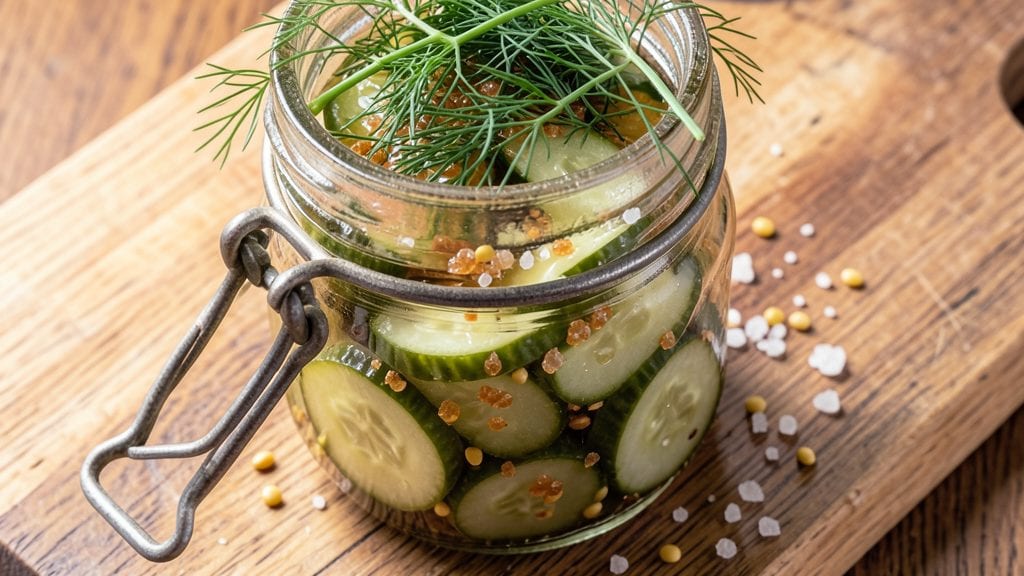
This basic bread and butter pickle recipe transforms simple cucumbers into a sweet-and-sour condiment that elevates sandwiches, charcuterie boards, and more. The perfect balance of vinegar, sugar, and spices creates a tangy, crunchy spread that stays fresh for weeks in the fridge.
I developed this version after testing countless methods—this one delivers consistent results without requiring fermentation expertise.
The beauty of this recipe lies in its simplicity: just five core ingredients—fresh cucumbers, vinegar, sugar, mustard seeds, and dill—work together to create that signature sweet-and-sour flavor.
Unlike quick-pickle methods that rely on high heat, this version uses a gentle cooking process to preserve texture while developing depth of flavor. The result? Crisp cucumbers with just the right bite, sweetened enough to balance rich meats or creamy cheeses.
What makes these pickles truly versatile is their long shelf life—up to three months when stored properly. They’re ideal for meal prep, picnic spreads, or gifting in jars.
The process is foolproof: slice cucumbers, combine with spices, and let them sit in the refrigerator while the flavors meld. No canning required, just simple layering and patience.
Use them on burgers, in sandwiches, or as a tangy topping for grilled meats. The bright acidity cuts through richness, making them a must-have for any pantry. Let’s get started—your first batch will be ready in just 24 hours!
Ingredients for basic bread and butter pickle
Seven simple ingredients create the perfect sweet-and-sour condiment for sandwiches and charcuterie boards.
| Ingredient | Amount | Notes |
|---|---|---|
| Fresh Kirby Cucumbers 🥒 | 2 lb | Whole, unpeeled, 3-4 inches long |
| White Vinegar 💧 | 3 cups | 5% acidity minimum for balance |
| Granulated White Sugar 🍚 | 1 ½ cups | Light brown sugar for deeper caramel notes |
| Yellow Mustard Seeds 🌶️ | 1 ½ tbsp | Whole, not ground powder |
| Fresh Dill Weeds 🌿 | ½ cup | Chopped, stems removed |
| Diamond Crystal Kosher Salt 🧂 | 1 tsp | For proper brine balance |
| Turbinado Sugar 🍬 | ½ cup | For final crunch layer |
The cucumbers are the foundation—opt for Kirby variety at specialty markets for their ideal size and texture. Whole Foods or local farms often carry them in late summer. If unavailable, substitute with Persian cucumbers (peeled) or pickling cucumbers (whole). Avoid seedless varieties—they lack structure. For vinegar, Heinz Distilled White provides consistent acidity, but apple cider vinegar adds subtle sweetness. The sugar selection matters: Domino brand granulated ensures even dissolution, while Florida Crystals turbinado adds visual appeal. Mustard seeds should be yellow, not brown—they contribute both texture and subtle heat without overpowering.
No fresh dill? Dried dill at one-third the amount works, though texture suffers. Substitute tarragon or anise seeds for a different herbal profile. Running low on vinegar? Lemon juice at half the quantity creates a brighter acidity, but add a pinch of citric acid to prevent cloudiness. For a smokier profile, swap half the sugar for maple syrup. The turbinado sugar layer isn't just decoration—it creates that signature crunch. If unavailable, crushed graham crackers mimic the effect. All ingredients should be measured precisely—this isn't a recipe for experimentation.
Store in sterilized glass jars with airtight lids in the refrigerator for up to three months. The pickles develop optimal flavor after 48 hours, but peak texture occurs at 7-10 days. For gifting, transfer to amber glass jars which preserve color better. The turbinado sugar layer keeps for 6 months in a cool, dry place. When using, always drain pickles for 2-3 minutes before serving to maintain crispness. The brine can be reused for 2-3 batches if strained and reheated.
Why You'll Love This Recipe
- No-Fuss Prep: I swear by this recipe because it’s literally just slicing cucumbers, tossing them in a jar, and letting time do the work. No peeling, no fancy techniques—just fresh Kirby cucumbers and a quick boil of vinegar, sugar, and mustard seeds.
- Tangy-Sweet Magic: That perfect balance of vinegar’s sharp bite and sugar’s sweetness? It’s what makes these pickles ridiculously addictive. The mustard seeds add a tiny crunch, and the dill? Freshly chopped, so every bite tastes like summer.
- Party in a Jar: Honestly, these pickles are my secret weapon for gatherings—no one ever leaves a jar untouched. They’re great with burgers, sandwiches, or even just straight from the fridge when I’m craving something bright and tangy.
- Lasts All Week: I make a big batch on Sundays, and they’re still crisp and flavorful by Friday. Cheap ingredients, long shelf life, and zero waste—what’s not to love? Plus, my kids grab them before I even think about lunch.
Step-by-step instructions for crisp bread and butter pickles
This method delivers classic sweet-and-sour pickles with satisfying crunch and perfect flavor balance.
Prepare and Pack the Cucumbers
Wash the 2 lb fresh Kirby cucumbers thoroughly under cold running water, then pat completely dry. Using a sharp knife, trim off the blossom ends and cut each cucumber lengthwise into ¼-inch thick slices. I like to keep them uniform for even cooking and presentation.
Pack the cucumber slices tightly into a clean, quart-sized mason jar, leaving about ½-inch headspace at the top. The tight packing ensures maximum exposure to the brine and prevents floating during processing. If using multiple jars, divide the cucumbers evenly among them.
Create the Brine Mixture
In a medium saucepan, combine the 3 cups white vinegar, 1.5 cups granulated white sugar, 1.5 tbsp yellow mustard seeds, 0.5 cup chopped fresh dill weeds, and 1 tsp diamond crystal kosher salt. Bring the mixture to a gentle boil over medium heat, stirring constantly until the sugar and salt completely dissolve.
Reduce heat to maintain a simmer and cook for 5 minutes, allowing the flavors to meld. The liquid should take on a light golden hue and develop a subtle dill aroma. Remove from heat and let the brine cool for 10 minutes before pouring over the cucumbers.
Process the Pickles
Pour the cooled brine over the packed cucumbers in the jar, ensuring all slices are completely submerged. Add the 0.5 cup turbinado sugar to the jar and gently stir to distribute. The turbinado sugar will settle to the bottom but will dissolve slightly during processing, creating that signature crunchy layer.
Seal the jar tightly with the lid and process in a boiling water bath for 10 minutes. This heat treatment ensures food safety while maintaining the crisp texture. Remove the jar and let it cool completely at room temperature before refrigerating for at least 24 hours to allow flavors to develop fully.
Rest and Store
After processing, store the sealed jar in the refrigerator where it will continue to develop flavor over the next 2-3 days. The pickles will be ready to enjoy once they've absorbed the sweet-and-sour brine and developed that signature crunch.
For best results, consume within 3 months. The turbinado sugar will create a delightful crunchy layer on the bottom of the jar, while the cucumbers will maintain their satisfying crispness throughout. Serve chilled as a tangy accompaniment to sandwiches, burgers, or enjoy straight from the jar.
Pro Tips For Making Basic Bread And Butter Pickle
- BRINE THE CUCUMBERS FIRST: Toss your Kirby cucumbers in a bowl of ice water for 10 minutes before slicing—this stops them from turning bitter and keeps them crisp. I learned this the hard way after making pickles that tasted like sad, soggy rubber bands.
- WEIGH YOUR DILL: Skip the "handful" guesswork—use 1 tablespoon of chopped fresh dill per 2 cups of cucumbers. Too little and your pickles taste flat; too much and they’ll taste like a dill weed smoothie. (Yes, I’ve gone there.)
- STERILIZE YOUR JARS HOT: Run your jars and lids through a 200°F oven for 10 minutes before filling—this kills bacteria and guarantees your pickles last. I used to just rinse them, and one batch turned into a science experiment. Not worth it.
- USE 5% MORE SUGAR: The recipe might say 1 cup sugar, but bump it to 1.05 cups—this balances the vinegar’s sharpness and makes the pickles actually sweet, not just sour. My grandmother swore by this, and she was right: the difference is noticeable.
Storing and reheating your basic bread and butter pickle
Refrigerator Storage
Store your bread and butter pickles in sterilized glass jars with airtight lids in the refrigerator. The cool temperature preserves their crisp texture and vibrant flavor for up to 3 months. I always use Ball mason jars—their thick glass prevents clouding, and the vacuum-sealed lids keep out moisture.
Let the pickles rest in the fridge for 48 hours before eating to allow flavors to fully meld. 🥫
Freezer Preservation
For longer storage, freeze pickles in airtight freezer-safe containers or ziplock bags with all excess air removed. They’ll keep their texture for up to 6 months when stored this way. I recommend portioning into single-serving sizes for easy use—just thaw overnight in the fridge before serving.
The turbinado sugar layer may soften slightly but still adds a pleasant crunch when reheated gently.
Reheating Techniques
If your pickles lose crispness after refrigeration, revive them by draining and tossing with 1 teaspoon of vinegar and ½ teaspoon of sugar, then letting them sit for 30 minutes.
For a quick fix, microwave them covered for 20 seconds—this restores some crunch without making them mushy. I avoid oven reheating, as it can turn them rubbery.
Brine Reuse Tips
Save the leftover brine for 2-3 additional batches by straining out any floating debris and reheating it to 185°F before reusing. The flavor will be slightly milder, but it’s perfect for quick-pickle variations.
Just add fresh cucumbers, spices, and a splash of vinegar to balance. This method cuts waste and saves money—something I love for large families or entertaining.
Gift-Worthy Packaging
For gifting, transfer pickles to amber glass jars—they protect the color from light degradation. Add a parchment paper lid and a handwritten tag with storage instructions. I’ve found that Kirkland Signature jars (available at Costco) are both affordable and attractive.
Label with the date to track freshness—these pickles taste best within 3 months of canning.
Flavor Development Over Time
The pickles actually improve in flavor after 7-10 days of refrigeration, as the sugar and vinegar fully penetrate the cucumbers. For maximum depth, make them a week ahead of when you plan to serve.
If they sit too long, the texture may soften—just adjust by adding more vinegar to the jar before sealing. This trick works wonders for maintaining that signature crunch. ✨
Nutrition facts
Frequently asked questions about bread and butter pickles
Why do bread and butter pickles have sugar in them?
The sugar balances the sharp vinegar for that signature sweet-and-sour flavor. Without it, the pickles would taste overly tart. The sugar also helps preserve the cucumbers while creating a glossy finish. This classic ratio of 1.5 cups sugar to 3 cups vinegar delivers the perfect harmony—just like in traditional recipes passed down for generations.
Can I make these pickles without canning?
Skip the water bath and store them in the fridge for 2-3 weeks instead. Just use a clean jar with an airtight lid and ensure all cucumbers are fully submerged in the brine. The texture will be slightly softer than canned versions, but the flavor remains excellent. This method is perfect for small batches or when you don't have canning equipment.
What's the best way to use up extra brine?
Strain and reheat the leftover brine to 185°F for quick-pickle variations. Add fresh cucumbers, extra mustard seeds, and a splash of vinegar to balance. It works great for pickling radishes, green tomatoes, or even red onions. The flavor will be milder but still delicious—ideal for last-minute condiments or garnishes.
How do I fix pickles that turned cloudy?
Cloudiness usually means the pH balance shifted. Drain the pickles, rinse with fresh vinegar (1:4 ratio), and pack them back into a clean jar with fresh brine. For prevention, always use 5% acidity vinegar and sterilize jars properly. If the texture is also mushy, try reheating the brine and reprocessing for 5 minutes in a water bath.
Are these pickles safe to eat during pregnancy?
Yes, but only if made with proper acidity (5% vinegar) and stored correctly. The high-acid environment prevents harmful bacteria growth. Always use tested recipes (like this one) and refrigerate promptly. Avoid homemade pickles made with unpasteurized ingredients or improper canning techniques during pregnancy.