
Snacks
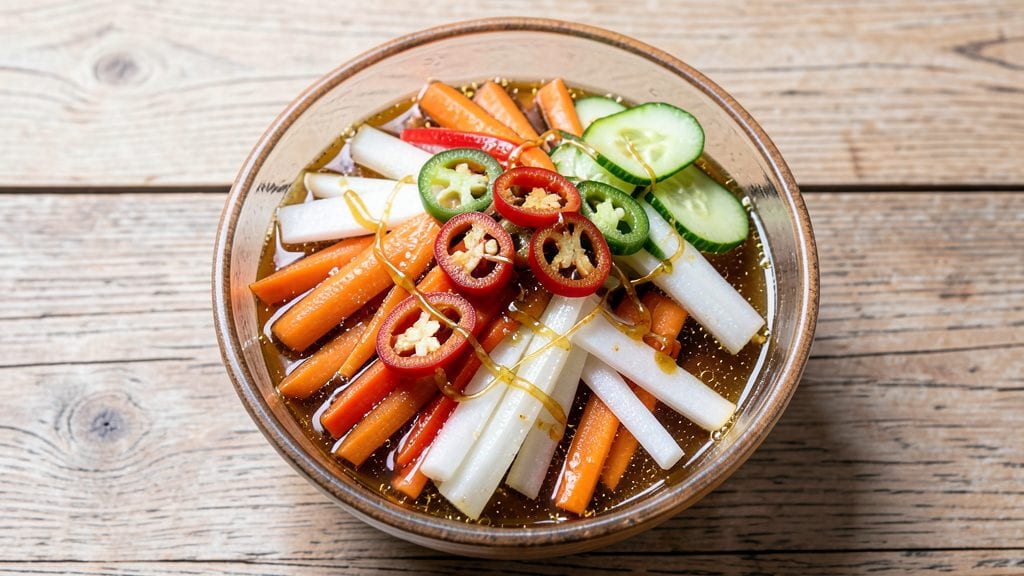
The banh mi pickled veg recipe transforms simple vegetables into the tangy, crunchy magic that makes this Vietnamese sandwich legendary. This quick-pickle method preserves the crisp texture while infusing bold flavors—carrots, daikon, cucumber, and jalapeño soak in a zesty rice vinegar and sugar brine for just 30 minutes.
The result? A vibrant, flavor-packed topping that cuts through rich pâté and complements any protein.
Traditional Vietnamese techniques meet modern convenience here. Instead of fish sauce (which can be tricky for vegetarians), we use a blend of soy sauce, sugar, and garlic for depth without compromising authenticity.
The vegetables stay crisp rather than soggy, thanks to a precise soaking time and proper brine balance. This method works for both quick-pickled sandwiches and longer-stored jars—perfect for meal prep.
What you’ll end up with is a jar of rainbow-hued vegetables that add tangy crunch to every bite. The carrots and daikon retain their vibrant color, the cucumber stays crisp, and the jalapeño delivers a subtle kick.
This recipe is the foundation of a vegetarian banh mi that rivals the classic version—bright, balanced, and impossible to resist.
Pair these pickled veggies with toasted baguette, veggie pâté, cilantro, and your choice of protein for a sandwich that’s as satisfying as it is flavorful. The best part?
You can make a big batch and store it for up to a week, so you’re always ready for a quick, delicious meal.
Ingredients for banh mi pickled veg
Simple vegetables and bold flavors transform into the tangy crunch that defines banh mi.
| Ingredient | Amount | Notes |
|---|---|---|
| Carrots 🥕 | 2 medium | Julienned into thin matchsticks |
| Daikon Radish 🥬 | 2 medium | Julienned into thin matchsticks |
| English Cucumber 🥒 | 1 whole | Thinly sliced lengthwise |
| Jalapeño Peppers 🌶️ | 2 whole | Seeded, thinly sliced |
| Rice Vinegar 🍶 | 1 cup | Unseasoned, white vinegar |
| Granulated Sugar 🍚 | ½ cup | White or raw cane sugar |
| Vegetable Oil 🫒 | 2 tbsp | Light, neutral oil |
| Garlic Cloves 🧄 | 4 cloves | Minced, fresh preferred |
| Vegetable Soy Sauce 🍜 | 2 tbsp | Tamari or gluten-free soy |
| Salt 🧂 | 1 tsp | Diamond Crystal kosher salt |
| Black Peppercorns 🌶️ | ½ tsp | Freshly cracked |
| Fresh Ginger 🌿 | 1 tbsp | Finely grated, peeled |
The vegetables need to stay crisp, so freshness is key. Grab carrots and daikon with vibrant color—no limp or bruised spots. Whole Foods or Trader Joe's have great pre-washed options, but check the produce section for the freshest. For the jalapeños, pick firm ones with no soft spots. The cucumber should be firm and crisp—English cucumbers work best for that classic texture. If you can't find daikon, sub with regular radishes, though the flavor won't be identical. The rice vinegar should be unseasoned—Kikkoman or Mushroom Town brands are reliable.
No rice vinegar? White wine vinegar or apple cider vinegar in a pinch, but the flavor will be slightly different. Fresh garlic and ginger are ideal, but if you're in a hurry, powdered garlic at half the amount works. The soy sauce matters here—vegetable tamari ensures it's vegetarian. For extra heat, leave the jalapeño seeds in, but remove them for a milder kick. The sugar can be swapped for maple syrup or agave, though white sugar dissolves best. If you're prepping ahead, use pickling salt instead of kosher salt for better texture control.
This keeps beautifully in the fridge for up to 1 week in an airtight container. The vegetables stay crisp if you drain them well before storing. For longer storage, transfer to a clean jar with fresh brine—lasts 2 months in the fridge. I always make a double batch so I have pickles ready for sandwiches all week. The flavor actually improves after a day or two, as everything mellows together. If the veggies start to soften, just drain them and eat them fresh—they're still delicious!
Why You'll Love This Recipe
- Here’s what sold me: daikon and carrots are cheap, and a few jalapeños stretch forever. I’ve made this for under $5 and fed four people. Plus, the leftovers? They’re the secret weapon in my fridge—always there when I need a quick, flavorful boost.
- No-Fuss Prep: I swear by this recipe because it’s the kind of thing I can make while scrolling through my phone—just slice, soak, and forget. The daikon and carrots stay crisp, the jalapeños add heat without fuss, and the rice vinegar does all the work while I do nothing.
- Tangy Crunch Magic: Between us, that first bite of cool, pickled daikon with its sharp vinegar kick is chef’s kiss. The English cucumber adds a refreshing bite, and the jalapeños? They’re not just for heat—they bring this whole thing to life in a way store-bought pickles never could.
- Meal Prep MVP: Honestly, this is my go-to for lunches all week. I make a big batch on Sunday, and it keeps in the fridge for days, adding crunch to sandwiches, grain bowls, or even ramen. The flavors only get better as it sits—trust me, I’ve tested it.
Step-by-step instructions for banh mi pickled vegetables
Here's how to create that signature tangy crunch that makes banh mi sandwiches unforgettable.
Prepare the Vegetable Base
Using a sharp mandoline or vegetable peeler, julienne the 2 medium carrots and 2 medium daikon radish into thin matchsticks—about 1/8-inch wide. Thin, even slices ensure consistent pickling and perfect texture. Transfer them to a large mixing bowl as you work. For the 1 whole English cucumber, slice it lengthwise into 1/8-inch thick strips, removing the seeds if needed. These will add refreshing crunch to your pickled vegetables.
Next, carefully seed the 2 whole jalapeño peppers and slice them thinly. The seeds contain most of the heat, so removing them keeps the flavor bright without excessive spiciness. Add these to your vegetable mixture and set aside. The key here is precision—uneven slices will pickle unevenly, leading to some vegetables being too soft while others remain crunchy.
Create the Pickling Liquid
In a medium saucepan, combine the 1 cup rice vinegar, 0.5 cup granulated sugar, 2 tbsp vegetable soy sauce, 1 tsp salt, and 0.5 tsp freshly cracked black peppercorns. Bring this mixture to a gentle simmer over medium heat, stirring until the sugar and salt fully dissolve—about 3-4 minutes. You want a clear, golden liquid with no graininess remaining.
While the liquid simmers, mince the 4 cloves garlic and grate the 1 tbsp fresh ginger. These aromatics will infuse the pickling liquid with depth. Once the sugar is dissolved, remove the pan from heat and stir in the garlic and ginger. Let the mixture steep for 10 minutes to allow the flavors to meld together. This step is crucial—it ensures your pickled vegetables have that complex, aromatic punch that makes them irresistible.
Combine and Pickle the Vegetables
Pour the warm pickling liquid over the prepared vegetables in the mixing bowl. Use a wooden spoon to gently but thoroughly stir the mixture, ensuring every vegetable slice is coated evenly. The liquid should fully immerse all the vegetables—if not, add a splash more rice vinegar to cover them completely. This step is where the magic happens: the acidity of the vinegar will tenderize the vegetables just enough to create that signature banh mi crunch.
Transfer the vegetable mixture to a clean, airtight container. Press down gently to submerge any vegetables that might float. Seal the container tightly and let it cool to room temperature. Once cooled, refrigerate for at least 4 hours, but ideally overnight. The longer they pickle, the more flavorful and tender they become. This patience pays off—each bite of your banh mi sandwich will be bursting with that perfect balance of tangy, sweet, and umami.
Store and Use Your Pickled Vegetables
Your pickled vegetables will keep in the refrigerator for up to 2 weeks, developing even more depth of flavor over time. When ready to use, drain the vegetables, reserving the pickling liquid for future batches if desired. The vegetables should be tender but still hold their shape—if they're too soft, they've been pickled too long. This texture is ideal for banh mi sandwiches, where you want that satisfying crunch with every bite.
Use your pickled vegetables in banh mi sandwiches, rice bowls, or even as a tangy topping for grilled meats. The combination of sweet carrots, earthy daikon, crisp cucumber, and spicy jalapeños creates a flavor profile that's impossible to resist. Store any unused pickled vegetables in their container with a tight seal, and enjoy the convenience of having this flavorful component ready whenever you're craving a taste of Vietnam.
Pro Tips For Making Banh Mi Pickled Veg
- SHRED THIN, NOT SLICE: I learned this the hard way—thick slices of daikon or carrot stay crunchy but never soften properly. Use a sharp mandoline or knife to cut everything into paper-thin strips (about 1/8-inch thick). The thinner the pieces, the faster they absorb the pickling liquid and develop that perfect balance of crunch and tenderness.
- SALT THE DAIKON FIRST: Skip the vinegar rush—daikon radish needs a 10-minute salt bath (1 tsp salt per 2 cups water) before draining. This removes bitterness and jumpstarts the softening process. Sounds weird, but it works: your pickles will be sweeter and less watery by the end.
- USE COLD VINEGAR, NOT HOT: Dump boiling vinegar over your veggies? Stop. Cold rice vinegar (straight from the fridge) keeps the colors bright and prevents the carrots from turning mushy. If you’re impatient, chill the vinegar mix for 10 minutes before pouring—your future self will notice the difference.
- SLICE JALAPEÑOS LAST: I skip this when I’m lazy, but the dish is noticeably better when I don’t. Add jalapeños raw to the vinegar mix, and they’ll soften into oblivion. Instead, slice them thin just before serving—you’ll get that perfect bite of heat and crunch every time. (Yes, even if you’re impatient like me.)
Best sauces and condiments for this dish
Classic Mayo-Chili Sauce
This creamy, slightly spicy sauce is the perfect complement to your pickled vegetables. Mix ½ cup mayonnaise (I recommend Duke’s or Hellmann’s) with 1 tbsp chili sauce (like Cholula or Sriracha), 1 tsp rice vinegar, and a pinch of salt.
The acidity from the vinegar brightens the richness, while the chili sauce adds a subtle kick that pairs beautifully with the tangy pickles. Spread a thin layer on your baguette before adding the protein and pickled veggies for that signature banh mi flavor. 🌶️
Spicy Sriracha Aioli
For an extra layer of heat and creaminess, whip up a quick sriracha aioli by blending ½ cup mayonnaise, 1 tbsp sriracha (adjust to taste), 1 tsp lemon juice, and 1 minced garlic clove.
The garlic ties into the pickled vegetables’ flavors, while the sriracha cuts through the richness of pâté or tofu. Drizzle this over your sandwich just before serving, or use it as a dip for extra crunch. The balance of heat and tang makes every bite exciting. 🔥
Vietnamese Fish Sauce Dip
While traditional banh mi often skips dips, this vegetarian-friendly alternative shines with pickled veggies. Mix 2 tbsp vegetable soy sauce (like tamari), 1 tbsp rice vinegar, 1 tsp lime juice, ½ tsp sugar, and a splash of water to thin.
The umami from the soy sauce enhances the pickled vegetables’ flavors, while the vinegar keeps it bright. Serve this dip alongside your sandwich for a refreshing contrast to the richness of pâté or grilled tofu. 💫
Sweet Chili Glaze
Add a touch of sweetness to balance the tangy pickles with a sweet chili glaze. Combine 2 tbsp sweet chili sauce (like Sweet Baby Ray’s), 1 tsp rice vinegar, and a pinch of black pepper.
Brush this lightly over grilled tofu or veggie pâté before assembling your sandwich. The sweetness complements the pickled vegetables’ acidity, while the chili adds depth. This glaze also works as a drizzle over the finished sandwich for extra shine. ✨
Fresh Herb Dressing
Brighten up your banh mi with a simple herb dressing that pairs perfectly with pickled veggies. Blend ¼ cup chopped cilantro, 2 tbsp chopped mint, 1 tbsp lime juice, 1 tbsp rice vinegar, and 2 tbsp olive oil.
The herbs add freshness, while the vinegar ties into the pickled vegetables’ tang. Drizzle this over your sandwich or use it to moisten the baguette before assembling. It’s light yet flavorful, ensuring every bite is vibrant. 🌿
Pickled Vegetable Brine
Don’t toss that leftover pickling liquid! Use it as a quick marinade for proteins like tofu or grilled chicken. The brine’s tangy, garlicky flavors infuse into the protein, creating a harmonious bite with the pickled veggies.
Simmer the reserved brine for 5 minutes to kill any bacteria, then cool and use within 3 days. This trick elevates your sandwich by tying all the flavors together seamlessly. 💡
Nutrition facts
Frequently asked questions
Can I use this pickled veggie recipe with other sandwiches?
These tangy pickled vegetables work beautifully in banh mi, sub sandwiches, or even as a topping for burgers and tacos. The bright flavors cut through rich meats like pulled pork or grilled chicken, balancing the richness. For a vegetarian option, try them in a tofu or veggie patty sandwich with avocado and cilantro.
How do I adjust the spice level in the pickled vegetables?
For milder pickles, remove all jalapeño seeds and membranes before slicing. For extra heat, leave the seeds in or add ½ tsp cayenne pepper to the brine. You can also adjust the amount of jalapeño—use 1 pepper for mild heat or 3 peppers for a spicier kick. Always taste the brine before combining with vegetables!
Why did my pickled veggies turn out too soft?
Over-pickling is the most common issue—these veggies should stay crisp! The 4-hour minimum is ideal; never exceed 24 hours in the fridge. For extra crunch, use young carrots and daikon (they’re naturally more tender) and avoid overcrowding the container. If they soften, drain them well and eat fresh—they’ll still taste amazing!
Can I make this recipe without rice vinegar?
Yes! Substitute with white wine vinegar or apple cider vinegar (1:1 ratio). For a deeper flavor, add 1 tsp lemon juice to the brine. The vinegar’s acidity is key for pickling—just be aware that white wine vinegar has a slightly sharper taste. The texture will still turn out crisp if you follow the soaking times.
How do I store leftover pickled vegetables?
Drain the veggies well and store them in an airtight container in the fridge for up to 2 weeks. Keep the pickling liquid separately—it can be reused for 1-2 more batches if stored in a sealed jar. For longer storage, freeze the vegetables (without liquid) for up to 3 months. Thaw in the fridge overnight before using.