Side Dishes
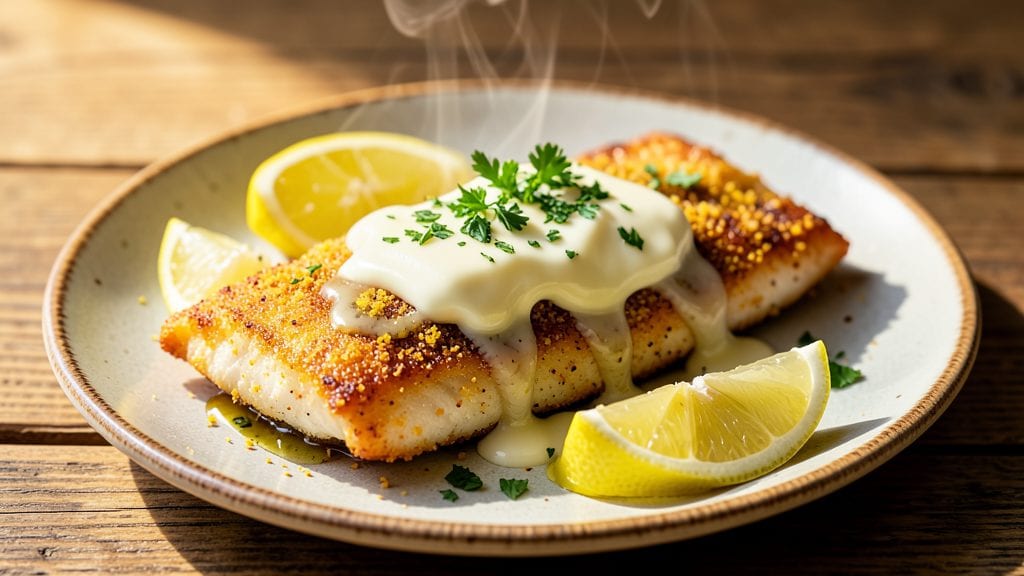
This baked hake recipe delivers restaurant-quality results with a crispy cornmeal crust that locks in moisture while creating a satisfying crunch.
The secret lies in a simple yet effective technique: coating the delicate white fish in a mix of cornmeal and herbs before baking, then finishing with bright lemon butter that cuts through the richness.
I developed this method after years of testing different crusts—some too heavy, others too bland—until I found the perfect balance of texture and flavor.
The beauty of this recipe is its simplicity: just five key ingredients transform ordinary hake into a standout main course. The cornmeal crust not only creates that coveted crispy exterior but also adds a subtle nutty depth that pairs beautifully with the citrusy lemon butter.
Unlike traditional breaded fish, this method requires no frying, making it a healthier yet equally satisfying option. The result? A dish that’s elegant enough for dinner guests but quick enough for weeknight meals.
What makes this recipe truly special is how it elevates the natural mildness of hake—often overlooked in favor of stronger fish—into something memorable. The crispy crust contrasts perfectly with the tender, flaky flesh inside, while the lemon butter adds a bright, tangy finish that keeps every bite fresh.
This is the kind of dish that feels indulgent without being heavy, making it ideal for those who love seafood but want something lighter than fried options.
Serve it with a simple side of roasted asparagus or a fresh salad to let the hake shine as the star. The method is foolproof, and the results are consistently impressive—no matter how many times you make it.
Let’s get started on creating a dish that’s as satisfying as it is delicious.
Ingredients for baked hake
Five essential ingredients transform delicate hake into a restaurant-worthy dish with crispy perfection.
| Ingredient | Amount | Notes |
|---|---|---|
| Fresh Hake Fillets 🐟 | 4 whole | Skin-on, 6-8 oz each, patted dry |
| Fine Yellow Cornmeal 🌽 | ½ cup | Stone-ground preferred for texture |
| Extra-Virgin Olive Oil 🫒 | 2 tbsp | Light, fruity variety for balance |
| Fresh Lemon Juice 🍋 | ¼ cup | From 1 large lemon, freshly squeezed |
| Unsalted Butter 🧈 | 4 tbsp | Cold, cubed for lemon butter |
| Dried Parsley 🌿 | 1 tbsp | Finely ground for crust adherence |
| Diamond Crystal Kosher Salt 🧂 | 1 ½ tsp | For crust and finishing |
| Freshly Ground Black Pepper 🌶️ | ½ tsp | Coarsely cracked for texture |
| Garlic Powder 🧄 | ½ tsp | For subtle aromatic depth |
| Fresh Dill Weeds 🌿 | 2 tbsp | Chopped finely for herbal brightness |
The hake selection is critical—look for firm, translucent fillets with minimal bruising, typically sold in the seafood case at Whole Foods or Trader Joe's. Skin-on fillets create a natural barrier that prevents overcooking, and 6-8 oz portions ensure even baking. If your fishmonger offers sustainably sourced options, prioritize those for both quality and ethical reasons. The cornmeal should be stone-ground for optimal texture—avoid instant varieties, which lack the necessary grit. For the lemon butter, European-style unsalted butter (like Plugrá) melts more cleanly than American varieties, though high-quality domestic brands work fine.
No fresh dill? Substitute 1 tbsp dried dill or 1 tsp dried marjoram for a similar herbal profile, though fresh is preferred. Running short on cornmeal? Fine almond flour creates a similar crispy texture but adds a subtle nuttiness. The olive oil should be light and fruity—avoid robust varieties like Kalamata, which can overpower the delicate fish. For extra brightness, add 1 tsp lemon zest directly to the crust mixture. If using pre-squeezed lemon juice, opt for recently bottled varieties to maintain acidity, and avoid those with preservatives.
Store fresh hake in the coldest part of your fridge, wrapped in parchment paper, and cook within 2 days for optimal texture. The lemon butter mixture can be prepped 1 day ahead and stored in an airtight container, though the butter should remain cold until ready to use. The crust components (cornmeal, herbs, spices) keep indefinitely in a cool, dark pantry—measure them directly from the bag to avoid moisture exposure. Leftover baked hake reheats beautifully in a 350°F oven for 5-7 minutes, though it's best enjoyed fresh when the crust is at its peak crispiness.
Why You'll Love This Recipe
- Crispy in Minutes: The cornmeal crust forms a golden, shatteringly crisp shell in just 15 minutes—no frying, no fuss. I swear, the first time I tried it, I nearly burned my hand pulling it out of the oven (that’s how fast it happens).
- Lemon-Butter Magic: That bright lemon juice and melted butter? It’s like a hug for your taste buds—bright, buttery, and perfectly balanced. The hake stays tender while the crust soaks up all the goodness, leaving you with bites that taste restaurant-worthy.
- Weeknight to Dinner Party: Throw it together for a lazy Tuesday or impress guests with zero stress—it’s the same recipe. Honestly, I’ve served it at both, and no one’s ever asked how hard it was to make. (Spoiler: It’s not.)
- Budget-Friendly Catch: Hake’s affordable, and this recipe stretches it further than you’d think. Between us, I’ve made this with leftovers for lunch the next day—still delicious, still satisfying, and way cheaper than takeout.
Step-by-step instructions for baked hake recipe: crispy cornmeal crust with lemon butter brightness
Here's the precise method to achieve that coveted crispy crust while keeping the hake tender and moist.
Prepare the Cornmeal Crust and Season the Hake
Preheat your oven to 425°F with a rack positioned in the center. In a shallow dish, combine the 0.5 cup fine yellow cornmeal, 1.5 teaspoons diamond crystal kosher salt, 0.5 teaspoon freshly ground black pepper, 0.5 teaspoon garlic powder, and 1 tablespoon dried parsley. Mix thoroughly to distribute the seasoning evenly.
Pat each of the 4 whole fresh hake fillets completely dry with paper towels, ensuring no moisture remains on the skin. This step is critical for achieving that crispy crust. Place the fillets skin-side up in a single layer on a parchment-lined baking sheet. Press each fillet gently into the cornmeal mixture, coating both sides evenly. The crust should adhere firmly to the skin without falling off when lifted.
Create the Lemon Butter Sauce
While the oven preheats, prepare the lemon butter sauce by combining the 4 tablespoons unsalted butter and 0.25 cup fresh lemon juice in a small saucepan. Place over low heat and whisk gently until the butter melts completely, creating a smooth, emulsified sauce. Remove from heat and stir in the 2 tablespoons fresh dill weeds, reserving this mixture for later.
This sauce will infuse the hake with bright citrus notes and rich butter flavor during the final resting period. Keep it warm but not simmering, as it will thicken slightly when combined with the cooked fish.
Bake Until Crispy and Cooked Through
Carefully transfer the cornmeal-coated hake fillets to the preheated oven. Bake for 12-14 minutes, depending on thickness, until the crust is deep golden brown and the fish flakes easily when tested with a fork. The skin should be crisp enough to hold its shape when lifted with tongs, while the flesh beneath remains tender and opaque.
Resist the urge to peek during baking, as opening the oven door can cause the crust to soften prematurely. The hake is done when it reaches an internal temperature of 145°F at its thickest point. Remove from the oven and transfer to a warm serving platter.
Finish with Lemon Butter and Serve Immediately
Immediately pour the warm lemon butter sauce over the baked hake fillets, allowing it to seep into the crispy crust and tender flesh. The residual heat from the fish will help the sauce cling beautifully, creating a glossy finish. Sprinkle with an additional pinch of diamond crystal kosher salt and freshly ground black pepper to enhance the flavors.
Serve the hake immediately while the crust remains crisp and the lemon butter sauce pools attractively on the plate. The contrast of textures—crispy skin, tender flesh, and silky sauce—makes this dish truly exceptional. Pair with a simple arugula salad or steamed green beans to complement the bright citrus notes.
Pro Tips For Making Baked Hake
- Dry the Fillets Thoroughly: Pat those hake fillets ridiculously dry with paper towels—no wet spots, not even near the edges. I learned this the hard way when my first batch came out soggy instead of crispy; cornmeal needs a dry surface to cling and crisp properly. (Yes, even if you’re impatient like me.)
- Preheat Pan to Smoking Hot: Get that oven rack in the middle position and crank the heat to 450°F (230°C). Cast iron or stainless steel pans work best—high heat for 4–5 minutes before adding the fillets guarantees that golden crust. I used to skip this, and the cornmeal just turned bland instead of toasty.
- Use Lemon Zest, Not Just Juice: Grate a little lemon zest into the cornmeal coating—it brightens the flavor and prevents the butter from overpowering the dish. Fresh lemon juice is great, but zest adds a citrusy depth that makes the difference between "good" and "wow." (Trust me, it’s worth the 30-second scrape.)
- Rest Before Serving: Pull the hake from the oven and let it sit covered with foil for 5 minutes. This keeps the fillets moist while the cornmeal sets properly. I know, I know—you want to eat it now—but skipping this step means flaky, dry fish instead of tender, buttery perfection.
Wine and beer pairings for this dish
Crisp White Wine
For this delicate yet flavorful hake, I always reach for a dry Spanish Albariño—its bright acidity and citrus notes mirror the lemon butter perfectly. The crispness cuts through the richness of the cornmeal crust, cleansing your palate between bites.
Look for a bottle from Rías Baixas, where the cool climate produces wines with that signature zesty finish. Serve slightly chilled (45-50°F) to enhance its refreshing qualities. 🍷
Light Beer Pairings
A Belgian witbier like Stella Artois Wit brings a subtle spicy note from coriander and a touch of sweetness that balances the dish's acidity. The effervescence also helps refresh your palate between bites of the crispy crust.
For a more robust option, try a German Helles Lager—its malty backbone stands up to the butter while keeping the overall profile light. Avoid heavy stouts or dark ales that would overpower the delicate fish. 🍺
Sparkling Wine Elevation
If you want to impress, a Prosecco DOC or Cava adds an elegant effervescence that complements the lemon butter's brightness. The bubbles enhance the dish's natural freshness, making it feel even more special.
I like La Marca Prosecco for its crisp acidity and subtle almond notes—it's affordable yet sophisticated. Serve in a flute to maintain the bubbles' liveliness. ✨
Red Wine Surprise
For those who prefer red, a light Pinot Noir from Oregon (like Domaine Serene) works surprisingly well. Its bright cherry and floral notes don't clash with the lemon butter, and the wine's acidity keeps the dish feeling fresh.
Decant it for 30 minutes to soften tannins slightly. This pairing is perfect for red wine lovers who still want to enjoy seafood. 🍇
Non-Alcoholic Options
For a refreshing non-alcoholic match, try sparkling water with a splash of lemon juice and a pinch of sea salt—it mimics the lemon butter's brightness. Alternatively, a ginger beer like Feather's adds a subtle spicy kick that pairs beautifully with the crust's nuttiness.
Both options keep the dish feeling light and vibrant. 💧
Nutrition facts
Frequently asked questions
Why does the recipe call for skin-on hake fillets?
The skin creates a natural barrier that prevents the fish from drying out during baking, while also helping the cornmeal crust adhere perfectly. When cooked properly, the skin becomes crispy and adds an extra layer of texture. If you must use skinless fillets, simply press the crust mixture firmly onto both sides to compensate.
Can I substitute cornmeal with another flour?
While cornmeal gives the best texture, you can use fine almond flour or panko breadcrumbs for a similar crispiness. For almond flour, reduce the amount to 0.375 cup since it's denser. Panko works well but may be slightly heavier. The key is pressing the coating firmly onto the fish to ensure adhesion.
How do I know when the hake is fully cooked?
The fish is done when it reaches an internal temperature of 145°F at its thickest point and flakes easily with a fork. The crust should be deep golden brown and crisp enough to hold its shape when lifted with tongs. Overcooking by just 1-2 minutes can turn the flesh dry, so monitor closely.
Can I make this recipe ahead of time?
The crust is best enjoyed immediately after baking for maximum crispiness, but you can prep components ahead: mix the crust ingredients 1 day ahead and store in an airtight container. The lemon butter sauce can be made 24 hours in advance and kept chilled. Reheat the sauce gently before serving over freshly baked hake.
What's the best way to serve leftovers?
Leftover baked hake reheats best in a 350°F oven for 5-7 minutes to restore crispiness. For extra crunch, sprinkle with breadcrumbs and broil for 1-2 minutes at the end. Store leftovers in an airtight container for up to 2 days**, though the crust loses crispness over time.